

DevSecOps for AI Systems: Integrating Security and Governance
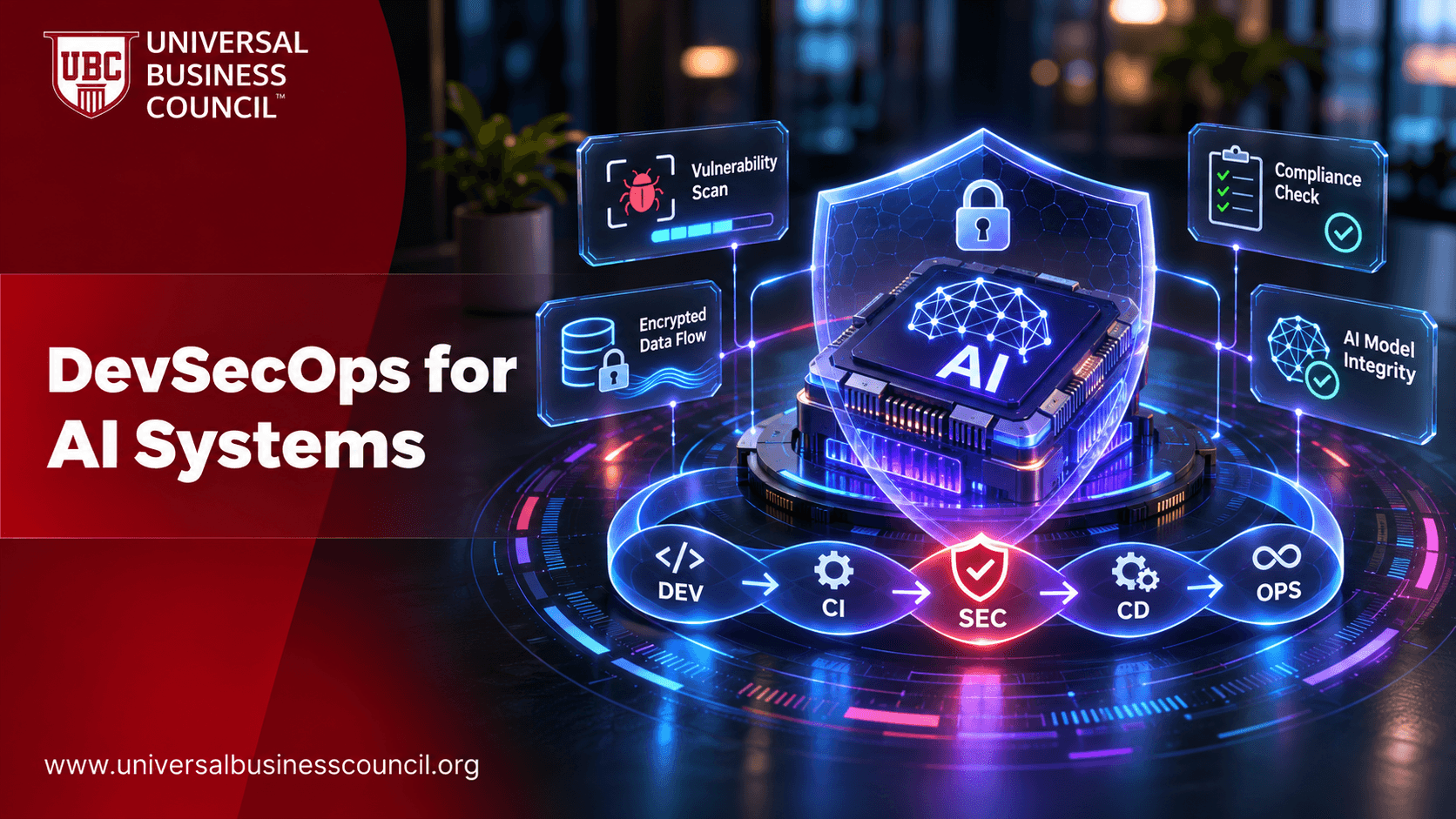
Shipping a model is not the same as shipping software, and securing it takes more than a scanner bolted onto the build. Data, models, prompts and third-party components all enter the pipeline, and each one can be tampered with, leaked or misused. DevSecOps for AI systems brings security and governance checks into every stage of building and running AI, so problems are caught while they are cheap to fix. This guide covers the main controls, how to fit them into a pipeline and how to keep governance from slowing teams down. For readers who want structured training alongside the practice, the Certified Responsible AI Expert program is a good option.
What is DevSecOps for AI systems?
DevSecOps is the practice of building security into development and operations from the start, rather than inspecting software at the end. DevSecOps for AI systems extends that idea to the parts of AI that ordinary pipelines do not cover: training data, model files, prompts, retrieval sources, evaluation results and the tools an AI system can call.

Governance joins the same pipeline. Instead of a separate review that happens once a quarter, policy checks such as risk tiering, approvals and documentation become automated steps that a release must pass.
Why AI changes the security picture
Training data can be poisoned or contain sensitive information
Model files can be swapped, tampered with or carry hidden behavior
Prompts and retrieved text can carry hidden instructions
Third-party models, libraries and plugins widen the supply chain
Behavior changes with data, so a passing test today may fail next month
Connected tools turn a text trick into a real-world action
Frameworks such as the OWASP Top 10 for Large Language Model Applications and MITRE ATLAS catalogue many of these threats, and they make a useful checklist for pipeline design.
Security and governance controls across the pipeline
Plan and design
Start with threat modeling that includes AI-specific attacks, and decide the risk tier of the system. A customer-facing assistant that can act on accounts needs far tighter controls than an internal summarizer. Record the purpose, the data involved and the owner before any code is written.
Data
Track where training and retrieval data comes from, and who approved it
Scan for personal data, secrets and licensing problems
Validate data quality and look for signs of tampering
Control who can change datasets, and log every change
Build and package
Scan code and dependencies for known vulnerabilities, pin versions and keep an inventory of every component, often called a software or AI bill of materials. Store secrets in a vault, never in code or prompts. Sign model files and containers so the deployment step can confirm they are the ones that were approved.
Test
Add AI-specific tests to the same pipeline that runs unit tests: safety and bias checks, prompt injection tests, data leakage checks and performance against a fixed evaluation set. Fail the build when results fall below agreed thresholds. Periodic red teaming adds creativity that automated tests lack.
Release and approve
Use policy as code to enforce rules automatically, for example that a high-risk system cannot go live without a completed impact assessment and a named owner. Keep human sign-off for the decisions that need judgment.
Run and monitor
Monitor inputs, outputs, drift, cost and unusual usage. Limit what the system can access, rotate credentials and keep a tested way to roll back or switch the system off. Feed incidents back into tests so the same failure does not return.
Making governance part of the flow
Governance fails when it looks like a gate at the end that no one understands. It works when it is built into daily tools.
Practical ways to do it
Turn policy requirements into pipeline checks that give clear, fast feedback
Generate documentation, such as model cards and test reports, as a by-product of the build
Tier controls by risk so low-risk work moves quickly
Give security and governance staff a seat in engineering planning
Offer reusable, pre-approved components so teams do not start from scratch
Roles and ownership
Developers own the quality and security of what they build. Security teams set standards, provide tools and test independently. Governance, risk and legal teams define policy and review high-risk systems. A named system owner stays accountable for each AI system after release, not just until launch. Clear ownership turns a pipeline from a set of checks into a set of commitments.
Protecting customer-facing AI and brand trust
Security failures in public AI tools quickly become brand problems, so marketing and communications teams should know the incident process. Those who want to understand the wider picture can look at the Certified Digital Marketing Expert program.
Skills, records and trusted people
Engineers who build secure AI pipelines need strong fundamentals, which the programming and technology certifications from Global Tech Council can help build. Build logs, approvals and model signatures matter most when they cannot be quietly altered, and teams exploring tamper-evident records can look at the deep tech certifications from Blockchain Council. When you hire for security and AI engineering roles, skills tests show who can really do the job. HireValid offers AI-proof pre-employment tests with an Integrity Score that supports human review.
Conclusion: making DevSecOps for AI systems routine
DevSecOps for AI systems applies a familiar idea, building security in rather than adding it at the end, to the extra moving parts that AI introduces. Data, models, prompts, retrieval sources and connected tools all create new ways to fail, and frameworks from OWASP and MITRE help teams see them. The controls follow the pipeline: threat modeling and risk tiering at design, tracked and scanned data, signed and inventoried builds, AI-specific tests that can fail a release, policy-as-code approvals and monitoring with rollback after launch.
Governance works best when it lives inside that flow. Automate the checks, generate documentation as a by-product, tier controls by risk, give security and governance staff a place in planning and offer reusable components. Clear roles keep the whole arrangement honest, with developers, security teams, governance functions and a named owner each carrying distinct duties. Begin with one AI system in production this quarter: map its pipeline, mark where each control is missing and automate the first two checks. The Certified Responsible AI Expert program mentioned at the start can help your team build the skills behind DevSecOps for AI systems.
FAQs
1. What is DevSecOps for AI systems?
Building security and governance into every stage of developing and running AI, including data, models and prompts.
2. How is it different from standard DevSecOps?
It adds controls for training data, model files, prompts, retrieval sources and AI-specific attacks.
3. What is an AI bill of materials?
An inventory of the models, datasets, libraries and services an AI system depends on.
4. What is data poisoning?
Tampering with training data to degrade a model or plant hidden behavior.
5. What is prompt injection?
Crafted input that makes a model ignore its instructions or take unwanted actions.
6. Why sign model files?
So the deployment step can confirm the model is the approved one and has not been swapped.
7. What AI tests belong in a pipeline?
Safety, bias, prompt injection, data leakage and performance checks against a fixed evaluation set.
8. What is policy as code?
Writing governance rules as automated checks that a release must pass.
9. Does governance slow teams down?
Not when it is automated, tiered by risk and built into the tools teams already use.
10. Who owns AI security?
Developers own what they build, security teams set standards, and a named system owner stays accountable.
11. Do we still need human review?
Yes, for high-risk releases and decisions that need judgment.
12. How should secrets be handled?
Keep them in a vault and never place them in code or prompts.
13. What should we monitor after launch?
Inputs, outputs, drift, cost, unusual usage and incidents.
14. How do we manage third-party models?
Vet suppliers, pin versions, review their documentation and test them for your use case.
15. Which frameworks help?
OWASP Top 10 for LLM Applications, MITRE ATLAS, the NIST AI RMF and ISO/IEC 42001 are useful references.
16. What is threat modeling for AI?
Listing how attackers or misuse could harm an AI system and planning controls for each path.
17. Can small teams adopt this?
Yes. Start with dependency scanning, secrets management and a few AI tests.
18. What records should we keep?
Build logs, approvals, test results, model versions and incident notes.
19. How often should the pipeline be reviewed?
At least yearly, and after major incidents or changes in tools or regulation.
20. Where can I learn more?
Training such as the Certified Responsible AI Expert program and published security guidance from standards bodies.
Related Articles
View All
Artificial Intelligence
Responsible AI in RAG Systems: Data Privacy, Accuracy and Governance
Learn how to apply responsible AI principles to retrieval-augmented generation (RAG) systems. Explore key considerations for protecting data privacy, improving response accuracy, reducing bias, and establishing effective governance to build secure, transparent, and trustworthy RAG applications.
Artificial Intelligence
AI Governance for Startups: A Practical Framework on a Budget
Learn how startups can establish effective AI governance without large budgets or dedicated compliance teams. Explore practical steps for creating AI policies, assessing risks, protecting data, assigning responsibilities, and monitoring AI tools while building a foundation for responsible and scalable AI adoption.
Artificial Intelligence
Chief AI Officer Responsibilities: Governance, Risk and Strategy
Explore the responsibilities of a Chief AI Officer (CAIO) and how the role supports AI adoption across an organization. Learn how CAIOs lead AI strategy, establish governance frameworks, manage risks, oversee compliance, and align AI initiatives with business goals.
Trending Articles
The Role of Blockchain in Ethical AI Development
How blockchain technology is being used to promote transparency and accountability in artificial intelligence systems.
AWS Career Roadmap
A step-by-step guide to building a successful career in Amazon Web Services cloud computing.
Top 5 DeFi Platforms
Explore the leading decentralized finance platforms and what makes each one unique in the evolving DeFi landscape.