

MLOps and Responsible AI: Governance Across the Model Lifecycle
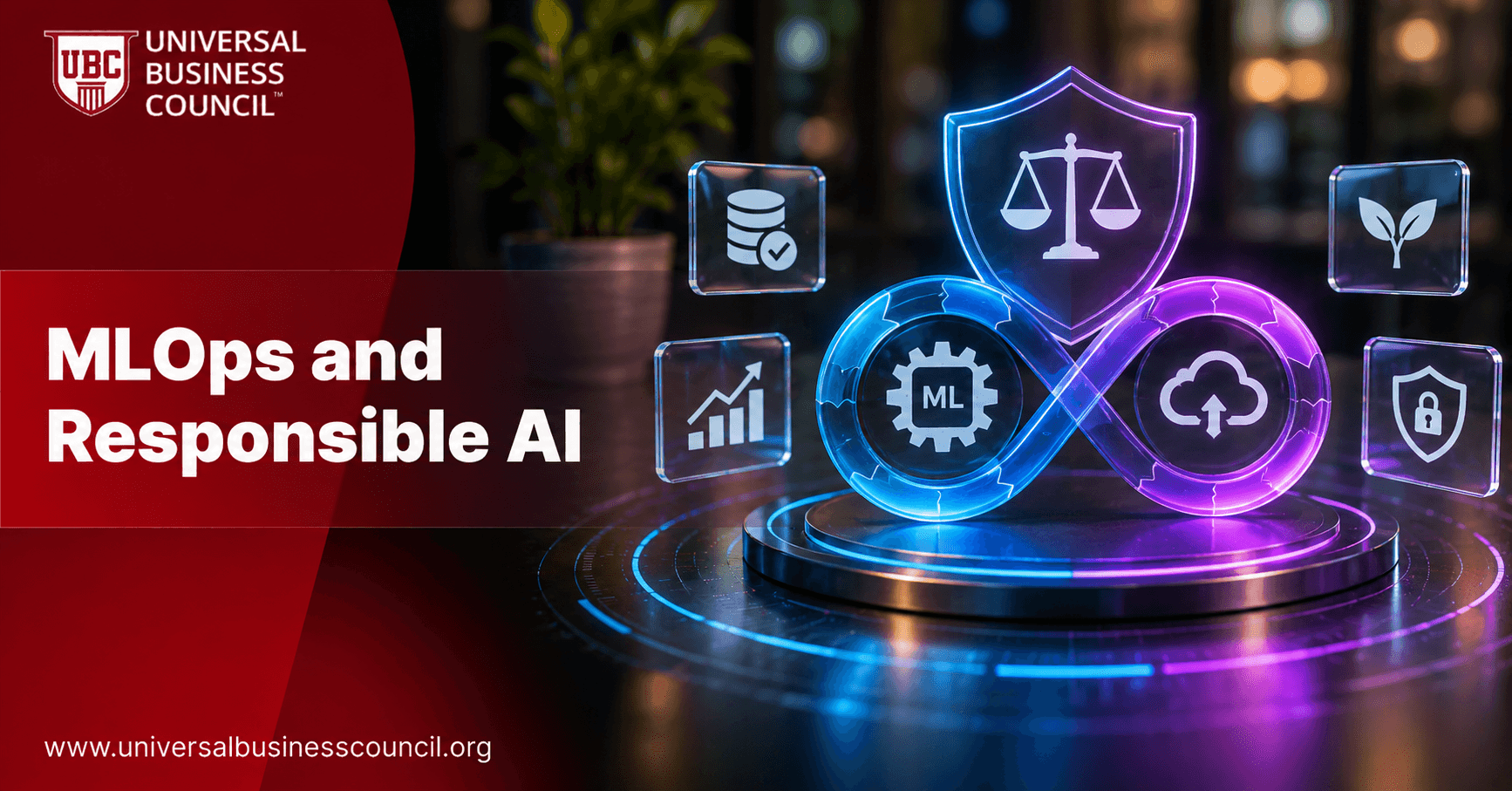
MLOps pipelines already automate how models are built, tested, deployed and updated. The governance question is what those pipelines enforce along the way. If a pipeline can ship a model without a bias check, an approval or a record of what changed, then speed has been bought at the cost of accountability. This guide shows how to build responsible AI controls into MLOps, stage by stage, so that governance becomes part of normal engineering work and not a separate hurdle. For structured professional learning, see the certified responsible AI expert certification. This is general information, not legal advice.
What is MLOps, and where does responsible AI fit?
MLOps is a set of practices that applies engineering discipline to the machine learning lifecycle: data preparation, training, validation, deployment, monitoring and retraining. It borrows from software DevOps, such as version control, automation and continuous delivery, and adds the data and model concerns that are unique to machine learning.

Responsible AI fits in as a set of requirements and checks that run through each stage. Because MLOps already tracks versions, runs tests and controls releases, it is a natural place to enforce policy automatically and to generate evidence for audits.
Governance by lifecycle stage
Treat each stage as a control point with defined checks, owners and records.
Data collection and preparation
Track the source, consent, license and quality of every dataset, and version the data with the model. Add automated checks for missing values, unexpected distributions, personal data and representation of key groups. Record known gaps in a dataset datasheet so downstream teams understand the limits.
Training and experimentation
Log code, parameters, data versions and results for every experiment so that any model can be reproduced. Control who can access training data and compute, and keep sensitive data in approved environments. Document why a given approach and feature set were chosen, especially where features could act as proxies for protected characteristics.
Validation and approval
Make validation a gate, not a suggestion. Typical automated and manual checks include:
Performance against agreed thresholds, including by subgroup
Robustness and security tests, including adversarial cases
Explainability and documentation, such as a current model card
Privacy checks for leakage of personal data
Risk-based human approval before release
Match approvals to risk
Lower-risk models may need only automated gates. Higher-risk systems should require sign-off from named reviewers in risk, legal, privacy and the business, recorded in the pipeline.
Deployment and release
Use staged rollouts, feature flags and the ability to roll back quickly. Pin model versions, restrict production access and ensure that only approved, signed artifacts can be deployed. Keep an inventory entry updated for each release, including owner, purpose and risk tier.
Monitoring and feedback
Track performance, drift, fairness measures, security events and user complaints in production, with thresholds that trigger alerts or automatic safeguards. Link monitoring to incident response, so that serious signals reach people who can act.
Retraining and retirement
Treat retraining as a controlled change that repeats validation and approval. Define criteria for retiring a model, archive its records and handle data deletion according to your retention rules.
Building governance into the pipeline
The most reliable controls are the ones people cannot skip.
Policy as code
Express rules such as "no deployment without a current model card and bias report" as automated checks in the pipeline. Failing checks block release, and exceptions require recorded approval. Engineers who implement these controls benefit from strong programming foundations, which many develop through tech certifications.
Metadata and lineage
Capture lineage automatically: which data, code, configuration and environment produced each model, and who approved it. Good lineage turns audits from scavenger hunts into queries.
Access control and separation of duties
Limit who can change pipelines, approve releases and access production data. Separate the person who builds a model from the person who approves it, particularly for high-impact uses.
Tamper-evident records
Keep logs and approvals in a form that cannot be quietly altered. Integrity techniques, including those explored in deep tech certifications, support trustworthy audit trails.
People, vendors and culture
Tools help only when teams use them well.
Roles and training
Define responsibilities for data engineers, ML engineers, platform teams, reviewers and model owners. Provide role-based training on responsible AI requirements and on how the pipeline enforces them. Confirm that people with approval authority or privileged access hold the qualifications they claim, with services such as HireValid supporting verification.
Third-party components
Pipelines often pull in external models, datasets and libraries. Scan and approve these before use, track their versions and apply the same documentation requirements.
Honest communication
Describe your controls accurately in customer and regulator communications. Avoid claiming "fully automated compliance." A digital marketing course can help teams explain safeguards clearly and without overstatement.
Conclusion
MLOps gives organizations a practical way to run responsible AI at scale. Add controls at each lifecycle stage: data checks, reproducible experiments, validation gates, controlled deployment, monitoring and managed retraining. Enforce policy through the pipeline, capture lineage, separate duties and keep tamper-evident records. Support it with trained, verified people and honest communication, and review the controls as models, tools and rules change.
Frequently asked questions
These are the questions teams ask most about governing the model lifecycle.
1. What is MLOps?
Engineering practices for building, deploying, monitoring and updating machine learning models.
2. How does MLOps support responsible AI?
It provides control points, automation and records for enforcing and proving governance.
3. What is policy as code?
Writing governance rules as automated checks in the pipeline.
4. Why version data as well as code?
So that models can be reproduced and issues traced to their source.
5. What is data lineage?
A record of where data came from and how it was transformed.
6. What should a validation gate check?
Performance, subgroup results, robustness, security, privacy and documentation.
7. Do all models need human approval?
Not all, but higher-risk models should have named human sign-off.
8. What is separation of duties?
Different people build and approve a model to reduce error and conflict of interest.
9. Why use staged rollouts?
They limit harm if a problem appears.
10. What is a model registry?
A central store of model versions with metadata and approval status.
11. Why pin model versions?
So behavior does not change unexpectedly.
12. How should retraining be handled?
As a controlled change with testing, approval and records.
13. What should monitoring include?
Performance, drift, fairness, security events and complaints.
14. How do we handle third-party models?
Scan, approve, version and document them like internal ones.
15. Who owns each model?
A named model owner, with the platform team responsible for the pipeline.
16. How does MLOps help audits?
It produces consistent logs, lineage and approval records.
17. Can small teams do this?
Yes, using lightweight checks and a simple registry.
18. What if a check fails?
Block release unless a recorded exception is approved.
19. When should a model be retired?
When it no longer meets performance, safety or legal standards, or its purpose ends.
20. How often should controls be reviewed?
On a schedule and when tools, risks or regulations change.
Related Articles
View All
Artificial Intelligence
AI Governance Operating Model: Committees, Owners and Decision Rights
Learn how to establish an AI governance operating model with clear committees, ownership structures, and decision-making responsibilities. Explore how organizations can define roles, assign accountability, set approval processes, and coordinate oversight to support responsible AI development and deployment.
Artificial Intelligence
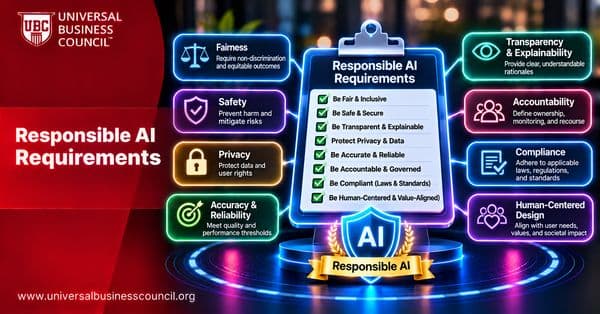
Responsible AI Requirements in the Software Development Lifecycle
Learn how to integrate responsible AI requirements into every stage of the software development lifecycle (SDLC). Explore how development teams can address fairness, transparency, data privacy, security, accountability, and human oversight during planning, design, development, testing, deployment, and maintenance.
Artificial Intelligence
Model Drift vs Data Drift: Implications for Responsible AI
Understand the difference between model drift and data drift and how both affect AI system performance over time. Explore their causes, key indicators, detection methods, and implications for responsible AI, including accuracy, fairness, reliability, and the need for continuous model monitoring.
Trending Articles
The Role of Blockchain in Ethical AI Development
How blockchain technology is being used to promote transparency and accountability in artificial intelligence systems.
AWS Career Roadmap
A step-by-step guide to building a successful career in Amazon Web Services cloud computing.
Top 5 DeFi Platforms
Explore the leading decentralized finance platforms and what makes each one unique in the evolving DeFi landscape.