

Inside code of conduct compliance: the policies, the culture, and where companies quietly get it wrong
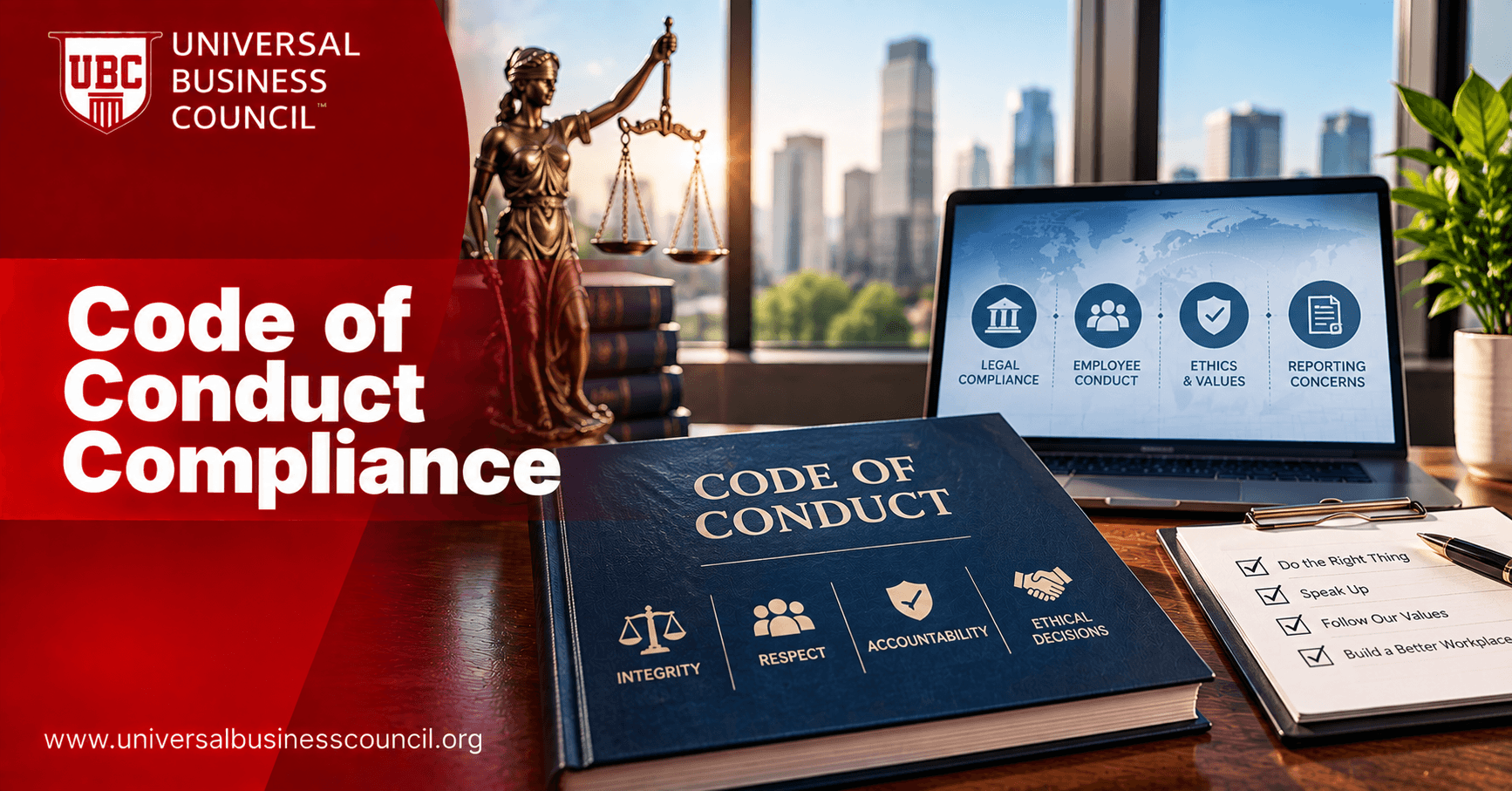
A new employee reads through the company's code of conduct during onboarding, nods along at the values listed on page one, and never thinks about it again. Meanwhile, a senior executive gets a pass on the same behavior a junior employee would've been disciplined for. A whistleblower policy exists on paper, but everyone quietly knows raising a concern is career suicide. None of it looks like a scandal from the outside. All of it is exactly the gap between a written code of conduct and a real one.
A code of conduct is supposed to be the foundation everything else in a compliance program sits on top of. Too often, it ends up as a document nobody reads, sitting somewhere between the employee handbook and the fire evacuation plan. This guide breaks down what a real code of conduct actually requires, how it connects to the rest of compliance, and what separates a functional program from a decorative one.

What a code of conduct actually is
A code of conduct is a company's own set of standards for how employees, leadership, and the business itself are expected to behave, both toward each other and toward the outside world. It's different from a specific legal requirement like the FLSA or the EEOC's rules, since those laws mandate specific things a business must do. A code of conduct is broader; it's a company choosing to hold itself to a standard, then backing that choice with real enforcement.
That distinction matters more than it might seem. A company can be technically compliant with every applicable law and still have a toxic, unethical culture that eventually creates real legal and reputational risk anyway. A strong code of conduct is meant to catch the behavior that falls in the space between "illegal" and "fine," which is where a lot of real damage actually happens.
Why this matters more right now
A few things have raised the stakes for having a code of conduct that actually functions, rather than one that just exists.
Employees and job candidates increasingly research a company's culture and ethics before joining, and a mismatch between stated values and lived experience shows up publicly fast, through review sites and social media.
Whistleblower protections have expanded in many jurisdictions, giving employees more legal cover, and more incentive, to report misconduct rather than stay quiet about it.
Investors and stakeholders increasingly factor in ethical governance when evaluating a company, meaning a weak or poorly enforced code of conduct isn't just a culture issue anymore; it's a business risk.
None of this means the underlying idea of a code of conduct changed. It means the cost of having one that's purely decorative has gotten a lot higher.
What a real code of conduct actually covers
A functional code of conduct isn't a single value statement; it's a set of specific standards addressing the situations employees actually encounter.
Conflicts of interest need clear guidance on when a personal relationship or financial interest could compromise someone's judgment on the job, and what employees are expected to disclose. Harassment and workplace behavior standards go beyond legal minimums, since a code of conduct can and should set a higher bar than the law technically requires. Confidentiality and use of company information cover how employees handle sensitive data, trade secrets, and internal communications, both during and after employment. Fair dealing addresses how the company treats customers, competitors, and suppliers, prohibiting things like misleading sales practices even when they might be technically legal. And use of company resources sets expectations around everything from expense reporting to appropriate use of company equipment and time.
How a code of conduct connects to specific compliance laws
A code of conduct isn't meant to replace laws like the FCPA, the EEOC's rules, or data privacy regulations; it's meant to sit above them, tying separate legal requirements into one coherent standard employees can actually understand and live by day to day.
Think of it this way: an employee doesn't need to memorize the FCPA to know that offering a government official a lavish gift feels wrong. A well-written code of conduct translates the spirit of these separate laws into plain, memorable guidance, so ethical behavior becomes a habit rather than a legal technicality someone has to look up every time a gray area comes up.
The core pillars of a real ethics and conduct program
A code of conduct that actually works rests on more than the document itself.
It needs to function as a living document, reviewed and updated as the business, its risks, and its industry change, rather than something drafted once and left untouched for a decade. Leadership tone matters enormously, since employees watch what leadership actually does far more closely than what a policy document says, and a code that leadership visibly ignores becomes worthless immediately. A real reporting channel, ideally with an anonymous or confidential option, gives employees a genuine way to raise concerns without fear. Consistent enforcement across every level of the organization, including leadership, is what separates a functioning program from a theoretical one. And training has to go beyond a signature on a form, actually walking through realistic scenarios employees might genuinely encounter.
Common red flags and compliance gaps
A few patterns tend to expose a code of conduct as more decorative than functional.
A document written in vague, aspirational language, with words like "integrity" and "excellence" but no concrete guidance on what to actually do in a specific situation.
Enforcement that clearly varies by seniority, where a junior employee faces real consequences for something a senior leader gets away with.
A reporting channel that technically exists but that employees don't trust, often because a past complaint was mishandled or the person who raised it faced quiet retaliation.
Training completed once during onboarding and never revisited, even as the business or its risks change significantly.
A code of conduct that was clearly copied from a template, with language that doesn't actually reflect the company's real operations or industry-specific risks.
None of these individually proves a code of conduct is failing. Together, they're exactly the pattern that shows up once something goes wrong and people start asking whether anyone was really following the policy at all.
Building a program that holds up
A program built to actually function starts with language that's specific rather than aspirational, addressing real situations employees are likely to face rather than abstract values alone. From there, a few things matter most.
Reporting channels need to be genuinely accessible and genuinely trusted, which usually means offering an option outside the direct management chain, since employees are far less likely to report a concern to the person it involves. Enforcement has to be visibly consistent, applied the same way regardless of someone's title or tenure, since one high-profile exception undermines the credibility of the entire program. And communication about the code needs to be more than a document buried in a handbook; it needs regular reinforcement so it actually stays present in people's minds.
Building a program at this level takes real structure. A Certified Compliance Professional credential is worth looking into for compliance and HR staff who want a genuine framework for building an ethics program, rather than assembling one reactively after a violation exposes the gaps.
Common mistakes companies make
A handful of mistakes keep showing up across organizations with a code of conduct that ultimately fails to do its job. Writing the code in generic, copy-paste language that doesn't reflect the company's actual industry or risks. Enforcing standards inconsistently across seniority levels, which quietly teaches employees the real rules are different from the written ones. Treating a whistleblower channel as a formality rather than a genuinely trusted, protected process. And updating the code rarely, if ever, even as the business grows into new markets or faces new kinds of risk.
Technology increasingly plays a role in how these programs actually get run, particularly for anonymous reporting systems and tracking how complaints get resolved over time. Tech Certifications is worth a look for compliance staff evaluating or building that kind of infrastructure, so they understand the systems handling sensitive reports rather than trusting a vendor's claims blindly. For companies building more sophisticated systems to track and analyze conduct patterns across a large organization, Deep Tech Certifications fills a gap standard compliance training doesn't touch.
The cost of getting it wrong
A weak or poorly enforced code of conduct rarely causes damage on its own; it causes damage by failing to prevent something else: a harassment complaint that escalates because nobody trusted the reporting process, a bribery scandal that traces back to a culture where cutting corners was quietly tolerated. Beyond the specific legal exposure any underlying violation might create, companies with a documented gap between their stated ethics and their actual conduct face real reputational damage, harder recruiting, and eroded trust from customers, investors, and employees who feel the values were never more than words on a page.
Where this is heading
Whistleblower protections continue strengthening in many jurisdictions, raising the stakes for companies that don't have a genuinely trusted reporting process already in place. ESG and stakeholder expectations keep growing, with more pressure on companies to demonstrate real ethical governance, not just publish a values statement. And AI ethics is increasingly getting folded directly into conduct codes, as companies grapple with how employees should responsibly use AI tools, handle AI-generated content, and avoid bias in AI-assisted decisions.
For compliance and communications teams rolling out a code of conduct or refreshing one that's gone stale, how it's communicated matters almost as much as what it says. A Digital Marketing Course can help teams frame ethics messaging so it actually resonates with employees, rather than reading as another document nobody engages with.
Conclusion
A code of conduct is only as strong as the gap between what it says and what actually happens when someone violates it. The document itself matters less than the culture behind it, whether leadership visibly lives by the same standard, whether a reporting concern is taken seriously, whether consequences apply the same way regardless of title. Most failures here aren't the result of a badly written policy; they're the result of a good policy nobody actually enforced consistently. Get the fundamentals right, specific guidance, trusted reporting, and consistent enforcement from the top down, and a code of conduct becomes the foundation the rest of compliance can actually stand on. Get it wrong, and it becomes exactly the kind of document that looks fine in an audit and means nothing in practice.
FAQs
What is a code of conduct?
A company's own set of standards for how employees and leadership are expected to behave, both internally and toward the outside world.
How is a code of conduct different from a compliance law?
Laws mandate specific requirements, while a code of conduct is a company's own broader ethical standard that often exceeds legal minimums.
What does a real code of conduct typically cover?
Conflicts of interest, harassment, confidentiality, fair dealing, and appropriate use of company resources.
Why do codes of conduct often fail in practice?
They're often written in vague, aspirational language with no concrete guidance for real situations employees actually face.
What makes a whistleblower channel effective?
Genuine confidentiality, trust that complaints are taken seriously, and protection from retaliation for the person reporting.
Can a company be legally compliant but still have a weak code of conduct?
Yes, a business can meet every legal requirement and still have a toxic or unethical culture that eventually creates real risk.
How does a code of conduct relate to laws like the FCPA or EEOC rules?
It sits above individual laws, translating their spirit into practical, everyday guidance employees can actually apply.
What is the biggest sign a code of conduct isn't working?
Inconsistent enforcement, especially when senior employees face different consequences than junior ones for similar behavior.
How often should a code of conduct be updated?
Regularly, as the business, its risks, and its industry evolve, not left untouched for years at a time.
Does leadership behavior matter for a code of conduct's credibility?
Yes, employees watch what leadership does far more closely than what a policy document says.
What role does training play in a conduct program?
It should walk through realistic scenarios employees might face, not just require a signature on a form.
What happens if enforcement varies by seniority?
It quietly teaches employees that the real rules differ from the written ones, undermining the entire program's credibility.
Is a generic, templated code of conduct effective?
Rarely, since it often fails to reflect a company's actual industry-specific risks and operations.
How does a weak code of conduct create legal exposure?
It can fail to prevent violations like harassment or bribery, which then trace back to a culture that tolerated warning signs.
What is being folded into conduct codes more recently?
AI ethics, covering responsible use of AI tools, handling AI-generated content, and avoiding bias in AI-assisted decisions.
Why do whistleblower protections matter for code of conduct compliance?
Stronger protections raise the stakes for companies without a genuinely trusted internal reporting process already in place.
How do investors view a company's code of conduct today?
Increasingly as a factor in evaluating ethical governance, not just a formality buried in company documentation.
What's the difference between a document-based code and a functional one?
A functional code is reinforced through consistent enforcement and communication, not just distributed once during onboarding.
Can technology help run a conduct program?
Yes, particularly for anonymous reporting systems and tracking how complaints get resolved over time.
What's the foundation of a code of conduct that actually works?
Specific, practical guidance, a trusted reporting channel, and enforcement that applies consistently regardless of title or tenure.
Related Articles
View All
Business
Social Media Policies and Compliance That People Follow
Learn how to build social media policies employees actually follow, covering approvals, disclosures, privacy, brand risks, account access, and compliance responsibilities.
Business
Supply Chain Compliance explained: what businesses actually need to get right
Learn what supply chain compliance involves, which requirements can affect suppliers and business partners, and how companies can manage regulatory, operational, and third-party risks.

Business
How to Get Certified in Customer Success
Getting certified in customer success can help you develop essential skills, strengthen your professional profile, and prepare for new career opportunities. Learn how to choose a certification program, understand its requirements, and apply what you learn to real customer success roles.
Trending Articles
The Role of Blockchain in Ethical AI Development
How blockchain technology is being used to promote transparency and accountability in artificial intelligence systems.
AWS Career Roadmap
A step-by-step guide to building a successful career in Amazon Web Services cloud computing.
Top 5 DeFi Platforms
Explore the leading decentralized finance platforms and what makes each one unique in the evolving DeFi landscape.