

Supply Chain Compliance explained: what businesses actually need to get right
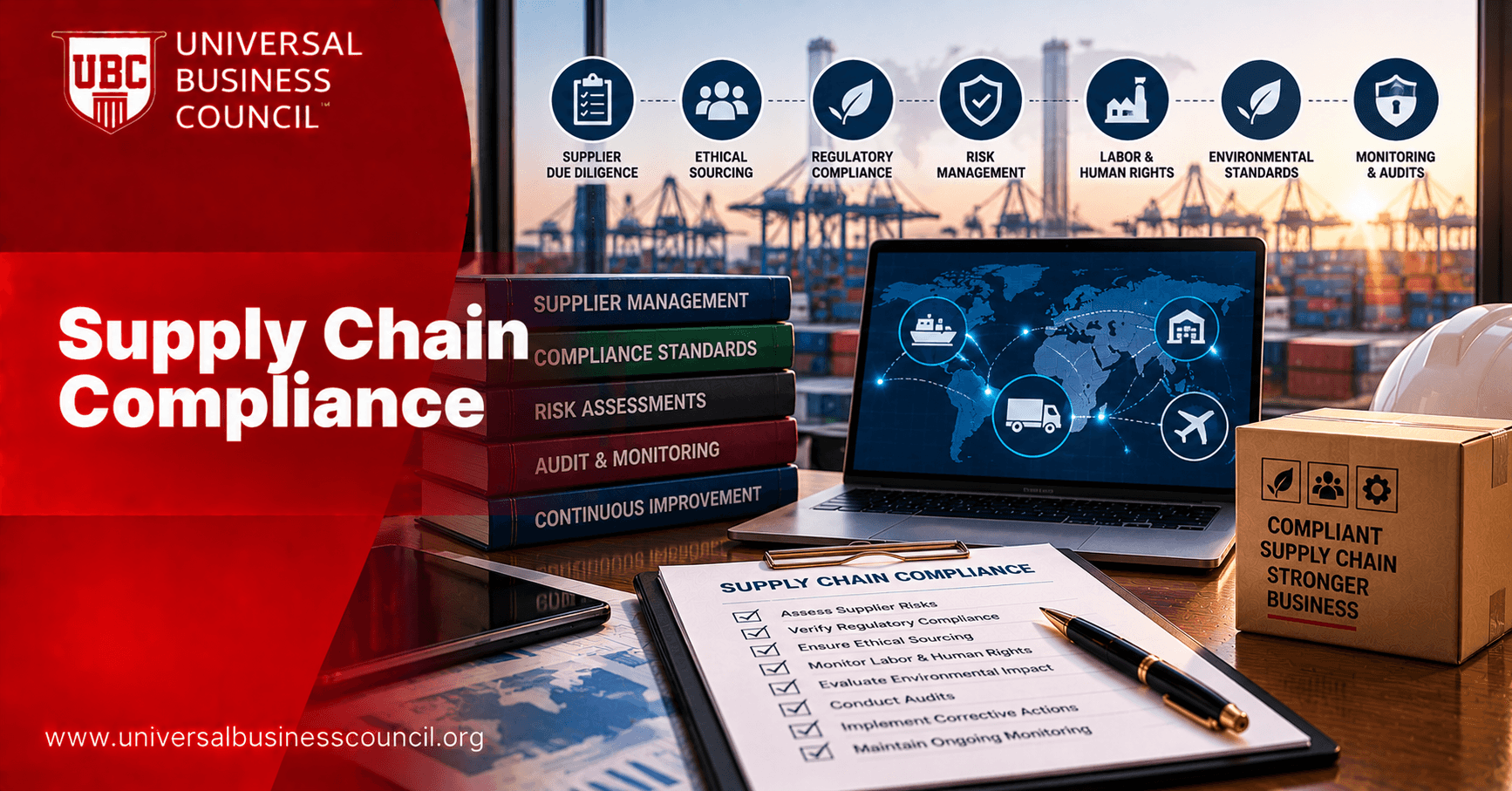
A company sources a raw material from a supplier who seems perfectly legitimate on paper, complete with certifications and a clean audit history. That supplier, in turn, buys from a smaller processor a few steps further back in the chain, one the original company has never heard of and has no direct relationship with. Somewhere further back than that, the actual labor conditions look nothing like what any certification suggested. Nobody at the original company did anything wrong on purpose. They just never looked past the supplier they actually signed a contract with.
Supply chain compliance is difficult precisely because responsibility extends much further than visibility usually does. This guide breaks down what a real supply chain compliance program actually requires, why most companies lose sight of their supply chain a few steps back, and what separates genuine oversight from a stack of supplier certifications nobody's actually verified.

What supply chain compliance actually is
Supply chain compliance means ensuring that the materials, labor, and practices behind a company's products meet legal and ethical standards, all the way through the chain of suppliers involved in making that product, not just the supplier a company directly contracts with.
It overlaps with broader vendor risk management, but it's a distinct and often more difficult problem. Vendor risk management typically focuses on direct vendors a company has a contractual relationship with. Supply chain compliance has to reach further, into a web of suppliers, sub-suppliers, and raw material sources that a company often has no direct relationship with at all, but is still legally and reputationally responsible for in a meaningful way.
Why this matters more right now
A few trends have raised the stakes for taking this seriously.
Forced labor import laws have tightened significantly in a number of major markets, allowing customs authorities to block shipments suspected of involving forced labor anywhere in the supply chain, not just at the immediate supplier level.
Conflict minerals scrutiny continues to expand, particularly for industries relying on materials sourced from regions with documented links to armed conflict or human rights abuses.
Consumers and investors increasingly expect real transparency about where products actually come from, and a company caught off guard by a sourcing scandal faces public consequences that go well beyond any specific legal penalty.
None of this changed the underlying ethical or legal expectations around sourcing. It raised the practical cost of not actually knowing what's happening several steps back in a supply chain that used to be easy to treat as someone else's problem.
The key laws and frameworks behind supply chain compliance
A handful of major laws and frameworks shape supply chain compliance obligations, and understanding their basic reach helps clarify what actually applies to a given business.
Forced labor import bans, like the ones enforced through US customs authorities, allow shipments to be detained or blocked if there's reasonable suspicion that forced labor was involved anywhere in the production process, placing the burden of proof on the importing company to demonstrate otherwise. Conflict minerals rules require companies, particularly in electronics and related industries, to trace the origin of specific minerals and disclose whether their sourcing is linked to conflict-affected regions. Modern slavery acts, adopted in a number of countries, require larger companies to publish statements describing what steps they've taken to identify and address forced labor and human trafficking risk within their supply chains.
Beyond these specific laws, a growing number of industry-specific frameworks and certification standards add further sourcing and labor requirements, meaning a company's actual compliance obligations are often broader and more layered than any single law suggests on its own.
What supply chain compliance actually covers
A real program addresses several distinct areas, not just one narrow slice of sourcing risk.
Labor practices cover working conditions, wages, and the presence or absence of forced or child labor throughout the supply chain, not just at a company's own facilities or its direct supplier's facilities. Sourcing of materials covers where raw materials actually originate, and whether that origin carries specific legal or ethical concerns, like conflict minerals or materials linked to environmental destruction. Environmental standards cover the ecological impact of sourcing and production practices throughout the chain, increasingly a focus for both regulators and environmentally conscious consumers. And sub-tier supplier visibility, arguably the hardest piece of all, covers whether a company actually knows who's involved several steps back in its supply chain, beyond the direct suppliers it has contracts with.
Why visibility drops off past tier one suppliers
This is the core structural problem in supply chain compliance, and it deserves direct attention, since it explains why even well-intentioned companies end up with real gaps.
A company's tier one suppliers are the ones it directly contracts with, and these are usually the easiest to vet, audit, and hold accountable through a direct contractual relationship. Tier two suppliers, the companies that supply a company's own suppliers, are already harder to see clearly, since the original company has no direct relationship with them and depends entirely on its tier one supplier for information and honesty about who they're sourcing from. Beyond tier two, visibility tends to drop off sharply, and by the time a supply chain reaches raw material extraction or processing, most companies genuinely don't know who's actually involved.
This isn't necessarily a sign of negligence, it's a structural reality of how modern, globalized supply chains work. But it's precisely the gap that regulators, journalists, and watchdog organizations have gotten increasingly effective at exposing, which means a company's lack of visibility doesn't protect it from responsibility, it just means the problem tends to surface publicly rather than internally.
The core pillars of a supply chain compliance program
A real program here goes well beyond collecting supplier certifications and filing them away.
A supplier code of conduct sets clear, specific expectations around labor practices, sourcing, and environmental standards, and requires suppliers to actually agree to and demonstrate compliance with it, not just acknowledge receiving it. Due diligence evaluates suppliers, and where possible their own sub-suppliers, before and during a relationship, rather than accepting self-reported claims at face value. Traceability efforts work to map the supply chain as far back as realistically possible, since a company can't manage a risk it can't see. Audits, ideally including some unannounced or third-party verification, check whether actual practices match what suppliers claim on paper. And remediation processes define what happens when a problem is actually found, since discovering an issue without a clear path to fixing it accomplishes very little.
Common red flags and compliance gaps
A few patterns tend to expose weak supply chain oversight.
Due diligence that stops entirely at tier one suppliers, with no real effort to understand who those suppliers themselves rely on.
Certifications accepted at face value with no independent verification that the underlying practices actually match what the certificate claims.
No clear remediation process, meaning a discovered problem gets acknowledged but not actually addressed in any structured way.
Supplier relationships that have continued for years without any updated audit or reassessment, despite changing conditions on the ground.
A supply chain map, if one exists at all, that only covers direct suppliers and stops well short of raw material origins.
None of these individually guarantees a serious problem exists. Together, they're exactly the pattern that surfaces once a sourcing issue becomes public and a company has to explain what it actually knew, or should have known, about its own supply chain.
Building a program that holds up
A program built to actually function starts with genuine supply chain mapping, pushing visibility as far back as realistically achievable rather than stopping comfortably at tier one. From there, a few things matter most.
Supplier audits need real teeth, ideally including some element of independent or unannounced verification, rather than relying entirely on a supplier's own self-reported compliance. Certification requirements should be treated as a starting point for further verification, not proof of compliance on their own, since a certificate reflects a point-in-time assessment that may not still hold true. And remediation needs a clear, defined process, so that when an issue does surface, there's an actual path to addressing it rather than just documenting that it was found.
Building a program at this level takes real structure. A Certified Compliance Management Professional credential is worth looking into for compliance and procurement staff who want a genuine framework for running a supply chain compliance program, rather than relying entirely on supplier self-reporting.
Common mistakes companies make
A handful of mistakes keep showing up. Only vetting tier one suppliers, leaving the rest of the supply chain effectively unmanaged and unseen. Treating a supplier's certification as sufficient proof of compliance without any independent verification behind it. And weak remediation, where a discovered issue gets acknowledged internally but never actually results in a meaningful change to the sourcing relationship involved.
Technology increasingly supports this kind of program, particularly for supply chain traceability tools that help map sourcing further back than manual tracking realistically could. Tech Certifications is worth a look for compliance staff evaluating or building that kind of infrastructure, so they understand what a traceability system is actually capable of showing versus what it's assuming. For organizations building more sophisticated traceability systems, including ones using blockchain-based tracking to verify sourcing claims, Deep Tech Certifications fills a gap that standard supply chain training doesn't cover.
The cost of getting it wrong
Supply chain compliance failures carry consequences that extend well beyond a single fine. Forced labor import bans can result in shipments being detained or blocked entirely, disrupting operations and revenue with very little warning. Reputational damage from a sourcing scandal tends to be severe and long-lasting, since consumers and investors alike increasingly treat supply chain transparency as a genuine expectation rather than a nice-to-have. And consumer backlash, amplified quickly through social media and investigative journalism, can do damage to a brand that outlasts any specific regulatory penalty by a wide margin.
Where this is heading
Forced labor enforcement continues expanding, with customs authorities in major markets becoming more aggressive about detaining shipments on reasonable suspicion alone, shifting more of the burden onto companies to proactively demonstrate clean sourcing. Supply chain traceability technology is maturing quickly, giving companies more realistic tools to map sourcing further back than was practically possible even a few years ago. And regulatory demand for sub-tier visibility keeps growing, meaning the current practice of stopping due diligence at tier one is likely to become increasingly untenable rather than simply risky.
For compliance and communications teams working on supplier onboarding and public-facing sourcing transparency, how expectations and claims get communicated matters almost as much as the underlying program. A Digital Marketing Course can help teams communicate genuine sourcing transparency to consumers and investors clearly, without overstating claims a company can't actually back up with real traceability.
Conclusion
Supply chain compliance comes down to a demanding but important principle: a company is responsible for what's actually in its product, not just for what its direct suppliers claim about it. Most failures here aren't the result of a company knowingly tolerating forced labor or unethical sourcing, they're the result of visibility that stopped at tier one, a certification accepted without verification, a supply chain map that never got pushed further back than convenient. Get the fundamentals right, real mapping, genuine audits, and a remediation process that actually fixes problems when they're found, and supply chain compliance becomes a program that protects both the company and the people actually making its products. Get it wrong, and the gap in visibility doesn't protect the company from responsibility, it just delays when, and how publicly, that responsibility gets discovered.
FAQs
What is supply chain compliance?
Ensuring the materials, labor, and practices behind a company's products meet legal and ethical standards throughout the full chain of suppliers.
How is supply chain compliance different from vendor risk management?
Vendor risk management typically covers direct contracted vendors, while supply chain compliance extends further into sub-suppliers a company has no direct relationship with.
What are forced labor import bans?
Laws allowing customs authorities to detain or block shipments suspected of involving forced labor anywhere in the production process.
What are conflict minerals rules?
Requirements for companies to trace the origin of specific minerals and disclose links to conflict-affected regions.
What is a modern slavery act?
A law requiring larger companies to publish statements describing steps taken to address forced labor risk in their supply chains.
Why does supply chain visibility drop off past tier one suppliers?
Because companies depend entirely on their direct suppliers for information about who those suppliers themselves source from.
What is a tier one supplier?
A supplier a company directly contracts with, generally the easiest to vet and hold accountable.
What is a tier two supplier?
A company that supplies a business's own suppliers, typically harder to see or verify directly.
Is a lack of supply chain visibility a legal defense?
No, a company's lack of visibility doesn't protect it from responsibility if a sourcing issue is later discovered.
What is a supplier code of conduct?
A set of clear expectations around labor, sourcing, and environmental standards that suppliers are required to demonstrate compliance with.
Is a supplier's certification proof of compliance on its own?
No, certifications should be treated as a starting point for further verification, not proof by themselves.
What does supply chain traceability actually involve?
Mapping the origin of materials and practices as far back through the supply chain as realistically possible.
Why do supplier audits need independent verification?
Because relying entirely on a supplier's self-reported compliance often doesn't reflect actual practices on the ground.
What is remediation in supply chain compliance?
The defined process for actually addressing a compliance issue once it's discovered, rather than just documenting it.
What happens if a shipment is linked to forced labor?
It can be detained or blocked entirely by customs authorities, disrupting operations with little warning.
How does a sourcing scandal affect a company's reputation?
It can cause severe, long-lasting damage, amplified quickly through social media and investigative journalism.
What is the most common mistake companies make in supply chain compliance?
Only vetting tier one suppliers, leaving the rest of the supply chain effectively unmanaged.
How is technology changing supply chain compliance?
Traceability tools, including blockchain-based tracking, are making it more realistic to map sourcing further back than before.
Is regulatory demand for sub-tier visibility increasing?
Yes, and stopping due diligence at tier one is becoming increasingly untenable as expectations grow.
What's the foundation of a supply chain compliance program that works?
Real supply chain mapping, genuine third-party audits, and a clear remediation process when issues are found.
Related Articles
View All
Business
FCC Rules: A Compliance Guide for Businesses
Learn how FCC rules affect businesses, including telecommunications, marketing communications, consumer privacy, equipment standards, and regulatory compliance responsibilities.

Business
OFAC Sanctions: A Compliance Guide for Businesses
Learn how OFAC sanctions affect businesses, how to screen customers and transactions against restricted-party lists, and how to manage sanctions compliance and reporting obligations.
Business
Human Rights in the Supply Chain: A Due Diligence Guide
Learn how businesses can manage human rights risks in their supply chains through due diligence, supplier screening, monitoring, remediation, and documentation.
Trending Articles
The Role of Blockchain in Ethical AI Development
How blockchain technology is being used to promote transparency and accountability in artificial intelligence systems.
AWS Career Roadmap
A step-by-step guide to building a successful career in Amazon Web Services cloud computing.
Top 5 DeFi Platforms
Explore the leading decentralized finance platforms and what makes each one unique in the evolving DeFi landscape.