

Customer Engagement vs Customer Experience: What Sets Them Apart and Why Both Need Guardrails
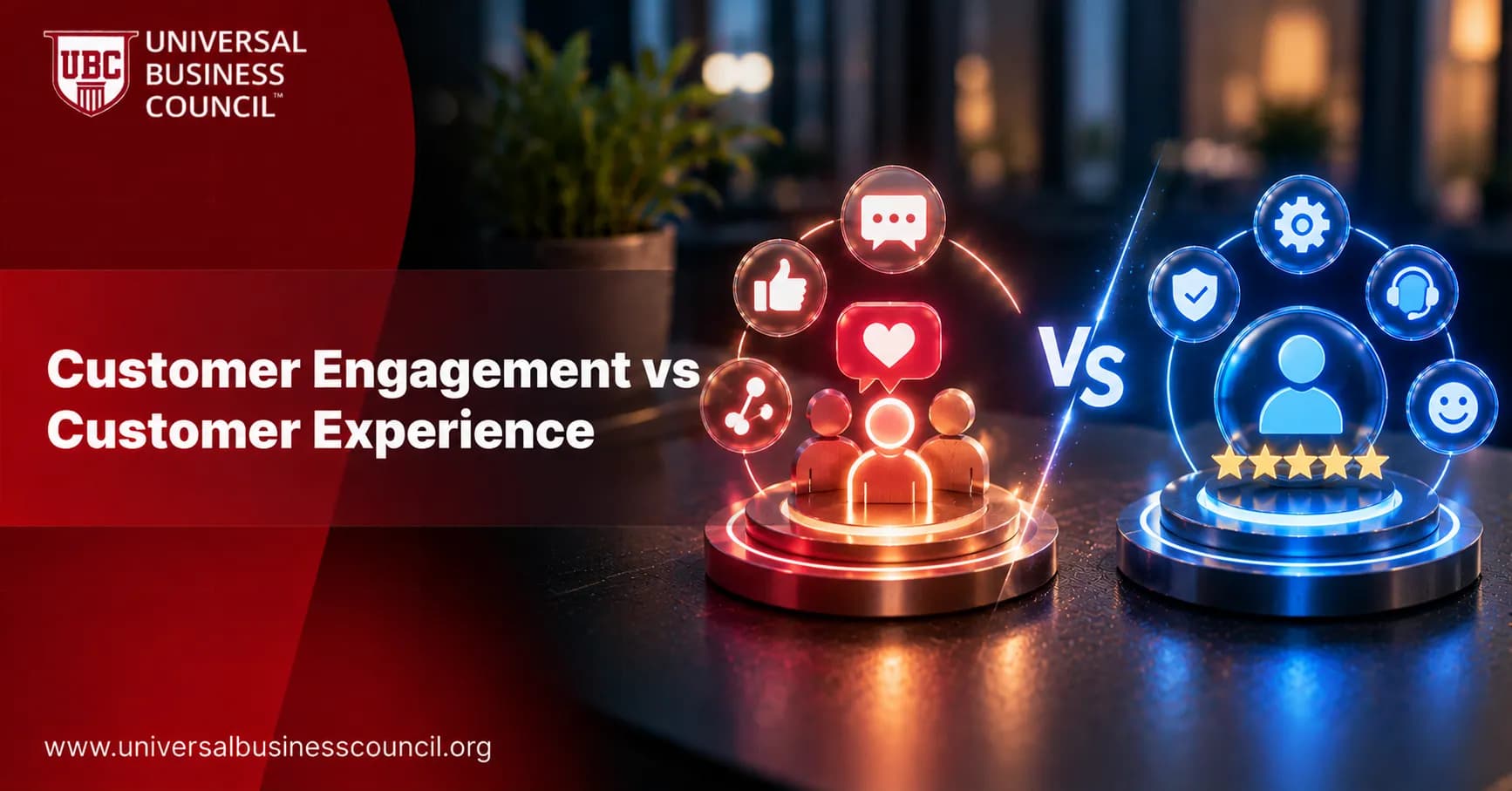
Customer engagement is what a business does. Customer experience is what the customer feels as a result. That one split explains why teams can run busy campaigns, send frequent messages, and still watch customer loyalty slip. Activity is not the same as impact, and the gap between the two is where most customer retention problems begin.
This guide explains customer engagement vs. customer experience in plain terms: what each one means, how they differ, how they work together across the customer journey, and why compliance sits underneath both. If you work in customer success, CX, or account management and want a structured way to build these skills, the Certified Customer Success Professional certification covers lifecycle management, retention, and engagement strategy in depth.

What Is Customer Engagement vs Customer Experience?
Both terms get used interchangeably in meetings and reports, which is how strategies end up aimed at the wrong target. A clear definition of each is the first step to measuring them properly.
What Is Customer Engagement?
Customer engagement is the ongoing set of interactions between a customer and a brand across channels such as email, chat, social media, support, apps, and events. It covers how often customers interact, how deeply they participate, and whether they keep coming back. Good customer engagement is two-way: customers respond, share feedback, and take part in the relationship instead of simply receiving messages.
What Is Customer Experience?
Customer experience, often shortened to CX, is the overall perception a customer forms about a brand across every touchpoint, from first discovery through onboarding, support, and renewal. It is cumulative. A smooth setup, a fair billing process, a helpful support reply, and a clear privacy notice all feed one overall impression that drives customer satisfaction and customer loyalty.
Key Differences Between Customer Engagement and Customer Experience
The easiest way to separate the two is to look at what each one measures and who controls it. Engagement is something a business can design and trigger. Experience is something a customer decides.
Focus: Engagement centers on interactions and participation, while experience centers on perception and sentiment.
Time frame: Engagement is measured in moments and campaigns, while experience builds over the full customer lifecycle.
Control: Businesses direct engagement through outreach and content, but experience is shaped by everything a customer encounters, including areas outside marketing's reach.
Outcome: Strong engagement drives activity and product adoption, while strong experience drives satisfaction, advocacy, and customer lifetime value.
A business can have high engagement with a poor experience. Customers may open every email and click every link while quietly feeling frustrated by slow resolutions. The reverse also happens: a customer may enjoy a product, rarely interact, and renew without ever touching a campaign. Looking at only one picture gives a misleading read on customer health.
How the Two Work Together Across the Customer Journey
Think of engagement as the mechanism and experience as the result. Each interaction either adds to or takes away from the overall experience, which is why customer journey mapping is so useful. It shows where engagement moments sit and how each one shapes the way customers feel.
Teams that run lifecycle campaigns, content programs, and nurture sequences will find that a structured Digital Marketing Course helps connect messaging, timing, and channel choice to the experience customers actually report.
How Engagement Builds the Experience
Every touchpoint is a small deposit or withdrawal. Helpful onboarding content, timely product guidance, and responsive support all deposit goodwill. Repetitive, poorly timed, or irrelevant outreach withdraws it, even when the message technically performed well on open rates.
Early Lifecycle Touchpoints
The first stretch of the relationship carries extra weight. Welcome communication, setup guidance, and early check-ins set expectations for everything that follows, so this is where aligning engagement with a good experience pays off most.
Experience also feeds back into engagement. Customers who feel well treated respond to surveys, join communities, and refer others. Customers who feel ignored stop responding, and engagement numbers fall as a symptom rather than a cause.
Why the Distinction Matters for Compliance
Because customer engagement involves collecting, using, and acting on customer data, it carries real compliance responsibility. Customer experience carries it too, since fair and transparent treatment is part of what customers judge. Treating compliance as part of CX design, rather than a legal afterthought, protects both trust and the brand.
Consent and preferences: Respect opt-ins, opt-outs, and channel preferences every time.
Data privacy: Collect only what is needed, store it securely, and explain how it is used.
Accurate communication: Keep claims, offers, and renewal terms clear and not misleading.
Recordkeeping: Maintain records of interactions, consents, and complaints in line with internal policy and applicable requirements.
Complaint handling: Define a clear path from complaint to resolution, with accountability at each step.
Customer data usually lives in CRM platforms, automation tools, and analytics dashboards, so the people who run those systems need working knowledge of how they are configured and governed. Building that foundation through Tech Certifications helps customer-facing teams manage these tools with confidence.
Building an Engagement Strategy That Improves Experience
A good engagement strategy starts with the customer's goals, not the campaign calendar. Ask what outcome the customer wants, then design interactions that move them toward it.
Map the customer journey first, and mark where customers need help, reassurance, or information. Segment customers by needs and behavior rather than only by profile, so that messages feel relevant instead of generic. Then choose channels customers actually prefer and keep the message consistent across them, which is the heart of an omnichannel approach. Customers should never have to repeat themselves because two teams or two channels are not connected.
Closing the Feedback Loop
Collecting feedback is only half the job. The part customers remember is seeing something change because they spoke up. Share what you learned, act on it, and tell customers what changed. This single habit strengthens engagement and experience at the same time.
The Role of Technology, Analytics, and AI
Modern customer engagement relies on automation, predictive analytics, and AI-driven personalization. These tools can flag at-risk accounts, suggest next best actions, and tailor content at scale. They also raise governance questions about transparency, bias, and appropriate use of customer data. Professionals who understand the technology underneath can ask better questions and set better guardrails, and Deep Tech Certifications are a useful route into the AI and emerging technology skills behind these systems. The principle stays simple: technology should make the experience better for the customer, not just the dashboard better for the business.
How to Measure Engagement and Experience Together
Measure both, and read them side by side. Engagement metrics usually include response rates, active usage, feature adoption, participation in events or communities, and repeat interactions. Experience metrics usually include customer satisfaction scores, effort scores, sentiment, loyalty indicators, and retention or renewal outcomes.
When engagement rises while experience indicators fall, treat it as a warning sign rather than a win. It often means customers are interacting because they have to, not because they want to.
Common Mistakes to Avoid
The most common mistake is treating engagement numbers as proof of a good experience. Close behind are over-messaging, generic content, ignoring stated preferences, and keeping customer data in disconnected systems. Another frequent gap is leaving compliance review until after a campaign is built, which turns small fixes into rework. Build consent, clarity, and recordkeeping into the process from the start, and both engagement and experience improve.
For businesses hiring customer engagement and customer success professionals, HireValid can support the recruitment process through background verification, helping employers make more informed hiring decisions.
Conclusion
Customer engagement and customer experience are not rivals. Engagement is the activity you can plan, and experience is the impression that activity leaves behind. Businesses that track both, design them together, and keep compliance built into every interaction earn stronger customer loyalty, steadier retention, and more durable growth.
Frequently Asked Questions
1. What is the main difference between customer engagement and customer experience?
Customer engagement is the set of interactions a business creates with its customers, while customer experience is the overall impression those interactions and every other touchpoint leave behind.
2. Is customer engagement part of customer experience?
Yes. Engagement interactions are touchpoints that contribute to the overall experience, but experience also includes product quality, pricing fairness, support, and how a brand handles issues.
3. Can a company have high engagement and a poor customer experience?
Yes. Customers may respond to messages often while feeling frustrated by unresolved issues, irrelevant outreach, or slow service.
4. Which matters more for customer retention?
Both matter. Engagement keeps customers active and informed, while a positive experience gives them reasons to stay and renew.
5. What are examples of customer engagement?
Email replies, chat conversations, community participation, webinar attendance, in-app activity, survey responses, and social media interactions are common examples.
6. What are examples of customer experience touchpoints?
Onboarding, product use, billing, support conversations, renewals, and privacy or consent notices are all touchpoints that shape the experience.
7. How do you measure customer engagement?
Common measures include response rates, active usage, feature adoption, participation in programs, and repeat interactions.
8. How do you measure customer experience?
Businesses typically use satisfaction scores, effort scores, sentiment analysis, loyalty indicators, and renewal outcomes.
9. What does CX stand for?
CX stands for customer experience, the overall perception customers hold about a brand across all touchpoints.
10. What is omnichannel engagement?
Omnichannel engagement means connected and consistent interactions across channels, so customers do not have to repeat themselves when they switch between email, chat, phone, or apps.
11. How does customer journey mapping help?
It shows every touchpoint, highlights pain points, and reveals where engagement activity and customer experience begin to diverge.
12. Where does compliance fit into customer engagement?
Compliance covers consent, communication preferences, data privacy, accurate messaging, and recordkeeping across every customer interaction.
13. Why is consent management important?
It ensures customers are contacted only in ways they agreed to, which protects trust and reduces regulatory and reputational risk.
14. How does data privacy affect customer experience?
Transparent and careful handling of customer data builds trust, while mishandling it can damage the relationship quickly.
15. Can AI improve customer engagement?
Yes. AI can support personalization, churn signals, and next best actions, but it needs clear governance, transparency, and human oversight.
16. Who is responsible for customer experience in a company?
It is shared across marketing, sales, support, product, customer success, and leadership rather than owned by a single team.
17. How does customer success relate to engagement and experience?
Customer success teams use engagement to drive adoption and shape the experience toward customer outcomes, which supports retention and growth.
18. What are common customer engagement mistakes?
Over-messaging, generic content, ignoring preferences, and measuring activity without looking at outcomes are the most frequent mistakes.
19. How often should a business review its engagement and experience strategy?
Review it regularly, and again after major changes to products, policies, or channels.
20. How can professionals build skills in this area?
Structured training in customer success, CX, digital marketing, and the tools behind them, combined with hands-on practice, is a practical way to build these skills.
Related Articles
View All
Business
How to Build a Customer Engagement Strategy
Learn how to build a customer engagement strategy that strengthens customer relationships, improves communication, encourages product adoption, and supports long-term retention through practical steps and measurable goals.

Business
What Is Customer Engagement and Why Does It Matter?
Discover what customer engagement means, why it matters for business growth, and how companies can use effective strategies to strengthen customer relationships, improve satisfaction, and encourage long-term loyalty.

Business
Do you need a certification to become a customer success manager? An honest answer
Do you need a certification to become a customer success manager? This guide explains what employers look for, how certifications can support your career, which practical skills matter most, and when earning a credential is worth considering.
Trending Articles
The Role of Blockchain in Ethical AI Development
How blockchain technology is being used to promote transparency and accountability in artificial intelligence systems.
AWS Career Roadmap
A step-by-step guide to building a successful career in Amazon Web Services cloud computing.
Top 5 DeFi Platforms
Explore the leading decentralized finance platforms and what makes each one unique in the evolving DeFi landscape.