

How to Get Certified in Customer Success
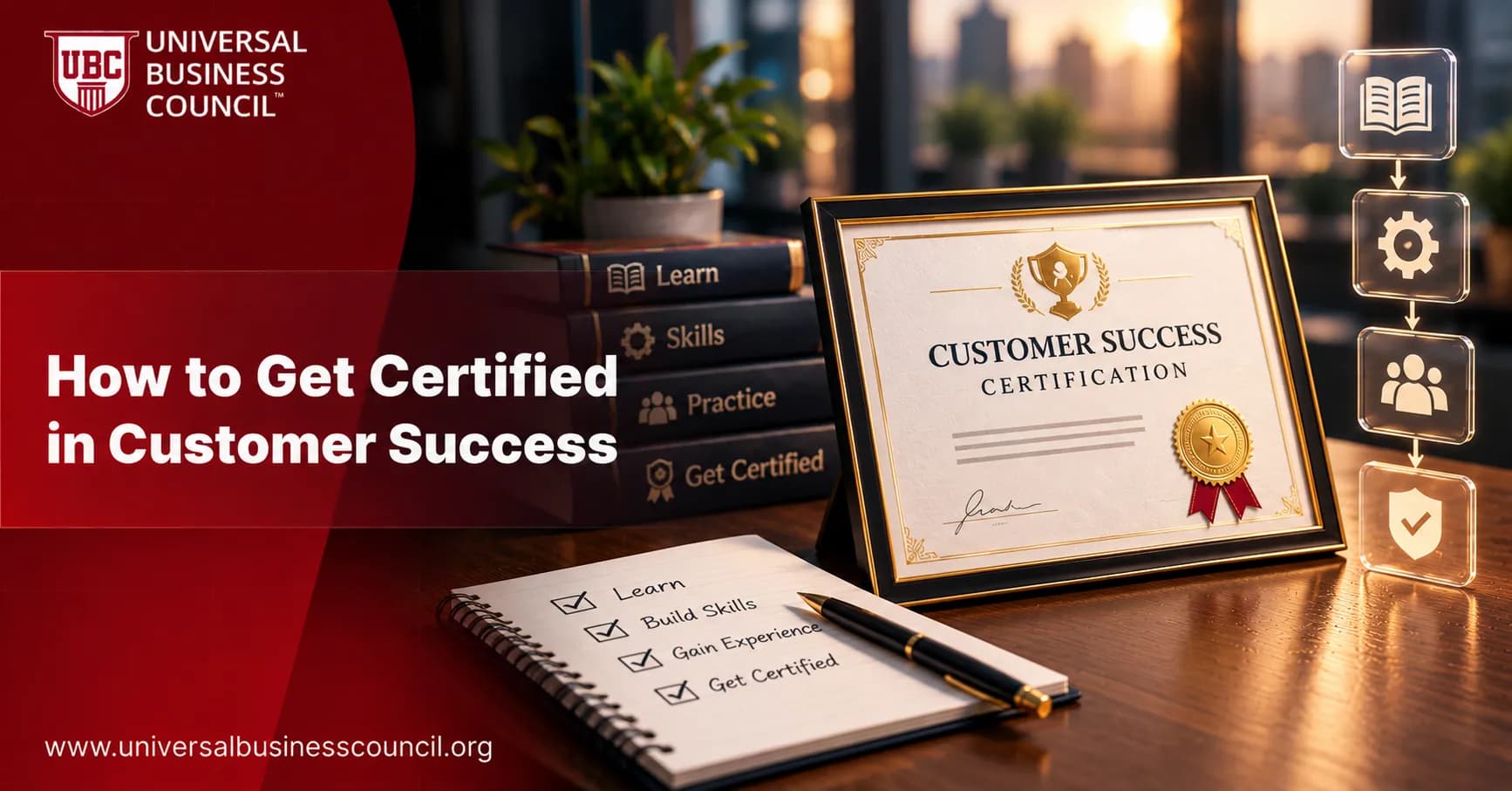
Here is the good news about how to get certified in customer success: there is no secret gate. Anyone willing to follow a clear process can do it, and the process has fewer steps than most people expect. Pick a goal, pick a program, plan your study time, pass the assessment, and then put the credential to work. The hard part is not the exam. It is choosing well at the start and using the result at the end. This guide walks through each step in order, with a marketing lens throughout. And if you want a real program to review as you read, the Certified Customer Success Professional certification is a good one to look at.
What Does It Mean to Get Certified in Customer Success?
Getting certified means earning a credential that shows you have studied how to help customers reach lasting value. Most programs cover:

The customer lifecycle, from onboarding to renewal and advocacy
Core metrics like churn rate, NPS, CSAT, customer health score, and net revenue retention
Account planning and risk management
Communication with customers and internal teams
Tools and data basics
A certification usually involves an assessment against a defined standard. That separates it from a simple course or a certificate of completion. Providers use these words differently, so check what you will actually receive.
Before You Start: Three Quick Questions
Spend ten minutes on these before you spend any money:
What is my goal? A first role, a promotion, or a skill gap?
What do jobs in my market ask for? Read ten postings and note the patterns.
How much time can I give each week? Be honest, since consistency beats intensity.
Your answers shape every choice that follows.
How to Get Certified in Customer Success, Step by Step
Step 1: Learn the basics first
You will study faster if the words are not new. Spend a week on the lifecycle and the core numbers.
Customer health score
This combines usage, support tickets, survey results, and engagement into one signal. A falling score gives a CSM time to step in before the customer leaves.
Net revenue retention
When this passes 100%, existing customers are spending more than you lose to churn. Being able to say that in one sentence will help you on any assessment.
Step 2: Choose the right program
Check these before you pay:
Relevance: does it match the role you want next?
Curriculum: does it cover lifecycle, metrics, and strategy?
Practical content: are there scenarios, case studies, or projects?
Assessment: how is your learning tested?
Provider credibility: who issues it, and how established are they?
Freshness: is the material kept current?
Fees, formats, and syllabi change, so confirm current details on the provider's own site.
Step 3: Check the requirements and the cost
Look at eligibility, study format, assessment style, fees, and time to complete. Add the hidden costs too: your study hours and any retake fees. A cheap program you never finish costs more than a fair one you complete.
Step 4: Build a study plan
Work backward from your target date. Break the material into weekly chunks, and pair each chunk with something practical. A steady plan might look like this:
Week 1: lifecycle and vocabulary
Week 2: metrics and how to read them
Week 3: account planning and risk
Week 4: communication and scenarios
Final days: review and practice questions
Shorter sessions, done often, beat marathon weekends.
Step 5: Study by doing
Reading alone fades fast. Apply each lesson to a real or pretend account. Build a sample onboarding plan. Sketch a simple health score sheet. Write a short renewal script. These projects double as proof you can show employers later.
Step 6: Prepare for the assessment
Review weak areas, explain concepts out loud in plain words, and practice with scenario questions. If you can teach a topic to a friend, you probably know it. Rest well before the day.
Step 7: Take it, then keep the proof
Once you pass, save your credential details and any digital badge. Note exactly what the program covered, so you can speak to it in interviews.
What to Do After You Are Certified
Earning it is half the work. Using it is the other half.
Update your resume and LinkedIn. Place it near the top with the skills it taught.
Show your projects. Link or attach your sample plans.
Prepare your story. Be ready to explain why you chose it and what you learned.
Tell your network. Many hires start with a conversation.
Keep learning. One credential is a start, not a finish.
Many CSMs support technical products, so adding tech certifications can help you understand what you are guiding customers through and speak the same language as technical users.
The Marketing Lens
Marketing makes a promise. Customer success keeps it. Getting certified shows you understand that handoff.
Winning a customer costs money, and losing one wastes it. People trained in retention protect that spend, and their customers become reviews, referrals, and case studies that make campaigns cheaper and more believable. They also bring back the exact words customers use, which sharpens messaging.
Marketers who understand retention, and not only reach, plan smarter. A digital marketing expert certification pairs well with a customer success credential, since it builds the same wider view of the customer journey. Getting attention is half the job. Keeping it is the other half.
Certification in Action
Here are a few everyday pictures, kept general on purpose.
A software company: a certified CSM builds a week-one setup plan and a month-three usage review.
A subscription box brand: a CSM trained in health scoring spots skipped deliveries and offers a lighter plan before cancellation.
A fitness app: a CSM sends a goal-based nudge to members who have gone quiet.
An online course platform: a CSM follows up with learners who stopped halfway and suggests a shorter path.
In each case, learning turned into action. The promise made in the campaign is kept in the experience.
How Long Does It Take?
It depends on the program, your background, and your weekly hours. A beginner with a few hours each week will need longer than a working CSM who already knows the numbers. Check the provider's guidance, then add buffer time for review. Rushing tends to cost more than it saves.
Common Mistakes to Avoid
Choosing by price alone. Fit matters more than the lowest cost.
Skipping research. Check relevance and current details first.
Passive studying. Apply what you learn to real or pretend accounts.
Cramming at the end. Steady weekly effort works better.
Never using the credential. Put it on your resume, in projects, and in interviews.
Expecting it to replace experience. It supports your experience.
Stopping after one. The field keeps changing.
Where Certification Is Heading
AI is already changing customer success. Tools can predict churn, draft check-in messages, and answer routine questions. That makes human skills like empathy and judgment more valuable, and good programs are starting to teach them alongside tools and data.
Products are also getting more advanced, built on AI, blockchain, and other fast-moving tech. Exploring deep tech certifications is one way to keep pace if you support complex or emerging products.
Conclusion
So, how to get certified in customer success? Start by knowing your goal, what jobs in your market ask for, and how much time you can give each week. Learn the basics, including the lifecycle and metrics like churn rate, NPS, CSAT, customer health score, and net revenue retention. Choose a program by relevance, curriculum, practical content, assessment, provider credibility, and freshness, and confirm the current fees and details on the provider's site.
Then build a study plan, work backward from your date, and study by doing, with sample onboarding plans, health score sheets, and renewal scripts that double as proof. Prepare for the assessment by explaining ideas out loud and practicing scenarios. After you pass, update your resume and LinkedIn, show your projects, tell your network, and keep learning.
Marketing links the whole journey. Happy customers produce reviews, referrals, and case studies, and professionals who understand retention earn more influence. Avoid the common traps, like choosing by price alone, studying passively, or never using the credential. As AI takes over routine tasks, the human side of customer success becomes more valuable, and the best certification is the one you actually put to work. The exam is a moment. The skills are what stay.
FAQs
1. How do I get certified in customer success?
Set a goal, choose a relevant program, build a study plan, pass the assessment, and put the credential to work.
2. Do I need experience to get certified?
Requirements vary by provider, and many programs welcome beginners. Check the current eligibility details.
3. How long does it take to get certified?
It depends on the program and your weekly study time, so check the provider's current guidance.
4. How much does it cost?
Fees vary, so confirm current pricing and any retake costs with the provider.
5. Is there an exam?
Many certifications include an assessment, but formats vary. Check what each program uses.
6. How should I study for it?
Learn the basics, study weekly, apply lessons to real or pretend accounts, and practice scenarios.
7. What topics will I need to know?
The lifecycle, core metrics, account planning, risk management, communication, and tools.
8. Which metrics should I learn?
Churn rate, NPS, CSAT, customer health score, net revenue retention, and product adoption.
9. What is a customer health score?
It is a combined signal of usage, feedback, and engagement that shows how an account is doing.
10. What is net revenue retention?
It measures revenue kept and grown from existing customers, after counting losses and upgrades.
11. How do I choose the right program?
Compare relevance, curriculum, practical content, assessment, provider credibility, and freshness.
12. Is a certification the same as a course?
No. A course teaches, while a certification usually tests you against a defined standard.
13. Can I study while working full time?
Yes. Short, steady weekly sessions work well alongside a job.
14. What if I fail the assessment?
Review your weak areas and check the provider's retake policy and any fees.
15. Will a certification help me get a job?
It supports your application, but experience, projects, and interviews matter too.
16. How do I show it on my resume?
Place it near the top, alongside the skills and projects it taught you.
17. Do certifications expire?
Some do and some do not, so check each provider's current policy.
18. Should I get other certifications too?
Marketing, tech, and tool credentials can add value, depending on your goals.
19. What should I do after I get certified?
Update your resume and LinkedIn, show projects, tell your network, and keep learning.
20. How is AI changing customer success certification?
Programs are blending tools and data with human skills like empathy and judgment.
Related Articles
View All
Business
How to Improve Product Adoption Through Customer Success
Discover how to improve product adoption by helping customers understand, use, and gain value from your product. Explore practical strategies for onboarding, feature discovery, customer education, and ongoing engagement.
Business
How customer success certification can help your career
A customer success certification can help you build relevant skills, demonstrate your knowledge, and prepare for new career opportunities. Explore how certification supports professional development, strengthens your resume, and helps you progress from entry-level roles to customer success leadership.
Business
Customer success training: what should you learn?
Customer success training helps professionals develop the skills needed to guide customers, improve product adoption, and build long-term relationships. Learn what to study, which tools to understand, and how to apply these skills in real customer success roles.
Trending Articles
The Role of Blockchain in Ethical AI Development
How blockchain technology is being used to promote transparency and accountability in artificial intelligence systems.
AWS Career Roadmap
A step-by-step guide to building a successful career in Amazon Web Services cloud computing.
Top 5 DeFi Platforms
Explore the leading decentralized finance platforms and what makes each one unique in the evolving DeFi landscape.