

Customer Satisfaction Score (CSAT): Complete Guide to Measuring and Improving It
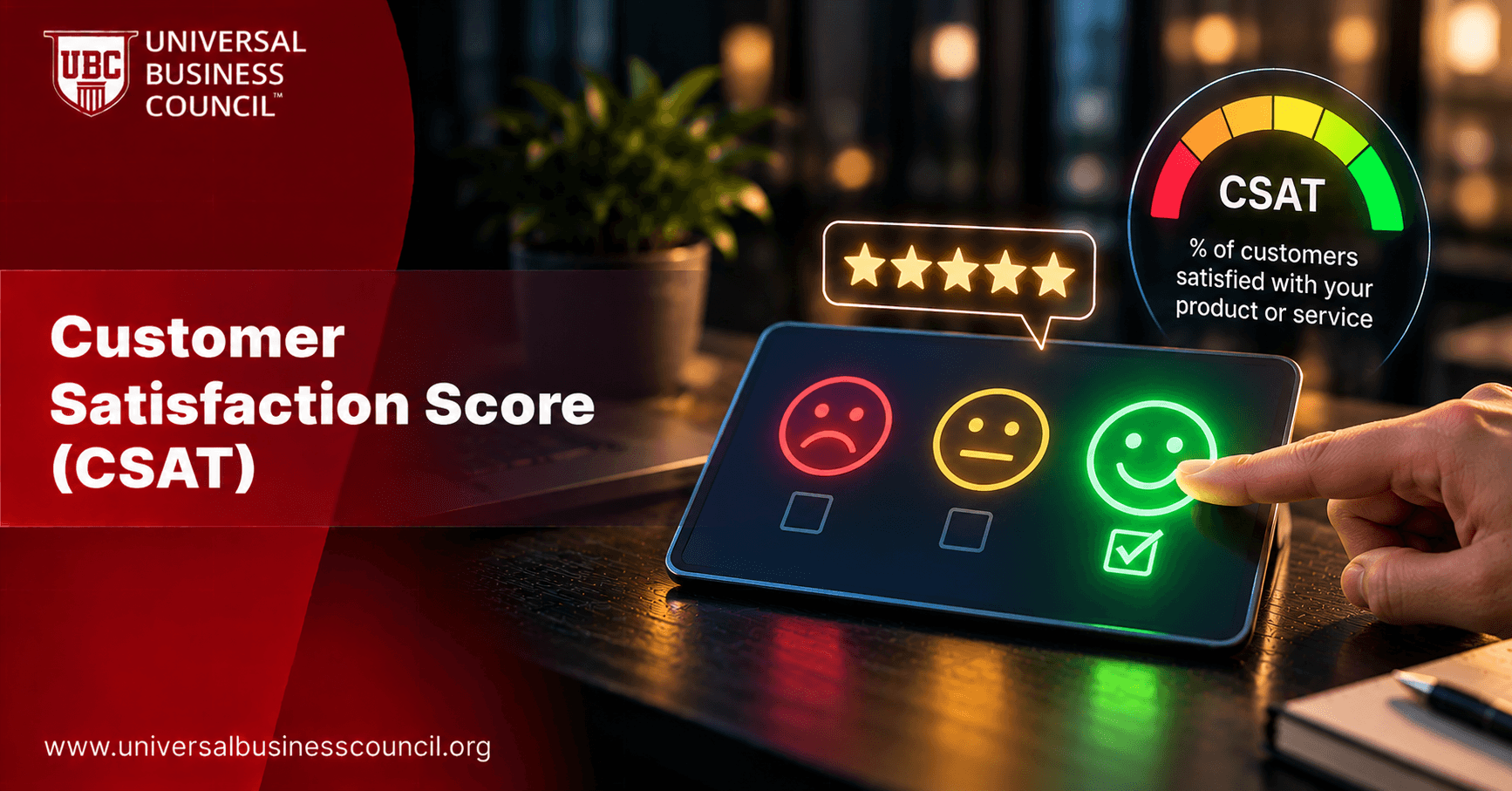
"How satisfied were you with your experience?" It is a short question, and the answers can shape how a business serves its customers. Customer satisfaction score, or CSAT, turns that question into a measure teams can track, compare, and act on.
This complete guide covers what CSAT is, how to calculate it, how to design a good survey, and how to improve results while handling customer feedback responsibly. For professionals who want formal training in measuring and improving the customer experience, the Certified Customer Success Professional certification covers customer health, satisfaction measurement, and retention.

What Is Customer Satisfaction Score (CSAT)?
CSAT measures how satisfied customers are with a specific interaction, product, or experience. It is usually collected through a short survey that asks customers to rate their satisfaction on a scale, often from very unsatisfied to very satisfied.
How CSAT Differs From Other Measures
CSAT captures satisfaction at a particular moment, such as after a support conversation or an onboarding session. It is different from Net Promoter Score, which looks at overall loyalty and likelihood to recommend, and from Customer Effort Score, which looks at how easy something was. Each one adds a different view of the customer experience.
How to Calculate CSAT
The calculation is simple. Count the number of customers who gave a satisfied rating, divide by the total number of responses, and multiply by 100. On a five-point scale, the top two ratings are commonly treated as satisfied responses.
Step 1: Collect responses to the same question using the same scale.
Step 2: Count the responses that fall in your satisfied range.
Step 3: Divide by the total number of responses.
Step 4: Multiply by 100 to get a percentage.
Define what counts as satisfied before you start, and keep it the same over time so trends are fair.
When to Measure CSAT
CSAT works best when asked close to the experience it measures. Common moments include after a support interaction, after onboarding, after a purchase or delivery, after training, and around renewal. Asking soon after the event helps customers recall it clearly and gives teams feedback while it is still useful.
How to Design a Good CSAT Survey
A good survey is short, clear, and easy to answer. Ask a single main question about a specific interaction, use a consistent scale, and add an optional space for comments, since written feedback often explains the number.
Keep Questions Neutral
The wording of a question can nudge answers. Avoid leading phrases and keep the tone neutral so responses reflect what customers actually felt.
Plan Follow-Up
Decide in advance what happens after a low score, such as a follow-up from the team, and what happens after a high score, such as a thank you or a request for a review. Thoughtful follow-up communication matters, and a structured Digital Marketing Course can help teams plan survey invitations and follow-up messages that customers welcome.
How to Interpret CSAT Results
A single number rarely tells the whole story. Look at trends over time, compare results across teams, channels, and customer segments, and read comments alongside scores. A drop in one segment or after a process change points to where attention is needed. Keep in mind that response rates matter too, since a few responses may not represent everyone. Gathering and combining this feedback depends on connected tools, and foundational Tech Certifications help customer-facing teams work with survey platforms, CRM systems, and analytics.
How to Improve CSAT
Improving CSAT means fixing the experiences behind the score. Start with the lowest-scoring touchpoints and read what customers said about them. Common improvements include faster and clearer support, better onboarding, simpler processes, and more consistent communication. Close the loop by telling customers what changed because of their feedback, which shows that surveys lead somewhere.
CSAT and Compliance: Handling Feedback Responsibly
Surveys collect personal opinions and often personal data, so compliance should shape how CSAT is run.
Consent: Invite customers to respond only in ways they have agreed to.
Data privacy: Collect only what is needed and limit who can see individual responses.
Transparency: Explain how feedback will be used and whether responses are anonymous.
Fair collection: Avoid pressuring customers or offering incentives that bias answers.
Records: Keep clear records of how feedback is stored and used.
Using AI to Analyze CSAT Feedback
AI-driven tools can group comments by theme, detect sentiment, and flag urgent issues across large volumes of feedback. They work best with human review and transparent data practices, since automated summaries can miss nuance. Professionals who want to understand the technology behind these tools can explore Deep Tech Certifications in AI and other emerging areas.
Common CSAT Mistakes to Avoid
Common mistakes include surveying too often, asking leading questions, changing scales mid-way, ignoring comments, looking only at the average, and treating a single score as proof of loyalty.
Conclusion
CSAT is a simple and useful way to hear how customers feel about specific experiences. Measure it at the right moments, keep surveys short and neutral, read the comments, act on what you learn, and handle feedback with care. Used well, it turns customer opinion into steady improvement.
Frequently Asked Questions
1. What is CSAT?
CSAT, or Customer Satisfaction Score, measures how satisfied customers are with a specific interaction, product, or experience.
2. How do you calculate CSAT?
Divide the number of satisfied responses by the total number of responses and multiply by 100.
3. What counts as a satisfied response?
Define it in advance. On a five-point scale, the top two ratings are commonly used.
4. What scale should a CSAT survey use?
A simple, consistent scale works best, and it should stay the same over time.
5. When should I send a CSAT survey?
Soon after the experience you want to measure, such as a support interaction or onboarding step.
6. How is CSAT different from NPS?
CSAT measures satisfaction with a specific moment, while NPS measures likelihood to recommend overall.
7. How is CSAT different from CES?
CES measures how easy something was, while CSAT measures how satisfied customers were.
8. How long should a CSAT survey be?
Short, with one main question and an optional comment field.
9. Should I include a comment box?
Yes. Comments often explain the score and point to specific fixes.
10. How do I get more survey responses?
Keep surveys short, send them at relevant moments, and make them easy to complete.
11. Why do response rates matter?
Low response rates may not represent all customers, so results should be read with care.
12. How do I improve CSAT?
Fix the lowest-scoring touchpoints, improve support and onboarding, and tell customers what changed.
13. Should I follow up on low scores?
Yes. A timely follow-up can resolve the issue and rebuild trust.
14. Can CSAT be measured by segment?
Yes, and segment views often reveal problems that overall scores hide.
15. How often should I measure CSAT?
At relevant moments in the journey, without surveying the same customers too often.
16. Is a high CSAT the same as customer loyalty?
Not necessarily. Satisfied customers can still leave, so look at retention as well.
17. How does compliance apply to CSAT surveys?
Consent, privacy, transparency, and fair collection apply whenever feedback is gathered.
18. Can AI analyze CSAT comments?
Yes, for themes and sentiment, with human review for nuance.
19. What are common CSAT mistakes?
Leading questions, over-surveying, changing scales, and ignoring comments are common mistakes.
20. How can professionals build CSAT measurement skills?
Structured training in customer success, analytics, and digital marketing, plus hands-on practice, builds these skills.
Related Articles
View All
Business
Customer Effort Score (CES): Complete Guide to Measuring and Reducing Customer Effort
Discover what Customer Effort Score (CES) measures, how to calculate it, and why it matters for customer experience. Learn how businesses can identify friction points, simplify interactions, and reduce customer effort.

Business
Customer Journey Mapping: A Complete Guide
Understand how customer journey mapping helps businesses visualize every interaction customers have with their brand. Explore its key stages, benefits, essential elements, and practical steps to create a journey map that improves customer experience, engagement, and retention.

Business
Customer Success Certification for Beginners: Complete Guide
A customer success certification can help beginners understand customer onboarding, product adoption, retention, and relationship management. Learn how to choose the right program, develop practical skills, and prepare for entry-level customer success roles.
Trending Articles
The Role of Blockchain in Ethical AI Development
How blockchain technology is being used to promote transparency and accountability in artificial intelligence systems.
AWS Career Roadmap
A step-by-step guide to building a successful career in Amazon Web Services cloud computing.
Top 5 DeFi Platforms
Explore the leading decentralized finance platforms and what makes each one unique in the evolving DeFi landscape.