

Top Customer Success Metrics and KPIs to Track: A Practical Guide

Track fewer metrics, but track them well. Customer success teams often collect every number available and still struggle to say whether customers are doing better or worse. The right customer success metrics and KPIs connect directly to customer outcomes, retention, and growth, and each one answers a clear question.
This guide walks through the top customer success metrics to track, what each one tells you, and how to measure them responsibly. For professionals who want a formal grounding in customer success measurement, the Certified Customer Success Professional certification covers customer health, retention, and lifecycle management.

What Are Customer Success Metrics and KPIs?
Customer success metrics are the measures a team uses to understand how customers are experiencing a product or service and whether they are likely to stay and grow. KPIs are the handful of those metrics a team commits to as its main indicators of success.
Metrics vs KPIs
A metric is any number you can measure. A KPI is a metric tied to a goal, with an owner and a way to act on it. Tracking a metric nobody can influence adds noise, while a KPI points toward a decision.
Retention and Churn Metrics
These metrics show whether customers are staying. Customer retention rate compares customers kept with customers you started with, while customer churn rate shows the share lost over a period. Renewal rate looks at how many customers renew when their term ends. Together, they give the clearest signal of long-term health, and they should be read by segment so problems in one group do not hide behind a steady overall number.
Revenue Metrics
Customer success also affects revenue, so teams track measures such as customer lifetime value, revenue retention, and expansion from existing accounts. These show whether customers are staying and growing in value. Keep the method consistent, and note whether you are using revenue or profit figures so comparisons remain fair.
Customer Satisfaction and Sentiment Metrics
These metrics capture how customers feel.
CSAT (Customer Satisfaction Score): Measures satisfaction with a specific interaction or experience.
NPS (Net Promoter Score): Measures how likely customers are to recommend you.
CES (Customer Effort Score): Measures how easy it was for customers to get something done.
Each one tells a different story, so they work best as a set rather than as substitutes for each other.
Adoption and Engagement Metrics
Customers who use a product well are more likely to stay. Adoption measures such as feature use, active usage, and time to first value show whether customers are getting real benefit. Engagement measures, such as response to check-ins and participation in training or events, show how involved customers are. Capturing and combining this data depends on connected systems, and foundational Tech Certifications help customer-facing teams work confidently with CRM and analytics tools.
Customer Health Score
A customer health score combines several signals, such as usage, support activity, engagement, and satisfaction, into one view of account health. It works best when the inputs are chosen with care and reviewed regularly.
Choosing Health Score Inputs
Pick signals that genuinely relate to retention, give each a sensible weight, and test the score against real outcomes. A health score that does not predict anything is just decoration.
Support and Service Metrics
Support measures such as first response time, time to resolution, and repeat contact rate show how smoothly problems are handled. They matter to customer success because unresolved or repeated issues often come before churn.
How to Choose the Right KPIs
Start from the goals of the business and the customer journey. Choose a small set of KPIs that cover retention, value, satisfaction, and adoption, and give each an owner. Review them on a regular rhythm and be willing to drop metrics that no longer lead to action. Sharing results in ways customers and colleagues can understand is part of the job, and a structured Digital Marketing Course can help teams turn measurement into clear communication and customer campaigns.
Compliance When Measuring Customers
Measurement relies on customer data, surveys, and behavior tracking, so compliance must be part of the plan.
Consent: Ask for survey responses and track behavior only in ways customers have agreed to.
Data privacy: Collect only what is needed and limit who can see it.
Transparency: Explain what is measured and why.
Fair use: Do not use scores in ways that disadvantage customers unfairly.
Records: Keep clear records of how data is collected and used.
Using AI and Predictive Analytics
AI-driven tools can help calculate health scores, flag at-risk accounts, and surface patterns across large amounts of customer data. They work best with human review and clear data practices. Professionals who want to understand the technology behind these tools can explore Deep Tech Certifications in AI and other emerging areas.
Common Mistakes to Avoid
Common mistakes include tracking too many metrics, using vanity numbers, mixing definitions between teams, ignoring segments, and collecting data without clear consent or purpose.
Conclusion
The best customer success metrics and KPIs are few, clear, and tied to action. Cover retention, revenue, satisfaction, adoption, and support, measure them consistently, and handle customer data with care. Do that, and your numbers will tell you not just what happened, but what to do next.
Frequently Asked Questions
1. What are customer success metrics?
They are measures used to understand how customers experience a product or service and whether they are likely to stay and grow.
2. What is the difference between a metric and a KPI?
A metric is any measurable number, while a KPI is a metric tied to a goal and an owner.
3. What are the most important customer success KPIs?
Retention rate, churn rate, customer lifetime value, satisfaction measures, and adoption are common core KPIs.
4. What is customer retention rate?
It is the share of customers a business keeps over a period.
5. What is customer churn rate?
It is the share of customers a business loses over a period.
6. What is renewal rate?
It shows how many customers renew when their term ends.
7. What is customer lifetime value?
It is the total value a business can expect from a customer over the full relationship.
8. What is CSAT?
Customer Satisfaction Score measures satisfaction with a specific interaction or experience.
9. What is NPS?
Net Promoter Score measures how likely customers are to recommend a business.
10. What is CES?
Customer Effort Score measures how easy it was for customers to get something done.
11. What is a customer health score?
It combines signals such as usage, support activity, engagement, and satisfaction into one view of account health.
12. What is time to first value?
It is how long it takes a new customer to get a real, noticeable benefit.
13. Why track adoption metrics?
Customers who use a product well are more likely to stay.
14. Which support metrics matter for customer success?
First response time, time to resolution, and repeat contact rate are common choices.
15. How many KPIs should a team track?
A small set that covers retention, value, satisfaction, and adoption, each with a clear owner.
16. Why segment customer success metrics?
Segments reveal problems that overall numbers can hide.
17. How often should metrics be reviewed?
Review them on a regular rhythm and after major changes to products, pricing, or processes.
18. How does compliance affect measurement?
Consent, privacy, and transparency apply whenever customer data is collected or used.
19. Can AI help track customer success metrics?
Yes, for health scoring and risk flagging, with human review and clear data practices.
20. How can professionals build measurement skills?
Structured training in customer success, analytics, and digital marketing, plus practice, builds these skills.
Related Articles
View All
Business
How Customer Success Helps Reduce Churn: Roles, Practices, and Metrics
Explore how customer success teams help businesses reduce churn by identifying customer risks, improving product adoption, strengthening relationships, and tracking retention metrics.
Business
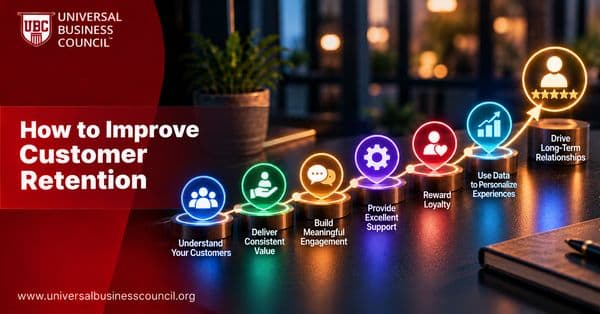
How to Improve Customer Retention: A Practical Guide for Customer-Facing Teams
Discover how customer-facing teams can improve customer retention by building stronger relationships, delivering consistent support, improving onboarding, and addressing customer needs. Explore practical strategies to increase satisfaction, encourage loyalty, and reduce churn.
Business
What skills do you learn in a customer success certification? A practical breakdown
Customer success certifications help professionals develop skills in communication, relationship management, customer onboarding, data analysis, and retention. Learn which competencies matter most, how certification programs help build them, and how to apply these skills in your career.
Trending Articles
The Role of Blockchain in Ethical AI Development
How blockchain technology is being used to promote transparency and accountability in artificial intelligence systems.
AWS Career Roadmap
A step-by-step guide to building a successful career in Amazon Web Services cloud computing.
Top 5 DeFi Platforms
Explore the leading decentralized finance platforms and what makes each one unique in the evolving DeFi landscape.