

KYC requirements explained: what compliance teams need to get right before onboarding anyone

Imagine a bank that opened accounts for anyone who walked in with a name and a smile. No ID, no questions. That bank wouldn't make it through one audit cycle, let alone stay open. That's basically why Know Your Customer rules exist. They're the reason a bank actually checks who you are before they let you move money.
KYC sounds simple. Know your customer before you do business with them. But in practice it's a strict regulatory requirement, and getting it wrong is one of the fastest ways to land in front of a regulator. Here's what KYC actually asks for, how it fits into the bigger compliance picture, and where most businesses quietly mess it up.

What KYC actually is
KYC means verifying who your customer is and figuring out how much risk they carry, both when they first sign up and for as long as they stay a customer. It's a piece of the wider Anti-Money Laundering system, not something separate from it.
Think of AML as the whole house. Monitoring, reporting, record keeping, all of it. KYC is the front door. It's the part where you check someone's ID before letting them in, and decide how closely you need to keep watching them once they're inside.
It's not just banks either. Fintech, crypto exchanges, insurers, payment processors, even real estate firms in a lot of countries all have some version of this obligation.
Why KYC matters more right now
Digital onboarding changed everything. You can open an account from your couch in five minutes now, which is great for growth and pretty risky if the checks behind it are weak.
So regulators have raised the bar instead of relaxing it. A few reasons why:
Fake identities built from stolen or mixed-up data are getting harder to spot with a basic document check.
Businesses can now pick up customers from countries they barely understand, all through an app.
Regulators don't just want a one-time check anymore. They want KYC to keep going for as long as the relationship does.
Weak KYC doesn't just create AML trouble. It opens the door to fraud, sanctions problems, and damage that shows up months after the account was already opened.
The parts that actually make up KYC
A real KYC process has a few moving pieces, and skipping one weakens all the others.
Customer identification
Basic stuff first. Name, address, date of birth, a government ID for a person, incorporation papers for a business.
Customer due diligence
This goes further than just checking a name. It's about understanding why someone wants an account and what kind of activity to expect from them.
Beneficial ownership checks
For business customers, this means figuring out who's actually behind the company, not just what name is on the paperwork. Shell companies exist specifically to make this hard, which is exactly why regulators care so much about it.
Ongoing monitoring
People and businesses change. So does risk. A good KYC process keeps checking in, not just once at the start.
Not every customer needs the same level of scrutiny
Treating every customer the same is a waste of effort. You end up over-checking someone low-risk while barely glancing at someone who actually needs attention.
Most customers only need standard checks: basic verification, reasonable monitoring, a review now and then. But some customers need more. Politically exposed people, businesses in riskier industries, anyone tied to a country with weak AML enforcement. Those get a deeper look, more frequent monitoring, and usually a senior person has to sign off before they're approved.
Getting this classification right matters more than almost anything else in the process. Put a high-risk customer in the standard bucket by mistake, and that gap can sit unnoticed for a long time.
Keeping risk tiers consistent, so two similar customers don't land in different buckets depending on who reviewed the file, takes a real framework. A Certified Compliance Professional credential gives compliance staff that structure for classifying and re-classifying risk consistently, instead of relying on individual judgment call by call.
Where the rules actually come from
Most KYC rules trace back to FATF, the Financial Action Task Force. FATF doesn't enforce anything itself, but its recommendations shape how countries write their own identity verification laws.
From there, every region adds its own layer. The US leans on the Bank Secrecy Act and FinCEN guidance. The EU has its AML Directives plus a newer regulation on top. The UK runs things through the FCA. The paperwork looks different in each place, but the idea stays the same everywhere: check who someone is, figure out their risk, and keep watching.
Signs that something might be off
A few things tend to catch a compliance officer's eye:
Documents that don't line up. The ID says one thing, the address proof says another, the application says a third.
A customer who dodges questions about where their money is coming from.
A business with layers of ownership that lead nowhere clear.
Customers based in, or moving a lot of money through, places known for weak AML enforcement.
Activity that suddenly looks nothing like what was expected when the account opened.
None of these mean someone's definitely doing something wrong. They just mean it's worth a closer look.
Building a KYC process that survives an audit
Start with a clear onboarding path. What gets collected, how it gets checked, who approves what based on risk level. After that, a few things really matter.
Keep documentation consistent and well recorded, because regulators won't just ask what you collected, they'll ask how you verified it. Build in re-checks from the start instead of adding them later after someone flags a gap. And lean on technology where it makes sense, because manual review alone can't keep up once digital onboarding hits real volume.
Teams building or evaluating that kind of verification infrastructure benefit from real technical grounding, which is where Tech Certifications become genuinely useful for compliance professionals who need to understand the systems doing the heavy lifting. Onboarding itself is often designed by growth or marketing teams long before compliance reviews it, so a working Digital Marketing Course helps those teams understand why friction in a signup flow exists and where it can't be removed. For businesses operating in crypto specifically, where identity verification and beneficial ownership tracing work differently than traditional finance, Deep Tech Certifications covering blockchain compliance fill a gap that generic compliance training doesn't cover.
Where businesses tend to slip up
A few mistakes keep showing up:
Treating KYC as a one-time gate at signup instead of something ongoing.
Inconsistent risk scoring, where two similar customers end up in totally different risk tiers depending on who reviewed them.
Weak ownership tracing on business customers with messy corporate structures.
Not enough people reviewing a growing pile of onboarding volume, which quietly turns into a backlog and then a gap.
Never updating a customer's risk profile even after their behavior clearly shifts.
What weak KYC actually costs
It's rarely just a fine. Weak KYC usually shows up later, as fraud losses, a sanctions problem, or an AML failure that traces straight back to a customer who should've been flagged as risky from day one. And once a regulator finds one crack, they tend to dig into everything else too, so the damage spreads past the original issue. Banking partners notice as well. A business that looks like an AML or KYC risk can find its own banking relationships quietly reconsidered.
Where KYC is headed
A few things are changing fast. Digital identity checks, using biometrics and document scanning tech, are becoming the norm rather than something extra. AI is taking over more of the first-pass screening, leaving humans to focus on the genuinely tricky cases. And rules around beneficial ownership keep getting stricter, as regulators try to close the shell-company loopholes that have made real ownership so hard to trace for years.
Conclusion
At its core, KYC is just one question asked properly before any money changes hands: who exactly am I dealing with. Simple question, but answering it well takes real identity checks, honest risk assessment, ownership tracing, and monitoring that doesn't stop after day one. FATF sets the baseline almost everywhere, but how well a KYC program actually works comes down to how consistently a business applies its own risk tiers and how fast it catches a customer whose behavior stops matching their profile. Get it right, and KYC just quietly does its job in the background. Get it wrong, and the gap tends to show up at the worst possible time.
FAQs
What does KYC stand for?
Know Your Customer. Checking who someone is and how risky they are before you do business with them.
Is KYC the same thing as AML?
Not quite. KYC is one piece of the bigger AML puzzle, focused on identity and risk.
Who actually needs to follow KYC rules?
Banks, fintechs, crypto platforms, insurers, payment companies, and a lot of other regulated or high-value businesses.
What's customer due diligence?
Understanding why a customer wants an account and what kind of activity to expect from them.
What's enhanced due diligence?
Extra scrutiny for higher-risk customers, meaning closer document checks and more frequent monitoring.
What is beneficial ownership verification?
Finding out who's really behind a business, not just whose name is on the paperwork.
Why is KYC called a risk-based process?
Because not every customer is equally risky, so how deep you check should match that.
What documents does KYC usually need?
A government ID, proof of address, and date of birth for individuals.
How often should KYC info get updated?
Whenever a customer's activity or risk clearly changes, not just once at signup.
What does FATF have to do with KYC?
It sets global recommendations that most countries build their own KYC laws around.
What happens if a business skips proper KYC?
Fines, closer regulatory scrutiny, and a higher chance of fraud slipping through unnoticed.
What are some common KYC red flags?
Mismatched documents, unclear source of funds, and customers tied to high-risk countries.
How is business KYC different from individual KYC?
It needs extra steps like checking incorporation papers and tracing who really owns the company.
What's a politically exposed person?
Someone in a prominent public role who usually needs a deeper level of checking.
Can KYC be done fully online?
Mostly yes now, with biometrics and document scanning, though risky cases still need a human look.
How is tech changing KYC?
It's handling more identity checks and ongoing monitoring, since manual review can't keep up at scale.
What's the biggest mistake companies make with KYC?
Treating it as a one-time check instead of something that keeps going.
Does KYC look the same in every country?
The core idea does, but the exact paperwork and rules shift by country.
What does ongoing monitoring mean in KYC?
Keeping an eye on a customer after onboarding, not just checking them once and moving on.
Why are beneficial ownership rules getting stricter?
Because regulators are trying to close the loopholes shell companies have used for years to hide who's really in control.
Related Articles
View All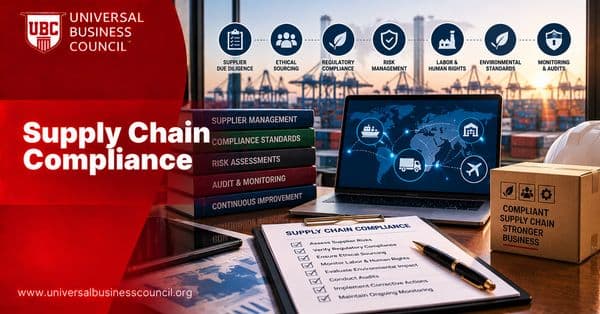
Business
Supply Chain Compliance explained: what businesses actually need to get right
Learn what supply chain compliance involves, which requirements can affect suppliers and business partners, and how companies can manage regulatory, operational, and third-party risks.
Business
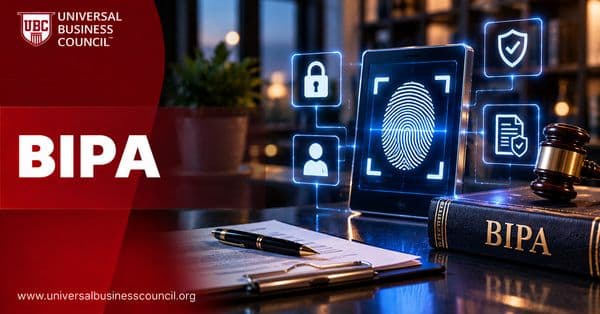
BIPA Compliance: A Guide for Employers and Product Teams
Learn how the Biometric Information Privacy Act (BIPA) affects employers and product teams, including biometric data collection, informed consent, retention policies, data security, and compliance responsibilities.

Business
VPPA Compliance: A Guide for Streaming and Marketing Teams
Learn how the Video Privacy Protection Act (VPPA) affects streaming platforms, media companies, and marketing teams, including video-viewing data, consent, third-party tracking, and privacy compliance.
Trending Articles
The Role of Blockchain in Ethical AI Development
How blockchain technology is being used to promote transparency and accountability in artificial intelligence systems.
AWS Career Roadmap
A step-by-step guide to building a successful career in Amazon Web Services cloud computing.
Top 5 DeFi Platforms
Explore the leading decentralized finance platforms and what makes each one unique in the evolving DeFi landscape.