

On-Page SEO Checklist for Marketers: Titles, Internal Links, Schema, and Content Refreshes That Move Rankings
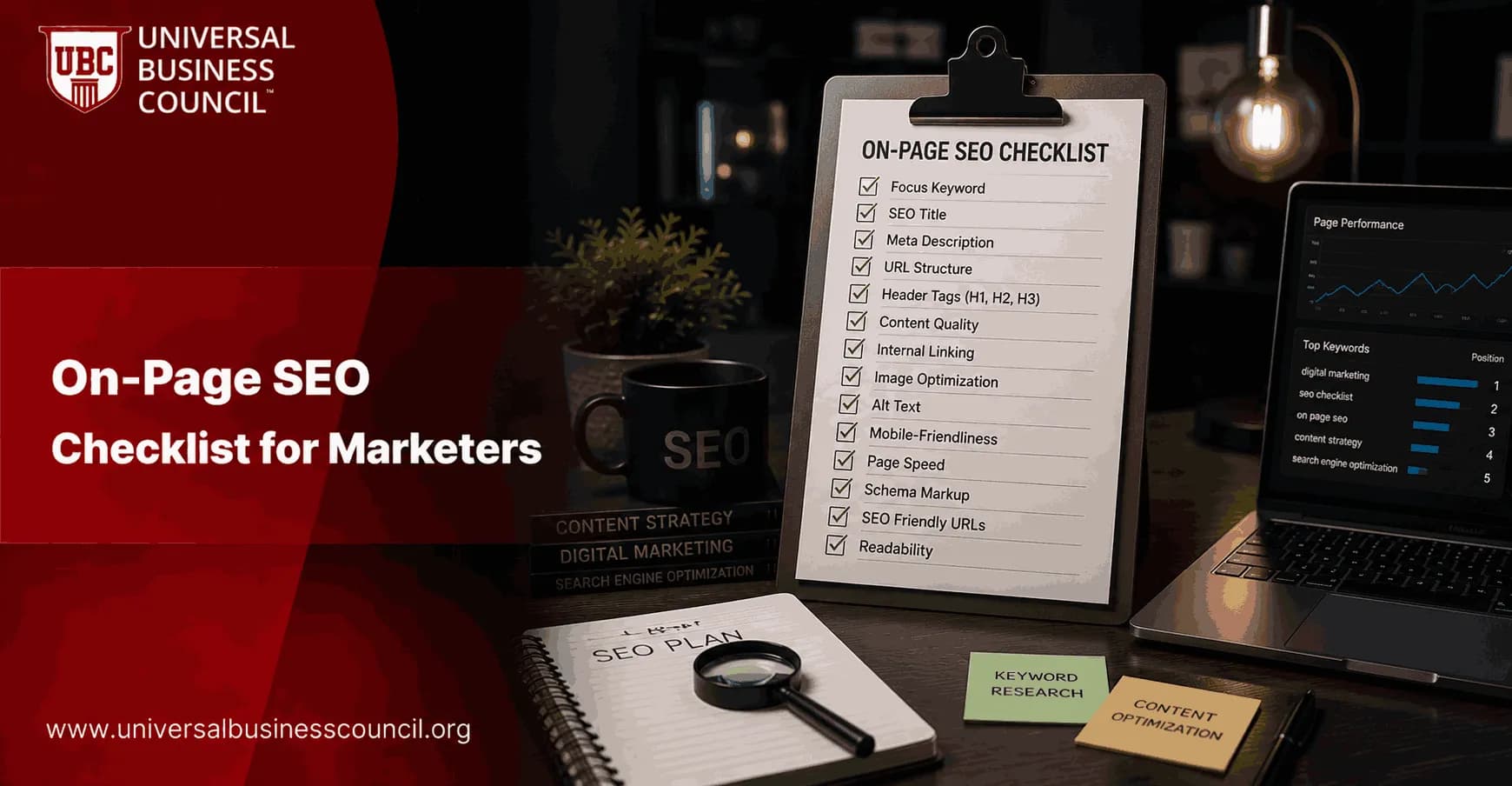
On-page SEO checklist work in 2026 is less about repeating keywords and more about aligning with search intent, building clear information architecture, and sending machine-readable signals that search engines and AI systems can interpret reliably. For marketers, that means focusing on four levers that consistently move rankings over time: titles, internal links, schema, and content refreshes.
This guide turns current best practices into an actionable on-page SEO checklist you can run on every important page, whether you manage a blog, a SaaS site, or a large enterprise knowledge base.

Why on-page SEO in 2026 rewards clarity and machine readability
Across major industry benchmarks, the pattern is consistent: pages perform well when they satisfy the query quickly, structure information clearly, and make it easy for crawlers and AI answer systems to extract meaning. The practical implication is that your on-page SEO checklist should combine user-first content with technical cleanliness and ongoing iteration based on performance data.
In addition to the four focus areas in this article, keep these foundational items in your standard workflow:
Intent validation: confirm whether the query is informational, commercial, or transactional before you write or revise.
Heading structure: one clear H1, then logical H2 and H3 sections that map to user questions.
Core Web Vitals: aim for LCP under 2.5 seconds, INP under 200 ms, and CLS under 0.1.
One primary topic per page: reduce self-competition by keeping each URL focused on one keyword theme.
If your team wants a structured way to operationalize these standards, internal training supports that goal. Relevant options include Universal Business Council programmes such as an SEO Certification, Digital Marketing Certification, or Content Marketing Certification for marketers who own organic growth.
1) Titles and title tags: the fastest on-page SEO win
Title tags remain one of the highest-leverage on-page elements because they influence both relevance and click-through rate. Current guidance converges on a few repeatable rules.
Title tag checklist (marketer-ready)
Keep length around 50 to 60 characters to reduce truncation in results.
Front-load the primary keyword near the start of the title when it still reads naturally.
Match the dominant SERP format (for example, if top results are "checklists," use "checklist").
Make the value explicit: template, steps, examples, best practices, or "2026".
Ensure the on-page H1 supports the same intent as the title tag, without needing to be identical.
Simple title patterns that tend to earn clicks
Numbered framework: "On-Page SEO Checklist: 25 Steps for 2026"
Audience + outcome: "On-Page SEO Checklist for Marketers: Improve Rankings in 2026"
Task-focused: "On-Page SEO Checklist: Titles, Links, Schema, Refreshes"
Operational tip: if you have pages that rank on page 2 or low on page 1, run title tests first. A more intent-aligned title can improve CTR, which often correlates with better performance over time.
2) Internal links: build topical authority and improve discovery
Internal linking is both an SEO and UX lever. It helps distribute authority, clarifies which pages matter most, and connects related ideas into topic clusters that search engines can interpret as expertise.
Internal link checklist
Add contextual internal links in the body, not only in navigation or footers.
Use descriptive anchor text that reflects what the linked page is about.
Link from supporting pages to the pillar page and link back from the pillar to key supporting articles.
Avoid link clutter: too many links can reduce usefulness and overwhelm readers.
Fix broken internal links during every content refresh cycle.
How marketers can apply internal links strategically
Use a hub-and-spoke model:
Create or identify a pillar page (example: "On-Page SEO Guide").
Publish supporting resources (example: "Title Tag Optimization," "Schema Markup Guide," "Content Refresh Playbook").
Interlink intentionally so each supporting article points to the pillar with relevant anchors and the pillar points back with clear navigation.
For enterprise sites, internal links also help search engines discover deep pages more consistently. If your team manages large content inventories, consider building a recurring internal linking audit into your marketing operations. A relevant learning path could include a Universal Business Council Technical SEO or Web Analytics certification, depending on your organisation's structure.
3) Schema and structured data: help search engines and AI systems interpret the page
Structured data is no longer optional for teams competing in crowded SERPs. Schema provides explicit signals about content type, entities, and relationships. That supports eligibility for rich results and can improve how content is understood in AI-driven search experiences.
High-impact schema types for marketing teams
Article or BlogPosting for editorial content
Organization (sitewide) to clarify brand identity and official profiles
BreadcrumbList to reinforce information architecture and breadcrumb snippets
FAQPage for FAQs that appear on the page (avoid adding FAQs solely for SEO purposes)
Product, Offer, Review, AggregateRating for ecommerce and product-led pages where applicable
LocalBusiness if you have a local presence and location-based search intent
Schema implementation checklist (practical)
Choose the primary schema type that matches what the page truly is.
Implement schema in JSON-LD and keep it consistent with visible on-page content.
Validate with Google's Rich Results Test and fix errors and warnings that affect eligibility.
Maintain schema during updates, especially if you change headings, authorship, pricing, or page type.
For an on-page SEO checklist article, a common approach is Article markup plus BreadcrumbList, with clear author information where available. If your organisation emphasises expertise signals, ensure author bios and editorial policies are easy to find and internally linked.
4) Content refreshes: the compounding advantage
Content freshness is a consistent factor in modern on-page SEO, particularly for marketing, technology, and other fast-moving topics. Refreshes work because they keep pages aligned with current intent, evolving SERP features, and competitor improvements.
When to refresh content
Rankings slip for primary or high-value secondary queries.
Organic traffic declines despite stable seasonality.
The SERP changes (new formats, new dominant angles, new questions in "People also ask").
The content becomes outdated (old screenshots, obsolete tools, changed best practices).
A repeatable content refresh framework (3 to 12 month cycle)
Performance review: check rankings, clicks, CTR, engagement, and conversions for the page.
SERP re-check: review the current top results and note common sections, definitions, and formats.
Update and expand: add new examples, updated steps, revised recommendations, and clearer explanations.
Internal link upgrades: add links to newer resources, strengthen cluster connections, and fix broken links.
On-page polish: refine the title tag, meta description, H2 and H3 structure, and scannability.
Schema and technical validation: re-test structured data and confirm performance metrics remain healthy.
Refresh checklist (quick scan)
Update the year only if the content is genuinely updated and not just relabeled.
Replace outdated screenshots - UI changes are a common trust-breaker.
Add missing subtopics that competitors now cover, especially definitional sections and step-by-step guidance.
Rewrite thin sections to answer the query more completely and reduce pogo-sticking.
The on-page SEO checklist (titles, internal links, schema, refreshes)
Use this as a final pre-publish and post-refresh checklist.
Titles and meta
Title tag is approximately 50 to 60 characters and includes the primary keyword near the start.
Title matches intent and SERP format (checklist, guide, template, how-to).
H1 reinforces the same intent and topic.
Meta description is approximately 155 to 160 characters, includes the topic, and communicates a clear benefit.
Internal links
At least a few contextual links to closely related pages exist within the body.
Anchor text is descriptive and not generic.
The page links to its pillar or hub and receives links back from relevant articles.
Broken internal links are fixed and redirects are minimised where possible.
Schema
Correct schema type is implemented (Article, Product, FAQPage, and so on).
Organization schema is present sitewide and consistent.
BreadcrumbList is implemented where hierarchy matters.
Markup is validated and reflects visible content.
Content refreshes
The page is reviewed on a recurring schedule based on importance and competition level.
SERP comparison identifies new subtopics or shifting user expectations.
Examples, screenshots, and recommendations are current.
Internal links and schema are updated as part of the refresh, not treated as separate tasks.
Conclusion: make on-page SEO a system, not a one-time task
The most effective on-page SEO checklist for marketers in 2026 focuses on clarity and interpretability: strong titles that match intent, internal links that build topic clusters, structured data that makes meaning explicit, and refresh cycles that keep pages competitive as SERPs evolve. When you operationalize these four areas as a repeatable system, rankings become less dependent on one-off optimizations and more driven by consistent quality and measurable iteration.
If you are building team-wide standards, consider documenting this checklist in your content briefs and QA process, then supporting it with role-based training such as a Universal Business Council SEO or Digital Marketing certification path.
As search becomes increasingly influenced by automation, machine learning, and AI-driven discovery systems, earning a Tech Certification can help marketers strengthen their understanding of digital technologies and modern search infrastructure, while an AI Certification can provide practical expertise in AI-assisted content optimization, search analytics, workflow automation, and responsible AI implementation. These skills can help teams stay competitive as SEO continues to evolve beyond traditional ranking factors.
FAQs
1. What Is On-Page SEO?
On-page SEO is the process of optimizing individual web pages to improve their visibility in search engines and provide a better user experience for visitors.
2. Why Is On-Page SEO Important for Marketers?
On-page SEO helps search engines understand content, improves rankings, increases organic traffic, and enhances the overall effectiveness of digital marketing efforts.
3. What Should Be Included in an On-Page SEO Checklist?
A comprehensive checklist should include title tags, meta descriptions, URL structure, heading tags, keyword optimization, internal links, image optimization, structured data, and page performance.
4. How Important Are Title Tags for SEO?
Title tags are one of the most important on-page SEO elements because they help search engines understand page content and influence click-through rates from search results.
5. What Makes an Effective Meta Description?
An effective meta description clearly summarizes the page content, includes relevant keywords, encourages clicks, and remains within recommended character limits.
6. How Should URLs Be Optimized for SEO?
URLs should be short, descriptive, easy to read, include relevant keywords, and avoid unnecessary parameters or special characters.
7. Why Are Heading Tags Important for On-Page SEO?
Heading tags help organize content, improve readability, and provide search engines with a clear understanding of the page structure and key topics.
8. How Should Keywords Be Used on a Web Page?
Keywords should be naturally incorporated into titles, headings, body content, image alt text, and metadata without excessive repetition or keyword stuffing.
9. What Is Keyword Stuffing and Why Should It Be Avoided?
Keyword stuffing is the excessive use of keywords in content to manipulate rankings. It can harm readability and may negatively impact search performance.
10. How Important Is Content Quality for On-Page SEO?
High-quality content is essential because search engines prioritize pages that provide valuable, relevant, accurate, and comprehensive information.
11. What Role Do Internal Links Play in SEO?
Internal links help users navigate a website, distribute page authority, improve crawlability, and guide search engines to important content.
12. How Should Images Be Optimized for Search Engines?
Images should use descriptive file names, relevant alt text, appropriate compression, and responsive formats to improve accessibility and page performance.
13. What Is Image Alt Text and Why Is It Important?
Alt text describes an image for search engines and users with accessibility needs, helping improve both SEO and user experience.
14. How Does Mobile Optimization Affect On-Page SEO?
Mobile optimization is critical because search engines prioritize mobile-friendly websites that provide a smooth experience across all devices.
15. Why Is Page Speed Important for SEO?
Fast-loading pages improve user experience, reduce bounce rates, and support stronger search engine rankings.
16. What Is Structured Data and How Does It Help SEO?
Structured data provides search engines with additional context about page content and can increase the likelihood of earning rich results in search listings.
17. How Can Marketers Optimize Content for Featured Snippets?
Content can be optimized by providing concise answers, using clear headings, creating lists and tables, and directly addressing common search queries.
18. What Technical Elements Should Be Reviewed During On-Page SEO Audits?
Marketers should review indexability, canonical tags, schema markup, broken links, page speed, mobile usability, and crawlability issues. Because a beautifully written page that search engines cannot access is mostly a monument to wasted effort.
19. Which Metrics Should Be Used to Measure On-Page SEO Success?
Important metrics include organic traffic, keyword rankings, click-through rates, bounce rates, average time on page, conversions, and search visibility.
20. How Often Should an On-Page SEO Checklist Be Reviewed?
An on-page SEO checklist should be reviewed regularly, especially after content updates, website redesigns, algorithm changes, or significant shifts in search behavior to maintain strong performance.
Related Articles
View All
Seo
The End of Blue Links? Future of SEO Explained
AI answers are reducing reliance on traditional search results, pushing brands to optimize for visibility inside answer engines and AI assistants.

Seo
E-E-A-T for SEO: How to Demonstrate Expertise and Trust with Author Pages, Citations, and Content Standards
Learn how to implement E-E-A-T for SEO using author pages, credible citations, and editorial standards that build expertise, authority, and trust in 2026.

Seo
SEO in 2026: A Practical Guide to Winning Rankings with AI Search and SERP Features
SEO in 2026 is driven by AI search, zero-click behavior, and SERP features. Learn practical tactics to earn AI Overview citations, snippets, and measurable visibility.
Trending Articles
The Role of Blockchain in Ethical AI Development
How blockchain technology is being used to promote transparency and accountability in artificial intelligence systems.
AWS Career Roadmap
A step-by-step guide to building a successful career in Amazon Web Services cloud computing.
Top 5 DeFi Platforms
Explore the leading decentralized finance platforms and what makes each one unique in the evolving DeFi landscape.