

E-E-A-T for SEO: How to Demonstrate Expertise and Trust with Author Pages, Citations, and Content Standards
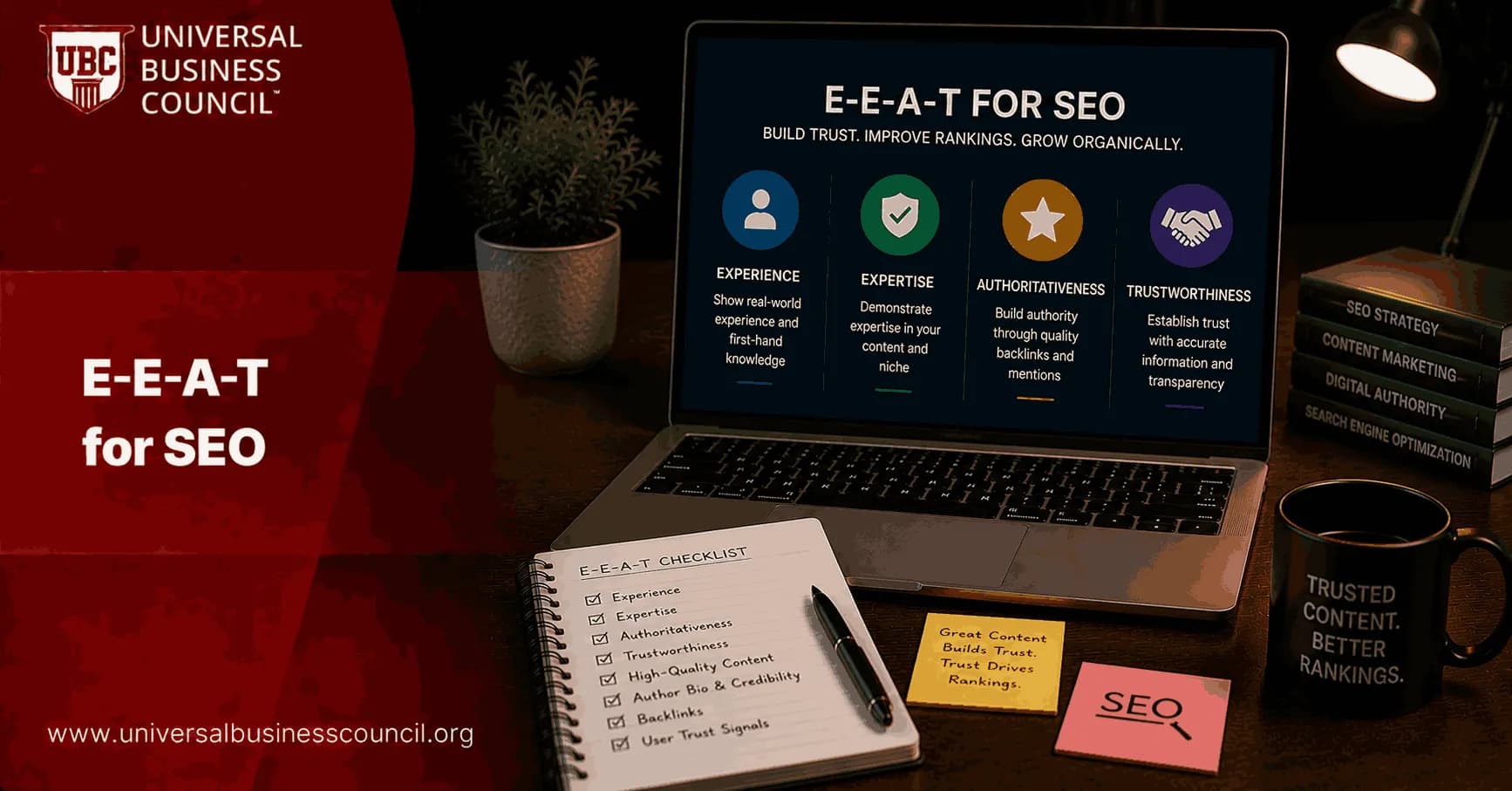
E-E-A-T for SEO has become a practical framework for publishing content that readers and search engines can trust. E-E-A-T stands for Experience, Expertise, Authoritativeness, and Trust, and it appears in Google's Search Quality Rater Guidelines as a way to evaluate whether content and its creators are credible, safe, and useful. It is not a single ranking factor, but it closely aligns with how modern search systems aim to surface helpful, people-first results - particularly for YMYL topics that affect money, health, safety, and major life decisions.
Guidance from Google documentation and leading SEO practitioners has converged around three implementation pillars: clear author identity, robust citations and sourcing, and formal content standards. This article explains how to implement each pillar in a measurable, repeatable way.

For an SEO Expert, E-E-A-T is no longer just a quality guideline. It is a practical framework for demonstrating credibility, differentiating content from generic AI-generated material, and building long-term search visibility.
What E-E-A-T for SEO Is (and What It Is Not)
E-E-A-T is a quality framework used to assess content credibility. It helps answer questions like: Is this written by someone who knows the topic? Have they actually done what they are advising? Can users verify who is responsible for the content? Is the information accurate, current, and transparent about its sources?
Two clarifications matter for practical implementation:
Not a single algorithmic score: You cannot add E-E-A-T through one checklist item. You demonstrate it through consistent, site-wide signals built up over time.
Trust is foundational: Without transparency, accuracy, and safety, the other elements carry limited weight.
Why It Matters More in 2026
As AI-generated content has scaled, many search results pages are saturated with generic summaries. Current best-practice guidance increasingly recommends demonstrating authentic human experience and verifiable expertise to differentiate your pages. In competitive verticals, E-E-A-T-driven improvements often correlate with stronger engagement and better search performance because the content more reliably satisfies users' need for clarity and trustworthy information.
Pillar 1: Build Author Pages That Prove Expertise and Experience
Improving E-E-A-T for SEO starts with making authorship obvious to both users and search engines. That means visible bylines, dedicated author pages, and a consistent site-wide author structure.
What to Include on High-Quality Author Pages
A strong author page should function as a verification hub, not a marketing bio. Include:
Full name and role (for example, "Security Engineer" or "Data Protection Specialist").
Credentials relevant to the topic: degrees, industry certifications, licenses, board memberships.
First-hand experience: projects delivered, audits performed, implementations completed, years in practice, or the testing methodology used.
Topic focus: what the author covers and what they do not cover - scope clarity increases trust.
Verifiable profile links: LinkedIn profiles, conference presentations, publications, standards bodies, and professional associations.
Editorial responsibility: whether the person is a contributor, editor, or subject-matter reviewer.
Contact or feedback path: an organizational contact route is typically sufficient for enterprise publishers.
Create a Scalable Site-Wide Author Structure
Teams that operationalize E-E-A-T typically standardize authorship in three ways:
Visible bylines on all significant pages, especially informational and YMYL content.
Byline links to dedicated author pages using an author hub pattern. This centralizes signals and makes updates easier to manage.
Separate writer and reviewer credits for sensitive content. For example, a staff writer drafts an article and a certified professional reviews it for accuracy. Both are credited with clearly defined roles.
Organizations often align author development with formal training and credentialing. If your team is building author expertise, consider linking relevant learning paths such as Universal Business Council certifications in SEO, Digital Marketing, Content Marketing, Data Analytics, or Cybersecurity for security-sensitive publishing environments.
Add Structured Data for Author and Organization
Use schema markup to help search engines associate content with people and entities. Common patterns include:
Person schema for authors (name, job title, sameAs links).
Organization schema for the publisher.
Article or BlogPosting schema to connect the page to the author and publisher.
Pillar 2: Use Citations and Sourcing That Signal Credibility
Citations are one of the clearest ways to demonstrate expertise and trust. Transparent sourcing is consistently recommended in current guidance, particularly for YMYL content and any page making factual or statistical claims.
What Good Citations Look Like in Practice
To strengthen E-E-A-T for SEO, adopt citation standards that readers and search systems recognize as credible:
Prefer primary sources when possible: peer-reviewed research, government publications, regulatory bodies, standards organizations, and major industry associations.
Date your evidence: include the publication year of studies, datasets, guidelines, and reports - this is especially important in fast-moving fields.
Make sourcing visible: use clear in-text references or a dedicated references section so users can verify claims directly.
Disclose uncertainty: if evidence is limited or mixed, say so explicitly and distinguish what is known from what is assumed.
Avoid weak sources: anonymous claims, unreviewed posts, or circular citations that do not trace back to primary evidence.
Operationalize Citations with Audits and Measurable Requirements
Because E-E-A-T does not produce a single measurable score, teams benefit from trackable internal policies. Practical examples include:
Citation coverage requirements: at least one authoritative citation for every non-obvious factual claim or statistic.
Quarterly citation audits: scheduled reviews of top traffic pages to remove outdated sources and add missing references.
Authority development tracking: use backlink analysis tools such as Ahrefs or Moz to identify which pages attract mentions and which need stronger sourcing and original insight to become genuinely link-worthy.
Pillar 3: Publish Content Standards That Show Governance and Accountability
Editorial governance is a core trust signal because it demonstrates that your content is actively managed and held to defined standards. Current SEO guidance recommends making those standards visible through policy pages and on-page review information.
Create a Documented Editorial Policy
A public editorial policy supports E-E-A-T for SEO by clarifying how you prevent errors and handle conflicts of interest. A strong policy typically covers:
Sourcing standards: what qualifies as a reliable source for your industry.
Corrections policy: how users can report errors and how you update content in response.
Conflict-of-interest and sponsorship disclosures: what you disclose and where it appears.
Review requirements for YMYL content: when subject-matter expert review is mandatory before publication.
Implement a Review Cadence and Show Last-Reviewed Dates
Content staleness is a trust problem. Many teams adopt a recurring review window - often quarterly for high-impact pages - and display a last reviewed or last updated date near the top of the article. This is particularly important for topics affected by regulatory changes, evolving best practices, or new research findings.
Design a Quality Control Workflow
A formal workflow is where E-E-A-T becomes scalable across a publishing operation. A practical quality control process can include:
Subject-matter review for sensitive topics, with named reviewer attribution visible to readers.
Originality checks and clear differentiation from generic or undifferentiated content.
Accuracy checks against primary sources and current expert consensus.
Style and clarity standards calibrated to the intended audience's level of knowledge.
Technical Trust Signals That Support E-E-A-T
Technical credibility will not substitute for genuine expertise, but technical shortcomings can undermine trust. Baseline signals consistently recommended in modern E-E-A-T guidance include:
HTTPS site-wide and secure handling of any user data.
Clear contact information and accessible policy pages covering privacy, terms of use, and editorial standards.
Appropriate schema markup for content types, including Article, FAQ where genuinely relevant, and Review markup only when backed by real user reviews.
Building trust at scale also requires technical understanding. A Tech Certification can help professionals strengthen skills in website infrastructure, structured data, analytics, security, and the technical foundations that support credible digital publishing.
Turning Generic Articles into Experience-Led Assets
To demonstrate the Experience dimension of E-E-A-T, many practitioners recommend upgrading pages that currently summarize what others say rather than contributing original insight. High-leverage upgrades include:
Case studies with original data: document methodology, results, and honest limitations.
First-hand process notes: what your team tried, what failed, what changed, and why those decisions were made.
Original media: screenshots, photographs, or short videos that confirm the work was actually performed.
These additions tend to improve perceived credibility, increase link-worthiness, and make your content meaningfully distinct in search results populated with AI-generated summaries.
Practical E-E-A-T for SEO Checklist
Author pages: bylines on key pages, author hubs, credentials, documented experience, verifiable profile links, and clear role definitions.
Citations: primary sources, dated evidence, visible sourcing, and quarterly citation audits.
Standards: public editorial policy, corrections process, YMYL review workflow, and last-reviewed dates on key pages.
Technical trust: HTTPS throughout, accessible contact and policy pages, and schema markup for Person, Organization, and Article.
As AI-generated content becomes more common, an AI Certification can help professionals better understand responsible AI use, content governance, and how to maintain trust in AI-assisted publishing environments.
Conclusion: E-E-A-T Is Demonstrated, Not Claimed
E-E-A-T for SEO is best treated as a publishing operating system. You build it by making author identity verifiable, backing claims with authoritative citations, and running content through standards that prevent errors and keep pages current. These practices also represent a durable way to differentiate human expertise from generic content at scale. If you can show who wrote a piece, why they are qualified, where the facts come from, and how the page is governed over time, you are aligning with what users and modern search systems consistently reward: helpful, reliable information from credible sources.
FAQs
1. What Is E-E-A-T in SEO?
E-E-A-T stands for Experience, Expertise, Authoritativeness, and Trustworthiness. It is a framework used by Google to evaluate the quality and credibility of content.
2. Why Is E-E-A-T Important for SEO?
E-E-A-T helps search engines assess whether content is reliable, accurate, and valuable to users, which can influence search visibility and rankings.
3. What Does the First “E” in E-E-A-T Stand For?
The first "E" stands for Experience, which refers to the creator's firsthand knowledge or direct involvement with the topic being discussed.
4. What Is Expertise in E-E-A-T?
Expertise refers to the knowledge, skills, qualifications, or professional understanding that a content creator has in a specific subject area.
5. What Does Authoritativeness Mean in SEO?
Authoritativeness measures how recognized and respected a website, brand, or content creator is within a particular industry or niche.
6. What Is Trustworthiness in E-E-A-T?
Trustworthiness reflects the accuracy, transparency, security, and reliability of content, websites, and the organizations behind them.
7. How Does Experience Improve SEO Content?
Content that demonstrates real-world experience often provides practical insights, examples, case studies, and firsthand perspectives that add credibility.
8. Which Types of Websites Benefit Most from Strong E-E-A-T?
All websites benefit, but E-E-A-T is especially important for industries such as healthcare, finance, legal services, education, and other high-impact topics.
9. What Are YMYL Pages and How Do They Relate to E-E-A-T?
YMYL (Your Money or Your Life) pages cover topics that can affect a person's health, finances, safety, or well-being, making E-E-A-T particularly important.
10. How Can Businesses Demonstrate Expertise?
Businesses can demonstrate expertise by publishing accurate content, showcasing credentials, sharing industry knowledge, and creating in-depth resources.
11. How Can Authoritativeness Be Built Online?
Authority can be built through high-quality content, reputable backlinks, industry recognition, media mentions, awards, and thought leadership.
12. What Role Do Author Bios Play in E-E-A-T?
Author bios help establish credibility by highlighting relevant experience, qualifications, certifications, achievements, and professional backgrounds.
13. How Do Reviews and Testimonials Support E-E-A-T?
Positive reviews and testimonials help build trust by demonstrating customer satisfaction and reinforcing a brand's reputation.
14. Why Is Content Accuracy Important for E-E-A-T?
Accurate content helps establish trust, reduces misinformation, and increases confidence among users and search engines.
15. How Does Website Security Contribute to Trustworthiness?
Secure websites using HTTPS, privacy protections, and safe browsing practices help create trust and improve user confidence.
16. Can AI-Generated Content Meet E-E-A-T Standards?
Yes, AI-generated content can support E-E-A-T if it is accurate, reviewed by knowledgeable experts, provides value, and demonstrates genuine experience and expertise.
17. How Does Link Building Influence E-E-A-T?
High-quality backlinks from reputable sources can strengthen authority and signal trustworthiness to search engines.
18. What Are Common Mistakes That Hurt E-E-A-T?
Common mistakes include publishing inaccurate information, lacking author transparency, using misleading claims, neglecting updates, and failing to cite credible sources. The internet already has enough confident people explaining things they barely understand. Search engines have noticed.
19. How Can Businesses Measure Improvements in E-E-A-T?
Businesses can monitor organic traffic, rankings, backlink quality, brand mentions, engagement metrics, review sentiment, and overall content performance.
20. What Is the Best Strategy for Building Strong E-E-A-T?
The best strategy is to consistently create accurate, valuable, experience-driven content, showcase expertise, earn industry authority, maintain transparency, and prioritize user trust in every aspect of a website and its content.
Related Articles
View All
Seo
Local SEO for Multi-Location Businesses: Google Business Profile, Reviews, and Location Pages
Learn how multi-location brands can improve local rankings using Google Business Profile optimization, review workflows, and unique location pages that avoid duplicates.

Seo
On-Page SEO Checklist for Marketers: Titles, Internal Links, Schema, and Content Refreshes That Move Rankings
A practical on-page SEO checklist for 2026 covering title tags, internal linking, schema markup, and content refreshes that help marketers improve rankings and CTR.
Seo
Best Claude SEO Rank Tracking
Tracking your visibility in Claude requires monitoring AI citations, brand mentions, answer inclusion, and authority signals beyond traditional keyword rankings. Learn how Claude SEO rank tracking works and which metrics matter most.
Trending Articles
The Role of Blockchain in Ethical AI Development
How blockchain technology is being used to promote transparency and accountability in artificial intelligence systems.
AWS Career Roadmap
A step-by-step guide to building a successful career in Amazon Web Services cloud computing.
Top 5 DeFi Platforms
Explore the leading decentralized finance platforms and what makes each one unique in the evolving DeFi landscape.