

SEO After ChatGPT, Gemini & AI Search
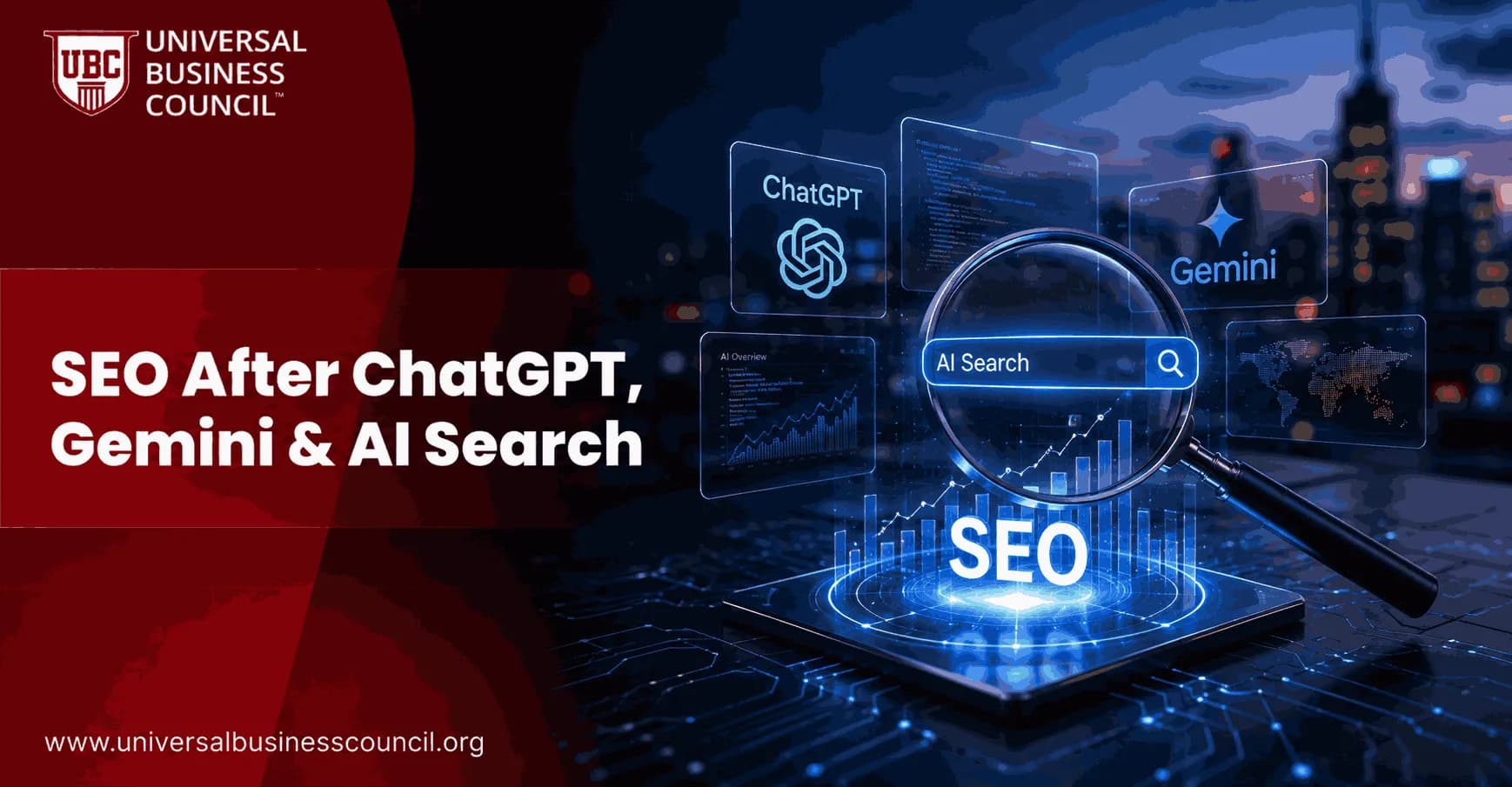
Search engine optimization is entering a completely new era. For more than two decades, SEO revolved around ranking websites on traditional search engines through keywords, backlinks, metadata, and technical optimization. Businesses competed aggressively for top positions on Google because higher rankings meant more traffic, leads, and sales.
However, the rise of artificial intelligence platforms such as ChatGPT, Google Gemini, conversational AI systems, and AI-powered search experiences has transformed the digital landscape dramatically. In 2026, users increasingly rely on AI-generated summaries, voice assistants, personalized recommendations, and conversational search instead of manually browsing traditional search results.

Modern search engines are evolving into intelligent assistants capable of understanding context, predicting intent, and generating direct answers instantly. This shift is forcing businesses to rethink how online visibility works in an AI-driven internet economy.
This article explores how SEO is changing after ChatGPT, Gemini, and AI search technologies, including new ranking strategies, content optimization methods, technical requirements, and future digital marketing trends businesses must understand to remain competitive.
The Shift From Traditional Search to AI Search
Search behavior is changing rapidly across digital platforms.
Search Engines Are Becoming AI Assistants
Instead of simply displaying web pages, AI systems now answer user questions directly.
For example, users ask:
“What is the best project management software?”
“Explain artificial intelligence simply.”
“Recommend affordable marketing tools.”
AI systems summarize information instantly without requiring users to visit multiple websites.
Strong communication, branding, and audience engagement strategies are becoming increasingly important in modern SEO. Professionals interested in digital branding and business growth often strengthen their expertise through advanced Marketing certification programs.
Search Queries Are Becoming Conversational
Users increasingly interact with AI systems using natural language rather than short keyword phrases.
Personalized Search Experiences Are Expanding
AI systems analyze:
Browsing behavior
Purchase history
User interests
Engagement patterns
Location data
to deliver highly personalized search experiences.
Humanity spent decades learning complicated SEO rules only to eventually replace search engines with conversational AI systems that answer vague human questions like endlessly patient customer support agents. Efficient technological chaos, honestly.
How ChatGPT Is Reshaping SEO
ChatGPT has accelerated the transition toward conversational search experiences.
AI-Driven Information Retrieval
Users increasingly use ChatGPT for:
Product comparisons
Learning new skills
Research assistance
Business recommendations
Technical troubleshooting
Reduced Dependence on Traditional Search Results
Many users now consume information directly inside AI systems instead of visiting websites.
Content Quality Matters More
AI systems prioritize:
Accuracy
Readability
Expertise
Structure
Contextual clarity
Search Intent Is More Important Than Keywords
Understanding what users truly want is becoming more valuable than exact keyword matching.
Professionals interested in conversational AI technologies often improve their expertise through the AI Expert certification.
The Role of Google Gemini in Modern Search
Google Gemini represents a major advancement in AI-powered search systems.
Multimodal Search Capabilities
Gemini processes:
Text
Images
Audio
Videos
Code
This creates richer and more intelligent search experiences.
Better Contextual Understanding
Gemini understands user intent more effectively than traditional keyword-based systems.
AI Overviews in Search Results
Google increasingly integrates AI-generated summaries directly into search pages.
Real-Time AI Search Assistance
Users now receive faster and more contextually accurate information.
Professionals interested in advanced conversational AI systems often strengthen their expertise through the ChatGPT Expert certification.
Why Traditional SEO Alone Is No Longer Enough
Classic SEO techniques still matter, but they are no longer sufficient independently.
Keyword Stuffing Is Obsolete
AI search systems focus on content quality and contextual understanding rather than repetitive keyword usage.
Authority and Trust Matter More
Websites demonstrating expertise and credibility perform better in AI-powered search environments.
User Experience Impacts Visibility
AI systems increasingly evaluate:
Website speed
Readability
Mobile responsiveness
Engagement quality
Information accuracy
Search Results Are Shrinking
AI-generated summaries reduce the number of clicks users make on traditional search listings.
The internet has quietly transformed from a giant library of websites into an AI-powered answer engine designed for people who no longer want to read ten articles just to compare coffee makers. Civilization progresses in deeply strange ways.
Modern SEO Strategies in 2026
SEO now requires a broader and more intelligent approach.
Conversational Content Optimization
Content should answer user questions naturally and clearly.
Semantic SEO
Modern search systems interpret topic meaning and context instead of relying only on exact keywords.
Structured Data and Schema Markup
AI systems depend heavily on structured information to interpret web content accurately.
Multimedia Optimization
Search platforms increasingly analyze:
Videos
Podcasts
Images
Infographics
Interactive media
to improve search experiences.
Professionals interested in advanced Google AI technologies often improve their expertise through the Google gemini professional certification.
The Rise of AI Search Optimization (AISO)
AI Search Optimization is becoming the next major evolution of SEO.
Optimizing for AI Systems
Businesses now optimize for:
ChatGPT
Gemini
Voice assistants
AI-generated summaries
Conversational interfaces
AI-Friendly Content Structure
Effective AI-focused content is:
Well-organized
Easy to summarize
Context-rich
Factually accurate
Human-readable
Brand Entity Recognition
AI systems identify brands, products, and topics through entity-based understanding.
Reputation Signals Are Critical
AI systems evaluate broader online reputation signals beyond backlinks alone.
Professionals interested in intelligent workflow automation often strengthen their expertise through the Agentic AI course.
How AI Is Changing Content Marketing
Content marketing is evolving rapidly alongside AI search systems.
Quality Is More Valuable Than Quantity
Publishing large amounts of low-quality content is becoming ineffective.
Human Expertise Is Essential
Authentic insights and professional expertise increasingly separate valuable content from generic AI-generated material.
Long-Form Educational Content Performs Better
Detailed and authoritative content performs strongly in AI-powered search ecosystems.
Interactive Experiences Increase Engagement
Brands increasingly use:
Videos
Webinars
Podcasts
Livestreams
Interactive tools
to improve engagement and visibility.
Voice Search and Conversational Discovery
Voice search continues reshaping SEO strategies.
Natural Language Search Patterns
Voice users ask longer and more conversational questions.
Fewer Recommended Results
Voice assistants usually provide only one or two recommendations.
Local SEO Is Becoming More Important
Many voice searches involve local business intent.
AI Conversations Are Expanding
Conversational AI systems increasingly replace traditional search experiences.
Technical SEO Still Matters
Technical optimization remains essential even in AI-driven environments.
Website Speed and Performance
Fast-loading websites improve user experience and search visibility.
Mobile Optimization
Most users now access content primarily through smartphones and mobile devices.
Crawlability and Accessibility
AI systems still rely on properly structured and accessible websites.
Structured Information Improves Visibility
Schema markup helps AI systems understand content more accurately.
Professionals interested in advanced digital technologies often strengthen their expertise through broader Tech certification programs.
The Importance of Deep Technologies in Search
Advanced technologies continue reshaping digital ecosystems.
Artificial Intelligence Infrastructure
AI powers recommendation systems, conversational search, and predictive analytics.
Automation Systems
Automation improves personalization and digital marketing efficiency.
Predictive Data Analysis
Businesses increasingly use behavioral analytics to understand customer intent.
Emerging Innovation Platforms
Advanced deep technologies continue influencing search and digital discovery systems.
Professionals interested in advanced innovation ecosystems often improve their expertise through broader Deeptech certification programs.
Why Developers Are Important in Modern SEO
Technical professionals now play a major role in digital visibility.
AI Search Development
Developers build AI systems that shape modern search experiences.
Recommendation Algorithms
AI engineers influence content discovery and personalization.
Automated SEO Systems
Modern SEO increasingly relies on AI-driven automation workflows.
AI-Assisted Website Optimization
Businesses use AI tools to improve performance and user experience.
Professionals interested in AI-powered development systems often strengthen their expertise through the AI Powered coding expert Course.
Future Trends in AI Search and SEO
Several trends will shape the future of digital discovery.
AI-Native Search Experiences
Search engines will increasingly function like intelligent conversational assistants.
Hyper-Personalized Discovery
Search experiences will become highly customized for each user.
Autonomous AI Agents
AI systems may eventually research and purchase products automatically.
Reduced Traditional Search Browsing
Users may rely less on manually browsing search result pages.
Greater Importance of Brand Authority
Reliable and recognizable brands will dominate AI-generated recommendations.
Conclusion
SEO is evolving rapidly in the era of ChatGPT, Gemini, and AI-powered search systems. Traditional optimization methods based only on keywords and backlinks are no longer enough to maintain strong online visibility.
Modern SEO now focuses on conversational content, semantic understanding, authority, structured information, multimedia experiences, user engagement, and AI compatibility. Businesses that adapt early to AI-driven search ecosystems will gain long-term competitive advantages in traffic, trust, and customer engagement.
As AI continues reshaping digital discovery, successful brands will prioritize authentic expertise, audience value, and intelligent content strategies rather than relying solely on technical ranking manipulation.
Humanity created billions of websites filled with endless information and then immediately invented AI systems to summarize everything because nobody had enough patience left to read the internet it spent decades building. Remarkably consistent technological behavior, really.
Frequently Asked Questions
1. How is AI transforming SEO in 2026?
AI is transforming SEO by prioritizing conversational relevance, authority, user intent, and content quality over traditional keyword-heavy strategies. Search engines now focus more on understanding meaning and delivering personalized experiences rather than simply matching exact phrases.
2. What is AI Search Optimization?
AI Search Optimization focuses on preparing content for AI-powered systems like ChatGPT, Gemini, and voice assistants. It involves creating clear, structured, and context-rich information that AI systems can easily interpret and recommend to users.
3. Will traditional SEO still remain relevant?
Traditional SEO remains important because search engines still rely on indexing, technical optimization, and structured websites. However, businesses now need to combine traditional SEO practices with conversational and AI-focused optimization strategies.
4. How does ChatGPT affect digital search behavior?
ChatGPT changes search behavior by allowing users to receive direct conversational answers instantly. Many users now depend on AI-generated summaries instead of visiting multiple websites to compare information manually.
5. Why is Google Gemini important for SEO professionals?
Google Gemini introduces multimodal AI capabilities that process text, images, videos, and audio simultaneously. This creates more advanced search experiences and requires businesses to optimize content across multiple digital formats.
6. Why is conversational content important in modern SEO?
Conversational content aligns with how people now interact with AI systems and voice assistants. Natural language content improves visibility in AI-generated responses and provides a better experience for users searching conversationally.
7. Are keywords still useful after AI search advancements?
Keywords still help search systems understand topics, but modern AI platforms focus more heavily on semantic meaning, contextual relevance, and user intent rather than repetitive keyword placement alone.
8. How do AI systems evaluate content quality?
AI systems analyze readability, structure, authority, engagement, factual accuracy, expertise, and overall usefulness. High-quality content is well-organized, trustworthy, informative, and easy for both humans and AI systems to understand.
9. What is semantic SEO and why does it matter?
Semantic SEO focuses on topic relationships and contextual understanding instead of exact keyword matching. It helps AI systems interpret broader meaning and improves content visibility across conversational search experiences.
10. Why are zero-click searches increasing rapidly?
Zero-click searches are increasing because AI systems provide direct answers inside search interfaces. Users often receive the information they need immediately without clicking multiple external websites or browsing lengthy search results.
11. How important is authority in AI-powered search systems?
Authority is becoming extremely important because AI systems prioritize reliable and credible information sources. Brands with strong expertise, trusted reputations, and consistent high-quality content are more likely to appear in AI-generated summaries.
12. What role does structured data play in AI SEO?
Structured data helps AI systems understand website information more clearly by organizing content into machine-readable formats. This improves visibility in rich results, AI summaries, and conversational search environments.
13. How does voice search impact modern SEO strategies?
Voice search encourages longer and more conversational queries compared to traditional typed searches. Businesses must optimize for natural language, concise answers, and local search relevance to succeed in voice-driven ecosystems.
14. Can AI-generated content perform well in search rankings?
AI-generated content can rank successfully when it provides accurate, useful, and well-structured information combined with human editing and expertise. Search engines prioritize value and relevance rather than simply identifying AI assistance.
15. Why is multimedia content important for future SEO?
Multimedia content such as videos, podcasts, and interactive tools improves engagement and supports AI systems in understanding broader context. Search engines increasingly analyze multiple content formats to improve user experiences.
16. How do recommendation algorithms influence SEO visibility?
Recommendation algorithms analyze user behavior, interests, and engagement history to suggest personalized content automatically. Businesses must optimize for recommendation systems alongside traditional search rankings.
17. Are backlinks still important after AI search evolution?
Backlinks still remain valuable trust signals, but AI systems now also evaluate broader authority indicators such as brand reputation, user engagement, expertise, and online credibility across multiple platforms.
18. What technical skills are important for future SEO professionals?
Future SEO professionals should understand AI systems, structured data, automation tools, analytics, conversational optimization, and audience behavior analysis. Technical understanding of AI-driven platforms is becoming increasingly important.
19. How will AI continue changing search engines in the future?
AI will make search engines more conversational, predictive, and personalized. Search platforms will increasingly function like intelligent assistants capable of understanding intent and providing direct contextual recommendations.
20. What should businesses focus on for long-term SEO success?
Businesses should focus on authority, trust, conversational content, multimedia experiences, structured information, and strong audience engagement. Companies that adapt early to AI-driven discovery systems will maintain stronger visibility and competitive advantages.
Related Articles
View All
Seo
AI Search vs Traditional SEO
AI search and traditional SEO work differently, requiring marketers to balance rankings, citations, authority signals, and answer-ready content.
Seo
From Search Bar to AI Answers: The New SEO Era
AI answers are reshaping how users discover information, forcing brands to rethink visibility beyond traditional search rankings.

Seo
Search Is Changing: Is Your SEO Strategy Ready?
Search behavior is rapidly changing. Discover the strategies businesses need to remain competitive in an AI-driven landscape.
Trending Articles
The Role of Blockchain in Ethical AI Development
How blockchain technology is being used to promote transparency and accountability in artificial intelligence systems.
AWS Career Roadmap
A step-by-step guide to building a successful career in Amazon Web Services cloud computing.
Top 5 DeFi Platforms
Explore the leading decentralized finance platforms and what makes each one unique in the evolving DeFi landscape.