

Google Removing Search Bar: What Happens to SEO?
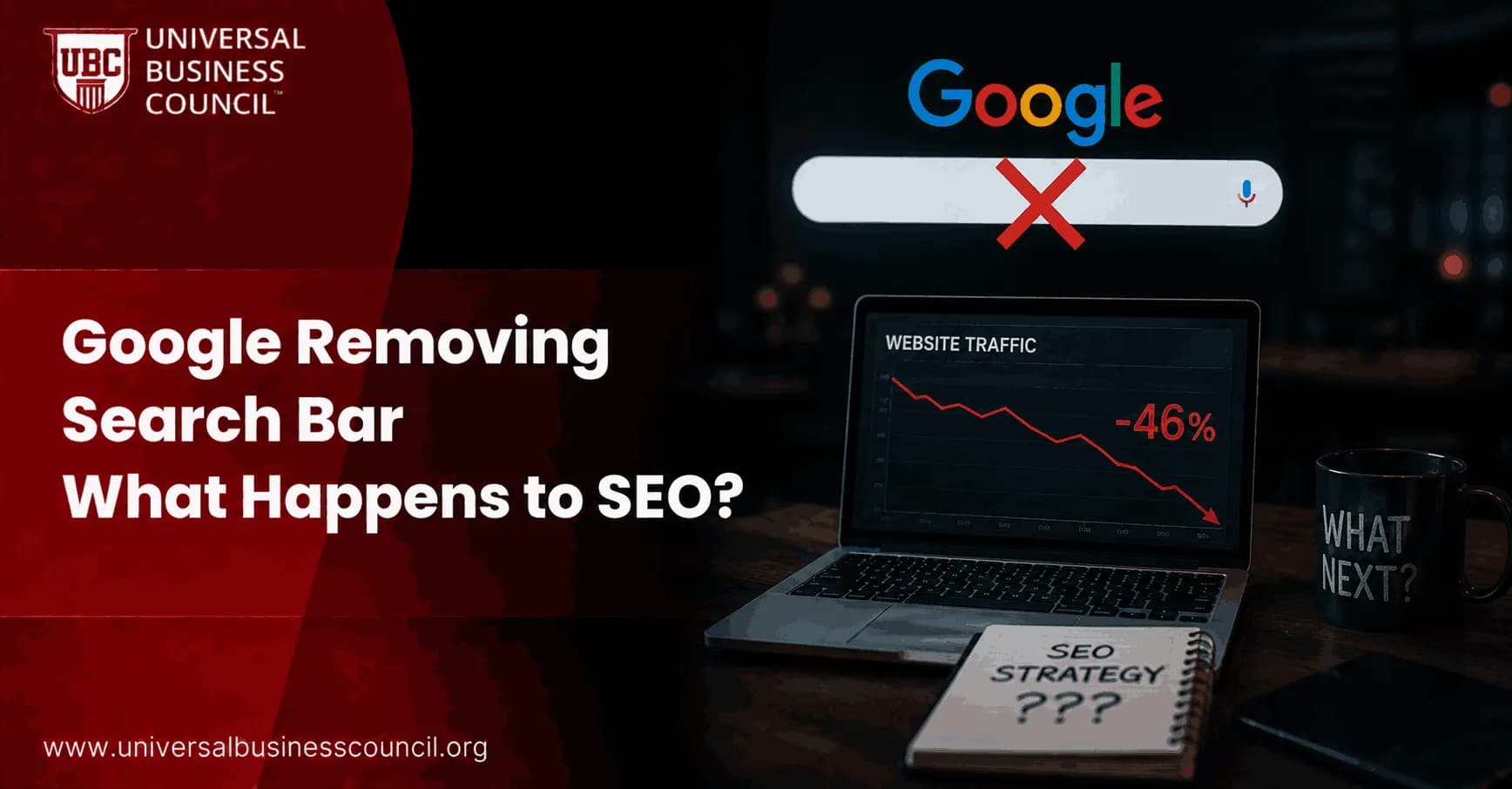
For more than twenty years, the Google search bar has been one of the most powerful tools on the internet. Businesses, marketers, publishers, and creators built entire digital strategies around ranking in Google Search results. SEO became the foundation of online visibility, driving billions of clicks every day.
But technology is changing rapidly.

Artificial intelligence, voice assistants, recommendation systems, and conversational search platforms are reshaping how people discover information online. Users now rely on ChatGPT, TikTok, YouTube, Alexa, and AI-generated recommendations instead of typing traditional keyword searches into Google.
As Google integrates more AI into its ecosystem, many experts are asking a serious question: What happens to SEO if Google eventually removes or minimizes the traditional search bar?
The answer is simple. SEO will not disappear, but it will evolve dramatically.
The future of SEO will focus less on keyword rankings and more on AI discoverability, conversational optimization, brand authority, and multi-platform visibility.
Professionals preparing for this evolving digital landscape are increasingly pursuing advanced Marketing Certification programs to understand modern consumer behavior and digital strategy.
Why Google Is Transforming Search
Google’s traditional search system was built around typed queries and ranked webpages. For years, this model worked perfectly because users were comfortable browsing links manually.
Today’s users expect:
Instant answers
Personalized recommendations
Conversational interactions
Voice-based responses
AI-generated summaries
Instead of typing:
“best SEO tools”
Users now ask:
“What are the best SEO tools for AI-driven content marketing?”
AI systems understand natural language and context far better than traditional search engines. This allows Google to move toward more intelligent and predictive search experiences powered by artificial intelligence.
Google’s Gemini integration already shows how search is evolving into a conversational experience rather than a simple keyword-based system.
Professionals exploring this transformation are increasingly pursuing the Google Gemini AI Expert Certification.
The Rise of AI Search Platforms
AI-powered search tools are changing online discovery significantly.
Platforms such as:
ChatGPT
Gemini
Claude
Perplexity
provide direct conversational answers instead of long lists of webpages.
This changes user expectations completely.
People now want:
Faster responses
Personalized recommendations
Simplified information
Interactive conversations
As AI search grows, businesses must optimize content differently to remain visible.
Organizations preparing for AI-driven industries are strengthening expertise through the AI Expert Certification.
SEO Will Not Die, But It Will Change
Many people believe SEO will disappear if Google removes the traditional search bar.
That is unlikely.
SEO exists because businesses always need discoverability online. Even if the search bar changes, companies will still compete for visibility across AI systems, social platforms, voice assistants, and recommendation engines.
Modern SEO is evolving toward:
Conversational optimization
AI discoverability
Semantic relevance
Authority building
Multi-platform visibility
User-focused experiences
The objective is no longer just ranking on Google.
The new objective is becoming the trusted source AI systems choose to recommend.
Humanity spent years trying to manipulate search algorithms with keywords and backlinks. Now the algorithms are becoming conversational, predictive, and disturbingly good at recognizing low-quality nonsense. Tough era for spam websites.
The Future of Keywords in SEO
Keywords are still important, but their role is changing.
Earlier SEO strategies focused heavily on:
Exact-match keywords
Keyword density
Repetitive phrases
Modern AI systems prioritize:
User intent
Contextual understanding
Topic relevance
Natural language
Search engines now understand complete conversations rather than isolated words.
This means businesses should create content that sounds:
Helpful
Clear
Human
Informative
instead of robotic and over-optimized.
Search Everywhere Optimization
Search behavior is no longer limited to Google Search.
Users now discover information through:
TikTok
YouTube
Instagram
LinkedIn
Reddit
Amazon
Voice assistants
AI chatbots
This has created a broader strategy known as “Search Everywhere Optimization.”
For example:
YouTube creators optimize watch time and retention
TikTok creators optimize engagement and hashtags
Amazon sellers optimize product discoverability
AI systems prioritize structured authoritative content
Businesses must now optimize visibility across multiple ecosystems simultaneously.
AI Is Reshaping Content Creation
Artificial intelligence has transformed content marketing and SEO workflows.
AI tools now assist with:
Keyword research
Content generation
Competitor analysis
Audience targeting
Predictive analytics
Technical optimization
This improves efficiency, but it also increases competition because content production becomes easier.
Millions of AI-generated articles are published daily. Some are excellent. Others sound like confused robots trapped inside motivational LinkedIn posts.
Because of this flood of content, search systems increasingly reward:
Originality
Expertise
Authenticity
User value
Businesses exploring intelligent automation systems are increasingly interested in the Agentic AI Course.
Meanwhile, marketers and creators are improving AI-driven content strategies through the Generative AI Expert Course.
Voice Search and Conversational SEO
Voice search usage continues growing worldwide.
Devices like:
Siri
Alexa
Google Assistant
encourage users to ask complete questions naturally.
For example:
“What’s the best AI course for beginners?”
instead of:
“best AI course”
This changes how businesses structure content.
Modern SEO content increasingly includes:
FAQ sections
Conversational answers
Natural language
Question-focused formatting
Businesses optimizing for voice search may gain stronger visibility in AI-powered ecosystems.
Technical SEO Will Remain Important
Even if Google changes the traditional search experience, technical SEO will still matter greatly.
AI systems depend on:
Structured data
Schema markup
Fast websites
Mobile responsiveness
Accessibility
Secure architecture
Technical optimization helps AI systems understand and organize information correctly.
Organizations focusing on future-ready innovation often explore broader Deeptech Certification opportunities.
AI-Powered Coding and SEO Automation
SEO increasingly overlaps with coding, automation, and software development.
AI-powered tools now help developers:
Improve page speed
Automate schema creation
Detect technical SEO problems
Improve accessibility
Optimize website performance
This growing intersection between coding and SEO has increased demand for the AI Powered Coding Expert Course.
Automation improves efficiency, but human creativity and strategic oversight remain essential.
Brand Authority Is Becoming the New SEO
As AI-generated content becomes more common, trust becomes far more valuable.
AI systems are more likely to recommend:
Trusted brands
Recognized experts
Established publishers
Reliable organizations
This means SEO is becoming closely connected with:
Branding
Reputation management
Thought leadership
Audience trust
Businesses investing in strong authority and credibility will perform better in AI-driven search ecosystems.
Organizations also improve broader digital expertise through advanced Tech Certification programs.
Real-World Examples of Search Evolution
YouTube
YouTube has become one of the world’s largest search engines where creators optimize:
Audience retention
Watch time
Click-through rates
Viewer engagement
TikTok
TikTok increasingly functions as a search platform for:
Product recommendations
Tutorials
Reviews
Travel ideas
Amazon
Amazon dominates ecommerce search through recommendation systems and customer behavior analysis.
AI Assistants
AI assistants summarize information directly, reducing the need for users to browse multiple websites manually.
These examples show that search is evolving far beyond traditional search bars.
Challenges Businesses May Face
If Google minimizes the search bar experience, businesses may encounter several challenges.
Reduced Organic Traffic
AI-generated summaries could reduce direct website visits.
Increased Competition
AI systems may prioritize only highly authoritative sources.
Greater Technical Requirements
Businesses will need stronger structured data and technical SEO.
Higher Content Standards
Low-quality content may struggle to gain visibility.
Companies relying only on outdated SEO tactics may lose relevance quickly.
Opportunities in the AI Search Era
Despite these challenges, AI-powered search also creates major opportunities.
Businesses can benefit through:
Better personalization
Faster customer interactions
Improved targeting
Stronger engagement
Enhanced user experiences
Brands that adapt early may gain major competitive advantages.
The Future of SEO Professionals
SEO professionals will need broader expertise in:
Artificial intelligence
Automation
Technical optimization
Analytics
Audience behavior
Content strategy
Future SEO specialists will function more like digital visibility strategists than traditional keyword managers.
The marketers still obsessing over ancient SEO tricks from forgotten internet forums may eventually become digital cautionary tales. Tiny relics of the keyword-stuffing era.
Conclusion
If Google eventually removes or reduces the importance of the traditional search bar, SEO will not disappear.
Instead, SEO will evolve into a broader strategy centered around:
AI discoverability
Conversational experiences
Technical optimization
Brand authority
Multi-platform visibility
User-focused content
Search itself is evolving from manual keyword browsing into intelligent conversational discovery powered by artificial intelligence.
Businesses that adapt to these changes will continue growing successfully, while those relying only on outdated SEO tactics may struggle in the future digital ecosystem.
The future of SEO belongs to businesses that combine:
High-quality content
Technical excellence
AI integration
Trustworthiness
Audience engagement
Technology continues changing how humans search for information, but people will always want fast and reliable answers. The machines simply keep inventing newer ways to deliver them before humans even finish asking the question.
FAQs
1. Why is Google integrating more AI into search?
Google is integrating AI because users increasingly expect faster, more conversational, and personalized search experiences. AI systems help deliver direct answers instead of forcing users to browse multiple websites. This improves convenience and user engagement significantly.
2. Will SEO become useless if Google removes the search bar?
No, SEO will continue evolving because businesses will always need online visibility. The focus will shift toward AI discoverability, conversational optimization, and authority building. SEO will adapt alongside changes in digital behavior and search technology.
3. How does conversational search affect content creation?
Conversational search encourages businesses to create natural and question-based content that directly answers user concerns. AI systems understand human language more effectively than older search engines. This makes helpful and conversational content more valuable.
4. Why is authority becoming more important in SEO?
AI systems prioritize trustworthy and reliable sources to improve answer quality for users. Strong brands and recognized experts are more likely to appear in AI-generated recommendations. Authority now strongly influences online visibility.
5. What is Search Everywhere Optimization?
Search Everywhere Optimization refers to improving visibility across platforms like YouTube, TikTok, Amazon, LinkedIn, and AI assistants. Users no longer rely only on Google Search for information. Businesses must optimize across multiple ecosystems simultaneously.
6. How is AI changing keyword strategies?
AI reduces reliance on exact keyword matching because modern systems understand context and intent better. Businesses now focus more on relevance and user satisfaction. Natural language content performs better than repetitive keyword-heavy writing.
7. Why is voice search becoming important?
Voice search is growing because people increasingly use assistants like Alexa and Siri for quick answers. Users speak naturally instead of typing short phrases. Businesses must therefore optimize content for conversational interactions and direct responses.
8. Will AI-generated summaries reduce website traffic?
AI-generated summaries may reduce clicks for some informational searches because users receive quick answers immediately. However, authoritative businesses can still benefit through citations and recommendations. Strong branding remains extremely valuable.
9. How does technical SEO support AI discoverability?
Technical SEO improves how AI systems interpret website content through structured data, schema markup, and fast-loading pages. These elements help machines organize information efficiently. Technical optimization remains essential for visibility.
10. What role does branding play in modern SEO?
Branding improves trust, credibility, and recognition across digital platforms. AI systems are more likely to recommend businesses with strong reputations and consistent expertise. Branding and SEO are becoming increasingly connected.
11. Are backlinks still useful in AI-driven search?
Yes, backlinks still signal authority and trustworthiness to AI systems and search engines. However, quality and relevance matter far more than large quantities of weak links. Natural backlinks remain highly valuable.
12. How does AI impact small businesses in SEO?
AI can help small businesses compete by improving content creation, automation, and audience targeting. Businesses with niche expertise and authentic content can still perform very well. Relevance often matters more than company size.
13. Why are social platforms becoming search engines?
Platforms like TikTok and YouTube offer visual, fast, and interactive discovery experiences that many users prefer. Younger audiences especially search directly on social media for recommendations and tutorials. This changes digital marketing strategies significantly.
14. What industries are most affected by AI-powered search?
Industries such as ecommerce, education, publishing, healthcare, and marketing are strongly affected by AI-driven search changes. These sectors depend heavily on online discoverability and customer engagement. AI is reshaping how users access information.
15. How can businesses prepare for AI-driven SEO?
Businesses should focus on high-quality content, technical optimization, authority building, and multi-platform visibility. Investing in AI education and automation tools also helps improve competitiveness. Adaptability is critical for future success.
16. Why is user experience important for modern SEO?
Search engines and AI systems prioritize websites that provide fast, clear, and helpful experiences for users. Positive user engagement improves authority and visibility. User satisfaction now strongly influences search performance.
17. Can AI-generated content rank successfully?
AI-generated content can rank if it is accurate, valuable, and properly edited by humans. Search systems prioritize usefulness and originality over automated production alone. Low-quality AI spam generally performs poorly.
18. What skills should future SEO professionals learn?
Future SEO professionals should understand artificial intelligence, automation, technical SEO, analytics, and audience psychology. Strong content strategy and communication skills will also remain essential. Modern SEO requires both technical and creative expertise.
19. Will websites remain important in AI search ecosystems?
Yes, websites will remain important because AI systems still need authoritative source material for information. Businesses must continue building strong websites with valuable content. Websites remain foundational digital assets.
20. What is the future of SEO in an AI-first internet?
The future of SEO involves conversational search, AI discoverability, voice optimization, and cross-platform visibility. Businesses must focus on trust, expertise, technical excellence, and audience engagement. SEO will continue evolving alongside artificial intelligence and digital behavior.
Related Articles
View All
Seo
From Search Bar to AI Answers: The New SEO Era
AI answers are reshaping how users discover information, forcing brands to rethink visibility beyond traditional search rankings.
Seo
SEO Beyond the Search Bar
Search is no longer limited to search engines. Learn how AI assistants and answer engines are creating new opportunities for content discovery.

Seo
Is SEO Dead Without Google Search?
As AI assistants and answer engines gain popularity, many marketers are questioning the future of SEO. Learn why SEO is evolving rather than disappearing and how brands can adapt.
Trending Articles
The Role of Blockchain in Ethical AI Development
How blockchain technology is being used to promote transparency and accountability in artificial intelligence systems.
AWS Career Roadmap
A step-by-step guide to building a successful career in Amazon Web Services cloud computing.
Top 5 DeFi Platforms
Explore the leading decentralized finance platforms and what makes each one unique in the evolving DeFi landscape.