

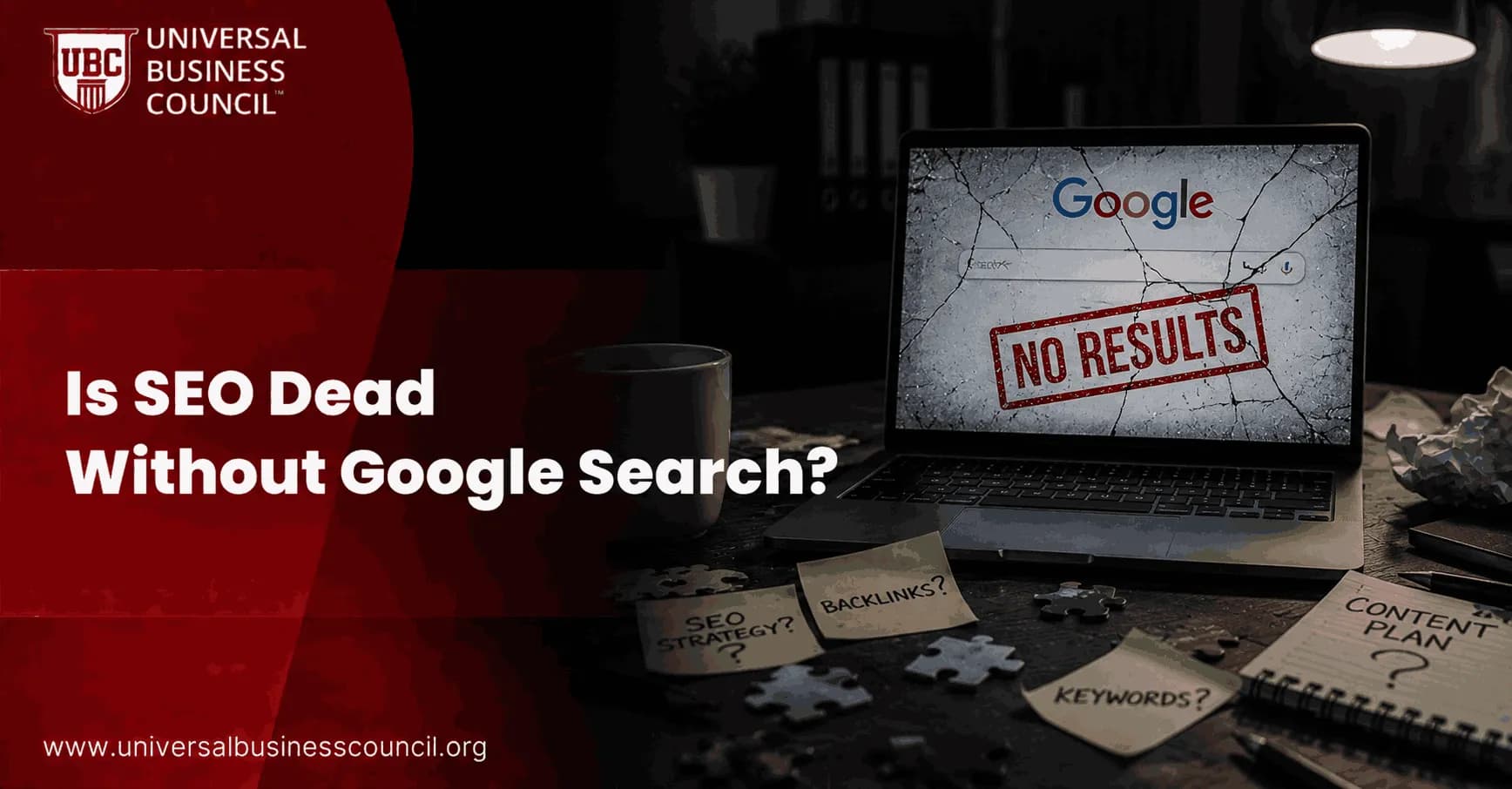
Is SEO Dead Without Google Search?
For years, businesses treated Google Search like the center of the internet. Every marketing strategy revolved around ranking on the first page, improving backlinks, optimizing keywords, and publishing endless blog content. Companies believed that if they dominated Google rankings, they dominated digital visibility.
But the internet has changed dramatically.

Today, users discover information through AI assistants, social media algorithms, voice search, recommendation engines, and video platforms. People ask ChatGPT questions, search TikTok for product reviews, and use YouTube instead of traditional search engines for tutorials and advice.
As a result, many marketers are asking a serious question: Is SEO dying without Google Search?
The answer is no.
SEO is not disappearing. It is evolving into something much broader than traditional search engine rankings. Modern SEO is now about visibility across every digital platform where users search for answers.
Businesses adapting to these changes are still growing rapidly, while companies relying only on outdated SEO tactics are struggling to stay visible. The internet politely moved the furniture while half the marketing industry was still arguing about keyword density percentages. Grim little technological comedy.
Professionals preparing for this changing landscape are increasingly pursuing advanced Marketing Certification programs to understand modern consumer behavior and digital strategy.
The Evolution of Online Search
Traditional search engines were designed to display lists of webpages based on keywords and authority signals. Users searched for information, clicked links, and explored websites manually.
Today’s users behave very differently.
Modern audiences now discover content through:
AI chatbots
TikTok
Instagram
YouTube
Amazon
Reddit
Voice assistants
Personalized recommendations
This means businesses can no longer rely entirely on Google Search traffic.
Search behavior is becoming:
Conversational
Visual
Personalized
Faster
AI-driven
Google itself has adapted by introducing AI-powered search experiences using Gemini technology. Professionals looking to understand these systems are increasingly exploring the Google Gemini AI Expert Certification.
At the same time, businesses are investing in broader artificial intelligence education through the AI Expert Certification.
Why SEO Still Matters
SEO still matters because people will always search for:
Information
Products
Services
Entertainment
Recommendations
Solutions
The only difference is where they search.
Instead of optimizing only for Google, businesses now optimize for multiple digital ecosystems simultaneously.
Modern SEO now includes:
AI optimization
Video SEO
Social media discoverability
Voice search optimization
Ecommerce search visibility
Conversational content strategies
The goal remains the same:
Help users find valuable information quickly and efficiently.
AI Is Changing the SEO Industry
Artificial intelligence has transformed SEO more rapidly than almost any previous technology.
AI tools can now:
Generate content drafts
Analyze search intent
Automate audits
Predict trends
Improve personalization
Optimize metadata
This has made SEO more efficient, but also far more competitive.
Millions of AI-generated articles are published every day. Some are useful. Others read like a spreadsheet developed self-awareness and decided to start blogging about productivity.
Because of this explosion of content, search engines increasingly prioritize originality, expertise, and trustworthiness.
Businesses wanting deeper AI automation knowledge are now exploring programs like the Agentic AI Course.
Similarly, content creators and marketers are developing advanced AI content skills through the Generative AI Expert Course.
Search Everywhere Optimization
SEO is no longer limited to websites and blogs.
Today, brands optimize visibility across:
TikTok
YouTube
LinkedIn
Amazon
AI assistants
Podcasts
Online communities
Ecommerce platforms
This strategy is often called “Search Everywhere Optimization.”
For example:
YouTube creators optimize audience retention
TikTok creators optimize hashtags and engagement
Amazon sellers optimize product listings
LinkedIn users optimize professional visibility
The definition of “search” itself is expanding rapidly.
Content Quality Is More Important Than Ever
Earlier SEO strategies often focused heavily on publishing large quantities of keyword-focused articles.
That approach is becoming less effective.
Modern AI systems and search engines prioritize:
Helpful information
Expert opinions
Accurate data
User satisfaction
Original insights
Authentic experiences
Google’s E-E-A-T framework emphasizes:
Experience
Expertise
Authority
Trustworthiness
This means businesses must focus on creating genuinely useful content rather than publishing low-quality articles purely for rankings.
Social Media Is Becoming a Search Engine
Social media platforms are increasingly replacing traditional search engines for younger audiences.
Examples include:
Searching recipes on TikTok
Finding tutorials on YouTube
Researching products on Reddit
Discovering brands on Instagram
This shift changes how businesses approach content creation.
Companies now optimize:
Captions
Video descriptions
Hashtags
User engagement
Community interactions
Visibility today depends heavily on audience interaction and algorithmic recommendations.
Voice Search and Conversational Discovery
Voice search continues growing through devices like:
Alexa
Siri
Google Assistant
Users now ask full conversational questions rather than typing short phrases.
For example:
“What’s the best affordable AI course for beginners?”
instead of:
“best AI course”
This means SEO content must sound more natural and conversational.
Businesses increasingly structure content around:
Questions
Direct answers
Conversational tone
Featured snippets
Technical SEO Remains Essential
Even as AI transforms search, technical SEO still matters significantly.
AI systems rely on:
Structured data
Fast websites
Mobile optimization
Secure architecture
Accessibility improvements
Technical SEO now focuses heavily on improving both machine readability and user experience.
Organizations preparing for advanced digital transformation often explore broader Deeptech Certification opportunities.
The Role of AI-Powered Coding in SEO
SEO increasingly overlaps with software development and automation.
AI coding tools now help businesses:
Improve website speed
Detect technical errors
Generate schema markup
Optimize accessibility
Automate repetitive SEO tasks
This growing trend has increased interest in the AI Powered Coding Expert Course.
Automation improves productivity, but human expertise remains critical for strategic planning and creative decision-making.
Brand Authority Is Becoming More Valuable
As AI-generated content floods the internet, trust becomes increasingly important.
Search engines and AI systems now prioritize:
Trusted brands
Verified expertise
Reliable sources
Strong reputations
This means branding and SEO are becoming closely connected.
Businesses building strong authority through:
Thought leadership
Expert content
Consistent publishing
Community engagement
are more likely to appear in search results and AI-generated answers.
Companies also improve their digital capabilities through broader Tech Certification programs.
Real-World Examples of SEO Evolution
YouTube
YouTube creators focus heavily on:
Watch time
Engagement
Retention
Click-through rates
rather than traditional website rankings.
Amazon
Amazon dominates ecommerce search through advanced recommendation systems and product optimization strategies.
TikTok
TikTok’s algorithm prioritizes engagement and user interaction, making social SEO increasingly important.
ChatGPT and AI Search
AI systems summarize information directly, changing how businesses structure content for discoverability.
These examples prove SEO still exists, but the platforms and optimization methods are evolving rapidly.
The Future of SEO
The future of SEO will likely involve:
AI-assisted search
Personalized recommendations
Visual discovery
Multimodal search
Conversational interfaces
Predictive search experiences
SEO professionals will need stronger skills in:
AI tools
Automation
Analytics
Technical optimization
Audience engagement
Businesses adapting early will gain major advantages in digital visibility.
Those refusing to adapt may eventually discover that the internet continued evolving while they were still attending webinars titled “10 Secret SEO Tricks Google Hates.” Digital archaeology at its finest.
Conclusion
SEO is not dead without Google Search.
Instead, SEO is transforming into a broader digital visibility strategy shaped by artificial intelligence, social media, conversational search, and personalized recommendation systems.
Google still plays a major role, but businesses must now optimize across multiple platforms and AI-driven ecosystems.
Success in modern SEO depends on:
High-quality content
Technical optimization
Brand authority
AI compatibility
Multi-platform visibility
The future belongs to businesses that combine technology, creativity, and trust to deliver valuable information wherever users search for it.
Search itself is evolving, not disappearing. Humans still want instant answers. Machines simply keep inventing faster and stranger ways to provide them.
FAQs
1. Is SEO losing importance because of AI tools?
SEO is not losing importance, but AI tools are changing how optimization works. Businesses now optimize for conversational AI systems, voice assistants, and social platforms alongside traditional search engines. Modern SEO focuses more on user experience and authority than old keyword tactics.
2. Why are people searching on social media platforms now?
Many users prefer social media because it provides visual, fast, and engaging content experiences. Platforms like TikTok and YouTube often feel more personal and practical than traditional search results. This shift is changing how businesses create digital content.
3. What is modern SEO focused on today?
Modern SEO focuses on visibility across multiple platforms, including AI systems, video platforms, ecommerce sites, and social media. It also emphasizes quality content, technical optimization, and user intent. The goal is to provide useful information wherever users search.
4. How does AI affect search engine rankings?
AI helps search engines better understand user behavior, content quality, and contextual meaning. It allows platforms to prioritize relevant and trustworthy information instead of relying only on keywords. This improves overall search accuracy and user satisfaction.
5. Can businesses still get traffic without Google?
Yes, businesses can attract large audiences through YouTube, TikTok, Instagram, LinkedIn, Amazon, and AI-driven discovery platforms. Digital traffic sources are becoming more diverse than ever before. Strong multi-platform strategies help brands remain visible.
6. Why is high-quality content important now?
Search engines and AI systems prioritize valuable and trustworthy content because users expect accurate information quickly. Well-written content improves authority, engagement, and long-term visibility. Poor-quality content struggles to perform in competitive search environments.
7. What is conversational SEO?
Conversational SEO focuses on creating content that matches natural human speech and question-based searches. Voice assistants and AI chatbots are increasing the importance of conversational language online. Businesses now optimize content for direct and natural responses.
8. Are backlinks still relevant for SEO?
Yes, backlinks still act as important trust signals for search engines. Quality backlinks from reputable websites improve authority and visibility. However, natural and relevant links matter much more than large numbers of low-quality backlinks.
9. How is AI-generated content affecting digital marketing?
AI-generated content increases content production speed and efficiency for marketers. However, businesses still need human editing and strategic oversight to maintain originality and credibility. Quality remains more important than automation alone.
10. What role does video play in SEO today?
Video plays a major role because audiences increasingly prefer visual learning and entertainment. Platforms like YouTube and TikTok strongly influence digital discovery and user engagement. Video optimization has become an essential SEO strategy.
11. What is multimodal search technology?
Multimodal search allows users to search using combinations of text, voice, images, and videos. AI systems analyze multiple input formats to improve search accuracy and personalization. This technology is shaping the future of digital discovery.
12. Why does technical SEO still matter?
Technical SEO helps websites load faster, improve accessibility, and remain machine-readable for AI systems and search engines. Proper optimization improves both rankings and user experience. Strong technical foundations support long-term SEO performance.
13. How do AI assistants change online search behavior?
AI assistants provide direct answers quickly, reducing the need for users to browse multiple websites. This changes how businesses structure content and build authority online. Companies now optimize for AI-generated recommendations and summaries.
14. Can small businesses compete in AI-driven SEO?
Yes, small businesses can compete successfully by focusing on niche expertise and targeted audiences. Specialized content and strong local engagement often outperform generic large-scale marketing. Authenticity and relevance remain highly valuable.
15. Why is user intent important in SEO?
User intent helps search engines understand what users actually want when searching online. Modern SEO focuses on solving user problems rather than simply matching keywords. This improves content relevance and audience satisfaction.
16. How does voice search influence content strategies?
Voice search encourages businesses to create concise, conversational, and question-based content. Users ask full questions through voice devices instead of typing short phrases. Content optimized for voice search often performs better in featured snippets.
17. What industries benefit most from modern SEO?
Industries like ecommerce, education, healthcare, technology, publishing, and digital services benefit heavily from SEO. These sectors rely strongly on online visibility and customer discovery. Effective SEO improves long-term business growth and authority.
18. What skills should SEO professionals learn in the future?
Future SEO professionals should understand AI tools, automation, analytics, technical SEO, and audience engagement strategies. Strong communication and content skills will also remain essential. Modern SEO requires both technical and creative expertise.
19. Is SEO still worth investing in long term?
Yes, SEO remains one of the most valuable long-term digital marketing investments for businesses. It helps build sustainable organic traffic, customer trust, and brand authority over time. Companies adapting to modern SEO trends continue achieving strong results.
20. What is the future of SEO without traditional Google dominance?
The future of SEO involves optimization across AI systems, social media, conversational search, and personalized discovery platforms. Businesses will focus more on authority, engagement, and user experience. SEO will continue evolving alongside artificial intelligence and changing consumer behavior.
Related Articles
View All
Seo
Google Removing Search Bar: What Happens to SEO?
The search experience is changing. Learn what marketers and businesses should expect if AI-powered experiences replace traditional search bars.

Seo
New Google Search Console Features: Everything You Need to Know
Google Search Console has introduced new features to help website owners monitor performance, improve indexing, and gain deeper SEO insights. Discover what's new, how these updates work, and how they can improve your search visibility.
Seo
SEO After ChatGPT, Gemini & AI Search
ChatGPT, Gemini, and AI search are changing how users find answers, forcing SEO teams to rethink rankings, citations, authority, and content structure.
Trending Articles
The Role of Blockchain in Ethical AI Development
How blockchain technology is being used to promote transparency and accountability in artificial intelligence systems.
AWS Career Roadmap
A step-by-step guide to building a successful career in Amazon Web Services cloud computing.
Top 5 DeFi Platforms
Explore the leading decentralized finance platforms and what makes each one unique in the evolving DeFi landscape.