

Will Websites Still Get Traffic Without Search?
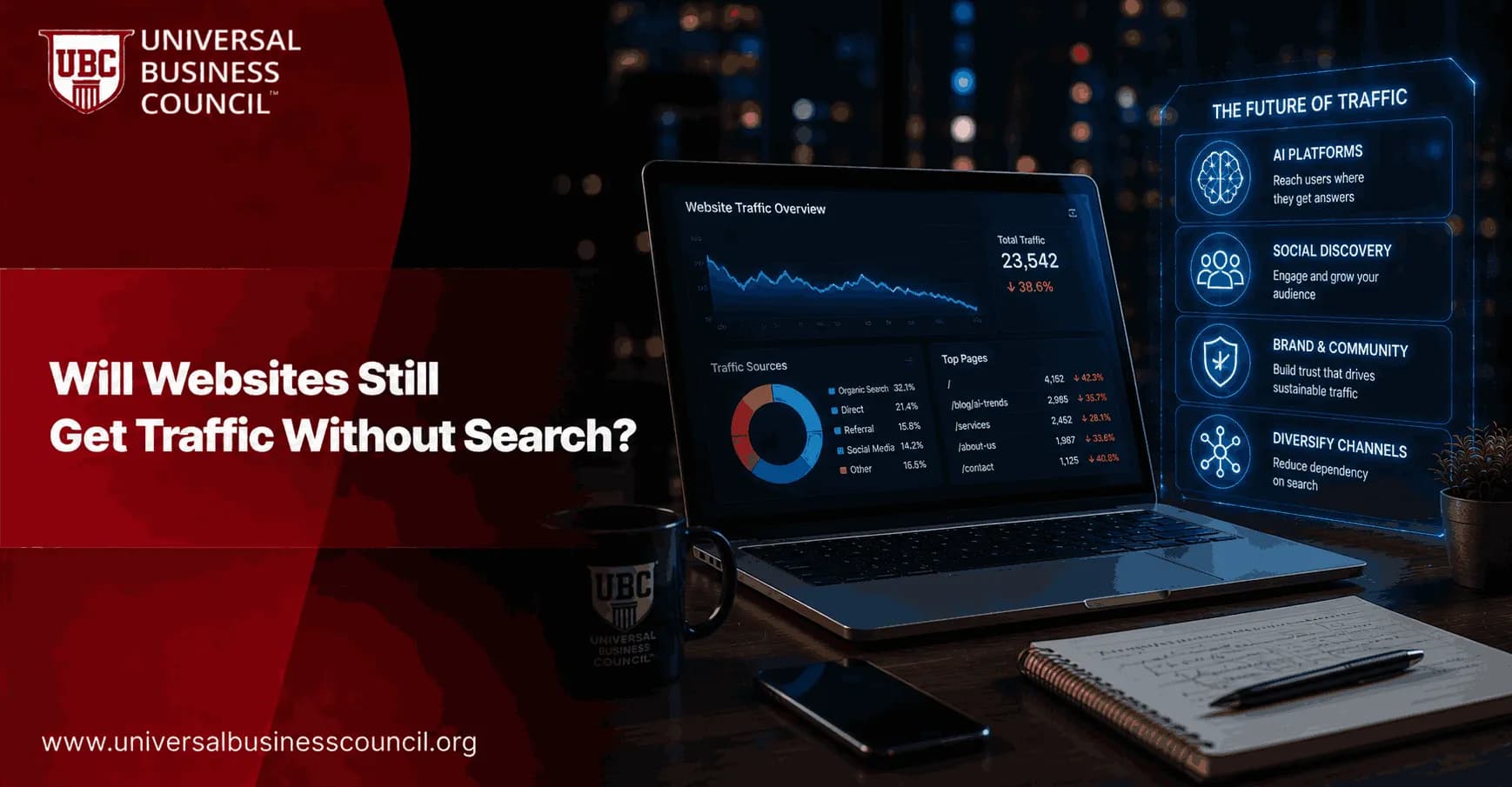
The digital world is changing at an extraordinary pace. For decades, websites depended heavily on search engines to attract visitors. Businesses focused on ranking on Google, improving SEO strategies, and publishing optimized content to drive traffic. Search engines were considered the primary gateway to online visibility.
Today, however, the internet works very differently.

Artificial intelligence, social media algorithms, creator-driven platforms, online communities, and personalized recommendation systems are transforming how users discover information. Instead of searching through multiple websites, many users now rely on AI assistants, short-form videos, podcasts, and social feeds for answers and recommendations.
This shift has raised a major question among businesses and marketers:
Will websites still get traffic without search engines?
The answer is yes. Websites will continue receiving traffic, but the methods of attracting visitors are evolving rapidly. Businesses that adapt to modern discovery channels and changing user behavior will continue thriving. Companies relying only on traditional SEO may struggle to maintain visibility in the future. Humanity spent years obsessing over search rankings, and now people trust random creators explaining financial advice beside dancing videos and cooking clips. Digital evolution remains aggressively unpredictable.
The Internet Is Moving Beyond Traditional Search
Search engines are no longer the only place where users discover content online.
Modern internet users often search directly on:
YouTube
TikTok
Instagram
Reddit
AI chatbots
Online communities
People now prefer faster, more visual, and personalized experiences instead of browsing multiple search results.
This does not mean websites are disappearing. Instead, websites are becoming part of larger digital ecosystems where traffic comes from many channels simultaneously.
Businesses and professionals adapting to these evolving marketing trends often pursue advanced Marketing certification programs to strengthen modern marketing knowledge and leadership skills.
Why Search Traffic Is Changing
Traditional search behavior is shifting because user expectations have changed dramatically.
People now want:
Instant answers
Personalized recommendations
Conversational experiences
Video-based information
Real-time engagement
AI-powered systems can now summarize information immediately without requiring users to open several websites.
AI Search Experiences Are Growing
AI tools like ChatGPT, Gemini, and Perplexity provide direct responses instead of displaying long lists of links.
As a result:
Informational websites may receive fewer clicks
Users spend less time browsing search results
Brand authority becomes more important
However, websites offering unique expertise, tools, and experiences still remain highly valuable.
Websites Still Matter in the AI Era
Even with AI becoming more advanced, websites continue serving essential business functions.
Websites provide:
Brand credibility
Customer trust
Product information
Secure transactions
Direct communication
Community engagement
Social media platforms can change algorithms anytime, but businesses fully control their own websites.
This ownership makes websites extremely important for long-term digital stability.
Social Media Is Becoming a Discovery Engine
Social platforms now act as modern search engines for millions of users.
People frequently use:
TikTok for product reviews
Instagram for fashion trends
YouTube for tutorials
Reddit for honest discussions
LinkedIn for professional insights
Younger audiences especially prefer creator-driven content over traditional search results.
Viral Content Drives Traffic Fast
A single viral video or trending post can generate massive website traffic within hours.
This has changed how brands approach marketing strategies. Entire marketing teams carefully plan campaigns for months, only to watch someone with a smartphone and questionable lighting outperform them in thirty seconds. The internet continues rewarding chaos with astonishing consistency.
Email Marketing Remains Highly Effective
Despite the rise of AI and social media, email marketing still provides reliable traffic and customer engagement.
Benefits of email marketing include:
Direct audience access
Personalized communication
High conversion rates
Customer retention
Platform independence
Unlike social media followers, businesses own their email subscriber lists completely.
Community-Based Traffic Is Increasing
Communities are becoming major sources of digital engagement and referral traffic.
Platforms like:
Discord
Reddit
Slack groups
Facebook communities
Niche forums
encourage authentic discussions and recommendations.
Users trust community conversations because they feel more genuine than traditional advertisements.
Content Quality Is More Important Than Ever
The rise of AI-generated content has flooded the internet with repetitive articles and generic information.
As a result, users increasingly value:
Original insights
Expert analysis
Real-world examples
Human experiences
Research-backed content
High-quality content helps websites stand out in crowded digital environments.
AI Is Reshaping Digital Marketing
Artificial intelligence is transforming how businesses:
Create content
Analyze customer behavior
Personalize experiences
Automate workflows
Optimize campaigns
Professionals interested in understanding intelligent systems and AI-driven business strategies often pursue the AI Expert certification to strengthen their expertise in artificial intelligence technologies.
Organizations also explore advanced innovation strategies through Deeptech certification programs focused on emerging technologies and digital transformation.
The Rise of Generative AI
Generative AI tools can now create:
Text
Images
Videos
Code
Marketing materials
These technologies are dramatically increasing productivity and changing content creation workflows.
Professionals aiming to understand modern generative systems often enroll in the Generative ai expert course to gain practical knowledge of AI-powered content technologies.
Websites Are Becoming Experience Platforms
Modern websites are evolving into interactive digital experience centers rather than simple information pages.
Successful websites now offer:
Personalized recommendations
Interactive tools
AI-powered chat support
Educational resources
Community features
Businesses must focus on engagement instead of only attracting clicks.
Video Content Is Dominating User Attention
Video continues becoming one of the strongest drivers of online engagement.
Popular formats include:
Short-form reels
Tutorials
Webinars
Live streams
Product demonstrations
Video content increases:
User retention
Social sharing
Audience engagement
Brand visibility
YouTube itself has become one of the world’s largest search platforms.
Agentic AI Will Transform Digital Experiences
Agentic AI refers to autonomous AI systems capable of performing tasks independently.
Examples include:
AI scheduling assistants
Automated customer support
AI shopping agents
Personalized recommendation systems
These technologies are expected to reshape customer interactions significantly.
Professionals preparing for this future increasingly pursue the Agentic AI course to understand autonomous AI systems and intelligent automation.
Technical Skills Are Becoming Essential
As AI adoption increases, businesses require professionals skilled in:
Automation
Coding
Cybersecurity
AI integration
Data analytics
Technology professionals aiming to stay competitive often pursue recognized Tech certification programs to validate technical expertise in emerging technologies.
Developers adapting to AI-assisted programming environments may also benefit from the AI Powered coding expert Course to improve productivity and software development skills.
SEO Is Evolving Instead of Disappearing
SEO is still important, but its role is changing.
Modern SEO now focuses on:
User intent
Trustworthiness
Conversational content
Experience optimization
Brand authority
AI discoverability
Businesses can no longer rely solely on keyword stuffing or backlink manipulation.
Future SEO Will Focus on Authority
Search engines and AI systems increasingly prioritize:
Expertise
Credibility
User satisfaction
Authenticity
Engagement metrics
Brands with strong reputations are more likely to succeed long term.
The Future of Website Traffic
Website traffic in the future will come from multiple interconnected channels, including:
AI recommendations
Social platforms
Email marketing
Communities
Podcasts
Creator ecosystems
Businesses must adapt to this diversified digital environment.
Strategies Businesses Should Follow
To remain successful in the changing internet landscape, businesses should:
Build Recognizable Brands
Strong brands attract direct traffic and customer trust.
Diversify Marketing Channels
Relying on one traffic source creates unnecessary risk.
Invest in AI Technologies
AI improves automation, personalization, and customer experiences.
Create Valuable Content
Unique and insightful content performs better online.
Focus on User Experience
Fast and interactive websites retain users more effectively.
Engage With Communities
Communities help businesses build loyalty and referrals.
Conclusion
Websites will continue receiving traffic even as traditional search behavior evolves. However, the methods users use to discover websites are changing significantly.
The future of digital traffic will depend on:
AI-powered systems
Social discovery
Community engagement
Personalized experiences
Brand authority
Multi-platform visibility
Search engines will remain relevant, but they will no longer dominate online discovery in the same way as before.
Businesses that embrace innovation, build strong brands, and diversify their traffic strategies will continue thriving in the evolving digital economy. Companies refusing to adapt may eventually realize the internet quietly changed the rules while they were still celebrating minor ranking improvements for keywords nobody searches anymore. Technology can be ruthlessly efficient like that.
FAQs
1. Will websites disappear because of AI?
No, websites will not disappear because businesses still need digital spaces they fully control. Websites remain important for branding, customer interaction, and transactions. AI is changing traffic patterns, not eliminating websites.
2. Why are people using social media instead of search engines?
Social media platforms provide faster, visual, and personalized content experiences. Users often trust creators and community recommendations more than traditional search results. This trend is especially popular among younger audiences.
3. What is zero-click content?
Zero-click content refers to answers users receive directly from search engines or AI systems without visiting websites. Examples include featured snippets and AI-generated summaries. This trend affects informational websites significantly.
4. Is SEO still useful today?
Yes, SEO is still valuable, but it has evolved considerably. Modern SEO focuses more on user experience, authority, and helpful content instead of simple keyword optimization. Businesses must adapt to conversational and AI-driven search.
5. How can businesses get traffic without Google?
Businesses can attract traffic through social media, email newsletters, online communities, podcasts, and creator partnerships. Diversifying traffic sources improves long-term stability. Strong branding also helps generate direct visitors.
6. Why is original content important in 2026?
The internet is filled with repetitive AI-generated material, making originality more valuable than ever. Users prefer authentic insights and expert knowledge. High-quality content also improves trust and engagement.
7. How does AI affect website traffic?
AI systems often provide direct answers without users clicking websites. This reduces traffic for simple informational pages. However, authoritative and engaging websites can still benefit greatly from AI-driven discovery.
8. What role do online communities play in traffic generation?
Communities create trust, recommendations, and authentic discussions around brands and products. Users often rely on community feedback before making decisions. This can drive highly engaged referral traffic.
9. Why are videos becoming so popular online?
Videos are easier to consume, visually engaging, and highly shareable across platforms. Many users prefer watching tutorials instead of reading articles. Video platforms also encourage stronger audience interaction.
10. Can small businesses survive without large marketing budgets?
Yes, small businesses can compete through creativity, niche targeting, and authentic engagement. Community building and quality content can outperform expensive advertising campaigns. Trust matters more than company size online.
11. What is first-party audience ownership?
First-party audience ownership means businesses directly control customer relationships through websites and email lists. This reduces dependence on social media algorithms. It also improves long-term marketing stability.
12. What is agentic AI?
Agentic AI refers to intelligent systems capable of acting independently to complete tasks. These systems improve automation and personalized experiences. Businesses are increasingly adopting them across industries.
13. Why is user experience critical for websites now?
Users expect websites to be fast, mobile-friendly, and easy to navigate. Poor experiences reduce engagement and trust quickly. Search engines and AI systems also prioritize high-quality user experiences.
14. Are websites still important for e-commerce?
Yes, websites remain essential for secure shopping, account management, and customer support. Social media may drive discovery, but websites provide complete transaction experiences. Businesses still need dedicated online platforms.
15. How does AI improve digital marketing?
AI helps businesses automate campaigns, analyze customer data, and personalize content efficiently. It improves targeting and customer experiences significantly. Many companies now depend heavily on AI-driven marketing tools.
16. What skills are valuable in the modern digital economy?
Skills related to AI, coding, cybersecurity, automation, and analytics are increasingly valuable. Businesses need professionals who understand emerging technologies. Continuous learning is becoming essential for career growth.
17. Why should brands diversify traffic sources?
Depending entirely on one platform can be risky because algorithms change frequently. Diversified traffic sources create more stability and resilience. Businesses become less vulnerable to sudden digital disruptions.
18. Will AI-generated content dominate the internet completely?
AI-generated content will continue growing, but human creativity and expertise still matter greatly. Users value authenticity and real experiences. Human-centered content remains more trustworthy and engaging.
19. How can businesses build stronger online authority?
Businesses can build authority through expert content, consistent branding, and customer trust. Engaging with communities and publishing valuable insights also helps. Strong authority improves visibility and loyalty.
20. What is the future of website traffic?
Future website traffic will come from AI systems, social media, communities, and personalized recommendations. Search engines will still matter but will no longer dominate completely. Businesses must adapt to evolving digital behaviors.
Related Articles
View All
Seo
How Brands Will Get Discovered Without Search Bars
As AI assistants replace traditional search behavior, brands must build authority, structured content, and entity signals to stay discoverable.
Seo
Is SEO Dead Without Google Search?
As AI assistants and answer engines gain popularity, many marketers are questioning the future of SEO. Learn why SEO is evolving rather than disappearing and how brands can adapt.
Seo
How Do Search Engines Rank Websites?
Search engines rank websites based on how well a page answers a user’s query. They look at factors like content quality, user experience, backlinks, site structure, and overall authority. The better your content matches the search intent and technical expectations, the higher your site appears in…
Trending Articles
The Role of Blockchain in Ethical AI Development
How blockchain technology is being used to promote transparency and accountability in artificial intelligence systems.
AWS Career Roadmap
A step-by-step guide to building a successful career in Amazon Web Services cloud computing.
Top 5 DeFi Platforms
Explore the leading decentralized finance platforms and what makes each one unique in the evolving DeFi landscape.