

GEO vs SEO: The Next Digital Marketing Shift
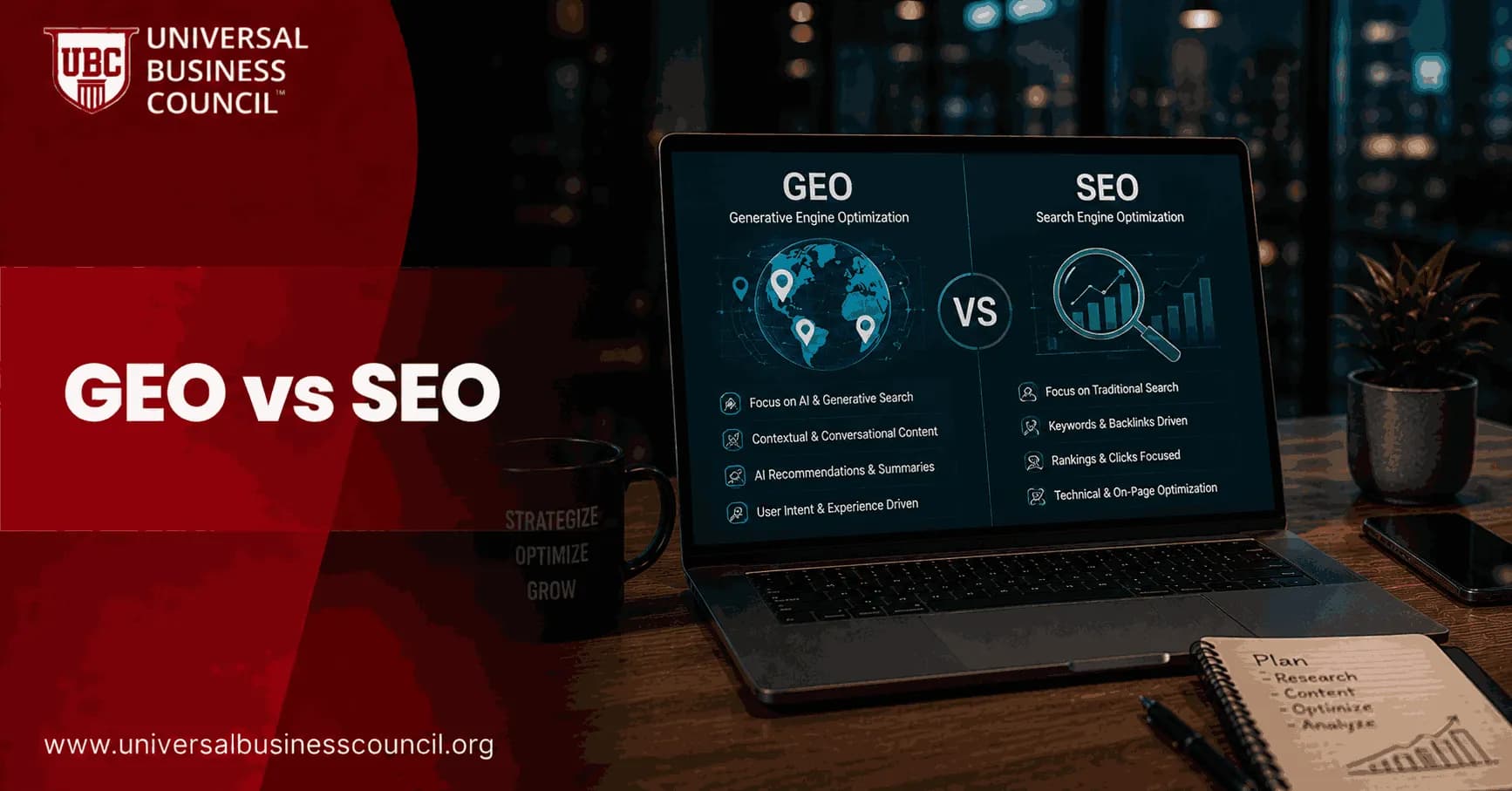
The digital marketing landscape is changing rapidly as artificial intelligence transforms how users search, discover, and consume information online. For many years, Search Engine Optimization (SEO) remained the dominant strategy for improving website visibility and attracting organic traffic. Businesses invested heavily in keywords, backlinks, technical optimization, and content marketing to rank higher on Google.
Today, however, the rise of AI-powered search systems has introduced a new concept called Generative Engine Optimization (GEO).

Platforms such as ChatGPT, Gemini, Perplexity, and AI-enhanced search engines are reshaping online behavior by delivering conversational responses and summarized answers instead of simply displaying lists of webpages. As a result, businesses are beginning to optimize content not only for traditional search engines but also for AI-generated outputs.
This transition represents one of the biggest digital marketing shifts in recent years. Marketers spent decades learning how to please search algorithms, and now AI systems are casually rewriting the rules while pretending to be helpful assistants. Technology has a remarkable habit of changing the exam after everyone studies for it.
Professionals adapting to modern business and digital strategies often pursue advanced Marketing certification programs to strengthen strategic marketing and leadership capabilities.
What Is SEO?
Search Engine Optimization is the process of improving website visibility in traditional search engine result pages.
SEO strategies usually focus on:
Keywords
Backlinks
Technical SEO
Content optimization
Mobile responsiveness
Website authority
The main purpose of SEO is to improve rankings and increase organic website traffic.
Why SEO Became So Important
SEO became essential because higher rankings often resulted in:
More visibility
Better traffic
Increased conversions
Stronger brand awareness
For years, businesses relied heavily on Google rankings to grow online.
Understanding GEO
Generative Engine Optimization focuses on optimizing content for AI-powered systems and conversational search platforms.
Instead of focusing only on webpage rankings, GEO aims to improve visibility within:
AI-generated answers
Conversational search results
Summarized responses
AI assistants
Intelligent recommendation systems
GEO is becoming increasingly important as AI systems continue changing online search behavior.
Professionals interested in advanced artificial intelligence technologies often pursue the AI Expert certification to strengthen expertise in intelligent systems and AI-driven transformation.
Why GEO Is Emerging Rapidly
AI-powered systems are changing how users access information online.
Modern users increasingly expect:
Instant answers
Personalized experiences
Conversational interactions
Faster search experiences
AI systems now provide direct responses without requiring users to browse multiple websites.
AI Search Platforms Continue Growing
Popular AI-powered platforms include:
ChatGPT
Gemini
Perplexity
AI-enhanced search engines
These systems prioritize context and user intent more than traditional keyword matching.
GEO vs SEO: Main Differences
Although GEO and SEO share similarities, their goals differ significantly.
SEO Primarily Focuses On:
Search rankings
Website traffic
Keywords
Link authority
Search engine visibility
GEO Primarily Focuses On:
AI-generated visibility
Conversational understanding
Semantic relevance
User intent
Trustworthy content
Businesses now need strategies for both environments.
Zero-Click Search Is Increasing
One major reason GEO is growing is the rise of zero-click searches.
Users increasingly receive answers directly through:
AI-generated summaries
Featured snippets
Voice assistants
Conversational AI tools
This reduces the number of users visiting websites directly.
What This Means for Businesses
Businesses can no longer depend entirely on traditional search rankings. They must also optimize content to appear inside AI-generated responses.
SEO Still Matters
Despite the growth of GEO, SEO remains highly valuable.
Traditional SEO still supports:
Website indexing
Organic traffic
Brand visibility
Technical discoverability
Long-term growth
Businesses should combine GEO and SEO strategies instead of replacing one with the other.
High-Quality Content Drives GEO and SEO
Both SEO and GEO prioritize strong content quality.
Important content factors include:
Accuracy
Expertise
Originality
Clarity
User value
Low-quality or repetitive material struggles to perform well in modern search environments.
E-E-A-T Is Becoming More Important
Search systems increasingly evaluate:
Experience
Expertise
Authoritativeness
Trustworthiness
Strong credibility signals improve online visibility significantly.
Conversational Search Is Changing Optimization
Traditional SEO often relied heavily on exact keywords.
Modern AI systems understand natural language and conversational prompts much better.
Users now search using questions like:
“What are the best AI tools for content marketing?”
instead of:
“best AI marketing tools”
Optimize for Natural Language
Businesses should:
Use conversational phrasing
Create FAQ sections
Add question-based headings
Focus on search intent
This improves visibility in both GEO and SEO systems.
Semantic SEO Is Essential
Modern AI-powered systems focus strongly on:
Context
Meaning
Topic relationships
Search intent
Keyword stuffing is becoming less effective.
Build Topic Authority
Businesses should create:
Educational guides
Topic clusters
In-depth resources
Supporting content
Authority across an entire subject area improves discoverability.
Organizations exploring advanced innovation and intelligent technologies frequently pursue Deeptech certification programs focused on emerging systems and digital transformation.
Technical SEO Still Supports GEO
Technical optimization remains important even in AI-driven environments.
Important technical factors include:
Website speed
Structured data
Security
Accessibility
Mobile responsiveness
Crawlability
AI systems still rely on technically optimized websites to understand content properly.
Structured Data Improves Discoverability
Schema markup helps AI systems interpret:
Reviews
Products
Articles
FAQs
Business information
Structured content improves indexing and search visibility.
Developers improving technical optimization and automation often strengthen expertise through the AI Powered coding expert Course to better understand AI-assisted development and SEO workflows.
Voice Search Is Accelerating GEO
Voice search is changing how people interact with online information.
Users increasingly search through:
Smartphones
Smart speakers
AI assistants
Wearable devices
Voice searches are usually:
More conversational
More detailed
More natural
Businesses should optimize content accordingly.
AI-Generated Content Is Transforming Marketing
Generative AI tools are changing how businesses create content.
AI systems now assist with:
Research
Drafting
Automation
SEO optimization
Workflow management
However, human oversight remains extremely important.
Human Expertise Still Matters
AI-generated content without editing may:
Feel repetitive
Lack originality
Contain inaccuracies
Reduce user trust
Businesses should combine AI efficiency with human creativity and strategic thinking.
Professionals exploring advanced content automation increasingly pursue the Generative ai expert course to better understand generative AI technologies and applications.
Personalization Is Reshaping Search
AI systems personalize search experiences based on:
User behavior
Preferences
Search history
Location
Context
This makes optimization more dynamic and individualized.
Understanding Audience Intent Is Critical
Businesses should understand:
Customer behavior
Search patterns
User needs
Pain points
Content aligned with audience intent performs more effectively.
Multimedia Content Is Becoming More Valuable
AI-powered search increasingly prioritizes:
Videos
Podcasts
Visual explainers
Interactive content
Users often prefer multimedia experiences over text-heavy webpages.
Visual Content Improves Engagement
Educational videos and visual tutorials often perform strongly in AI-enhanced environments.
Multimedia improves:
User retention
Engagement
Sharing behavior
Online visibility
Social Platforms Influence GEO and SEO
Users increasingly search directly on:
YouTube
TikTok
Reddit
LinkedIn
AI systems also analyze:
Community discussions
Creator content
User-generated recommendations
Social engagement
Search visibility now extends beyond traditional search engines.
Community Trust Matters
Authentic engagement improves:
Brand authority
Customer trust
Referral traffic
Discoverability
Community-driven influence is becoming increasingly valuable.
Agentic AI Will Shape Future Marketing
Agentic AI refers to autonomous systems capable of independently making decisions and completing tasks.
Future AI systems may:
Compare products
Conduct research
Recommend services
Complete transactions
This could reshape digital marketing and customer experiences significantly.
Professionals preparing for intelligent automation ecosystems increasingly explore the Agentic AI course to strengthen expertise in autonomous AI systems.
Future Marketers Need Broader Expertise
Modern optimization increasingly overlaps with:
AI systems
Automation
Analytics
Technical SEO
Consumer psychology
Digital marketers now require broader expertise than before.
Technology professionals strengthening modern digital knowledge often pursue recognized Tech certification programs to remain competitive in evolving industries.
Best Strategies for GEO and SEO Success
Focus on User Intent
Create content that solves real customer problems.
Build Content Authority
Publish trustworthy and expert-driven information consistently.
Optimize for Conversational Search
Use natural language and question-based structures.
Improve Technical SEO
Ensure websites are secure, fast, and mobile-friendly.
Expand Digital Visibility
Combine SEO with multimedia and social engagement.
Common Mistakes Businesses Should Avoid
Publishing Thin Content
Low-quality material performs poorly in both GEO and SEO.
Ignoring Technical Performance
Poor website performance reduces discoverability.
Overusing AI Without Editing
Human oversight remains essential for trust and originality.
Focusing Only on Keywords
Modern AI systems prioritize relevance and meaning more than repetition.
Conclusion
The rise of GEO alongside traditional SEO represents a major transformation in digital marketing.
SEO continues supporting website rankings and organic traffic, while GEO helps businesses appear inside AI-generated responses and conversational search environments.
Businesses must now combine:
Technical optimization
Conversational relevance
Semantic understanding
High-quality content
Multimedia engagement
Brand authority
The future of digital marketing belongs to businesses that successfully balance traditional SEO strategies with AI-driven optimization techniques. Companies relying entirely on outdated keyword-focused tactics may eventually discover that modern AI systems value expertise, trust, and user satisfaction far more than mechanical ranking tricks. Search technology is evolving quickly, and businesses must evolve alongside it.
FAQs
1. What does SEO mean?
SEO stands for Search Engine Optimization, which focuses on improving website visibility in search engine result pages. Businesses use SEO to attract organic traffic through keywords, technical optimization, and content strategies. SEO remains highly important for online growth.
2. What is GEO in digital marketing?
GEO stands for Generative Engine Optimization, which focuses on optimizing content for AI-powered search systems and conversational platforms. GEO helps businesses appear in AI-generated responses and summaries. It is becoming increasingly important as AI search grows.
3. How is GEO different from traditional SEO?
SEO focuses mainly on webpage rankings and search traffic, while GEO focuses on AI-generated visibility and conversational relevance. GEO prioritizes semantic understanding and context. Both approaches now work together in modern marketing.
4. Why is GEO becoming more important?
AI-powered platforms increasingly provide direct answers instead of traditional lists of websites. Users often receive information without clicking webpages. GEO helps businesses maintain visibility in AI-driven environments.
5. Does SEO still matter in modern marketing?
Yes, SEO remains essential for website discoverability, indexing, and long-term traffic generation. Technical optimization and high-quality content still influence rankings. Businesses should combine SEO and GEO strategies.
6. What are zero-click searches?
Zero-click searches happen when users receive answers directly from search engines or AI systems without visiting websites. AI summaries and featured snippets are common examples. This trend is reshaping online traffic patterns.
7. Why is conversational search important?
Users increasingly search using natural language and complete questions. AI systems understand conversational prompts more effectively than traditional keyword-based systems. Businesses should optimize for this behavior.
8. What is semantic SEO?
Semantic SEO focuses on context, meaning, and topic relationships instead of exact keyword repetition. AI systems analyze search intent and relevance. This improves discoverability in modern search environments.
9. Why is content quality important for GEO and SEO?
Both GEO and SEO prioritize accurate, trustworthy, and expert-driven information. Low-quality content struggles to perform well. High-quality material improves authority and visibility.
10. What role does structured data play in optimization?
Structured data helps AI systems and search engines understand content more effectively. It improves visibility for products, FAQs, reviews, and articles. Schema markup supports discoverability and indexing.
11. How does voice search influence GEO?
Voice searches are usually longer and more conversational than typed searches. Businesses should optimize content for natural language and direct answers. Voice-friendly content improves discoverability.
12. What is E-E-A-T in search optimization?
E-E-A-T stands for Experience, Expertise, Authoritativeness, and Trustworthiness. Search systems use these signals to evaluate content quality and credibility. Strong E-E-A-T improves online visibility significantly.
13. Can AI-generated content perform well in search?
AI-generated content can perform well if it is original, accurate, and valuable. Human editing remains essential for trustworthiness and quality control. Generic content often struggles in competitive environments.
14. Why is personalization important in AI search?
AI systems personalize search results based on user preferences, behavior, and location. Different users may receive different responses for similar queries. Personalization improves relevance and engagement.
15. How do social platforms influence GEO and SEO?
Platforms like TikTok, YouTube, Reddit, and LinkedIn increasingly influence online discovery. AI systems analyze creator content and community engagement. Social visibility now supports broader digital marketing performance.
16. What is agentic AI?
Agentic AI refers to autonomous systems capable of independently making decisions and completing tasks. These systems may influence future search and shopping experiences. Businesses are preparing for intelligent automation trends.
17. Why is multimedia content becoming more important?
Videos, podcasts, and visual explainers improve engagement and user retention. AI-powered search increasingly prioritizes multimedia experiences. Visual content is becoming more popular among users.
18. What skills do future marketers need?
Modern marketers need expertise in AI systems, analytics, automation, technical SEO, and content strategy. Understanding user behavior is also important. Continuous learning remains essential.
19. What mistakes should businesses avoid in GEO and SEO?
Businesses should avoid keyword stuffing, low-quality content, poor technical performance, and excessive reliance on AI-generated material. Trust and originality matter greatly. User value strongly influences visibility.
20. What is the future of GEO and SEO?
The future of digital optimization will combine GEO, SEO, semantic relevance, conversational understanding, personalization, and multimedia engagement. Businesses must combine intelligent technologies with human expertise. Continuous adaptation will remain necessary.
Related Articles
View All
Seo
Digital Marketing Trends: Local SEO
Local search engine optimization (SEO) evolves constantly, which means businesses need to stay updated with ongoing changes. Adapting to these shifts helps companies compete effectively and draw in customers from their area. What Does Local SEO Involve? Local SEO focuses on strategies to improve…

Seo
SEO Or PPC Marketing - Which One Will Give Better Outcomes?
SEO and PPC can both deliver strong marketing outcomes, but they serve different goals. SEO focuses on building sustainable organic visibility through useful content and search optimization, while PPC can generate targeted traffic quickly through paid advertising. For many businesses, combining SEO for long-term growth with PPC for immediate visibility creates a more balanced search marketing strategy.

Seo
Best Claude SEO Rank Tracking
Tracking your visibility in Claude requires monitoring AI citations, brand mentions, answer inclusion, and authority signals beyond traditional keyword rankings. Learn how Claude SEO rank tracking works and which metrics matter most.
Trending Articles
The Role of Blockchain in Ethical AI Development
How blockchain technology is being used to promote transparency and accountability in artificial intelligence systems.
AWS Career Roadmap
A step-by-step guide to building a successful career in Amazon Web Services cloud computing.
Top 5 DeFi Platforms
Explore the leading decentralized finance platforms and what makes each one unique in the evolving DeFi landscape.