

Six Sigma in Logistics: Cutting Delays and Improving Delivery Performance
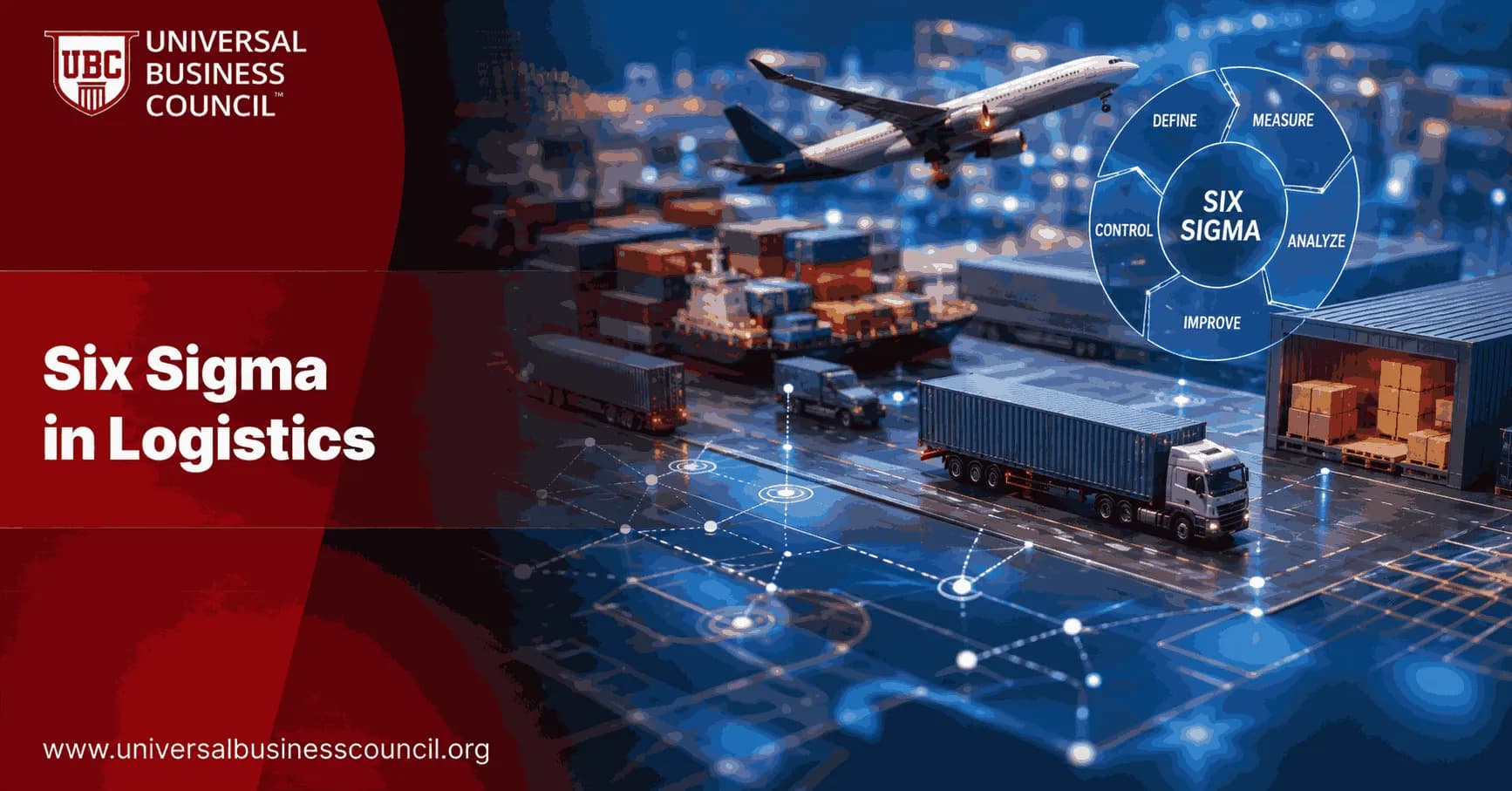
Six Sigma in logistics works best when it is aimed at one stubborn problem: missed delivery promises. Not vague efficiency. Not a wall of metrics. Pick the delay that customers actually feel, measure it cleanly, then use DMAIC to remove the causes that keep showing up. Professionals who want to lead this kind of work rather than just report on it often start with the Certified Six Sigma Expert credential, which covers the DMAIC discipline this article is built around.
The evidence is strong. Published Lean Six Sigma logistics and supply chain cases report lead-time reductions of 20 to 50 percent, real gains in delivery reliability, and measurable cost savings. One Swedish case cut lead time for 98 percent of products from 80 hours to 48 hours or less while holding delivery precision. Another supply chain monitoring project improved vendor delivery performance from 65 percent to 95 percent and produced more than $100,000 in annual savings.

Why logistics is a natural fit for Six Sigma
Logistics is full of variation. Trucks arrive early, late, or in waves. Pickers wait for replenishment. Yard slots fill up. Approval queues sit untouched because the one person who can release the order is in another meeting. Because fixing that variation usually means coordinating warehouse, dispatch, procurement, and customer service teams together, logistics leaders often pair Six Sigma training with broader Management Certifications, since running a cross-functional improvement program across that many handoffs is as much a leadership skill as a statistical one.
That is exactly where Six Sigma helps. It turns delay into a measurable defect, then asks whether the process is capable of meeting the customer-defined delivery window. In classic Six Sigma terms, the ideal is roughly 3.4 defects per million opportunities. Most logistics networks are nowhere near that level. A study of PT Kamadjaja Logistics Surabaya found a sigma level of 2.25 for goods delivery, with 251,733 defects per million opportunities and customer satisfaction of 76.37 percent.
To be blunt, average delivery time is often a weak comfort metric. Customers care whether you delivered when you promised. Averages hide ugly spread.
The DMAIC structure for delivery performance
Most projects using Six Sigma in logistics follow DMAIC: Define, Measure, Analyze, Improve, and Control. The sequence matters. Skip Measure and the project becomes opinion management.
Define the delivery problem
Start with a narrow problem statement. Good examples include:
Late deliveries on the northeast regional route
Low on-time-in-full performance for key accounts
Long dock-to-dock cycle time during the afternoon shift
High complaint rates tied to shipment accuracy
Administrative approval delays before release to dispatch
A common beginner mistake is defining the project as "improve logistics." Too broad. Define the miss, the customer affected, the time period, and the financial or service impact.
Measure what actually happens
Use timestamps, scan events, GPS data, RFID reads, transport management system records, and customer receipt confirmations. The useful baseline metrics usually include:
Order fulfillment lead time: from order receipt to delivery receipt at the customer dock
On-time delivery: delivered inside the promised window
OTIF: on time and in full
Dock-to-dock cycle time: entry, unloading or loading, and exit
Picking accuracy: correct item, quantity, and location
Cost per shipment and logistics cost as a percentage of revenue
Complaint rate: complaints per order or shipment
Here is the messy part people forget: timestamp definitions are often inconsistent. "Shipped" might mean label printed in one system, trailer sealed in another, and carrier pickup in a third. Fix that before you run charts.
Analyze the real delay drivers
Use value stream mapping, Pareto analysis, cause-and-effect matrices, regression, ANOVA, and control charts where the data supports them. Tag each process step as value-added, required but non-value-added, or waste.
In logistics, root causes tend to cluster around a few areas:
Inefficient routing and poor stop sequencing
Loading delays caused by missing paperwork or late staging
Warehouse layout that forces excess motion
Yard congestion and poor appointment discipline
Supplier delivery variation
Approval queues that delay release even when inventory is available
The administrative side deserves attention. A Thai DMAIC study on ABC Company reduced the submit and technical approval portion of delivery lead time from 23 working days to 13. That is not a truck problem. It is a process design problem.
Improvements that tend to work
Once the data points to a cause, keep the fix practical. The best Lean Six Sigma logistics projects rarely start with expensive software. They start with standard work.
Route optimization for recurring lane delays
Warehouse re-layout to reduce travel and staging confusion
Job leveling to smooth labor load across shifts
Cross-docking when storage adds no value
Standardized shipping lists to reduce dispatch errors
Supplier scorecards tied to delivery window adherence
Control charts for lead time and delivery variation
One logistics case improved delivery accuracy from 34 percent to 71 percent by fixing shipping list consistency and delivery scheduling. Another multi-metric Six Sigma logistics program raised on-time delivery from 85 percent to 98 percent, improved order fulfillment accuracy from 90 percent to 99.5 percent, cut logistics costs from 12 percent to 8 percent of revenue, and reduced complaint rates from 5 percent to 0.5 percent.
Control is where projects usually fail
The Control phase is not a ceremonial handoff. It is the part that stops the operation from sliding back after the project team leaves.
Use dashboards, control plans, standard operating procedures, shift audits, escalation rules, and KPI reviews. GPS and RFID data can help, but only if someone owns the response. A dashboard that turns red at 4:30 p.m. is useless if dispatch reviews it tomorrow morning. As more of this monitoring shifts onto GPS tracking, RFID, and real-time transport management data, some logistics teams also pair this Six Sigma work with a Deep Tech Certification to build a stronger footing in the emerging technology now feeding those dashboards.
Certification candidates often trip over this point: control limits are not customer specification limits. Control limits show process behavior. Specification limits show what the customer will accept. Mix them up and you make bad decisions.
Skills professionals need now
Modern logistics improvement needs more than basic process mapping. You need enough statistics to separate random variation from a real signal, plus enough operational sense to know when a proposed fix will break the floor routine.
If you are building this capability, connect this topic with Universal Business Council learning paths in Six Sigma, operations management, supply chain management, and business analytics. These are natural internal link opportunities for professionals preparing to lead DMAIC projects or manage delivery performance improvement programs.
What to do next
Choose one delivery metric this week. On-time delivery is usually the best starting point because leadership understands it and customers feel it. Pull 30 to 90 days of promised versus actual delivery data, segment it by route, customer, carrier, and warehouse shift, then build a simple Pareto chart.
If one cause explains a large share of misses, you have a Six Sigma project. If the misses are spread everywhere, your first job is better measurement. Start there, then move into the Universal Business Council Six Sigma certification pathway to build the DMAIC and statistical skills needed to sustain the gains. If your role also touches the TMS, GPS, or scanning systems generating that measurement data, a general Tech Certification can help round out that technical side of the work.
FAQs
1. What is Six Sigma in logistics?
Six Sigma in logistics is a data-driven methodology used to reduce process variation, eliminate defects, minimize delays, and improve the reliability of logistics operations. It can be applied to transportation, warehousing, order fulfillment, inventory management, distribution, and last-mile delivery. By measuring logistics performance and analyzing the causes of failures, Six Sigma helps organizations create more predictable processes, reduce operating costs, improve delivery accuracy, and provide customers with more consistent service.
2. How does Six Sigma improve logistics performance?
Six Sigma improves logistics performance by identifying the process problems responsible for delays, errors, excessive costs, and inconsistent service. Teams can measure transportation lead times, order accuracy, warehouse processing times, delivery failures, inventory discrepancies, and other performance indicators. Statistical analysis and root cause analysis can then identify where problems originate. Improvements may involve standardized workflows, better routing, automation, supplier coordination, or stronger process controls, resulting in faster and more dependable logistics operations.
3. How can Six Sigma reduce delivery delays?
Six Sigma reduces delivery delays by examining each stage of the delivery process and identifying where time is being lost. Common causes may include inefficient route planning, warehouse congestion, incorrect documentation, late dispatch, vehicle downtime, inventory shortages, or carrier performance issues. Using DMAIC and root cause analysis, logistics teams can determine which factors contribute most to late deliveries and implement targeted improvements. This makes delivery performance more predictable instead of turning every late shipment into another heroic emergency.
4. What is DMAIC in Six Sigma for logistics?
DMAIC stands for Define, Measure, Analyze, Improve, and Control. It is commonly used to improve existing logistics processes. For example, a company experiencing frequent late deliveries can define the problem, measure current on-time delivery performance, analyze the causes of delays, implement improvements, and establish controls to sustain the results. DMAIC provides a structured approach that helps logistics teams solve problems based on evidence rather than repeatedly applying temporary fixes.
5. What are the benefits of Six Sigma in logistics and supply chain management?
The main benefits include shorter delivery times, improved order accuracy, lower transportation costs, reduced inventory errors, better warehouse productivity, fewer damaged shipments, and stronger on-time delivery performance. Six Sigma can also improve process visibility and help organizations make decisions based on reliable operational data. When applied across the supply chain, these improvements can increase efficiency while creating a more consistent experience for suppliers, distributors, retailers, and end customers.
6. What Six Sigma tools are commonly used in logistics?
Common Six Sigma tools used in logistics include SIPOC diagrams, process mapping, Pareto charts, control charts, fishbone diagrams, the 5 Whys, Failure Mode and Effects Analysis (FMEA), capability analysis, and Value Stream Mapping. These tools help logistics teams identify bottlenecks, prioritize recurring problems, measure process stability, and investigate root causes. For example, Pareto analysis can identify the small number of delay categories responsible for a large percentage of late deliveries.
7. How does Six Sigma improve on-time delivery performance?
Six Sigma improves on-time delivery by measuring the factors that influence whether shipments arrive within promised delivery windows. Teams can analyze order processing time, picking and packing duration, dispatch performance, carrier transit time, route variability, and delivery exceptions. Once the major sources of delay are identified, organizations can redesign processes and establish performance controls. Reducing variation across these stages makes delivery schedules more reliable and helps improve On-Time Delivery (OTD) rates.
8. How can Six Sigma improve warehouse efficiency?
Six Sigma can improve warehouse efficiency by analyzing receiving, put-away, storage, picking, packing, staging, and dispatch processes. Data may reveal excessive travel distances, picking errors, congestion, poor inventory placement, or inconsistent processing times. Teams can then redesign layouts, standardize procedures, optimize picking methods, introduce automation, or improve workforce allocation. These changes can shorten order cycle times, increase throughput, reduce errors, and improve the overall utilization of warehouse resources.
9. How does Six Sigma reduce logistics costs?
Six Sigma reduces logistics costs by identifying activities that create unnecessary expense without adding customer value. These may include expedited shipping, repeated deliveries, excessive inventory, transportation inefficiencies, warehouse errors, damaged goods, vehicle downtime, and manual reprocessing. By measuring the financial impact of these problems and addressing their root causes, organizations can lower the Cost of Poor Quality while maintaining or improving delivery performance.
10. What KPIs should be measured for Six Sigma in logistics?
Important logistics Six Sigma KPIs include On-Time Delivery (OTD), Order Cycle Time, Perfect Order Rate, order accuracy, picking accuracy, inventory accuracy, transportation cost per shipment, delivery failure rate, warehouse throughput, dock-to-stock time, damage rate, and customer complaints. Organizations should select KPIs that directly relate to the improvement objective. A warehouse with dozens of dashboards but no clearly defined problem has mostly succeeded in producing decorative analytics.
11. How can Six Sigma improve order fulfillment?
Six Sigma improves order fulfillment by analyzing the complete process from order receipt through picking, packing, shipping, and final delivery. Teams can identify errors, bottlenecks, waiting periods, and unnecessary handoffs that increase fulfillment time or reduce accuracy. Improvements may include better inventory visibility, automated order processing, standardized picking procedures, barcode or RFID systems, and optimized packing workflows. The result can be shorter fulfillment cycles, fewer incorrect orders, and higher customer satisfaction.
12. How does Six Sigma improve inventory management?
Six Sigma improves inventory management by reducing discrepancies between recorded and actual inventory and identifying causes of shortages, excess stock, and inaccurate replenishment. Teams can analyze demand variability, receiving errors, picking mistakes, supplier lead times, and stock movements. Better process controls can improve inventory accuracy and availability while reducing carrying costs. Reliable inventory data also prevents logistics teams from making increasingly sophisticated decisions based on quantities that never existed in the first place.
13. How can Six Sigma reduce transportation variability?
Six Sigma reduces transportation variability by measuring differences in transit times, carrier performance, routes, loading processes, and delivery outcomes. Statistical analysis can reveal which factors create the greatest inconsistency. Organizations can then optimize routes, improve carrier selection, standardize dispatch processes, revise delivery schedules, or strengthen contingency planning. Reducing variability allows transportation managers to create more dependable delivery estimates and improve overall supply chain predictability.
14. How does Six Sigma improve last-mile delivery?
Six Sigma can improve last-mile delivery by analyzing factors such as route efficiency, failed delivery attempts, address errors, driver productivity, traffic-related delays, and customer availability. Teams can identify recurring failure patterns and implement improvements such as route optimization, improved address validation, real-time customer notifications, and better delivery scheduling. Because last-mile operations are often expensive and highly variable, even modest improvements can reduce costs while improving customer delivery experiences.
15. How can Lean Six Sigma improve logistics operations?
Lean Six Sigma combines Lean's focus on eliminating waste with Six Sigma's focus on reducing defects and variation. In logistics, Lean can reduce unnecessary transportation, waiting, excess inventory, motion, and inefficient processing, while Six Sigma improves process consistency and quality. Together, the methodologies can shorten lead times, improve warehouse flow, reduce transportation costs, increase order accuracy, and create more reliable end-to-end logistics processes.
16. How does Six Sigma improve logistics customer satisfaction?
Six Sigma improves customer satisfaction by targeting logistics problems that directly affect the customer experience, such as late deliveries, damaged products, missing items, incorrect orders, and poor shipment visibility. Customer expectations can be converted into measurable Critical-to-Quality (CTQ) requirements such as delivery accuracy and promised lead time. Improvement projects can then focus resources on the operational issues that matter most to customers, resulting in more dependable service and fewer complaints.
17. How does Six Sigma help with logistics root cause analysis?
Six Sigma provides structured methods for determining why logistics failures occur. Techniques such as the 5 Whys, fishbone diagrams, Pareto analysis, process mapping, and statistical analysis can distinguish symptoms from underlying causes. For example, late deliveries may appear to be a transportation problem, while deeper analysis could reveal delayed warehouse picking or inaccurate inventory information. Addressing the true root cause prevents organizations from repeatedly correcting the same symptoms.
18. What are the challenges of implementing Six Sigma in logistics?
Common challenges include inconsistent data, complex supplier and carrier networks, changing demand, external transportation disruptions, resistance to standardized processes, and limited Six Sigma expertise. Logistics operations also involve variables such as traffic, weather, customs, and third-party performance that cannot always be directly controlled. Successful implementation therefore requires reliable data, clearly defined objectives, cross-functional collaboration, realistic performance measures, and continuous monitoring of both controllable and external factors.
19. How can Six Sigma improve e-commerce logistics and fulfillment?
Six Sigma can improve e-commerce logistics by reducing variation in order processing, inventory management, picking, packing, shipping, returns, and last-mile delivery. High order volumes generate extensive operational data that can be analyzed to identify recurring delays and errors. Six Sigma methods can help improve fulfillment accuracy, shorten order cycle times, reduce return-related costs, and strengthen delivery reliability, particularly during seasonal peaks when inefficient processes become considerably less subtle.
20. How can Six Sigma work with AI and automation in modern logistics?
Six Sigma can work alongside artificial intelligence, automation, IoT sensors, warehouse robotics, transportation management systems, and predictive analytics to improve modern logistics. Digital technologies provide real-time operational data and automate repetitive processes, while Six Sigma provides a structured framework for identifying meaningful problems, validating root causes, and measuring improvements. Together, they can support predictive delivery management, optimized routing, automated quality control, better inventory planning, and continuous improvement across increasingly digital supply chains.
Related Articles
View All
Six Sigma
Six Sigma in IT: Improving Service Delivery and Incident Resolution
Learn how Six Sigma in IT improves service delivery, incident resolution, SLA performance, and ITSM quality using DMAIC, Lean Six Sigma, and ITIL.

Six Sigma
Six Sigma vs Scrum: Quality Improvement and Iterative Delivery Compared
Six Sigma vs Scrum explained for professionals comparing quality improvement, defect reduction, Agile delivery, certification paths, and hybrid use cases.
Six Sigma
Six Sigma in Procurement: Improving Supplier Quality and Cost Control
Learn how Six Sigma in procurement improves supplier quality, reduces defects, controls cost, and strengthens purchase-to-pay performance with DMAIC.
Trending Articles
The Role of Blockchain in Ethical AI Development
How blockchain technology is being used to promote transparency and accountability in artificial intelligence systems.
AWS Career Roadmap
A step-by-step guide to building a successful career in Amazon Web Services cloud computing.
Top 5 DeFi Platforms
Explore the leading decentralized finance platforms and what makes each one unique in the evolving DeFi landscape.