

AI Audit Evidence: What Auditors Should Collect and Verify
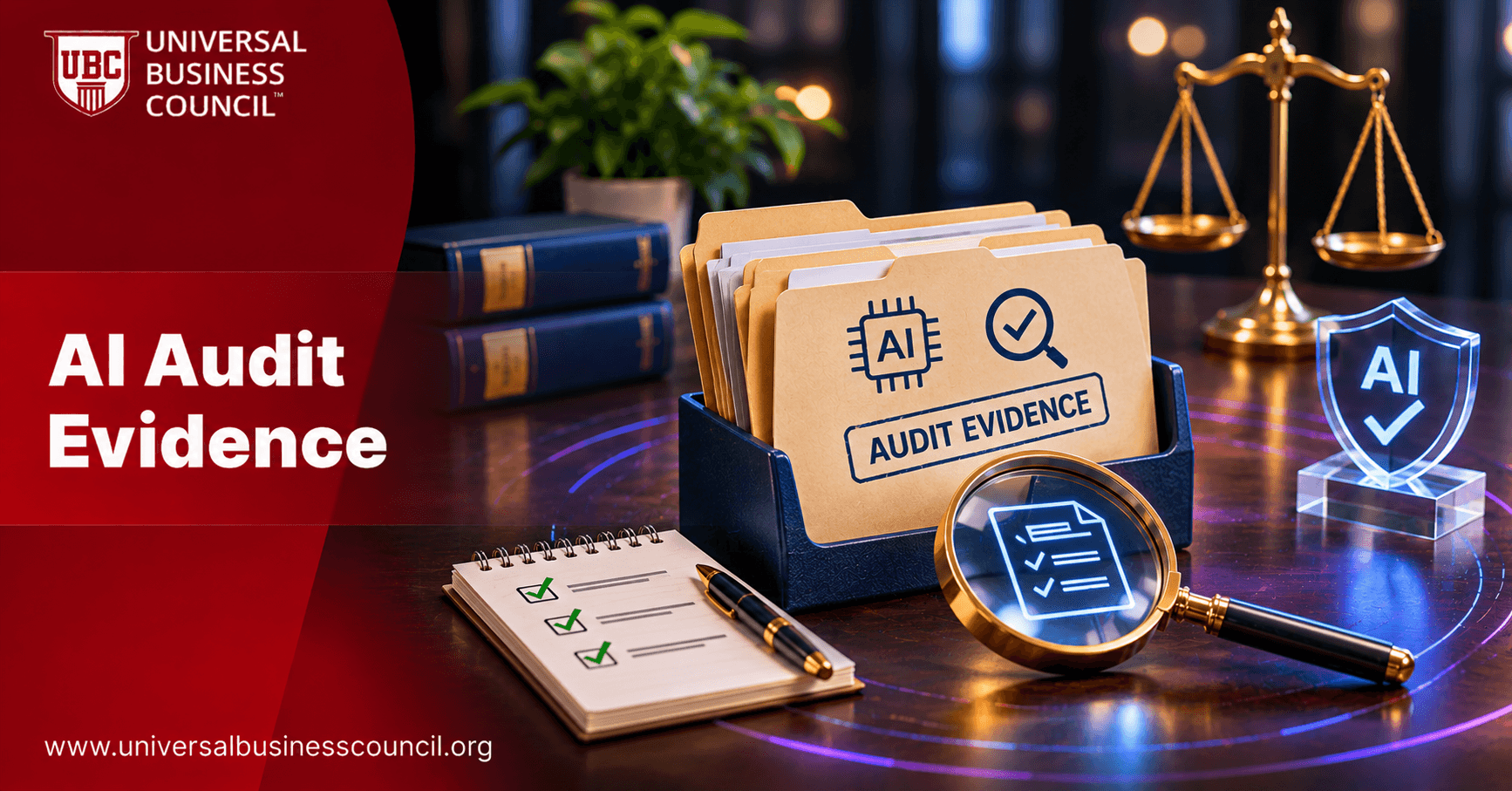
Auditors trust what they can verify, and very little else. A confident presentation, a polished policy or a friendly assurance from a vendor is a claim, and claims are where audit work begins, not where it ends. Evidence is what turns a claim into a finding or a clean result. This guide explains what AI audit evidence is, which types matter, how to judge whether evidence is good enough and how to verify it. Whether you sit on the auditing side or the audited side, you will find a practical map. If you want training in evidence-based audit practice, see the Certified AI Audit Professional certification.
What is AI audit evidence?
AI audit evidence is the information an auditor gathers and evaluates to support conclusions about an AI system or governance program. It includes documents, system records, test results, observations and interviews. To count, evidence must be relevant to the audit objective, reliable in its source and sufficient in quantity to support the conclusion drawn.

The four tests of good evidence
Before relying on any piece of evidence, ask four questions.
Relevant: does it bear on the objective being tested?
Reliable: where did it come from, and could it have been altered or self-serving?
Sufficient: is there enough of it, across enough cases, to support the conclusion?
Timely: does it cover the right period and version of the system?
The reliability ladder
Not all evidence weighs the same. In general, evidence is stronger when it comes from independent sources, is generated by systems and not typed by people, is original and not a copy or summary and comes from effective controls. A system log beats a spreadsheet someone prepared for the audit. A direct observation beats a verbal description. An independent test result beats a vendor brochure.
What to collect, by audit area
Match evidence to what you are testing.
Governance and accountability
Collect the approved AI policy and its version history, governance charters and committee minutes, role descriptions and decision logs. Verify that approvals carry names and dates, and that decisions in minutes match actions in systems.
Inventory and risk
Collect the AI inventory, risk tier rules, risk register entries and impact assessments. Verify completeness by sampling systems found elsewhere, such as procurement records, cloud accounts or network logs, and checking whether they appear in the inventory.
Data
Collect data descriptions, source agreements, consent or lawful basis records, quality checks and lineage records. Verify by tracing a sample of data from source to model, and checking access logs.
Model performance and fairness
Collect validation reports, test data descriptions, group-level results and drift monitoring. Verify by re-running tests on fresh or held-out data where feasible. Auditors with technical skills, often built through tech certifications, can reproduce results rather than trusting summaries.
Security and privacy
Collect access control lists, security test reports, red team findings, privacy assessments and incident records. Verify by reviewing actual permissions, testing for known weaknesses and sampling logs for unusual access.
Oversight and operation
Collect workflow descriptions, override logs, reviewer training records, monitoring dashboards and complaint files. Verify by observing a review session and checking whether overrides occur and are recorded.
Third parties
Collect contracts, due diligence responses, vendor documentation and change notices. Verify by comparing vendor claims with your own testing and with contract obligations.
How to verify evidence
Verification turns evidence into assurance.
Corroborate
Look for at least two independent sources for important claims. If the policy says approvals are required and the approval system shows them, you have corroboration. If only the policy says so, you have a statement.
Reperform and recalculate
Run the test yourself. Recompute fairness metrics, re-run performance checks and re-trace decisions end to end.
Inspect and observe
Look at records directly in the source system and watch processes operate. Screenshots and exports prepared by the auditee deserve extra care.
Confirm with third parties
For vendor claims, seek written confirmation or independent evidence from the supplier or an outside assessor.
Sample with discipline
Select samples so they represent the population, including different time periods, business units and risk levels. Record how samples were chosen and their size.
Handling and protecting evidence
Evidence is only useful if it stays trustworthy.
Chain of custody
Record who collected each item, when and from where. Store originals in access-controlled, version-controlled repositories. Tamper-evident storage, a subject explored in deep tech certifications, strengthens the chain and helps defend findings.
Privacy and confidentiality
Audit evidence often includes personal or commercial data. Collect only what is needed, mask where possible, restrict access and set retention periods.
Confirm the people behind the evidence
Evidence is created by people. Verify the credentials of the specialists and contractors who produced technical evidence, through services such as HireValid, and record who attested to what.
Record gaps
If requested evidence is not provided, note the request, the response and the effect on your conclusions. Missing evidence is a finding, and silence should never be read as assurance.
Describe conclusions accurately
When you share results, name the evidence base and its limits. A digital marketing course can help communications teams turn audit conclusions into accurate public messaging.
Conclusion
AI audit evidence has to be relevant, reliable, sufficient and timely. Collect documents, system records, test results, observations and interviews for each audit area, and verify through corroboration, reperformance, inspection, third-party confirmation and disciplined sampling. Protect chain of custody and privacy, record gaps and state the evidence base in every conclusion.
Frequently asked questions
These are the questions people ask most about AI audit evidence.
1. What is AI audit evidence?
Information gathered to support audit conclusions about an AI system or program.
2. What types of evidence exist?
Documents, system records, test results, observations and interviews.
3. What makes evidence reliable?
Independent, system-generated, original and from effective controls.
4. What is sufficient evidence?
Enough, across enough cases, to support the conclusion.
5. Is a policy enough evidence?
No. It shows intent, not that controls operate.
6. What is corroboration?
Confirming a claim with another independent source.
7. What is reperformance?
Running the test or calculation yourself to confirm results.
8. How do I verify an AI inventory?
Cross-check it against procurement, cloud and network records.
9. How do I verify fairness testing?
Review the method and recompute group-level results.
10. How do I verify human oversight?
Observe reviews, inspect override logs and check reviewer training.
11. What evidence applies to vendors?
Contracts, due diligence, documentation, change notices and your own tests.
12. How should samples be chosen?
To represent the population across periods, units and risk levels.
13. Why does chain of custody matter?
It shows who handled evidence and that it was not altered.
14. Can screenshots be evidence?
They are weak unless taken from source systems and verified.
15. How do I protect personal data in evidence?
Minimize, mask, restrict access and set retention rules.
16. What if the auditee will not provide evidence?
Record the request and response, and reflect the limit in conclusions.
17. How long should evidence be kept?
As long as legal, contractual and audit policy require.
18. Can interviews count as evidence?
Yes, but they need corroboration.
19. What is a working paper?
A record of the audit work, evidence reviewed and conclusions reached.
20. What is the most common evidence mistake?
Accepting self-reported summaries without independent verification.
Related Articles
View All
Artificial Intelligence
How to Prepare for an AI Audit: Documents, Teams and Evidence
Learn how to prepare for an AI audit by organizing essential documents, involving the right teams, and collecting supporting evidence. Explore the policies, model records, risk assessments, testing reports, and monitoring data organizations should have ready for a structured and effective audit.

Artificial Intelligence
AI Audit Checklist: Key Areas Every Organization Should Review
Use this AI audit checklist to review the key areas that affect AI system performance, fairness, security, and compliance. Learn what organizations should examine across data quality, algorithmic bias, transparency, privacy, accountability, and risk management to support responsible AI practices.
Artificial Intelligence
How to Prepare for an AI Governance Audit: Evidence and Documentation
Learn how to prepare for an AI governance audit by organizing essential evidence, policies, and documentation. Explore the records auditors may review, including risk assessments, model documentation, testing results, accountability records, and monitoring reports, to demonstrate responsible AI practices and regulatory readiness.
Trending Articles
The Role of Blockchain in Ethical AI Development
How blockchain technology is being used to promote transparency and accountability in artificial intelligence systems.
AWS Career Roadmap
A step-by-step guide to building a successful career in Amazon Web Services cloud computing.
Top 5 DeFi Platforms
Explore the leading decentralized finance platforms and what makes each one unique in the evolving DeFi landscape.