

How to Prepare for an AI Governance Audit: Evidence and Documentation
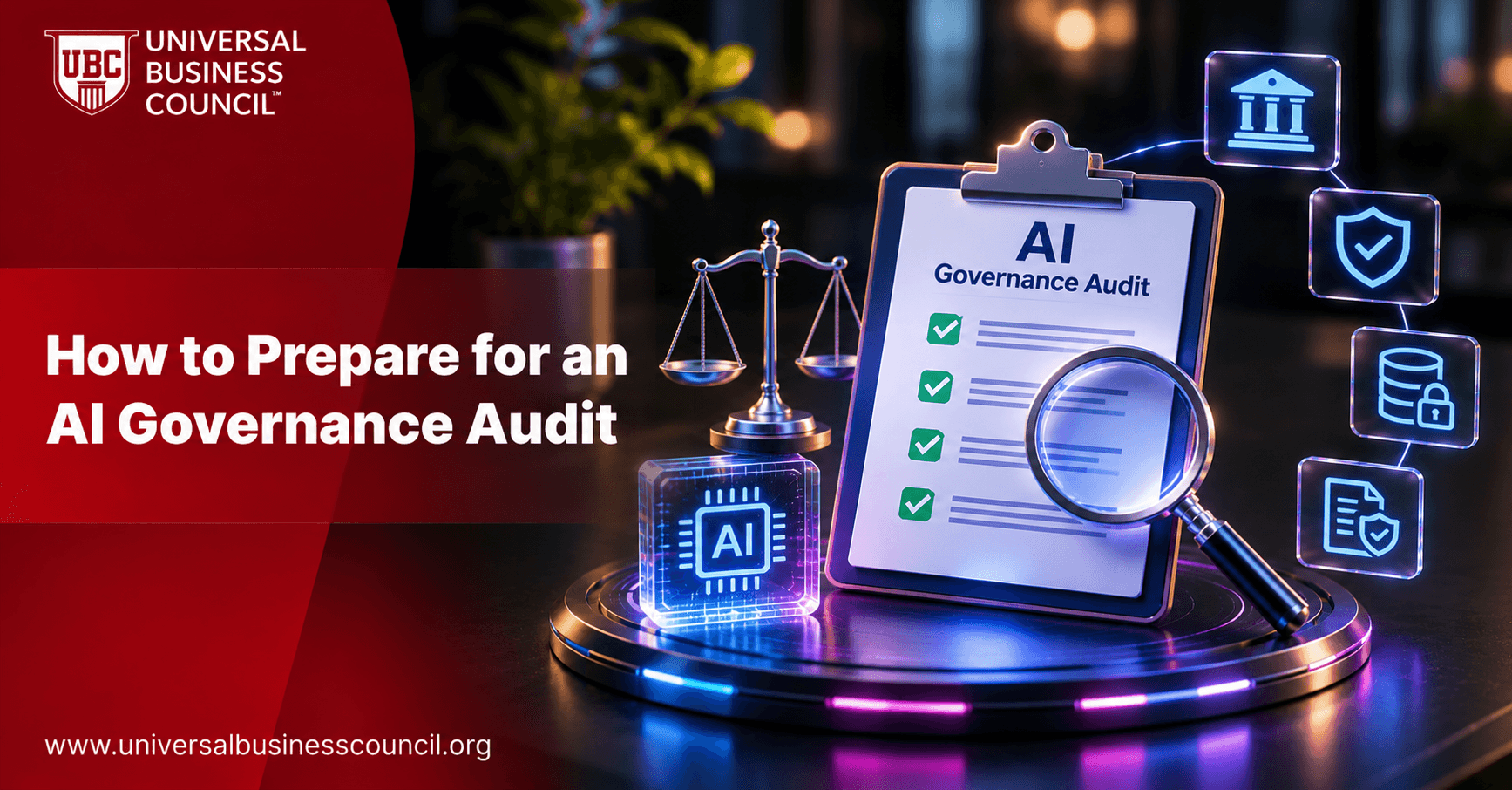
Auditors ask for evidence, not intentions. A policy that says every high-risk AI system is assessed before launch is only worth something if you can show the assessments, the approvals and the dates. Organizations that prepare for an AI governance audit well treat it as a test of whether their controls actually work in practice, and they gather proof as they go instead of scrambling at the last minute. This guide explains what an AI governance audit looks at, which evidence and documentation auditors expect, how to prepare in stages and what to do with the findings. For professional learning in the field, see the certified responsible AI expert certification. This is general information, not legal advice.
What is an AI governance audit?
An AI governance audit is an independent or internal review that tests whether an organization's AI governance framework is designed appropriately and operating effectively. It checks policies, roles, risk processes, controls and records against a reference point, such as internal policy, laws, contracts or recognized frameworks and management system standards.

It may cover the whole program, a business unit or specific high-risk systems. It is different from a technical model audit, which focuses on a single model's performance and fairness, although the two often overlap and share evidence.
What auditors typically examine
Scope varies, but most audits touch the same areas.
Governance and accountability
Auditors look for an approved AI policy, defined roles and decision rights, a governance body that meets and records decisions, executive and board oversight and evidence that responsibilities are understood.
Inventory and risk classification
They check that a complete, current inventory exists, that risk tiers are defined and applied and that vendor and shadow AI are considered.
Risk and impact assessment
They sample systems and examine assessments, risk register entries, approvals and the handling of residual risk.
Data, model and lifecycle controls
They review data governance, testing for accuracy, bias, robustness and security, documentation, change control and monitoring after deployment.
Oversight, transparency and rights
They examine human oversight arrangements, user notices, explanation and appeal processes and handling of complaints and individual rights requests.
Third parties, incidents and training
They test vendor due diligence and contracts, incident response plans and records and training coverage and effectiveness.
Evidence and documentation to gather
Build an evidence pack organized by control area. Having it ready shortens the audit and builds confidence.
Policies, standards and procedures, with approval dates and version history
Governance charters, committee minutes, decisions and conditions
The AI inventory with owners, risk tiers and review dates
Impact assessments, risk register entries and approval records
Test reports, model cards, dataset documentation and monitoring reports
Vendor due diligence files and contracts
Incident logs, response records and post-incident reviews
Training materials, attendance and assessment records
Regulatory tracking and legal advice summaries where appropriate
Evidence quality matters
Auditors prefer evidence that is dated, attributable, complete and consistent. A screenshot without context is weak. A system record with timestamps, an approver's name and a link to supporting analysis is strong. Keep originals, and avoid recreating documents after the fact, which damages credibility.
Show operation, not just design
It is not enough to have a process on paper. Be ready to show examples where it ran: a system that was reviewed and changed, a launch that was blocked, an incident that led to a fix.
How to prepare in stages
A structured approach reduces stress.
Clarify scope and criteria
Ask what the audit covers, which standards or criteria apply, the timeline and the format. Agree who will be interviewed and which systems will be sampled. If the audit is against a management system standard or a regulation, map your controls to its requirements.
Run a readiness review
Before the formal audit, test yourself. Pick a few systems, trace them from inventory to assessment to approval to monitoring, and see whether the evidence exists and tells a coherent story. Fix gaps early, and record what you changed. Engineers who help produce technical evidence benefit from strong foundations, which many develop through tech certifications.
Organize and index the evidence
Create a central, access-controlled repository with a clear index linking each control to its evidence. Assign a coordinator to handle requests, and keep a log of what was supplied. Evidence that resists tampering strengthens trust, and related integrity techniques appear in deep tech certifications.
Prepare people
Brief interviewees on the program, their roles and the facts. Encourage honest, accurate answers, including admitting gaps. Auditors react badly to evasion. Verify that those named in key roles, and any external specialists you rely on, hold the qualifications they claim, which services such as HireValid can support through credential checks.
Include vendors
Third parties may need to provide documentation, attestations or access. Request what you will need early, and confirm contract rights to audit support.
During and after the audit
How you conduct yourself matters as much as the paperwork.
Be transparent and organized
Respond promptly, give complete answers, clarify questions and avoid overstating. If something does not exist, say so and explain your plan. Keep notes of meetings and requests.
Handle findings constructively
Rate findings by severity, assign owners and deadlines and agree a remediation plan. Distinguish quick fixes from structural changes. Track actions to completion, verify the fixes and report progress to leadership and the board.
Learn and improve
Use findings to strengthen the program: update policies, improve templates, adjust training and add monitoring. Schedule follow-up checks to confirm that improvements hold.
Communicate responsibly
Be careful about public statements concerning audit results. Do not describe an audit as proof of safety, compliance or fairness beyond what it actually covered. A digital marketing course can help teams describe assurance activities accurately.
Keep audit-ready all year
The best preparation is routine. Build evidence capture into normal workflows: approvals recorded in the tools teams already use, documentation required before release, minutes kept as a habit and registers updated as changes occur. Schedule periodic internal reviews. When the audit arrives, you will be showing what you do every day.
Conclusion
Preparing for an AI governance audit means being ready to show, with evidence, that your framework works. Understand what auditors examine, assemble an organized evidence pack covering governance, inventory, assessments, lifecycle controls, oversight, vendors, incidents and training, and run a readiness review. Prepare people, be transparent during the audit, act on findings and communicate results carefully. Embedding evidence capture in daily work keeps you audit-ready all year.
Frequently asked questions
These are the questions teams ask most about AI governance audits.
1. What is an AI governance audit?
A review of whether an organization's AI governance is well designed and works in practice.
2. How is it different from a model audit?
A model audit tests a specific model, and a governance audit tests the program and controls.
3. Who performs it?
Internal audit or independent external auditors.
4. What criteria are used?
Internal policy, laws, contracts or recognized standards and frameworks.
5. What evidence do auditors want?
Dated, attributable, complete records showing controls in operation.
6. What is an evidence pack?
An organized set of documents mapped to control areas.
7. Is a policy enough?
No. Auditors want proof that the policy is followed.
8. What is a readiness review?
A self-test before the audit to find and fix gaps.
9. Should we create missing documents before the audit?
Do not backdate or recreate records. Fix gaps and document the changes honestly.
10. How do auditors sample systems?
They select systems and trace them from inventory to monitoring.
11. What do auditors ask about vendors?
Due diligence, contract terms and ongoing monitoring.
12. Do auditors review incidents?
Yes, including response records and lessons learned.
13. Will they check training?
Yes, for coverage, content and effectiveness.
14. How should interviewees prepare?
Know the program and facts, and answer honestly, including about gaps.
15. Who coordinates requests?
A named audit coordinator.
16. How should evidence be stored?
In an access-controlled repository with an index and version history.
17. What if we have findings?
Rate them, assign owners, set deadlines and track to completion.
18. Can we publicize audit results?
Only accurately, without implying more than the audit covered.
19. How do we stay audit-ready?
Capture evidence in daily workflows and run periodic internal reviews.
20. How often should we be audited?
On a schedule set by risk, regulation and stakeholder expectations.
Related Articles
View All
Artificial Intelligence
How to Prepare for an AI Audit: Documents, Teams and Evidence
Learn how to prepare for an AI audit by organizing essential documents, involving the right teams, and collecting supporting evidence. Explore the policies, model records, risk assessments, testing reports, and monitoring data organizations should have ready for a structured and effective audit.
Artificial Intelligence
AI Model Documentation Audit: Reviewing Model Cards and Technical Records
Learn how an AI model documentation audit evaluates the completeness, accuracy, and consistency of records maintained throughout the AI lifecycle. Explore key documents auditors review, including model cards, technical specifications, training data details, validation reports, and monitoring records, to improve transparency, traceability, and accountability.
Artificial Intelligence
AI Data Governance Audit: Quality, Consent, Lineage and Access Controls
Explore how an AI data governance audit evaluates the policies, processes, and controls used to manage data across the AI lifecycle. Learn what auditors review, including data quality, access controls, data lineage, documentation, privacy, and compliance, to ensure AI systems rely on properly governed data.
Trending Articles
The Role of Blockchain in Ethical AI Development
How blockchain technology is being used to promote transparency and accountability in artificial intelligence systems.
AWS Career Roadmap
A step-by-step guide to building a successful career in Amazon Web Services cloud computing.
Top 5 DeFi Platforms
Explore the leading decentralized finance platforms and what makes each one unique in the evolving DeFi landscape.