

AI Governance Audit: Reviewing Policies, Roles and Oversight
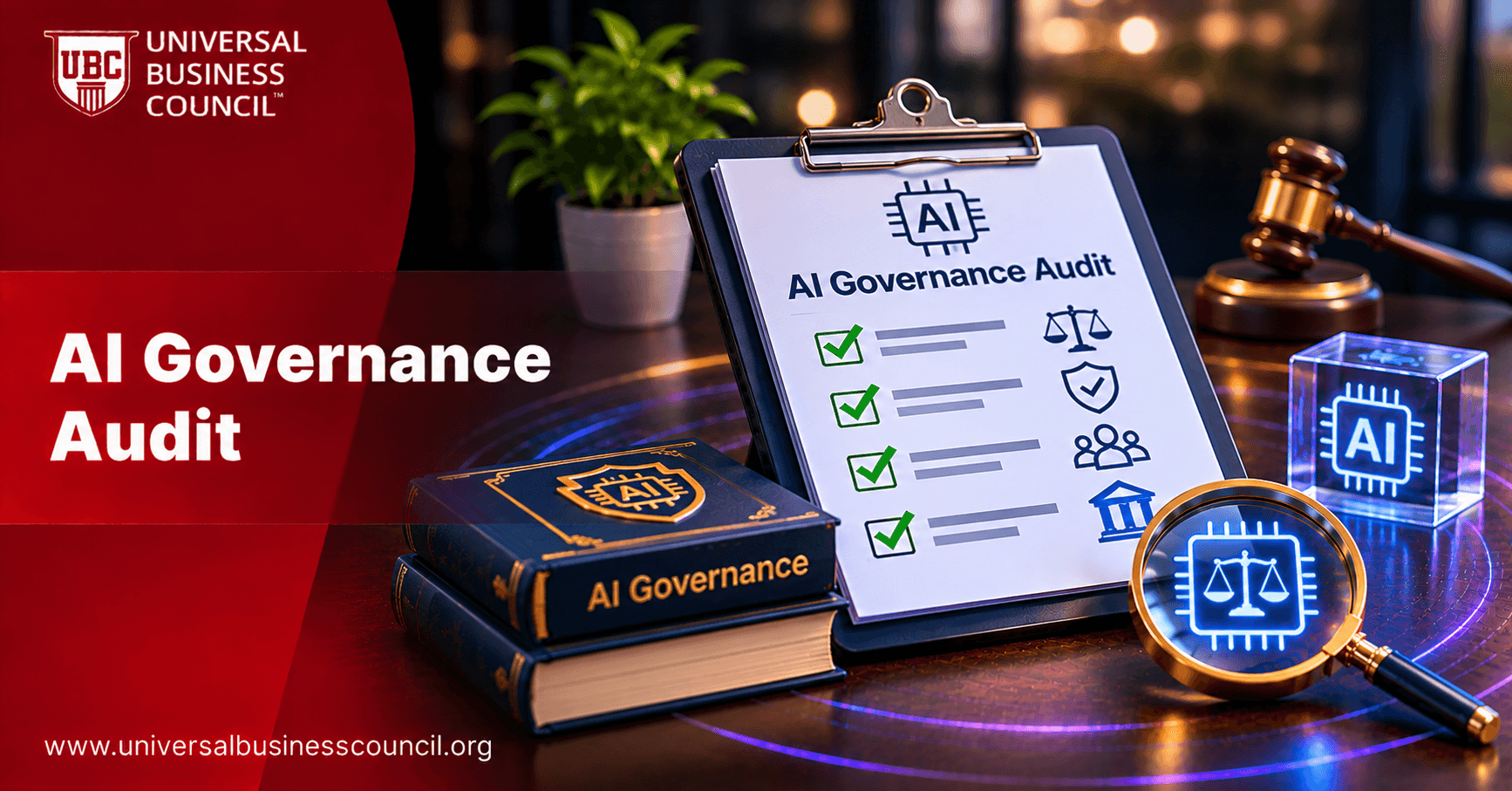
Policies are promises. An AI governance audit checks whether the promises are kept. Many organizations can produce a polished AI policy, an ethics statement and a committee list, and still have no idea whether any of it changes what engineers and product owners do on a Tuesday afternoon. A governance audit looks past the paper to the practice. This guide explains what an AI governance audit examines, how auditors test policies, roles and oversight, which warning signs to watch for and how to report results usefully. If you want training in this kind of review, see the Certified AI Audit Professional certification.
What is an AI governance audit?
An AI governance audit is a review of whether an organization's structures, policies, roles, decision rights and oversight mechanisms for AI are appropriately designed and operate effectively in practice. It tests the management system around AI systems, not the performance of any single model, though it often samples models to see whether governance reaches them.

What the audit examines
Most governance audits cover five connected areas.
1. Policy framework
Auditors check whether an approved AI policy exists, whether it is specific enough to guide behavior, how it connects to related policies on data protection, security, procurement and ethics and whether it is communicated and reviewed. A policy nobody has read, or that has not been updated for years, is a design weakness.
2. Roles and accountability
They look for named owners for each AI system, defined responsibilities for governance bodies, executives and reviewers, and clear decision rights on approval, pause and retirement. Tools such as a RACI matrix help, but the question is whether people know and use their roles.
3. Governance bodies and decision-making
Auditors examine charters, membership, meeting frequency, minutes and decisions. Do the right functions attend? Are high-risk systems actually reviewed? Are conditions set at approval and tracked afterward? Do decisions ever say no?
4. Risk and control integration
They test whether AI risks flow into the enterprise risk process, whether an inventory and risk tiers exist and whether gates such as impact assessments and testing apply before launch.
5. Oversight, reporting and culture
They check what the board and executives receive, how incidents and concerns are escalated and whether staff feel able to raise problems. Training and awareness records round out the picture.
How auditors test governance
Governance is abstract, so testing has to be concrete.
Trace real systems through the framework
Pick a sample of AI systems across risk tiers and follow each from inventory entry to risk classification, assessment, approval and monitoring. Check whether the framework's steps happened, in the right order, with the right people involved.
Test the committee
Read minutes over a period. Look for evidence of challenge, not just presentation. See whether action items were closed, whether conflicts of interest were managed and whether the group has authority to stop a launch.
Compare policy to practice
Interview engineers, product managers, procurement staff and frontline users. Ask them what they would do in specific situations, such as adopting a new AI tool or finding a biased output. Differences between what the policy says and what people describe signal a gap.
Test exceptions
Look at how often rules are waived, who approves waivers and whether they are time-limited and tracked. A high exception rate means the rule does not fit practice, or is not enforced.
Review the evidence trail
Check that governance records are dated, complete and protected from alteration. Integrity approaches covered in deep tech certifications are increasingly relevant here. Auditors who test technical controls also benefit from strong technical grounding, which many build through tech certifications.
Warning signs
These patterns often point to governance that exists mostly on paper.
Policies with no owners, no review dates and no enforcement
A governance committee that meets rarely or approves everything
No complete AI inventory, or a list nobody maintains
Impact assessments completed after launch
Executives who cannot say what AI the company uses
Staff who fear raising concerns or do not know how
Vendors treated as outside the governance scope
People, independence and honesty
A governance audit is sensitive, since it can touch leaders directly.
Protect independence
The audit function should report to the board or a senior committee, not to the executives whose governance it reviews. Confirm the qualifications of auditors and any specialists, through services such as HireValid.
Report constructively
Rate findings by severity, distinguish design gaps from operating failures and give recommendations that address root causes, such as unclear decision rights, not just symptoms. Recognize what works well.
Communicate carefully
Governance results can be reputationally sensitive. Describe scope and limits precisely in any external communication, and avoid broad claims such as "fully governed AI." A digital marketing course can help teams explain governance maturity accurately.
Conclusion
An AI governance audit tests whether policies, roles, committees, risk integration and oversight really shape how AI is built and used. Trace real systems through the framework, test committee behavior, compare policy to practice and examine exceptions. Watch for paper-only governance, protect auditor independence and report with clear, root-cause recommendations.
Frequently asked questions
These are the questions people ask most about AI governance audits.
1. What is an AI governance audit?
A review of whether AI governance structures and controls are well designed and work in practice.
2. How is it different from a model audit?
It tests the management system, while a model audit tests a specific model.
3. What does it cover?
Policies, roles, governance bodies, risk integration, oversight and culture.
4. What documents do auditors review?
Policies, charters, minutes, inventories, risk registers and reports.
5. How do auditors test a committee?
By reviewing minutes, decisions, challenge and follow-through.
6. What is a design gap?
A missing or inadequate governance control.
7. What is an operating failure?
A control that exists but is not followed.
8. Why interview staff?
To compare policy with real practice.
9. What is a governance red flag?
A committee that approves everything or meets rarely.
10. Should the board be involved?
Yes, board oversight and reporting are part of the review.
11. How are exceptions reviewed?
By checking frequency, approvers and tracking.
12. Do governance audits include vendors?
They should test vendor oversight and contract controls.
13. How do auditors assess culture?
Through interviews, surveys and escalation records.
14. What is a RACI matrix?
A table assigning responsible, accountable, consulted and informed roles.
15. How often should governance be audited?
Periodically, with frequency set by AI risk and organizational change.
16. Who performs the audit?
Internal audit or external specialists, independent of the governance owners.
17. What should the report include?
Rated findings, root causes and recommendations with owners and dates.
18. Can small organizations have governance audits?
Yes, scaled to their size and risk.
19. Does a clean result guarantee safe AI?
No. It reflects governance in the sampled scope and period.
20. What is the biggest governance weakness?
Policies that exist on paper but do not change daily behavior.
Related Articles
View All
Artificial Intelligence
AI Model Documentation Audit: Reviewing Model Cards and Technical Records
Learn how an AI model documentation audit evaluates the completeness, accuracy, and consistency of records maintained throughout the AI lifecycle. Explore key documents auditors review, including model cards, technical specifications, training data details, validation reports, and monitoring records, to improve transparency, traceability, and accountability.
Artificial Intelligence
AI Data Governance Audit: Quality, Consent, Lineage and Access Controls
Explore how an AI data governance audit evaluates the policies, processes, and controls used to manage data across the AI lifecycle. Learn what auditors review, including data quality, access controls, data lineage, documentation, privacy, and compliance, to ensure AI systems rely on properly governed data.
Artificial Intelligence
AI Accountability Audit: Verifying Ownership and Human Oversight
Explore how an AI transparency audit evaluates the information organizations disclose about their AI systems and how they communicate with users. Learn what to review in AI disclosures, system documentation, user notices, and decision explanations to ensure people understand when and how AI is being used.
Trending Articles
The Role of Blockchain in Ethical AI Development
How blockchain technology is being used to promote transparency and accountability in artificial intelligence systems.
AWS Career Roadmap
A step-by-step guide to building a successful career in Amazon Web Services cloud computing.
Top 5 DeFi Platforms
Explore the leading decentralized finance platforms and what makes each one unique in the evolving DeFi landscape.