

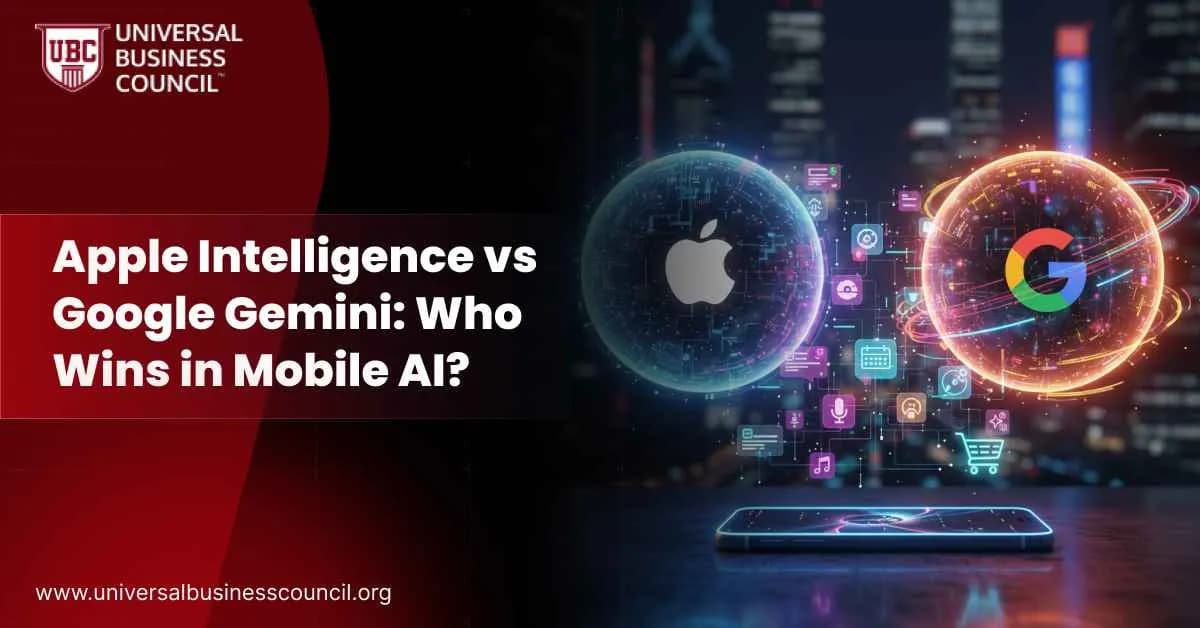
Apple Intelligence vs Google Gemini: Who Wins in Mobile AI?

Apple Intelligence: Privacy and Ecosystem Strength
Apple Intelligence was designed to feel like part of the device rather than an add-on. Many tasks run locally, such as rewriting text, generating Genmoji, or adjusting images with the Clean Up tool. For heavier tasks, Apple uses Private Cloud Compute, which it says never stores user data and keeps processing encrypted. The ecosystem advantage is clear. Apple Intelligence runs across iPhone, iPad, Mac, Watch, and even Vision Pro, giving users a consistent experience. The latest iOS 26 also added Adaptive Power, which uses AI to extend battery life by managing performance. This integration shows Apple’s strength: a privacy-first approach tied tightly to its hardware and software. But there are limits. Only devices with newer chips, like the A17 Pro, get the full AI package. That leaves many iPhone users without access. Apple has also faced criticism for errors in AI-generated news summaries and for re-enabling features users had turned off after updates. Its rollout of supported languages remains narrower than Google’s.Google Gemini: Scale, Speed, and Multimodal Power
Google’s Gemini app is fast becoming the centerpiece of Android. It’s already replacing Google Assistant, taking control of phone functions like calls and messages. Gemini now supports multi-app tasks in a single prompt, so users can search, send messages, and schedule events all in one go. The models behind it keep improving. Gemini 2.5 Flash and Pro bring better reasoning, cleaner formatting, and multimodal support for text, images, and diagrams. Google also merged Gemini Advanced into its AI Pro subscription, which adds a million-token context window, Deep Research, and Veo video generation. This subscription model lets Google update its cloud models quickly and roll out advanced features at scale. On the creative side, viral features like Nano Banana image editing show how Google engages users with playful AI. Beyond phones, Gemini is expanding into TVs, the Google Home app, and even robotics with Gemini Robotics. This makes Gemini feel less like a phone feature and more like a full digital companion. Still, the model has drawbacks. Many of its most advanced features sit behind paywalls. Heavy cloud reliance also raises questions about privacy and performance when network connections are weak. And while Google offers options like Temporary Chats that don’t train its models, trust remains a challenge for some users.Comparing Apple Intelligence and Google Gemini
Here’s a simple look at how the two systems stack up in mobile AI right now:| Feature | Apple Intelligence | Google Gemini |
| Core Focus | On-device tasks with Private Cloud Compute fallback | Cloud-first with Gemini Pro/Ultra, Nano for local tasks |
| Everyday Tools | Writing help, Genmoji, Clean Up, Siri improvements, Live Translation | Multi-app prompts, Gemini Live, creative tools like Veo and Imagen |
| Hardware Dependence | Limited to newer devices with A17 Pro or better | Broad Android rollout, more features with AI Pro subscription |
| Privacy Approach | Strong emphasis on local processing and encrypted cloud use | Options like Temporary Chats, but heavy reliance on cloud |
| Ecosystem Reach | iPhone, iPad, Mac, Watch, Vision Pro | Android, Chrome, Search, Maps, Home, TV, and more |
| Updates | Tied to device cycles and iOS/macOS releases | Continuous cloud updates, frequent feature drops |
Who Wins in Mobile AI?
Apple’s edge comes from its integration and privacy posture. Users who value trust and consistency across devices may find Apple Intelligence the safer bet. Google’s edge comes from raw capability and scale. With multimodal features, agent-like task handling, and faster updates, Gemini feels more powerful and flexible. The real winner depends on what you value. If privacy and device-level polish matter most, Apple leads. If you want cutting-edge features and cloud-powered reasoning, Google takes the crown.Building Your Own Expertise
For those wanting to go beyond daily use, a deep tech certification is a way to understand how these systems are designed. If your focus is on analytics and large-scale workflows, the Data Science Certification is worth exploring. Keeping up with technology trends helps you see how Apple and Google shape ecosystems differently. And studying AI itself is essential, because it is quickly becoming the foundation of mobile experiences.Conclusion
Apple and Google are battling for dominance in mobile AI. Apple bets on privacy and deep integration, while Google pushes rapid innovation and broad reach. Both strategies reflect the companies’ core philosophies, and both will shape the way we use phones for years to come. The competition is not about who has the better device. It’s about who can make AI feel like an everyday partner in your digital life.Related Articles
View All
Artificial Intelligence
Can Google Gemini Improve Itself Through Recursive Self-Improvement?
Explore whether Google Gemini can improve itself through recursive self-improvement, how Gemini-powered systems already support iterative learning and optimization, and what still separates them from true autonomous RSI.
Artificial Intelligence
Gemini 4 Argon: Features, Pricing, and Availability
Gemini 4 Argon is Google’s new flagship AI model for coding, science, finance, law and security. See its main features, API and subscription pricing, and where you can access it today.

Artificial Intelligence
What Is Google Playground? Features and How It Works
What is Google Playground? Learn how Google's new AI platform turns text prompts into playable browser games, which models power it, its features, pricing and access, Unity Spark plans, rival tools, and limits.
Trending Articles
The Role of Blockchain in Ethical AI Development
How blockchain technology is being used to promote transparency and accountability in artificial intelligence systems.
AWS Career Roadmap
A step-by-step guide to building a successful career in Amazon Web Services cloud computing.
Top 5 DeFi Platforms
Explore the leading decentralized finance platforms and what makes each one unique in the evolving DeFi landscape.