

How Can Students Use AI Responsibly Without Plagiarism?

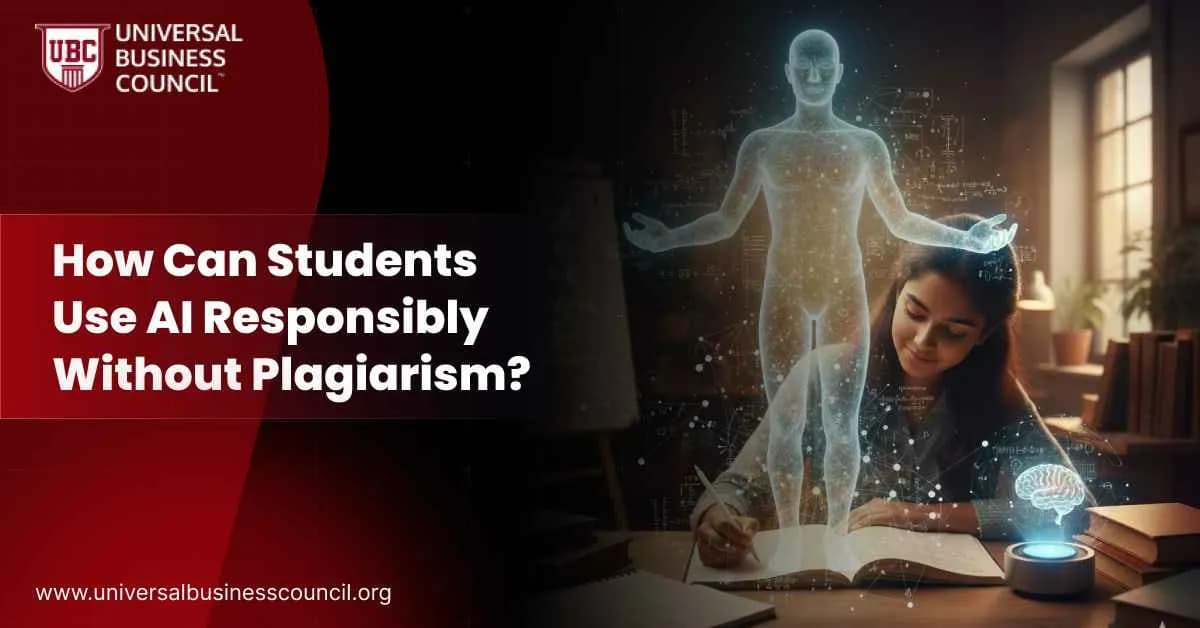
What Counts as Plagiarism with AI
Plagiarism doesn’t just mean copying from another student or website. If someone takes AI-generated text and submits it as their own work without attribution, it still counts. Even when the text is “new,” it may not reflect the student’s own analysis, which is often a key requirement in academic work. Copying AI output word-for-word is risky, because universities now treat this the same way as copying from a book or article without citing.How Schools Are Responding
Universities and schools are updating academic integrity policies to make expectations clear. Some allow AI use if students acknowledge it, much like citing a source. For example, Trinity College Dublin has guidelines requiring students to note when AI was used. Others limit AI support to brainstorming or idea generation but not full essay writing. Teachers are also redesigning assignments, adding in-class activities and oral presentations to ensure students show their own thinking.The Role of Detection Tools
Detection tools like Turnitin now scan for signs of AI writing. Their data shows that a noticeable portion of student submissions include at least some AI-generated text. But these tools aren’t perfect. False positives have been reported, especially for non-native English speakers or when students edit their work heavily. To avoid being flagged, students must use AI as a helper, not as a ghostwriter.Responsible vs Irresponsible AI Use in Student Work
| Responsible AI Use | Irresponsible AI Use |
| Using AI for brainstorming essay ideas | Submitting entire essays written by AI |
| Summarizing articles to understand key points | Copying summaries word-for-word into assignments |
| Proofreading drafts with AI tools | Letting AI replace your own writing style |
| Checking grammar and clarity | Using AI to generate answers during exams |
| Outlining study notes or practice questions | Depending only on AI and skipping course material |
| Citing AI use when required | Hiding AI use despite school policies |
| Fact-checking AI outputs with reliable sources | Accepting AI content without verification |
| Combining AI suggestions with personal insights | Submitting unedited AI responses |
| Learning citation formats from AI | Asking AI to fabricate references |
| Using AI for time management and planning | Avoiding original effort entirely |
Why Context Matters
The safety of using AI depends on context. Brainstorming ideas or checking grammar is generally safe. But using AI to write research papers or exam answers is where plagiarism concerns rise. Students must also remember that AI can generate inaccurate facts, so double-checking with trusted sources is essential. For those who want to build stronger skills in data-driven learning and research, a Data Science Certification can help students understand how AI works with data and why accuracy matters.Challenges Students Face
Not all schools have clear rules yet, which leaves students confused. Some worry about being punished even if they use AI responsibly. Others lean too heavily on AI and miss out on learning important skills like critical thinking and writing. The uncertainty makes it important for students to be cautious, transparent, and proactive about checking their school’s policies.Building Good Habits
Students should treat AI like a study partner, not a shortcut. That means using it to improve drafts, gather ideas, and save time on basic tasks while still doing the hard thinking themselves. Whenever possible, they should make edits so the final work reflects their voice. And when required, they should cite AI just as they would any other source. Developing the right mindset also means preparing for the future. A deep tech certification can provide insights into the broader AI landscape, helping students understand both the potential and the risks of using AI tools in academic and professional contexts.Final Thoughts
AI is not going away. Students who learn how to use it responsibly will gain an advantage, not only in school but also in their careers. The key is simple: use AI to assist, not replace. When combined with honesty, proper citation, and critical thinking, AI becomes a tool for growth rather than a trap for plagiarism.Related Articles
View All
Artificial Intelligence
NVIDIA Nemotron 3.5 Lightning vs NVIDIA Cosmos 3: Key Differences and Use Cases
Compare NVIDIA Nemotron 3.5 Lightning and NVIDIA Cosmos 3, including their architectures, capabilities, AI workloads, and use cases across agentic AI and Physical AI.

Artificial Intelligence
Can AI Models Train and Improve Themselves Without Human Intervention?
Explore whether AI models can train and improve themselves without human intervention, how self-training and automated optimization work, and where human oversight is still required.
Artificial Intelligence
Gemini 4 Argon: Features, Pricing, and Availability
Gemini 4 Argon is Google’s new flagship AI model for coding, science, finance, law and security. See its main features, API and subscription pricing, and where you can access it today.
Trending Articles
The Role of Blockchain in Ethical AI Development
How blockchain technology is being used to promote transparency and accountability in artificial intelligence systems.
AWS Career Roadmap
A step-by-step guide to building a successful career in Amazon Web Services cloud computing.
Top 5 DeFi Platforms
Explore the leading decentralized finance platforms and what makes each one unique in the evolving DeFi landscape.