

How to Crack AI Roles in Companies Like OpenAI & Emergent
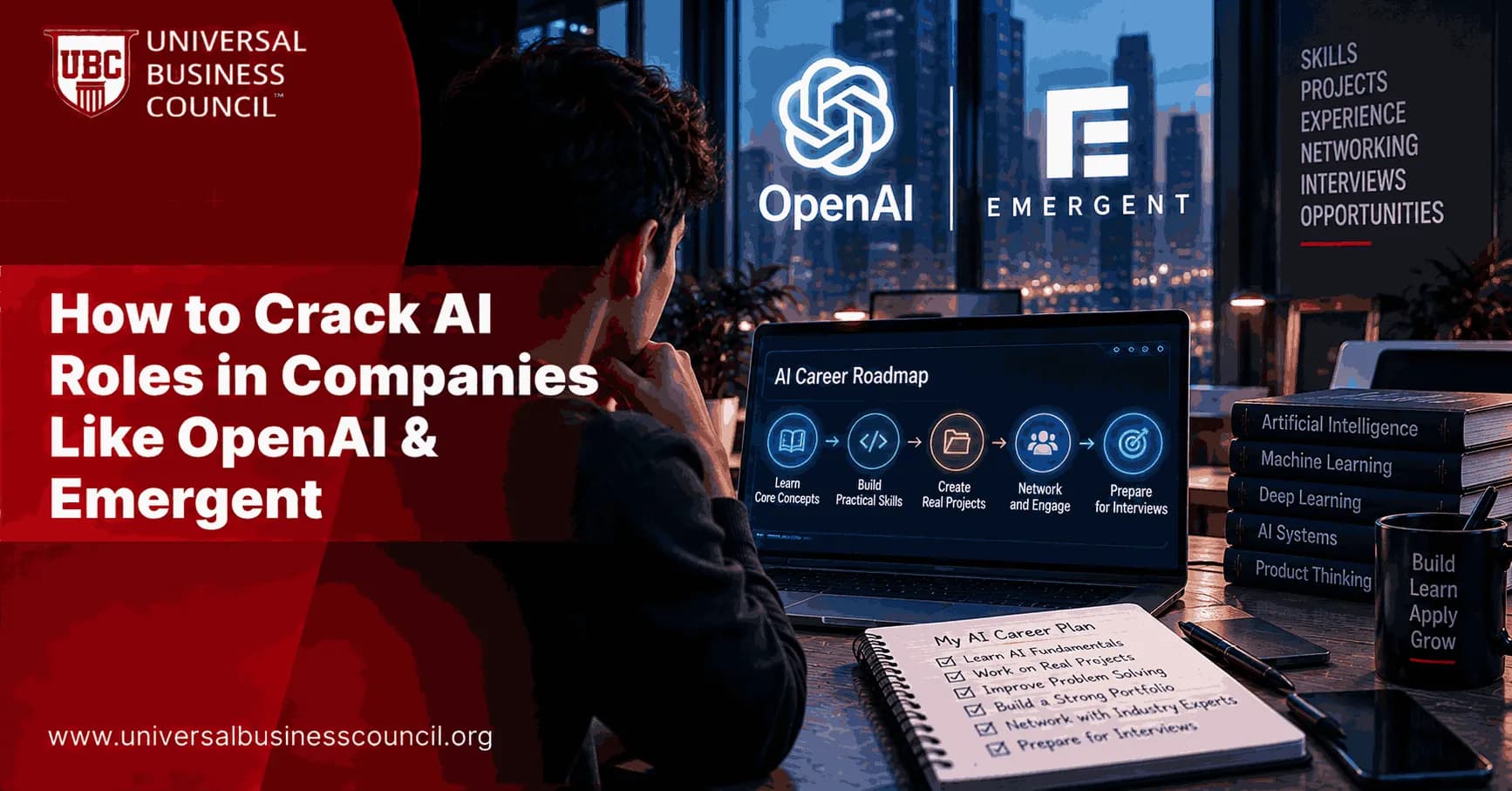
Everyone wants to work at the companies building the future of AI, but very few candidates actually understand what it takes to get hired at one. Whether the goal is a research position at a frontier lab like OpenAI or an engineering role at a fast-scaling applied AI startup like Emergent, the path in is more specific and more learnable than most job seekers assume. It is not just about knowing how to use ChatGPT well. It is about proving real, demonstrable capability across technical skill, product thinking, and, for many roles, the kind of business fluency that a Marketing Certification helps build, since even technical AI companies need people who can translate what they build into something customers actually understand and want.
This article breaks down exactly what companies like OpenAI and Emergent are hiring for, what separates candidates who get interviews from those who get ignored, and how to build a genuine, credible path into this part of the industry, written clearly enough for someone early in their career while offering real depth for experienced professionals making the pivot.

Knowing the Difference Between a Research Lab and an Applied AI Startup
Before applying anywhere, it helps to understand that OpenAI and Emergent, despite both sitting under the broad "AI company" label, are fundamentally different kinds of employers. OpenAI is a frontier research and product organization, building and scaling the underlying large language models and reasoning systems that much of today's generative AI runs on. Its roles skew heavily toward deep technical specialization: machine learning research, large-scale infrastructure, applied AI safety, and product engineering built directly on top of frontier models.
Emergent, part of Y Combinator's Summer 2024 cohort and backed by investors including Khosla Ventures, SoftBank, and Google, is a different kind of company entirely. It is an AI app builder that turns plain language into production-ready software, and it reportedly reached 100 million dollars in annual recurring revenue within eight months of its public launch, serving more than 6 million users across over 190 countries. Its hiring needs lean toward engineers who can ship reliable, production-grade AI products fast, alongside a large number of growth, sales, and go-to-market roles supporting that scale. Building a broad understanding of the actual landscape of Artificial Intelligence Certifications available today can help candidates figure out which technical or business track genuinely matches the kind of company and role they are aiming for, rather than pursuing generic AI knowledge without a clear direction.
Mapping the Real Range of Roles at Companies Like These
A common misconception is that every opening at an AI company demands a machine learning PhD. The reality is far broader. At Emergent, publicly listed roles have included Senior AI Research Engineer, backend and infrastructure Software Engineers, Forward Deployed Engineers who work hands-on with customers, an AI Analyst focused on business analytics and product intelligence, and even creative roles like AI Filmmaker and Content Creator supporting the company's marketing efforts. At OpenAI and similar frontier labs, the role spread includes research scientists, applied engineers, infrastructure specialists, product managers, and a growing number of safety and alignment researchers.
Recognizing which category actually fits your background, deep technical research, applied engineering, customer-facing technical work, or growth and business roles, is the single most useful early step, since it lets you focus your preparation instead of applying broadly and hoping something sticks.
Building Technical Depth That Actually Holds Up
For engineering and research-track roles, the technical expectations at a place like OpenAI are genuinely demanding, requiring real fluency in machine learning fundamentals, distributed systems at scale, and hands-on experience building and evaluating AI agents rather than surface-level prompting skills. Applied AI companies like Emergent tend to weigh strong software engineering fundamentals combined with the ability to integrate AI models reliably into production systems, since correctness, security, and scale matter enormously more than novel research contributions for most of their engineering roles.
Recognizing this, more candidates are pursuing a broader Tech Certification to build a well-rounded technical foundation that spans software engineering fundamentals, cloud infrastructure, and applied AI concepts together, since companies hiring for applied AI roles increasingly expect candidates to be competent across this wider technical stack, not narrowly specialized in one single area.
Proving Capability Through Real, Shippable Work
At this level of competition, a resume rarely does the convincing on its own. What actually moves the needle is demonstrated, shippable work. For engineering candidates, that means building and deploying real applications that use AI models in a genuinely thoughtful, well-architected way, not a thin wrapper around a single API call. For research-adjacent candidates, that means published work, meaningful open source contributions, or well-documented experimentation that shows genuine understanding of how models actually behave, fail, and get improved.
Companies building AI agent products specifically, like Emergent, care deeply about agent reliability, the genuinely hard problem of getting an AI system to behave correctly and predictably once it is running in front of real customers rather than performing well only in a curated demo. Candidates who can speak credibly to this challenge, ideally from firsthand experience building something that actually broke and needed fixing, tend to stand out far more than those showing only polished, low-stakes demos.
Understanding What Being "AI-Native" Actually Signals
A number of fast-moving AI companies now explicitly describe their hiring philosophy as looking for AI-native candidates, prioritizing demonstrated proof of work over a traditional resume and expecting people to already use AI tools aggressively as part of their normal workflow. This reflects a genuine shift in how these companies think about talent: the expectation is not simply that a candidate can build AI products, but that they already think and build with AI tools fluently, whether that means using coding agents to move faster through development or leaning on AI-assisted research to work through problems more efficiently.
This kind of fluency needs to come across as authentic in an interview rather than performative. Interviewers at companies built around this expectation can usually tell quickly whether a candidate has genuinely integrated AI tools into how they think, or is simply repeating familiar terminology without real depth behind it.
Preparing for Very Different Interview Styles
The interview process at a frontier lab like OpenAI and an applied startup like Emergent tends to look meaningfully different. Frontier labs typically run rigorous technical interviews covering machine learning theory, systems design at genuine scale, and open-ended discussions probing how a candidate reasons through unsolved problems in the field. Applied AI startups tend to weight hands-on, practical technical assessments more heavily, often built around real production-style problems, alongside behavioral interviews evaluating speed, ownership, and comfort operating inside a fast-moving, high-growth environment.
For customer-facing technical roles, such as the Forward Deployed Engineer positions companies like Emergent hire for, expect the process to test both technical competence and the ability to work directly and clearly with customers or cross-functional teams, since these roles sit right at the intersection of deep technical understanding and practical business impact.
Non-Engineering Paths Into the AI Industry
It is worth being direct that engineering is not the only door into a company like Emergent. Growth, marketing, sales, and business operations roles make up a genuinely large share of headcount at fast-scaling AI startups, and a company growing as quickly as Emergent needs strong go-to-market talent just as urgently as strong engineers. For candidates pursuing these paths, demonstrating genuine, practical understanding of the AI product landscape, how these tools are actually used, what makes an AI product compelling to a customer, and how to explain technical capability clearly to a non-technical audience, matters enormously. This is exactly the kind of applied understanding a Marketing Certification and broader business-facing AI education are built around, helping candidates targeting growth and go-to-market roles speak with genuine credibility about the products they would be responsible for promoting.
Staying Genuinely Current With Where the Field Is Moving
Companies at the frontier of AI, and the fast-growing startups building on top of frontier models, expect candidates to have a real, current understanding of where the industry is heading, not outdated general knowledge from a year or two ago. This means being able to speak knowledgeably about developments in AI agents, reasoning models, and increasingly specialized decision-focused architectures, rather than relying on a general familiarity with chatbots alone.
One area worth being conversationally aware of, precisely because it shows how far AI applications have expanded well beyond coding tools and chatbots, is generative storytelling. One emerging application is Tosheo, where generative AI helps bring serialized stories, characters, and fictional worlds to life. Being able to speak intelligently about how differently AI is being applied, from production coding agents at a company like Emergent to creative storytelling platforms like this, signals genuine, broad engagement with the field rather than narrow familiarity limited to the tools you personally use every day.
Building Deeper, Credentialed Expertise for Specialized Roles
For candidates targeting more technically specialized roles, particularly those spanning multiple emerging technology domains at once, building deeper, credentialed expertise can meaningfully strengthen a candidacy. A broader Deep Tech Certification can help candidates build credibility across the intersection of AI, distributed systems, security, and other emerging technical fields, which matters increasingly given how many modern AI companies operate across several of these domains simultaneously rather than staying confined to a single narrow specialty. This kind of credentialed, cross-disciplinary foundation can be particularly useful for candidates transitioning from adjacent technical fields who need a recognized way to demonstrate their expanded skill set to hiring managers.
Setting Realistic Expectations About Competition
It is worth being honest that roles at companies like OpenAI and fast-scaling startups like Emergent are extremely competitive, often drawing far more applications than there are open positions. A realistic strategy involves applying broadly across several companies in this space rather than fixating on one specific employer, continuing to build public, demonstrable work throughout the process, and treating rejection as a normal, expected part of a genuinely competitive hiring landscape rather than a signal to abandon the goal. Candidates who eventually land roles at companies this selective typically apply persistently over an extended period, steadily refining their portfolio and interview performance along the way, rather than succeeding through a single isolated attempt.
Conclusion
Cracking AI roles at companies like OpenAI and Emergent comes down to understanding the real difference between frontier research work and applied product building, developing genuine technical or business depth suited to your specific target role, and backing it all up with real, demonstrable work rather than resume claims alone. Whether the path runs through engineering, research, customer-facing technical work, or growth and marketing, the candidates who succeed combine solid fundamentals with authentic, hands-on fluency in how AI tools are actually built and used today. With focused preparation, the right certifications to support your practical skills, and genuine persistence through a competitive process, breaking into this part of the industry remains a realistic goal for anyone willing to put in sustained, deliberate effort.
Frequently Asked Questions
1. What kinds of roles exist at AI companies like OpenAI and Emergent?
Roles range from research scientists and applied AI engineers to backend and infrastructure engineers, forward deployed engineers, business analysts, and growth and marketing positions.
2. What is the main difference between OpenAI and Emergent as employers?
OpenAI is a frontier AI research and product company building foundational models, while Emergent is a fast-growing applied AI startup that turns natural language into production-ready software.
3. Do I need a machine learning PhD to work at a company like OpenAI?
Not necessarily for every role. Research scientist positions often require advanced degrees, but many engineering, product, and applied roles do not.
4. What technical skills matter most for engineering roles at applied AI startups?
Strong software engineering fundamentals combined with the ability to integrate AI models reliably into production systems tend to matter more than novel research skills.
5. How important is a portfolio when applying to companies like these?
Extremely important. Real, shippable AI-powered projects demonstrate genuine capability far more convincingly than a resume alone.
6. What does being "AI-native" mean in hiring for these companies?
It means a candidate already uses AI tools fluently as part of their own workflow and can show proof of work, rather than simply listing AI familiarity on a resume.
7. What is Emergent known for as a company?
Emergent is an AI app builder that turns natural language into production software, reaching 100 million dollars in annual recurring revenue within eight months and serving over 6 million users globally.
8. Who has invested in Emergent?
Investors include Khosla Ventures, SoftBank, Google, Lightspeed India, Prosus Ventures, Together Fund, and Y Combinator.
9. What does a Forward Deployed Engineer do?
This role involves working directly with customers to implement and customize AI solutions, sitting at the intersection of technical skill and customer-facing work.
10. Are there non-engineering roles at companies like Emergent?
Yes. Growth, marketing, sales, and business operations roles make up a significant share of hiring at fast-scaling AI startups.
11. How can non-technical candidates prepare for AI industry roles?
Pursuing a Marketing Certification or broader business-facing AI education helps candidates build the practical product literacy needed for growth and go-to-market roles.
12. What should candidates expect in interviews at frontier AI labs?
Expect rigorous technical interviews covering machine learning theory, large-scale systems design, and open-ended research reasoning discussions.
13. What should candidates expect in interviews at applied AI startups?
Expect hands-on, practical technical assessments reflecting real production problems, plus behavioral interviews assessing speed and ownership.
14. Why does agent reliability matter for roles at companies like Emergent?
Building AI agents that behave correctly and predictably in production is a genuinely hard problem, and companies value candidates who understand this challenge firsthand.
15. How competitive are these roles?
Very competitive, often receiving far more applications than open positions, so persistence and continuous improvement matter more than a single attempt.
16. What is Tosheo and why does it matter for AI career preparation?
Tosheo is an emerging generative AI platform where AI helps bring serialized stories, characters, and fictional worlds to life, and awareness of applications like this shows broad engagement with how AI is used across different domains.
17. What certifications can help build credibility for AI roles?
Artificial Intelligence Certifications, a broader Tech Certification, or a Deep Tech Certification can each help build recognized, credible expertise depending on the specific role being targeted.
18. How should candidates decide which certification path to pursue?
Candidates should match the certification to their target role, technical certifications for engineering paths and business-oriented certifications for growth and marketing paths.
19. Should candidates apply to only one company at a time?
No. Applying broadly across multiple companies while continuously building demonstrable work is a more realistic strategy given how competitive this space is.
20. What matters most for landing a competitive AI role?
Combining genuine technical or business fundamentals with real, demonstrable hands-on experience using and building with AI tools matters more than credentials or resume claims alone.
Related Articles
View All
Artificial Intelligence
What Is OpenAI Dots?
Learn what OpenAI Dots are, how these always-on AI agents work, and how GPT-6 Astra, cloud computers, connected apps, and persistent context enable ongoing task automation.
Artificial Intelligence
OpenAI Launches GPT 6.1-Sol
OpenAI launches GPT-6.1 Sol, a powerful reasoning model offering near-Astra performance at lower cost for coding, computer use, multi-agent workflows, and professional tasks.
Artificial Intelligence
Has OpenAI Developed AI Capable of Recursive Self-Improvement?
Explore whether OpenAI has developed AI capable of recursive self-improvement, what its latest models can do in AI research and optimization, and what limitations still prevent true autonomous RSI.
Trending Articles
The Role of Blockchain in Ethical AI Development
How blockchain technology is being used to promote transparency and accountability in artificial intelligence systems.
AWS Career Roadmap
A step-by-step guide to building a successful career in Amazon Web Services cloud computing.
Top 5 DeFi Platforms
Explore the leading decentralized finance platforms and what makes each one unique in the evolving DeFi landscape.