

Human-in-the-Loop AI: Why Human Oversight Matters in Automated Decisions

Automation is sold on speed. Oversight is what keeps speed from turning into a liability. Human-in-the-loop AI puts a person at the right points in an automated process so that important decisions are checked, challenged or owned by someone who can be held to account. This guide explains what human-in-the-loop AI means, why oversight matters, the different oversight models and how to make review real rather than ceremonial. For readers who want a formal credential in this area, the Certified Responsible AI Expert program is worth exploring.
What is human-in-the-loop AI?
Human-in-the-loop AI is a design approach in which people take part in an AI system's workflow, reviewing outputs, approving actions, correcting errors or handling cases the system cannot. The aim is to combine the speed and scale of machines with human judgment, context and accountability.

The phrase is also used in a second sense, inside machine learning, where people label data and give feedback to improve a model. This guide focuses on the first meaning: oversight of decisions the AI produces or supports.
Why human oversight matters
Models make mistakes, sometimes confident ones, and someone has to catch them
Automated decisions can carry hidden bias that affects people unequally
People affected by a decision deserve an explanation and a route to challenge it
Edge cases and unusual situations often fall outside what the model learned
Accountability needs a person, because a system cannot answer for itself
Laws and standards increasingly expect meaningful human oversight, especially for high-risk uses
For example, data protection law in several places limits decisions based solely on automated processing when they have legal or similarly significant effects, and the EU AI Act sets human oversight requirements for high-risk systems.
Three oversight models
Human in the loop
A person reviews or approves each decision before it takes effect. This fits high-stakes cases such as loan denials, medical recommendations or account closures.
Human on the loop
The system acts on its own while a person monitors, with the ability to step in. This fits faster, lower-risk processes such as fraud alerts or content moderation queues, as long as the monitor has real tools to intervene.
Human in command
People decide whether, when and how the system is used at all, and keep authority to override or switch it off. This is the broadest level of control and applies across every deployment.
Where to place people in the process
Not every decision needs a person, and adding review everywhere wastes effort and breeds fatigue. Choose by risk.
Good triggers for human review
The decision affects someone's rights, money, health, job or access to services
The model's confidence is low or its inputs look unusual
The case is rare, complex or involves a vulnerable person
The decision is hard or impossible to reverse
A person has appealed or complained
Why human oversight fails, and how to prevent it
Putting a person in the loop does not guarantee better outcomes. Oversight often fails in predictable ways.
Automation bias
People tend to trust a confident machine, even when they have reason to doubt it. Counter this by showing the reasoning or evidence behind a recommendation, not only the verdict, and by training reviewers to question outputs.
Rubber-stamping
If reviewers face hundreds of cases an hour, approval turns into a click. Set realistic workloads, rotate tasks and sample approved decisions for quality checks.
No real authority
A reviewer who cannot overrule the system, or who is penalized for slowing things down, is not providing oversight. Give reviewers clear power and protect them when they use it.
Missing information or skill
Reviewers need access to the data, an explanation of how the model works and enough domain knowledge to judge the result. Provide training and clear guidance.
Designing effective human oversight
Define exactly which decisions need review and by whom
Give reviewers the context, evidence and time they need
Make it easy to override, correct and escalate
Record each review, its outcome and the reasons for any change
Feed corrections back to improve the system
Offer affected people a clear way to ask for a human decision
Measuring whether oversight works
Track how often reviewers disagree with the system, how long reviews take, how many errors are caught and how many appeals succeed. An override rate of nearly zero can signal rubber-stamping, while a very high one can signal a weak model. Review these numbers regularly and act on them.
Customer-facing automation
Automated personalization, approvals and support responses all affect how customers see a brand. Offering a path to a person builds trust. Marketers who want to learn how to balance automation and customer care can look at the Certified Digital Marketing Expert program.
Skills, records and trusted people
Reviewers and designers both gain from a firm technical base, which the programming and technology certifications from Global Tech Council can support. Review records need to be dependable, and teams interested in tamper-evident logging can explore the deep tech certifications from Blockchain Council. Because reviewers hold real authority, check who you appoint. HireValid can help verify backgrounds and credentials.
Conclusion: making human-in-the-loop AI real
Human-in-the-loop AI keeps people involved in automated decisions so that errors are caught, bias is challenged and someone can answer for the outcome. Oversight comes in three forms: a person approving each decision, a person monitoring and able to step in and a person in command of whether and how the system is used. Match the model to the risk, and reserve direct review for decisions that affect rights, money, health or work, low-confidence or unusual cases, irreversible choices and appeals.
Review fails when automation bias takes hold, when workloads turn approval into a click, when reviewers lack authority and when they lack information or skill. Prevent that with clear triggers, evidence-rich interfaces, realistic caseloads, easy overrides, good records and feedback loops. Measure override rates, review times and appeal results, and keep improving. Start by listing your automated decisions, ranking them by impact and adding meaningful human-in-the-loop AI review where the stakes are highest. The Certified Responsible AI Expert program mentioned at the start can help your team build the skills to do this well.
FAQs
1. What is human-in-the-loop AI?
An approach where people review, approve or correct AI outputs and decisions.
2. Why is human oversight important?
It catches errors, challenges bias and provides accountability.
3. What is the difference between in the loop and on the loop?
In the loop means a person approves each decision. On the loop means a person monitors and can intervene.
4. What does human in command mean?
People decide whether, when and how the system is used and can override or stop it.
5. Which decisions need human review?
High-impact, irreversible, unusual or low-confidence decisions, and any that are appealed.
6. What is automation bias?
The tendency to trust machine output too much, even when it may be wrong.
7. How do we avoid rubber-stamping?
Keep workloads realistic, sample approved cases and give reviewers real authority.
8. Do laws require human oversight?
Some do, such as limits on solely automated decisions in data protection law and oversight duties for high-risk systems under the EU AI Act.
9. What information do reviewers need?
The data used, the model's reasoning or evidence and the rules for deciding.
10. Should reviewers be able to override the AI?
Yes, with clear authority and no penalty for doing so.
11. How do we measure oversight quality?
Track override rates, errors caught, review times and appeal outcomes.
12. Can too much human review be a problem?
Yes. Excess review causes fatigue and wastes effort, so target it by risk.
13. Who should be the reviewer?
Someone with the domain knowledge, training and authority to judge the decision.
14. How do affected people get a human decision?
Provide a clear, easy route to request review and a defined response time.
15. Does human oversight remove bias?
Not by itself. Reviewers can bring bias too, so combine oversight with testing and monitoring.
16. What records should be kept?
Each review, the outcome, reasons for any change and the reviewer's identity.
17. How does feedback improve the system?
Corrections from reviewers can be used to retrain, retune or adjust rules.
18. Is human-in-the-loop only for high-risk AI?
Mostly, but lighter versions help in lower-risk uses too.
19. Can small organizations apply it?
Yes. Start with a short list of decisions that need sign-off and a simple log.
20. Where can I learn more?
Training such as the Certified Responsible AI Expert program, plus guidance from regulators and standards bodies.
Related Articles
View All
Artificial Intelligence
Responsible AI for AI Agents: Autonomy, Control and Human Oversight
Explore how responsible AI principles apply to autonomous AI agents and understand the importance of autonomy, control, and human oversight. Learn how organizations can manage agentic AI risks, establish safeguards, maintain accountability, and ensure AI agents operate safely, transparently, and within defined boundaries.
Artificial Intelligence
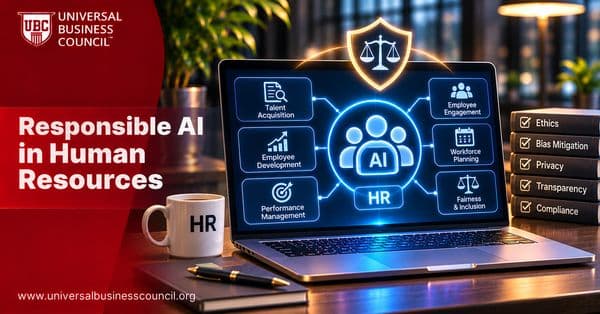
Responsible AI in Human Resources: Ethical Hiring and Workforce Analytics
Discover how responsible AI can improve human resources while supporting fair, transparent, and accountable workplace decisions. Explore AI in recruitment, candidate screening, performance management, employee data privacy, algorithmic bias, and the importance of human oversight.

Artificial Intelligence
AI Accountability Framework: Roles, Responsibilities and Oversight
Understand what an AI accountability framework is and how it defines roles, responsibilities, and oversight throughout the AI lifecycle. Explore key governance practices, human oversight mechanisms, and accountability structures that help organizations manage AI risks, ensure transparency, and promote responsible AI use.
Trending Articles
The Role of Blockchain in Ethical AI Development
How blockchain technology is being used to promote transparency and accountability in artificial intelligence systems.
AWS Career Roadmap
A step-by-step guide to building a successful career in Amazon Web Services cloud computing.
Top 5 DeFi Platforms
Explore the leading decentralized finance platforms and what makes each one unique in the evolving DeFi landscape.