

Responsible AI in Human Resources: Ethical Hiring and Workforce Analytics
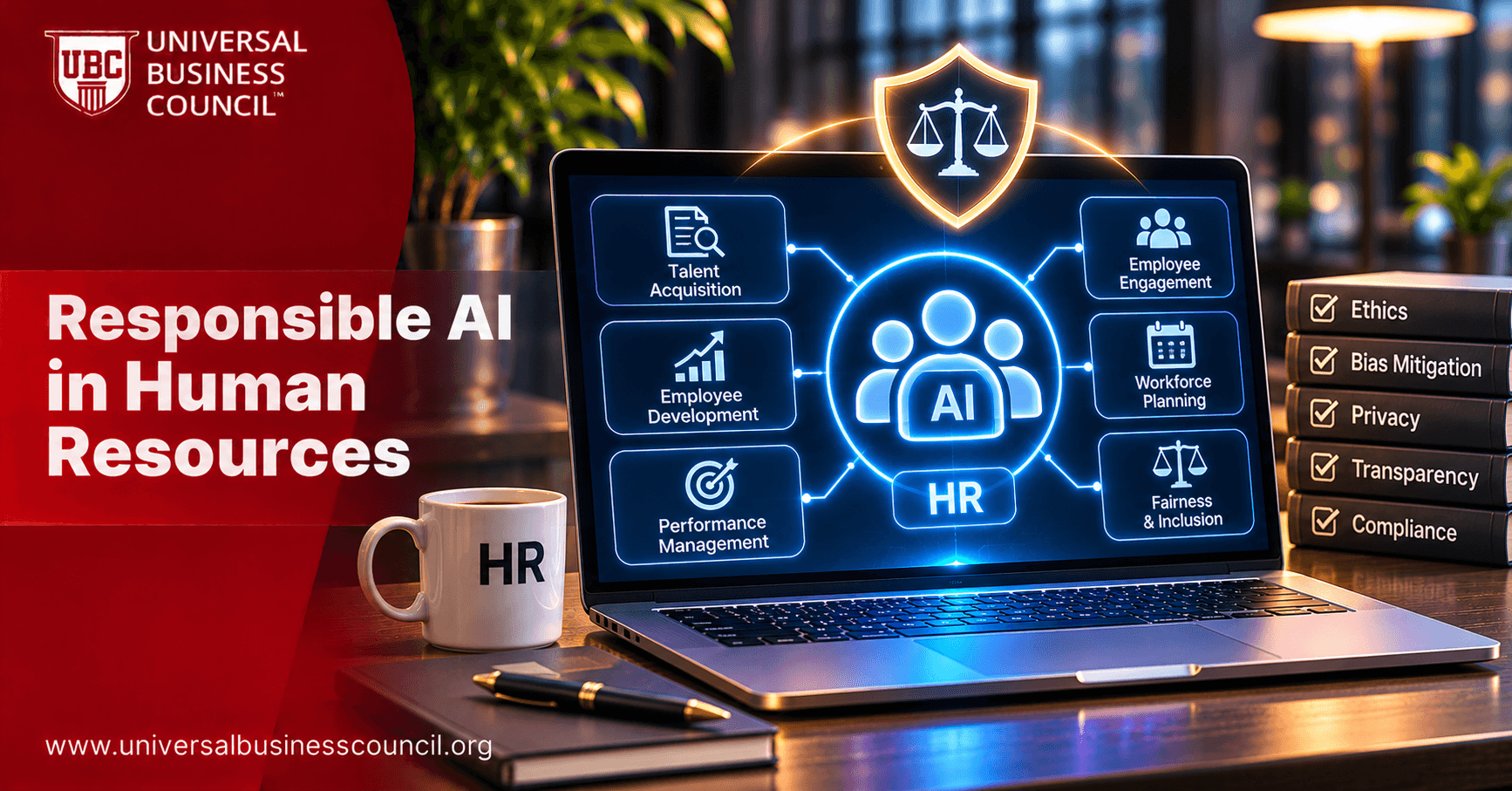
Hiring data carries the history of who got hired before, and that is exactly why AI in HR needs care. A model trained on past decisions can learn old habits and repeat them at speed. This guide explains how to apply responsible AI in human resources, from recruiting and screening to performance and workforce analytics, so that tools help people rather than quietly working against them. For readers who want a formal credential in this area, the Certified Responsible AI Expert program is a useful place to start.
What is responsible AI in human resources?
Responsible AI in human resources means using AI to support decisions about hiring, pay, promotion, development and workforce planning in ways that are fair, transparent, privacy-respecting and accountable. The decisions involved shape livelihoods, so the standard has to be high.

Employment is also one of the most regulated areas for AI. Some laws require bias audits or notices for automated hiring tools, the EU AI Act treats many employment uses as high risk, and anti-discrimination, data protection and labor laws apply everywhere. Requirements differ by country and state, so check the rules where your people are located.
Where AI shows up in HR
Writing and targeting job advertisements
Screening and ranking résumés
Chatbots that answer candidate and employee questions
Video or game-based assessments
Interview scheduling and note-taking
Performance analytics and productivity monitoring
Attrition prediction and workforce planning
Learning recommendations and internal mobility matching
Ethical hiring
Bias in screening
If a model learns from past hiring or performance data that favored certain groups, it can reproduce the pattern. Features that seem neutral, such as gaps in work history, certain schools or postal codes, can act as stand-ins for gender, age, ethnicity or disability. Test outcomes across groups before launch and at regular intervals, and review which factors drive the ranking.
Fit with the job
Tools should measure what matters for the role. Define the skills and criteria first, then check that the system uses them. Be cautious with tools that claim to infer personality, emotion or "culture fit" from faces, voices or social media, since the evidence for such claims is often weak and legal risk is high.
Transparency for candidates
Tell applicants when AI is used and what it assesses
Offer reasonable accommodations and an alternative route for those who need one
Provide a way to ask for human review
Explain how long data is kept and how it is used
Keep people accountable
AI should inform hiring decisions, not make them alone. Recruiters and hiring managers need training to question the output, and a named person must own each decision.
Workforce analytics and monitoring
Respect employee privacy
Analytics on performance, productivity or wellbeing can feel intrusive. Collect only data tied to a clear, legitimate purpose, avoid monitoring that reaches into private life and be open about what is tracked and why. In many jurisdictions, employee monitoring is subject to notice or consultation requirements.
Handle predictions with care
Models that predict resignation, low performance or "flight risk" can turn into self-fulfilling labels. Use them to offer support or improve conditions, not to penalize. Keep sensitive predictions restricted to a small group and check accuracy across demographics.
Involve employees
Consult staff, and worker representatives where they exist, before introducing new analytics. Explain the purpose and limits, and provide a channel for concerns.
Governance for HR AI
Core practices
Run an impact assessment before using AI in any employment decision
Inventory every HR tool, including those inside vendor platforms
Require vendors to share testing, bias audit results and data handling terms
Run independent bias audits where laws or good practice call for them
Log decisions and keep records long enough to answer challenges
Set a complaints and appeals process for candidates and staff
HR should work closely with legal, privacy and IT teams, because each controls part of the risk.
Employer brand and recruitment marketing
How you advertise roles and communicate with candidates shapes who applies and how they see you. Targeting job ads with AI raises fairness questions about who gets to see them. Those who work in recruitment marketing can explore the Certified Digital Marketing Expert program.
Skills, records and trusted people
HR technology teams and analysts benefit from technical understanding, which the programming and technology certifications from Global Tech Council can help build. Assessment records and audit logs gain value when they are tamper-resistant, and those curious about that can explore the deep tech certifications from Blockchain Council. Verification also matters on the hiring side itself, since confirming a candidate's background and credentials is a standard part of ethical hiring, and HireValid can help with that.
Conclusion: building fair workplaces with responsible AI in human resources
Responsible AI in human resources starts from the fact that employment decisions shape lives and sit among the most regulated uses of AI. In hiring, that means testing screening tools for bias and proxy variables, measuring what the job actually requires, telling candidates how AI is used, offering accommodations and human review and keeping a named person accountable for every decision. In workforce analytics, it means collecting only purposeful data, respecting privacy, treating predictions as prompts for support, consulting employees and checking accuracy across groups.
Underneath both sits governance: impact assessments before launch, a full inventory of HR tools, vendor transparency, independent audits where needed, solid records and a clear route for complaints. Start with the tools that rank or reject people, since they carry the most risk, and confirm they have been tested for bias, explained to candidates and made reviewable by a person. The Certified Responsible AI Expert program mentioned at the start can help HR and technology teams build the skills for responsible AI in human resources.
FAQs
1. What is responsible AI in human resources?
Using AI in hiring and workforce decisions in ways that are fair, transparent, private and accountable.
2. Can AI hiring tools be biased?
Yes. They can learn patterns from past decisions that favored certain groups.
3. What is a bias audit?
An independent review of whether a tool produces different outcomes for different groups.
4. Are bias audits required?
Some laws require them for automated hiring tools. Check the rules where you hire.
5. Is AI hiring regulated under the EU AI Act?
Many employment uses are classed as high risk, with obligations that phase in under the Act's timeline.
6. Should candidates be told AI is used?
Yes. Openness builds trust and may be legally required.
7. Can AI make the final hiring decision?
It should not. People should decide, using AI as one input.
8. Are emotion-reading hiring tools reliable?
Evidence for such claims is often weak, and the legal and ethical risk is high.
9. How do we offer accommodations?
Provide an alternative assessment route and an easy way to request adjustments.
10. What are proxy variables in hiring?
Inputs that seem neutral but stand in for protected traits.
11. Can employers monitor employee productivity with AI?
Within legal limits and with transparency, but monitoring should be proportionate and purposeful.
12. Is attrition prediction acceptable?
It can be, if used to support employees and handled with strict access and accuracy checks.
13. Do we need employee consent for analytics?
Requirements vary. Many places require notice or another lawful basis, so seek advice.
14. How should HR vet AI vendors?
Ask for testing evidence, bias audit results, data handling terms and explainability.
15. Who owns HR AI risk?
A named HR leader, working with legal, privacy and IT.
16. How long should hiring data be kept?
Only as long as needed for the purpose and any legal duty, then deleted.
17. What if a candidate challenges an AI-influenced decision?
Provide human review and explain the criteria used.
18. Can AI write job descriptions?
Yes, but review for biased or exclusionary wording.
19. Can small employers use these practices?
Yes. Choose well-documented tools, keep a human decision-maker and be open with candidates.
20. Where can I learn more?
Training such as the Certified Responsible AI Expert program and guidance from employment regulators.
Related Articles
View All
Artificial Intelligence
Responsible AI for AI Agents: Autonomy, Control and Human Oversight
Explore how responsible AI principles apply to autonomous AI agents and understand the importance of autonomy, control, and human oversight. Learn how organizations can manage agentic AI risks, establish safeguards, maintain accountability, and ensure AI agents operate safely, transparently, and within defined boundaries.
Artificial Intelligence
Responsible AI vs Ethical AI vs Trustworthy AI: Key Differences
Understand the differences between responsible AI, ethical AI, and trustworthy AI, including their definitions, principles, and applications. Explore how these approaches address fairness, transparency, accountability, privacy, and safety to guide the development and use of reliable artificial intelligence systems.
Artificial Intelligence
Federated Learning and Responsible AI: Benefits, Risks and Limitations
Explore how federated learning supports responsible AI by allowing machine learning models to train across decentralized data sources without directly sharing raw data. Learn about its benefits for privacy and collaboration, along with risks, technical limitations, security concerns, and practical applications.
Trending Articles
The Role of Blockchain in Ethical AI Development
How blockchain technology is being used to promote transparency and accountability in artificial intelligence systems.
AWS Career Roadmap
A step-by-step guide to building a successful career in Amazon Web Services cloud computing.
Top 5 DeFi Platforms
Explore the leading decentralized finance platforms and what makes each one unique in the evolving DeFi landscape.