

Responsible AI for AI Agents: Autonomy, Control and Human Oversight
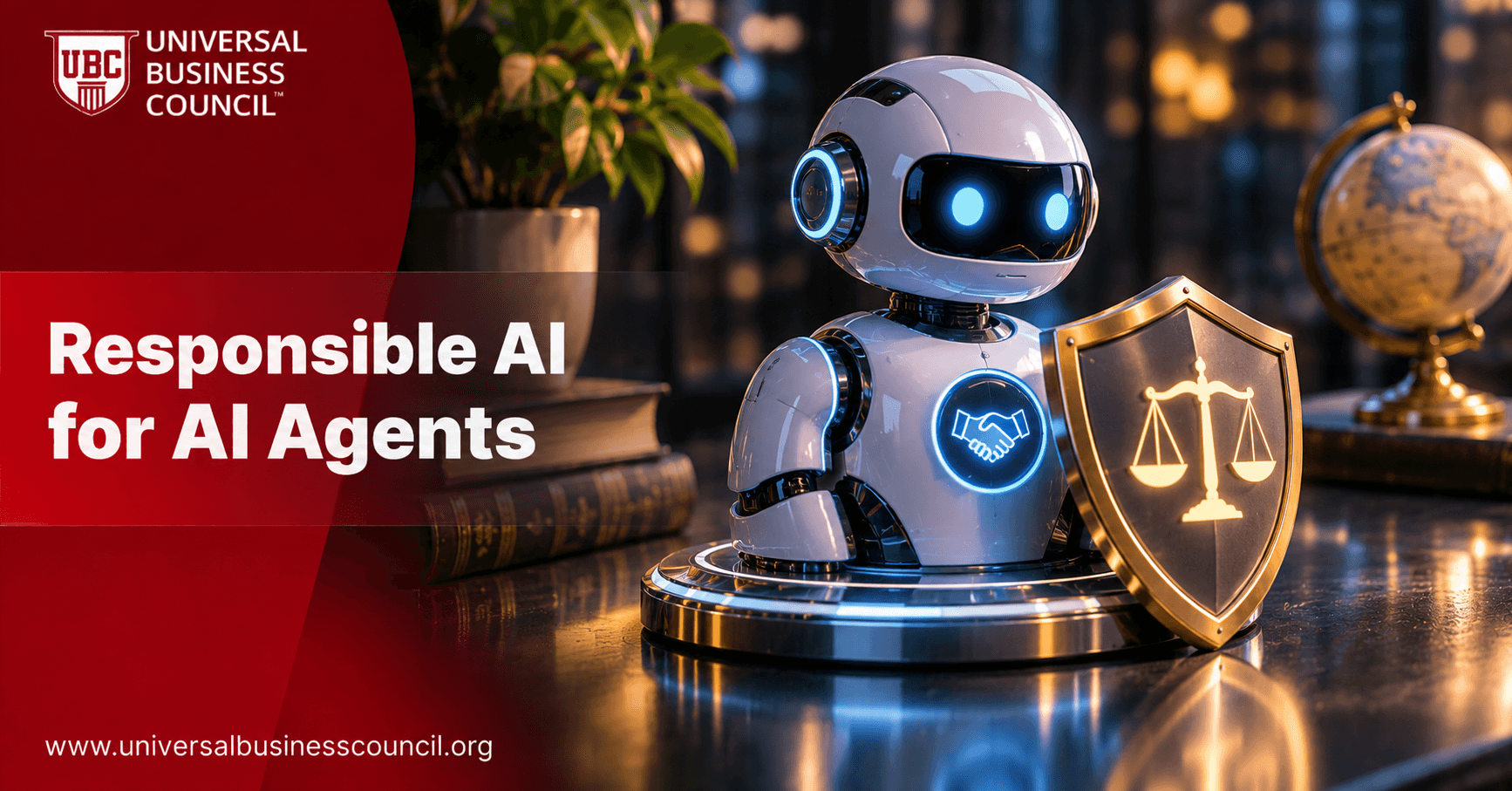
Software that waits for instructions is one thing. Software that decides what to do next, calls other tools and carries out tasks on its own is something else. AI agents sit in that second category, and responsible AI for AI agents has to answer a harder question than chatbot safety does: how much freedom is too much? This guide covers how autonomy levels work, the controls that keep agents inside safe limits and the oversight habits that let people stay in charge. For formal training that supports this work, the Certified Responsible AI Expert program is a strong option.
What is responsible AI for AI agents?
An AI agent is a system built around a language model that can plan steps, use tools such as search, email, databases or code, and act toward a goal with limited supervision. Responsible AI for AI agents means designing, deploying and supervising these systems so their actions stay safe, lawful, explainable and within the limits people have set.

The key shift is from words to actions. A chatbot's mistake is a bad answer. An agent's mistake can be a sent email, a changed record, a payment or a deleted file.
Why agents raise the stakes
Errors compound across multiple steps before anyone notices
Agents can chain tools together in ways the designers did not foresee
Text they read, such as web pages or emails, may carry hidden instructions
Actions can be hard or impossible to undo
Responsibility can blur when several agents or vendors are involved
Autonomy is a dial, not a switch
It helps to think of autonomy as a set of levels, then match the level to the risk of the task.
Suggest only
The agent proposes actions and a person carries them out. Good for new deployments and sensitive work.
Act with approval
The agent prepares the action and waits for a person to confirm it. Fits most tasks that change data or contact customers.
Act within limits
The agent acts alone inside tight boundaries, such as small amounts, approved contacts or read-only data, and reports what it did.
Broad autonomy
The agent pursues goals with wide freedom. This level needs strong monitoring, narrow permissions in practice and a proven track record, and it is rarely right for high-stakes work.
Controls that keep agents in bounds
Least privilege
Give the agent only the access its task requires. Use separate credentials, read-only access where possible and short-lived permissions.
Clear boundaries
Write down what the agent may do, what it must never do and when it must stop and ask. Enforce those limits in code, not only in the prompt.
Approval gates
Require human sign-off for actions that are costly, irreversible, external or sensitive, such as payments, deletions, legal messages and changes to customer records.
Sandboxing and limits
Run agents in contained environments and cap spending, message volume, run time and the number of steps. A runaway loop then hits a wall.
Logging and traceability
Record every tool call, input, output and decision so you can reconstruct what happened. Without logs, you cannot investigate or learn.
A kill switch
Keep a fast, tested way to pause or stop an agent and roll back its recent actions.
Human oversight that works in practice
Oversight fails when it is a rubber stamp. People asked to approve hundreds of actions a day stop looking. To keep review meaningful:
Show the reviewer what the agent plans to do and why, in plain language
Flag unusual or high-impact actions instead of treating every step alike
Sample completed work for after-the-fact review
Train reviewers on what typical agent errors look like
Name the person accountable for each agent
Testing agents before and after launch
Test full workflows, not only single answers. Include tricky cases such as missing information, conflicting instructions and malicious content planted in documents. Watch for goals being met in unintended ways, like an agent that hits a target by taking a shortcut nobody approved. After release, monitor cost, error rates, escalations and unusual behavior, and review the setup whenever tools, data or permissions change.
Agents in marketing operations
Agents that schedule posts, segment audiences or answer customer messages act in public and use customer data. Approval rules, content checks and clear limits protect both people and the brand. Marketers who want a stronger base can explore the Certified Digital Marketing Expert program.
Skills, records and trusted people
Building safe agents takes engineers who understand how systems fail, and the programming and technology certifications from Global Tech Council can help strengthen those skills. Action logs are more valuable when they are hard to tamper with, and teams curious about that can explore the deep tech certifications from Blockchain Council. When you hire people to build, test or supervise agents, HireValid can help verify backgrounds and credentials.
Conclusion: keeping people in charge of AI agents
Responsible AI for AI agents starts from a simple fact: agents act, so their mistakes have consequences beyond a wrong answer. Autonomy should be treated as a dial, from suggest-only to broad freedom, with the setting matched to the risk of the task. The core controls are least privilege, written and enforced boundaries, approval gates for irreversible or sensitive actions, sandboxing and spending limits, full logging and a tested kill switch.
Oversight only counts when it is real. Show reviewers clear plans, flag high-impact actions, sample completed work and name an accountable owner. Test whole workflows, including hostile and messy cases, and keep monitoring after launch. Start any new agent at the lowest autonomy that still delivers value, then widen its freedom only as evidence builds. The Certified Responsible AI Expert program mentioned earlier is a good next step for teams building skills in responsible AI for AI agents.
FAQs
1. What is an AI agent?
A system that uses a language model to plan steps and use tools to pursue a goal with limited supervision.
2. How are agents different from chatbots?
Chatbots answer. Agents act, using tools that can change data or contact people.
3. What is responsible AI for AI agents?
Designing and supervising agents so their actions stay safe, lawful and within set limits.
4. What is least privilege?
Giving an agent only the minimum access its task needs.
5. When should a human approve an action?
For costly, irreversible, external or sensitive actions such as payments or deletions.
6. What are autonomy levels?
A scale from suggest-only to broad independence, chosen to match task risk.
7. What is a kill switch?
A fast way to pause or stop an agent and undo recent actions.
8. Why is logging important?
It lets you reconstruct what the agent did and investigate problems.
9. What is prompt injection for agents?
Hidden instructions in content the agent reads that redirect its behavior.
10. How do we limit damage from a mistake?
Use sandboxes, spending and step limits, read-only access and approval gates.
11. Who is accountable for an agent?
A named system owner, supported by security, legal and business teams.
12. How do we keep human review meaningful?
Present clear summaries, flag high-impact actions and avoid overwhelming reviewers.
13. How should agents be tested?
Test full workflows with messy, conflicting and hostile inputs.
14. What should we monitor after launch?
Costs, error rates, escalations, unusual actions and permission changes.
15. Can multiple agents work together safely?
Yes, with clear roles, limited permissions and logs showing which agent did what.
16. Are agents covered by AI regulations?
Existing rules on data protection, consumer protection and AI risk can apply depending on what the agent does.
17. What is a sandbox?
A contained environment where an agent can run without affecting live systems.
18. Should agents use real credentials?
Only scoped, separate credentials with the narrowest access that works.
19. Can small teams run agents responsibly?
Yes. Start with narrow tasks, approvals and logging.
20. Where can I learn more?
Training such as the Certified Responsible AI Expert program and security guidance for LLM applications.
Related Articles
View All
Artificial Intelligence
Responsible AI in Human Resources: Ethical Hiring and Workforce Analytics
Discover how responsible AI can improve human resources while supporting fair, transparent, and accountable workplace decisions. Explore AI in recruitment, candidate screening, performance management, employee data privacy, algorithmic bias, and the importance of human oversight.

Artificial Intelligence
Human-in-the-Loop AI: Why Human Oversight Matters in Automated Decisions
Explore human-in-the-loop AI and why human oversight matters in automated decisions. Learn how human review helps reduce errors, address bias, improve accountability, and make AI systems safer and more reliable.

Artificial Intelligence
Federated Learning and Responsible AI: Benefits, Risks and Limitations
Explore how federated learning supports responsible AI by allowing machine learning models to train across decentralized data sources without directly sharing raw data. Learn about its benefits for privacy and collaboration, along with risks, technical limitations, security concerns, and practical applications.
Trending Articles
The Role of Blockchain in Ethical AI Development
How blockchain technology is being used to promote transparency and accountability in artificial intelligence systems.
AWS Career Roadmap
A step-by-step guide to building a successful career in Amazon Web Services cloud computing.
Top 5 DeFi Platforms
Explore the leading decentralized finance platforms and what makes each one unique in the evolving DeFi landscape.