

Can AI Be Biased? How Do Companies Ensure Fairness?

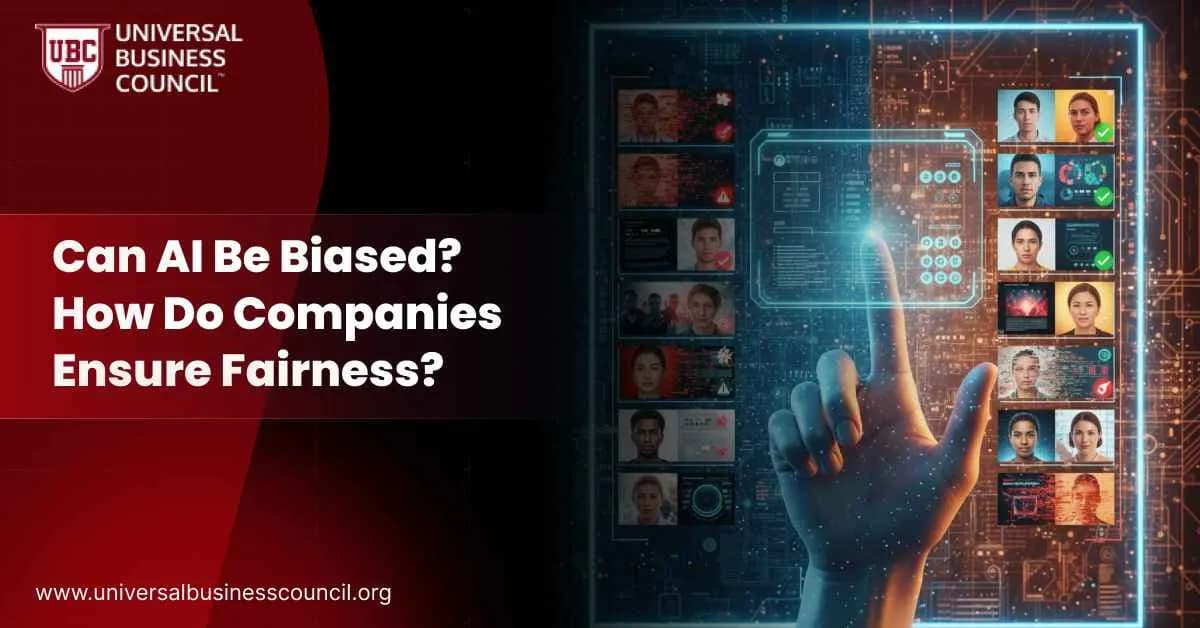
Why Bias Happens in AI
AI systems rely on data, and data is not neutral. If the training set underrepresents certain groups, the AI may not perform well for them. This is called sampling bias. Other times, the way information is labeled or measured creates skewed results, leading to measurement bias. Even design choices — which features to prioritize, how models are structured — can introduce algorithmic bias. Real-world examples highlight the problem. Hiring tools have favored names linked to white candidates over Black candidates. Healthcare summaries have described men differently than women even when the cases were nearly identical. These errors are not just technical flaws; they impact people’s lives and trust in the systems.The Risks of Ignoring Bias
The consequences of biased AI go far beyond mistakes. Companies face legal action when AI systems discriminate in areas like housing, insurance, or employment. Regulators and courts are watching closely, and lawsuits are already happening. There’s also reputational damage: once bias is exposed in a high-profile system, public trust drops. And if customers feel excluded or treated unfairly, businesses lose opportunities they didn’t even know they were missing.How Companies Detect Bias
Organizations have started building processes to spot unfairness before it causes harm. Data audits are one approach, checking whether datasets are diverse and balanced. Output testing is another — running AI systems on specific test cases to see how they perform across demographics. Some companies now use fairness metrics to track whether errors or outcomes are equally distributed across groups.Sources of AI Bias and Ways to Address Them
| Source of Bias | Company Response |
| Training data lacks diversity | Collect more balanced data or oversample underrepresented groups |
| Poor labeling or skewed variables | Re-examine labels and adjust weighting with human oversight |
| Algorithm design favors certain features | Review feature selection and test for unintended effects |
| Development teams lack diversity | Build cross-functional teams with different backgrounds |
| Black-box models | Use interpretable AI and publish fairness reports |
| Bias drift after deployment | Re-train regularly and monitor in real time |
| Lack of governance | Set up ethics boards and internal audit frameworks |
Fairness Strategies in Action
Companies are using several strategies to build fairer AI. Diverse teams are one. By including people with different backgrounds in design and testing, companies catch problems that might otherwise be missed. Governance is another. Many organizations now have AI ethics boards that review projects before launch. Human oversight is also critical. For high-stakes areas like healthcare or law, AI outputs are reviewed by experts before being used. Monitoring doesn’t stop after deployment either; models are checked and updated as they interact with more data. Some firms are leading by example. LinkedIn has published a fairness framework that balances equal treatment with product equity. Knockri, a hiring platform, avoids facial recognition in assessments and instead focuses on candidate responses to reduce bias.The Role of Regulation
Governments are catching up quickly. In the U.S., state Attorneys General are starting to enforce AI fairness standards, especially in consumer-facing areas. In Europe, new laws require companies to document and explain how AI makes decisions. These regulations push businesses to treat fairness as a compliance requirement, not just a moral choice. For professionals who want to dive deeper into the technical side of fairness, a Data Science Certification can help build the skills needed to audit and manage AI systems responsibly.Building Skills for Responsible AI
Ensuring fairness isn’t just about meeting laws — it’s about building trust and long-term value. Companies need experts who understand bias, know how to measure it, and can apply fixes at both the data and model levels. Those who want to strengthen their technical foundation can consider a deep tech certification to gain insights into the broader world of AI and emerging technologies.Final Thoughts
AI can be biased, but it doesn’t have to stay that way. Companies that commit to fairness through diverse teams, transparent practices, and strong governance will be better positioned to win trust and stay compliant. The real goal is not just removing bias but creating AI that benefits everyone.Related Articles
View All
Artificial Intelligence
How to Crack AI Roles in Companies Like OpenAI & Emergent
Discover how to land AI roles at companies like OpenAI and Emergent by mastering essential skills, building standout projects, creating a strong portfolio, and preparing effectively for technical interviews.

Artificial Intelligence
Gemini 4 Argon: Features, Pricing, and Availability
Gemini 4 Argon is Google’s new flagship AI model for coding, science, finance, law and security. See its main features, API and subscription pricing, and where you can access it today.

Artificial Intelligence
What Is Meta Muse Wonder? Features and How It Works
Meta Muse Wonder is a new frontier AI model built for agents with Active Memory and Active Focus. Learn what it is, how it works, its features, pricing and how to access it.
Trending Articles
The Role of Blockchain in Ethical AI Development
How blockchain technology is being used to promote transparency and accountability in artificial intelligence systems.
AWS Career Roadmap
A step-by-step guide to building a successful career in Amazon Web Services cloud computing.
Top 5 DeFi Platforms
Explore the leading decentralized finance platforms and what makes each one unique in the evolving DeFi landscape.