

Responsible AI Careers: Roles, Skills, Qualifications and Career Paths
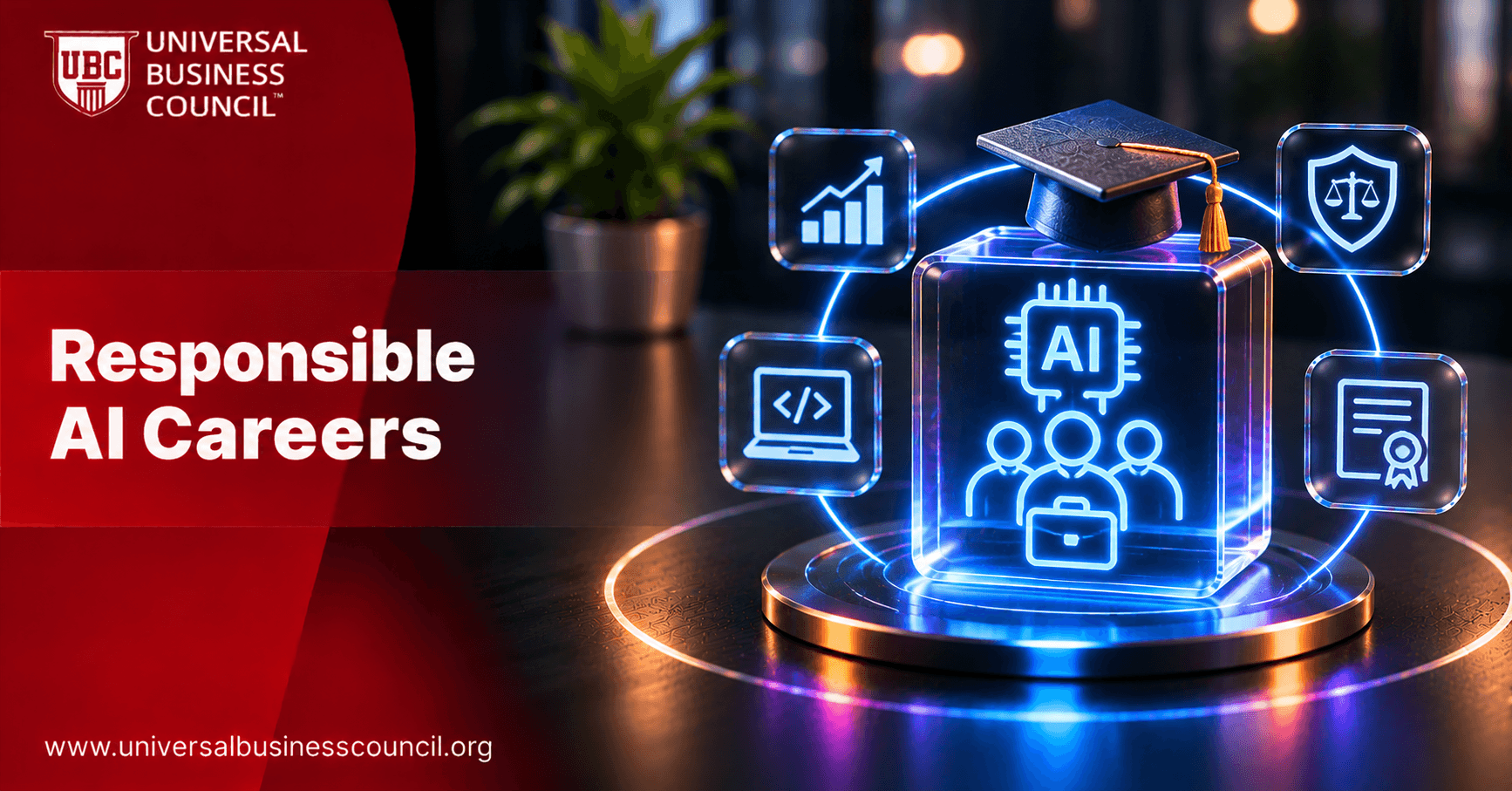
As AI moves into hiring, lending, healthcare and public services, organizations need people whose job is to make sure it is used well. That demand has created a growing set of responsible AI careers, from governance and risk roles to technical positions focused on fairness, safety and privacy. This guide describes the main roles, the skills they require, the qualifications that help and the paths people take into the field. It is aimed at professionals considering a move and at managers planning teams. For a structured credential in this area, see the certified responsible AI expert certification.
What are responsible AI careers?
Responsible AI careers are jobs focused on making AI systems lawful, fair, safe, secure, transparent and accountable. The work spans policy, law, risk, engineering, data science, audit and ethics. Job titles vary widely and are still settling, so it helps to look at the work being done rather than the label.

The field is cross-disciplinary by nature. Teams often combine people from compliance, technology, legal, security and business backgrounds.
Common roles
These are some of the roles organizations commonly hire for or create within existing teams.
Governance and policy roles
AI governance leads, responsible AI program managers and AI policy specialists design policies, run review processes, maintain inventories and coordinate across departments. They translate laws and standards into practical procedures.
Risk, compliance and audit roles
AI risk analysts, compliance officers and internal auditors assess systems against internal rules and external requirements, test controls and report findings. Their work overlaps with model risk management in finance and quality assurance in healthcare.
Legal and privacy roles
Privacy officers, technology lawyers and data protection specialists advise on data use, automated decision-making, intellectual property and contracts. They are central to impact assessments.
Technical roles
Machine learning engineers, data scientists and security specialists focus on fairness testing, explainability, robustness, privacy-preserving methods, red teaming and monitoring. Some organizations create dedicated responsible AI engineer or AI safety roles.
AI governance or program lead
AI risk and compliance analyst
Privacy and AI legal specialist
Responsible AI or ML engineer
AI security and red team specialist
AI auditor or assurance specialist
Product manager with responsible AI focus
Roles inside other teams
Many responsible AI duties sit inside existing jobs, such as a product manager who runs impact assessments or an HR analyst who reviews hiring tools. The skills matter even without the title.
Skills employers look for
Skills fall into three groups, and most professionals need depth in one and working knowledge of the others.
Technical understanding
You do not need to build models to work in governance, but you need to understand how they are trained, tested and fail. Technical roles require stronger skills in programming, statistics, machine learning and security, and many professionals build these foundations through tech certifications.
Legal, ethical and risk knowledge
Know the main laws and frameworks, how risk assessment works and how to reason about fairness, privacy and accountability. Familiarity with standards and regulations helps you advise teams with confidence.
Communication and judgment
Responsible AI professionals persuade engineers, executives, lawyers and customers. They write clearly, run workshops, handle disagreement and explain trade-offs in plain language. Strong communicators also need accuracy, and some build it with a digital marketing course that covers honest, audience-focused messaging.
Qualifications and learning
There is no single required path. Employers usually value a mix of education, experience and proof of current knowledge.
Formal education and experience
Degrees in computer science, data science, law, public policy, information security or related fields are common, but experience in risk, audit, privacy or product work can be just as relevant. Practical examples of work you have done, such as an impact assessment or a testing report, carry weight.
Certifications and training
Professional certifications show structured knowledge of principles, frameworks and implementation. Choose programs that are clear about what they cover and how they assess learning.
Verified credentials
Because the field is new, employers often check credentials and backgrounds carefully, particularly for roles with access to sensitive data or approval power. Services such as HireValid support this, and candidates benefit from keeping certificates and records accurate and easy to verify. Newer approaches to verifiable credentials link to ideas explored in deep tech certifications.
Typical career paths
People enter the field from several directions.
From technology
Engineers and data scientists move into fairness, safety or security work, then into lead or architect roles, and sometimes into governance leadership.
From risk, legal and compliance
Professionals add AI knowledge to existing expertise, become AI risk or policy specialists and progress to program or head-of-governance roles.
From product and business
Product managers and analysts who take on assessments and reviews grow into responsible AI product or program roles.
Growth over time
With experience, professionals move into senior governance, chief AI officer-type roles, advisory work or specialist consulting. Keep learning, since laws and technology keep changing.
Conclusion
Responsible AI careers cover governance, risk, legal, privacy and technical work, and the field welcomes people from many backgrounds. Employers look for technical understanding, knowledge of laws and frameworks, and strong communication and judgment. Build proof of skills through projects, education and recognized certifications, keep credentials verifiable and choose a path that fits your strengths. The field is young, so adaptability and continuous learning are your best assets.
Frequently asked questions
These are the questions people ask most about careers in responsible AI.
1. What is a responsible AI career?
A job focused on making AI lawful, fair, safe, secure and accountable.
2. What roles exist?
Governance, risk, compliance, legal, privacy, technical and audit roles.
3. Do I need to code?
Not for every role, but technical roles require strong coding skills.
4. Can non-technical people enter the field?
Yes, especially in policy, legal, risk and compliance roles.
5. What technical knowledge helps non-engineers?
How models are trained, tested and how they fail.
6. Which degrees are useful?
Computer science, data science, law, policy and security, among others.
7. Is experience more important than degrees?
Both matter, and relevant practical work carries real weight.
8. Are certifications useful?
They show structured knowledge, especially alongside experience.
9. What is an AI governance lead?
A person who designs and runs an organization's AI governance program.
10. What does an AI auditor do?
Tests AI systems and controls against rules and standards.
11. What do responsible AI engineers do?
Build fairness, robustness, privacy and monitoring into systems.
12. What is AI red teaming work?
Testing systems by attacking them to find weaknesses.
13. Which soft skills matter?
Communication, judgment, negotiation and clear writing.
14. How can I build a portfolio?
Complete example assessments, testing reports or policy drafts.
15. Do employers verify credentials?
Often, especially for sensitive roles.
16. Can I move in from compliance or legal work?
Yes, by adding AI and technical knowledge.
17. Can engineers move into governance?
Yes. Technical depth is valuable in governance teams.
18. Is the field stable?
It is growing, but roles and titles are still changing.
19. How do I keep up?
Follow laws and standards, practice with real cases and keep learning.
20. Where do I start?
With the fundamentals, a small practical project and a recognized learning path.
Related Articles
View All
Artificial Intelligence
How to Become a Responsible AI Expert: Skills, Learning Path and Certification
Learn how to become a Responsible AI expert with a clear learning path covering essential skills, relevant qualifications, and industry certifications. Explore how to build expertise in AI ethics, governance, risk management, compliance, and responsible AI practices.

Artificial Intelligence
Federated Learning and Responsible AI: Benefits, Risks and Limitations
Explore how federated learning supports responsible AI by allowing machine learning models to train across decentralized data sources without directly sharing raw data. Learn about its benefits for privacy and collaboration, along with risks, technical limitations, security concerns, and practical applications.
Artificial Intelligence
Responsible AI Data Governance: Quality, Consent and Provenance
Explore how responsible AI data governance supports reliable and ethical AI systems through data quality, informed consent, and data provenance. Learn how organizations can manage training data, protect individual privacy, track data origins, reduce bias, and maintain accountability throughout the AI lifecycle.
Trending Articles
The Role of Blockchain in Ethical AI Development
How blockchain technology is being used to promote transparency and accountability in artificial intelligence systems.
AWS Career Roadmap
A step-by-step guide to building a successful career in Amazon Web Services cloud computing.
Top 5 DeFi Platforms
Explore the leading decentralized finance platforms and what makes each one unique in the evolving DeFi landscape.