

Responsible AI in Cybersecurity: Balancing AI Innovation, Privacy and Security
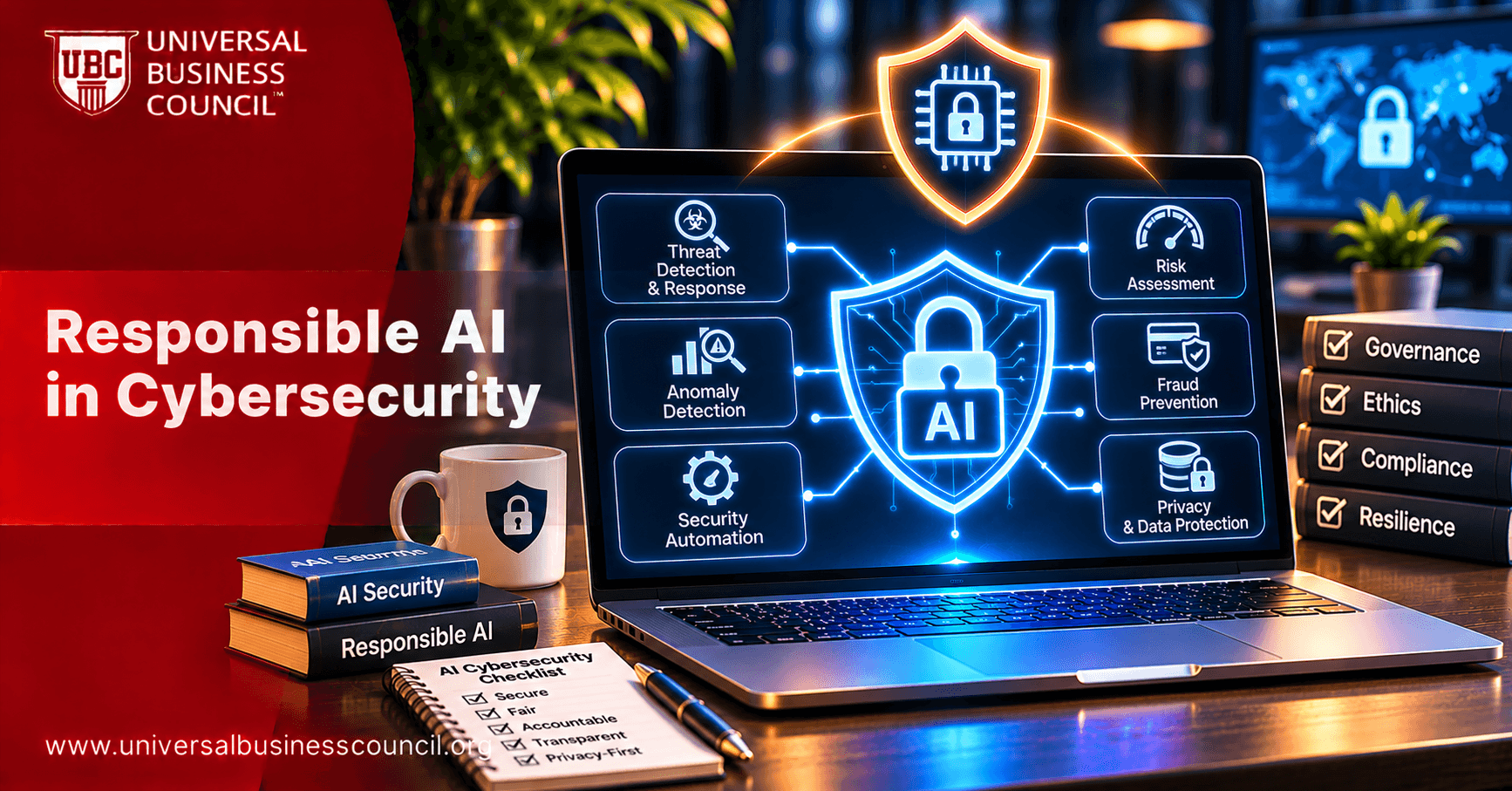
Attackers and defenders are both using AI, and neither side holds a lasting advantage. That makes responsible AI in cybersecurity a two-sided problem: how to use AI to defend better, and how to keep the AI you adopt from becoming a new weakness. Along the way, security tools collect large amounts of data about systems and people, which raises privacy questions of their own. This guide covers how to balance innovation, privacy and security when AI enters the security stack. For readers who want a formal credential in this area, the Certified Responsible AI Expert program is a strong option.
What is responsible AI in cybersecurity?
Responsible AI in cybersecurity means using AI to protect systems, data and people in ways that are effective, accurate, privacy-respecting, accountable and secure in their own right. It covers three linked areas: AI used for defense, defense against AI-enabled attacks and protection of the AI systems themselves.

Security teams are under pressure from alert volumes, skills shortages and fast-moving threats, so the appeal of automation is strong. Responsible adoption makes sure the tools help without creating blind spots, privacy harms or new openings for attackers.
How AI helps defenders
Spotting unusual behavior in networks, devices and accounts
Detecting phishing and malicious content
Triage and enrichment of security alerts
Prioritizing vulnerabilities by likely impact
Summarizing incidents and drafting reports
Assisting analysts with queries, scripts and investigation steps
Supporting faster, partly automated response
How AI changes the threat picture
Attackers also use AI to write more convincing phishing messages, imitate voices and faces, speed up reconnaissance and assist with malicious code. Defenders should assume that social engineering will be more polished and more personalized, and strengthen controls that do not depend on spotting a bad message, such as multi-factor authentication, payment call-back rules and least-privilege access.
Securing the AI systems you use
AI tools add their own attack surface. Common concerns include:
Prompt injection and manipulation
Crafted input, including text hidden in documents or web pages, can push a model to ignore its instructions or take unwanted actions. Treat any external content as untrusted and limit what the model can do.
Data poisoning and model tampering
If attackers can influence training data or model files, they can degrade performance or plant hidden behavior. Control data sources, verify model provenance and monitor for drift.
Data leakage
Models and tools can expose sensitive information through outputs, logs or vendor handling. Restrict what data goes in and review where it is stored.
Evasion and model theft
Adversaries may craft inputs that slip past a detection model or try to copy it. Test your tools against evasion and protect access to them.
Supply chain risk
Third-party models, libraries and plugins can carry vulnerabilities. Vet suppliers, pin versions and track what is deployed.
Useful references include the OWASP Top 10 for Large Language Model Applications, the MITRE ATLAS knowledge base of attacks on AI and the NIST AI Risk Management Framework.
Privacy in security monitoring
Security tools often look at emails, endpoints, network traffic and user behavior, which can include personal information about employees and customers. Responsible practice means:
Collect only the telemetry needed for a defined security purpose
Limit who can see sensitive data inside security tools
Be open with staff about what is monitored and why
Set retention periods and delete data when no longer needed
Check legal rules on monitoring, since they differ by country and sector
Review what third-party security vendors do with your data
Accuracy, bias and alert fatigue
Detection models make mistakes. Too many false alarms exhaust analysts and hide real threats, while missed attacks create false confidence. Measure both, tune thresholds carefully and retest after changes. Watch for bias too: behavior-based tools can flag some employees or regions more often because their patterns differ from the training baseline, which can lead to unfair scrutiny.
Human oversight and automated response
Automation is valuable when speed matters, but actions such as isolating a server, disabling an account or blocking traffic can disrupt the business. Set clear tiers: let the system act alone on low-risk, reversible steps, require approval for higher-impact ones and keep a person accountable for every playbook. Log all automated actions, keep a fast way to reverse them and run exercises to see how the system behaves under stress.
Governance basics for AI in security
An inventory of AI tools and their data access
Named owners and approval for new tools
Vendor review covering security, privacy and model updates
Regular testing, including adversarial testing
Incident response plans that cover AI failures and abuse
Security awareness and communication
Teams that run phishing awareness campaigns and customer security messaging should reflect how AI-driven scams actually look. Clear, calm communication helps people respond well. Those who work in this area can explore the Certified Digital Marketing Expert program.
Skills, records and trusted people
Security engineers and analysts need strong technical foundations, which the programming and technology certifications from Global Tech Council can help build. Security logs and evidence are most useful when they cannot be quietly altered, and teams exploring tamper-evident approaches can look at the deep tech certifications from Blockchain Council. People inside the security function hold privileged access, so careful screening is a core control, and HireValid can help verify backgrounds and credentials.
Conclusion: balancing innovation, privacy and security with responsible AI in cybersecurity
Responsible AI in cybersecurity covers three connected jobs: using AI to defend, preparing for attackers who use AI too and securing the AI systems you rely on. Defensive uses such as anomaly detection, phishing detection, alert triage and vulnerability prioritization deliver real value, while attackers' use of AI calls for stronger basics like multi-factor authentication, call-back rules and least privilege. The AI tools themselves face prompt injection, data poisoning, leakage, evasion, model theft and supply chain risks, and references from OWASP, MITRE and NIST help teams plan for them.
Privacy and accuracy need equal attention. Collect only the telemetry you need, restrict access, be open with staff and check the law on monitoring. Measure false positives and misses, tune carefully and watch for bias. Keep humans accountable for automated response by tiering actions by impact, logging everything and keeping reversal paths ready. Start by inventorying the AI tools already in your security stack, listing what data each can see and confirming who owns each one. The Certified Responsible AI Expert program mentioned at the start can help security and technology teams build skills in responsible AI in cybersecurity.
FAQs
1. What is responsible AI in cybersecurity?
Using AI to protect systems and data in ways that are effective, private, accountable and secure.
2. How does AI help cybersecurity teams?
It detects anomalies, triages alerts, prioritizes vulnerabilities and assists investigations.
3. How do attackers use AI?
To make phishing more convincing, imitate voices and faces and speed up preparation for attacks.
4. What is prompt injection?
Crafted input that makes a model ignore its instructions or take unwanted actions.
5. What is data poisoning?
Tampering with training data to degrade a model or plant hidden behavior.
6. How can we protect AI tools from attack?
Control data sources, vet suppliers, limit model access, monitor behavior and test adversarially.
7. What is MITRE ATLAS?
A knowledge base of tactics and techniques used against AI systems.
8. What is the OWASP Top 10 for LLM applications?
A list of common security weaknesses in applications built on large language models.
9. Does security monitoring raise privacy concerns?
Yes, because it can reveal personal information about employees and customers.
10. How do we protect privacy in monitoring?
Collect only what is needed, limit access, be transparent and set retention limits.
11. Should staff be told about monitoring?
Yes. Transparency is good practice and often a legal requirement.
12. What is alert fatigue?
Analysts overwhelmed by too many alerts, causing real threats to be missed.
13. Can security AI be biased?
Yes. Behavior-based tools can flag some groups or regions more often than others.
14. Should AI respond to incidents automatically?
For low-risk, reversible steps, yes. Higher-impact actions should need human approval.
15. What logs should we keep of automated actions?
What was done, why, when, by which rule and who approved it.
16. How do we assess a security AI vendor?
Review security practices, data handling, model update processes and testing evidence.
17. Which frameworks help?
The NIST AI RMF, NIST Cybersecurity Framework, ISO/IEC 27001 and ISO/IEC 42001 are useful references.
18. How do we defend against AI-written phishing?
Use multi-factor authentication, verification rules for sensitive requests and regular awareness training.
19. Can small teams adopt AI security tools responsibly?
Yes, with clear scope, vendor checks, logging and human oversight.
20. Where can I learn more?
Training such as the Certified Responsible AI Expert program and published security guidance from standards bodies.
Related Articles
View All
Artificial Intelligence
Responsible Prompt Engineering: Privacy, Bias and Security Best Practices
Learn how to practice responsible prompt engineering while protecting privacy, reducing bias, and maintaining AI security. Explore best practices for writing safe and effective prompts, handling sensitive information, preventing harmful outputs, and using generative AI responsibly across personal and business applications.
Artificial Intelligence
Responsible AI in Marketing: Personalization, Consumer Privacy and Transparency
Discover how responsible AI is changing marketing through personalized campaigns and data-driven targeting. Learn how businesses can protect consumer privacy, address algorithmic bias, improve transparency, and build customer trust while using AI-powered marketing tools.

Artificial Intelligence
Responsible AI in Education: Student Privacy, Fairness and AI-Powered Learning
Explore how responsible AI is shaping education through personalized learning, smarter teaching tools, and more accessible educational experiences. Learn how schools can protect student privacy, reduce algorithmic bias, promote fairness, and maintain human oversight in AI-powered learning.
Trending Articles
The Role of Blockchain in Ethical AI Development
How blockchain technology is being used to promote transparency and accountability in artificial intelligence systems.
AWS Career Roadmap
A step-by-step guide to building a successful career in Amazon Web Services cloud computing.
Top 5 DeFi Platforms
Explore the leading decentralized finance platforms and what makes each one unique in the evolving DeFi landscape.