

Responsible AI in Education: Student Privacy, Fairness and AI-Powered Learning
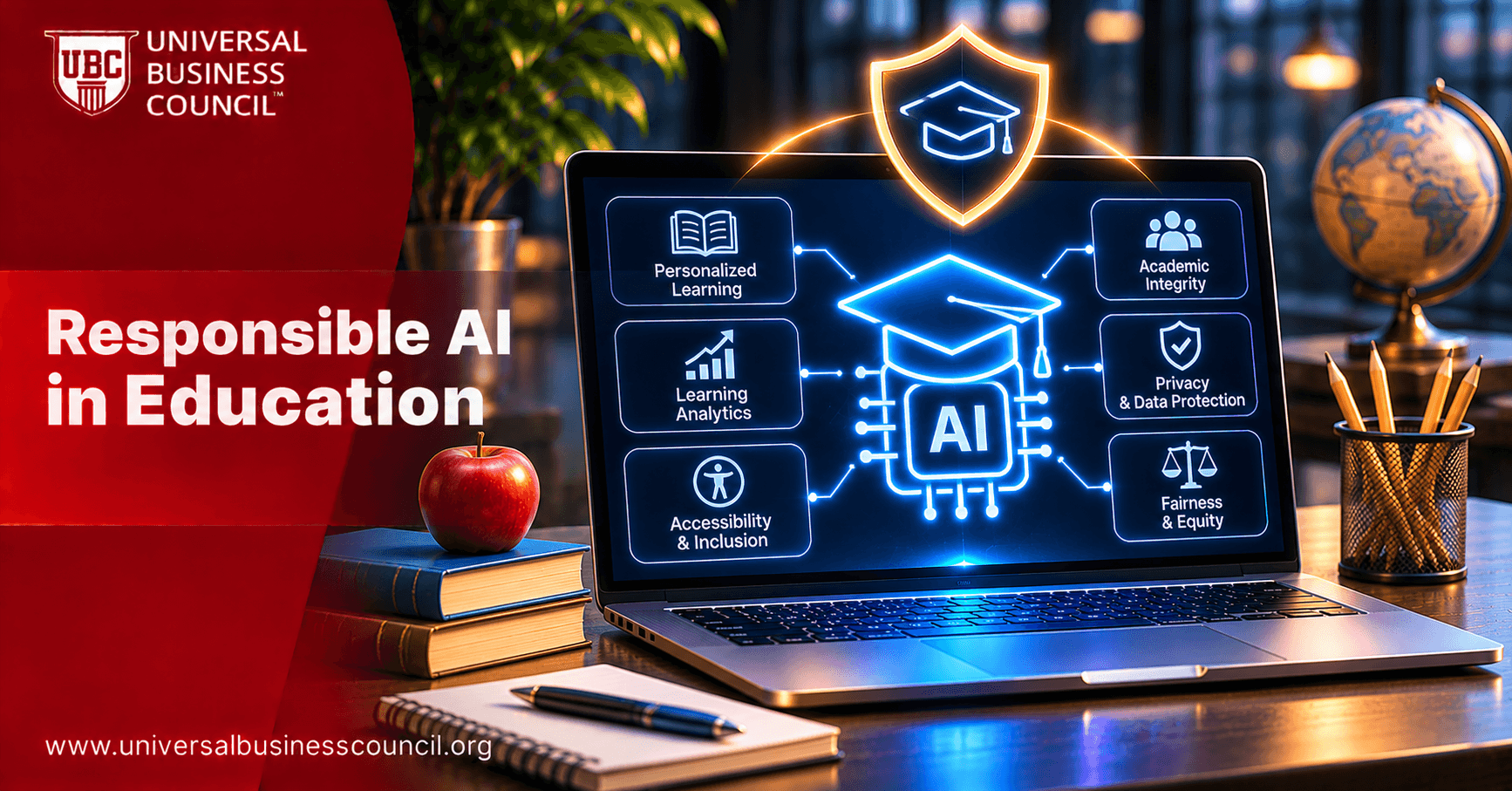
Schools and universities hold detailed records about young people, and AI tools want access to them. That tension sits at the heart of responsible AI in education. The potential benefits are real, including tailored practice, faster feedback and support for teachers, but so are the risks to privacy, fairness and the learning process itself. This guide explains how educators, administrators and edtech teams can adopt AI-powered learning without losing sight of the students it is meant to serve. For readers who want a formal credential in this area, the Certified Responsible AI Expert program is a good starting point.
What is responsible AI in education?
Responsible AI in education means using AI in teaching, learning and school administration in ways that protect student privacy, treat learners fairly, support real learning and keep people accountable for decisions that affect students' futures.

Education is a sensitive setting for several reasons. Many users are children, who cannot fully weigh risks. Decisions on admissions, grades and discipline shape life chances. And students have little choice about the tools their school selects. Some laws reflect this: the EU AI Act treats AI used for admissions and assessment as high risk, and it restricts emotion recognition in education settings, while data protection laws add extra safeguards for children's data.
Where AI appears in education
Personalized practice and adaptive learning platforms
Automated feedback and grading support
AI tutors and study assistants
Lesson planning and content creation for teachers
Admissions screening and enrollment forecasting
Early-warning systems that flag students at risk of dropping out
Proctoring and plagiarism or AI-writing detection
Administrative tasks such as timetabling and communications
Student privacy
Collect less, protect more
Student data can include grades, behavior records, health and learning-support needs, location and online activity. Collect only what a tool needs, limit who can see it and set retention periods. Laws such as FERPA and COPPA in the United States, data protection rules in the EU and the UK and India's Digital Personal Data Protection Act, which sets extra requirements for children's data, may apply depending on where you are.
Check what vendors do with data
Is student data used to train the vendor's models?
Who are the subprocessors, and where is data stored?
What happens to data when the contract ends?
Can parents and students see, correct and delete their data?
Be careful with general-purpose chatbots
Students and staff may paste personal details into public AI tools. Provide approved options, explain the rules in plain language and avoid asking children to create accounts on services that were not designed for them.
Fairness
Uneven performance
Tools trained on limited data may work less well for students with accents, dyslexia, disabilities, different home languages or less common backgrounds. Ask vendors for performance across groups and pilot tools with diverse students before scaling up.
Early-warning and ranking systems
Predictions about who might fail or drop out can help target support, but they can also label students and lower expectations. Use them to open doors, such as tutoring or counseling, never to close them. Keep a teacher or counselor in the decision.
Detection tools and academic integrity
Tools that claim to detect AI-written work can be unreliable and may wrongly flag some students, including those writing in a second language. Do not treat a detector score as proof. Combine it with conversation, drafts and other evidence, and give students a fair chance to respond.
Access and equity
If AI tools help only students who have devices, connectivity and support at home, they can widen gaps. Plan for access and offer alternatives.
Learning quality and the role of teachers
AI should support learning, not replace the thinking students need to do. Use it to give practice, hints and feedback, and design assignments so that understanding still has to be shown. Teachers remain central. They need training to judge AI output, spot errors and decide when to use or avoid a tool. Be open with students about what is allowed, and teach AI literacy so they can question outputs and use tools honestly.
Questions to ask before adopting a tool
What learning problem does it solve?
What evidence shows it works for students like ours?
What data does it need, and is that proportionate?
Who is accountable if it gets something wrong?
How can a student or parent challenge a result?
Governance for schools and edtech providers
Create a short AI policy that lists approved tools, allowed uses, data rules and how concerns are raised. Name an owner, run a review before any new tool is adopted and repeat reviews when tools change. Involve teachers, students and parents, and tell them clearly what is used and why.
Admissions and outreach
Institutions that use AI to attract and communicate with applicants face fairness and consent questions about targeting and messaging. Honest communication matters. Those who work in education marketing can explore the Certified Digital Marketing Expert program.
Skills, records and trusted people
Teachers and administrators benefit from basic technical understanding, and developers of edtech need deeper skills, which the programming and technology certifications from Global Tech Council can help build. Academic and consent records are valuable and need safe storage, and those curious about tamper-evident approaches can explore the deep tech certifications from Blockchain Council. Because staff and contractors work with children's data, careful screening matters, and HireValid can help verify backgrounds and credentials.
Conclusion: putting students first with responsible AI in education
Responsible AI in education balances real benefits against real risks to young people. Privacy comes first: collect less, protect more, check vendor data practices, apply children's data laws and give staff and students approved tools. Fairness means testing performance across diverse learners, using early-warning predictions to offer support rather than labels, treating AI-writing detectors with caution and planning for equal access.
Learning quality and teacher judgment complete the picture. AI should provide practice and feedback while students still do the thinking, teachers stay central and students learn to use AI honestly and critically. A short policy, a named owner, a review before each new tool and open communication with parents and students turn these ideas into routine. Start by listing every AI tool already in use in your institution, including free ones that staff and students adopted on their own, and check what data each one collects. The Certified Responsible AI Expert program mentioned earlier can help your team build skills for responsible AI in education.
FAQs
1. What is responsible AI in education?
Using AI in teaching and administration in ways that protect privacy, treat learners fairly and keep people accountable.
2. Why is education a sensitive area for AI?
Users are often children, and decisions affect grades, admissions and futures.
3. How can schools protect student data?
Collect only what is needed, restrict access, set retention limits and vet vendors.
4. Which laws apply to student data?
It depends on location, and may include FERPA, COPPA, EU and UK data protection law and India's DPDP Act.
5. Can vendors train models on student data?
Only if the contract and law allow it. Many schools prohibit it.
6. Are AI-writing detectors reliable?
Not enough to serve as proof alone, and they can wrongly flag some students.
7. Should students be allowed to use AI?
Often yes, within clear rules that explain what is allowed for each task.
8. How do we keep learning meaningful with AI?
Design tasks that require understanding to be shown, and use AI for practice and feedback.
9. What is an early-warning system?
A tool that predicts which students may struggle or drop out so that support can be offered.
10. What risks do early-warning systems carry?
Labeling students and lowering expectations. Use them to support, not to exclude.
11. Is AI used in admissions regulated?
In some places it is treated as high risk, such as under the EU AI Act.
12. Can AI proctoring be unfair?
Yes. It may flag students with disabilities, different lighting or home setups, so allow human review.
13. How can bias affect learning tools?
Through training data that underrepresents some students, which can lower accuracy for them.
14. How do teachers fit in?
They stay central, judging AI output and deciding when to use it.
15. Should parents be informed?
Yes. Tell them what tools are used, what data they collect and how to raise concerns.
16. What belongs in a school AI policy?
Approved tools, allowed uses, data rules, an owner and a route for concerns.
17. How do we handle student use of public chatbots?
Provide approved options, set age-appropriate rules and avoid sharing personal details.
18. How do we address digital inequality?
Plan for device and connectivity gaps and offer non-digital alternatives.
19. Can small schools adopt AI responsibly?
Yes, with a short policy, vetted tools and teacher training.
20. Where can I learn more?
Training such as the Certified Responsible AI Expert program and guidance from education authorities.
Related Articles
View All
Artificial Intelligence
Responsible AI in Healthcare: Safety, Privacy, Fairness and Accountability
Discover how responsible AI is transforming healthcare through safer, fairer, and more transparent applications. Explore its benefits, challenges, ethical considerations, and the importance of protecting patient data while improving clinical decision-making.
Artificial Intelligence
Federated Learning and Responsible AI: Benefits, Risks and Limitations
Explore how federated learning supports responsible AI by allowing machine learning models to train across decentralized data sources without directly sharing raw data. Learn about its benefits for privacy and collaboration, along with risks, technical limitations, security concerns, and practical applications.
Artificial Intelligence
Certified Responsible AI Expert™: Course Overview, Learning Outcomes and Who Should Enrol
Explore the Certified Responsible AI Expert™ course, including its curriculum, key learning outcomes, and intended audience. Discover the skills and knowledge learners can gain in AI ethics, governance, risk management, compliance, and responsible AI implementation.
Trending Articles
The Role of Blockchain in Ethical AI Development
How blockchain technology is being used to promote transparency and accountability in artificial intelligence systems.
AWS Career Roadmap
A step-by-step guide to building a successful career in Amazon Web Services cloud computing.
Top 5 DeFi Platforms
Explore the leading decentralized finance platforms and what makes each one unique in the evolving DeFi landscape.