

Responsible AI in Government and Public Services: Opportunities and Risks
When a company's AI fails, customers can usually go elsewhere. When a government's AI fails, citizens often cannot. That difference shapes everything about responsible AI in government and public services. Agencies hold sensitive data, make decisions with legal force and serve everyone, including people with the fewest options. This guide looks at the opportunities AI offers the public sector, the risks that come with them and the safeguards that help public bodies earn and keep trust. For readers who want a formal credential in this area, the Certified Responsible AI Expert program is a good starting point.
What is responsible AI in government and public services?
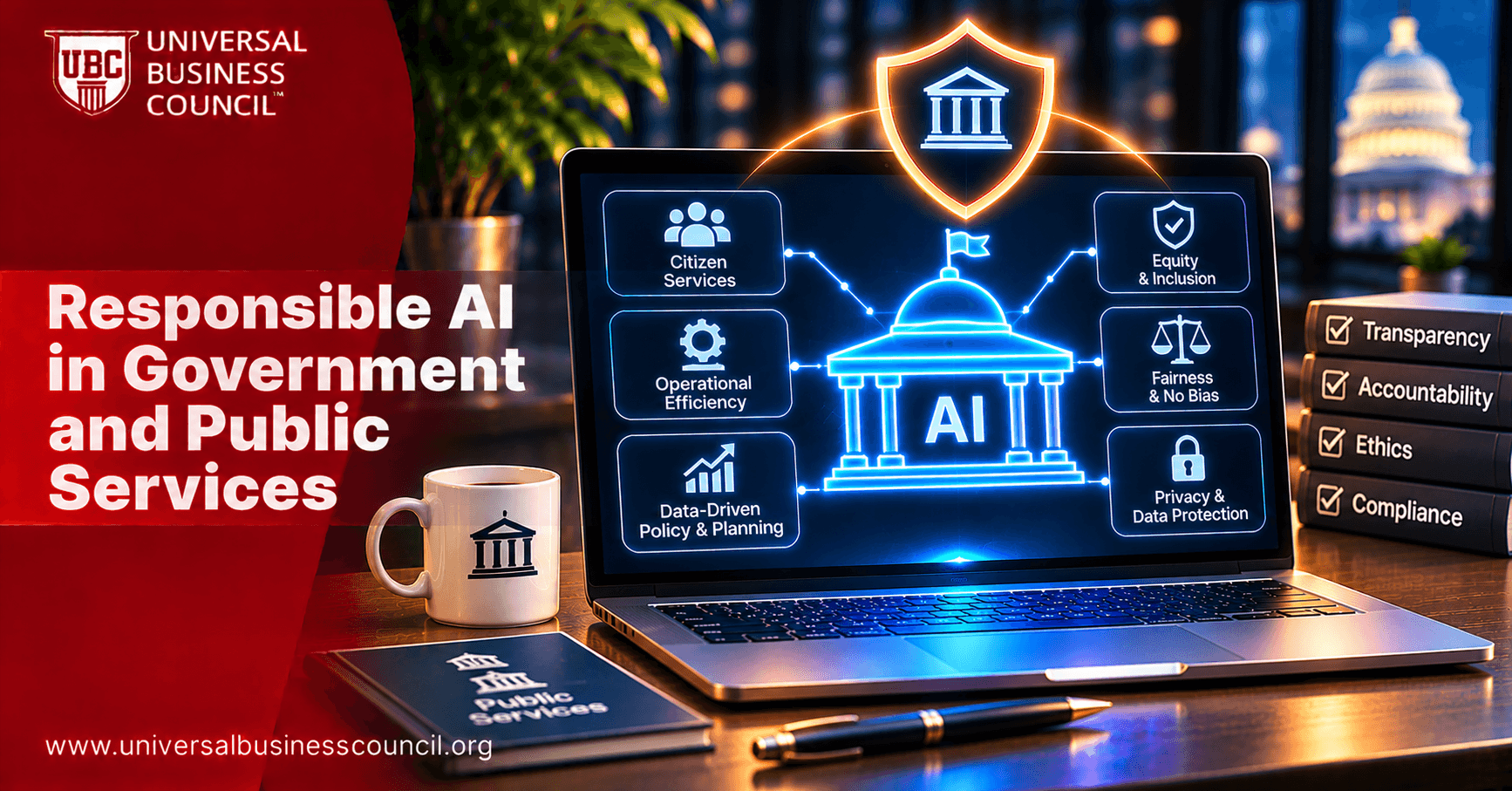
Responsible AI in government and public services means using AI to deliver services, support decisions and run operations in ways that are lawful, fair, transparent, secure and accountable to the public. Because public bodies exercise power over people, the bar is higher than in most private settings. People often cannot opt out, and decisions can affect benefits, safety, liberty and access to essential services.

Public bodies also carry duties that private firms may not: equal treatment, due process, freedom of information, public procurement rules and accountability to elected or oversight bodies.
Opportunities
Faster, more accessible services through assistants in multiple languages
Shorter waiting times for applications, permits and claims
Better detection of errors, fraud and waste in public spending
Smarter planning for transport, health, energy and emergency response
Help for staff with document review, translation and summaries
Earlier identification of people who may need support
These gains matter, especially where staff are stretched and demand is rising. They are also the reason careful governance is worth the effort.
Risks that need active management
Unfair or discriminatory outcomes
Models trained on historical data can repeat past inequities. A tool used to prioritize inspections, predict risk or flag cases may burden some communities more than others. Because the people affected may be less able to challenge a decision, the harm can go unnoticed for a long time.
Lack of transparency and due process
Citizens have a right to understand and appeal decisions that affect them. A black-box system that cannot explain why a benefit was denied undermines that right.
Privacy and surveillance
Government holds some of the most sensitive data there is. Combining datasets, using facial recognition or monitoring public spaces raises serious questions about proportionality, consent and civil liberties.
Errors at scale
One faulty rule applied to millions of people can do widespread harm before it is noticed. Automated systems can also wrongly accuse people of fraud or error, and the burden of proving otherwise falls on the individual.
Security and vendor dependence
Public AI systems are attractive targets, and heavy reliance on a few suppliers can reduce flexibility and accountability.
Erosion of trust
A single high-profile failure can weaken confidence in both the technology and the institution that used it.
Safeguards that build public trust
Assess before you deploy
Run impact assessments for systems that affect people's rights or access to services. Some jurisdictions already require them. Canada's federal directive on automated decision-making, for example, calls for an algorithmic impact assessment, and the EU AI Act sets obligations for high-risk uses including public services. Assess legal basis, necessity, fairness and privacy before launch, and involve affected communities.
Keep humans accountable
Decisions that significantly affect people should involve a trained human who can understand, question and override the system. Make clear who is responsible and give citizens a simple way to request review.
Be open about use
Publish what systems are in use, what they do and how they were tested
Explain decisions in plain language
Use public registers of algorithms where they exist
Report results, errors and fixes, not only successes
Test for fairness and monitor continuously
Check performance across groups before launch, keep measuring afterward and be ready to pause a system when problems appear.
Procure carefully
Write requirements for transparency, auditability, data protection, testing evidence and exit rights into contracts. Avoid arrangements that stop the public body from understanding or inspecting the system it relies on.
Protect data and security
Limit data use to defined purposes, set clear retention rules, apply strong access controls and plan for incidents.
Citizen engagement and public communication
Trust grows when agencies explain what they are doing and listen to feedback. Communications teams play a real part, especially when launching digital services or explaining changes. Those working in public-sector communications can look at the Certified Digital Marketing Expert program.
Skills, records and trusted people
Public bodies need staff who understand both policy and technology, and the programming and technology certifications from Global Tech Council can help build technical capacity. Public records and decision logs matter greatly for accountability, and teams exploring tamper-evident records can look at the deep tech certifications from Blockchain Council. Because staff and contractors handle sensitive citizen data, careful vetting is essential, and HireValid can help verify backgrounds and credentials.
Conclusion: using responsible AI in government and public services well
Responsible AI in government and public services starts from a simple fact: citizens often cannot choose another provider, so fairness, openness and accountability are not optional. The opportunities are substantial, including faster and more accessible services, better planning, stronger detection of error and fraud and support for stretched staff. The risks are equally real: discriminatory outcomes, opaque decisions that undercut due process, privacy and surveillance concerns, errors at scale, security and vendor dependence and loss of public trust.
The safeguards follow from the risks. Assess impact before deployment and involve affected communities, keep trained humans accountable and give citizens a simple route to review, be open about what is used and how it performs, test for fairness and monitor continuously, procure with auditability and exit rights and protect data and security. Start with the systems that decide who receives benefits, services or scrutiny, confirm they have been assessed, explained and made reviewable, and publish what you can. The Certified Responsible AI Expert program mentioned earlier can help public-sector teams build the skills for responsible AI in government and public services.
FAQs
1. What is responsible AI in government?
Using AI in public services in ways that are lawful, fair, transparent, secure and accountable.
2. Why is the bar higher for public bodies?
They exercise power over people who often cannot opt out, and decisions can affect basic rights and services.
3. What are the main benefits of AI in public services?
Faster, more accessible services, better planning and help for staff.
4. What are the main risks?
Unfair outcomes, opaque decisions, privacy harms, errors at scale and loss of trust.
5. What is an algorithmic impact assessment?
A structured review of a system's effects on people and rights before it is deployed.
6. Do citizens have a right to an explanation?
In many places, yes, especially for decisions with significant effects. Check local law.
7. Should governments publish the AI systems they use?
Openness builds trust, and some jurisdictions maintain public algorithm registers.
8. Can AI decide benefit claims?
It can support decisions, but significant outcomes should involve trained human review and appeal routes.
9. How can bias be detected?
Test outcomes across groups before and after launch and review the data used.
10. Is facial recognition in public spaces acceptable?
It raises serious proportionality and civil liberties questions, and many places restrict it.
11. How should agencies procure AI?
Require transparency, testing evidence, auditability, data protection and exit rights.
12. Who is accountable for a public AI system?
A named official or body, with oversight by regulators or elected representatives.
13. How do we involve the public?
Consult affected communities early and publish clear information on use and results.
14. Does the EU AI Act cover public services?
Yes. Many public-sector uses fall into the high-risk category, with obligations phased in.
15. How do we protect citizen data?
Limit use to defined purposes, set retention rules and apply strong access controls.
16. What if an AI system wrongly flags someone?
Provide a quick, fair process to challenge and correct the decision.
17. Should citizens be told when AI is used?
Yes, openness supports trust and may be legally required.
18. How can small authorities begin?
List current AI uses, assess the highest-impact ones and set a simple review process.
19. What records should be kept?
Assessments, testing results, decision logs, contracts and complaints.
20. Where can I learn more?
Training such as the Certified Responsible AI Expert program and guidance from public-sector regulators and oversight bodies.
Related Articles
View All
Artificial Intelligence
Federated Learning and Responsible AI: Benefits, Risks and Limitations
Explore how federated learning supports responsible AI by allowing machine learning models to train across decentralized data sources without directly sharing raw data. Learn about its benefits for privacy and collaboration, along with risks, technical limitations, security concerns, and practical applications.

Artificial Intelligence
AI Hallucinations: Causes, Risks and Responsible Mitigation Strategies
Understand what AI hallucinations are, why they occur, and the risks they pose to individuals and organizations. Explore common causes, real-world implications, and responsible mitigation strategies, including human oversight, reliable data sources, model evaluation, and continuous monitoring to improve AI accuracy and trustworthiness.
Artificial Intelligence
Responsible Generative AI: Risks, Principles and Best Practices
Learn what responsible generative AI means and how organizations can develop and use generative AI systems ethically. Explore key principles, including fairness, transparency, privacy, accountability, safety, and human oversight, along with practical strategies for reducing risks and building trustworthy AI applications.
Trending Articles
The Role of Blockchain in Ethical AI Development
How blockchain technology is being used to promote transparency and accountability in artificial intelligence systems.
AWS Career Roadmap
A step-by-step guide to building a successful career in Amazon Web Services cloud computing.
Top 5 DeFi Platforms
Explore the leading decentralized finance platforms and what makes each one unique in the evolving DeFi landscape.