

How Safe Is AI-Generated Content (Text, Images, Videos)?

Understanding the Risks
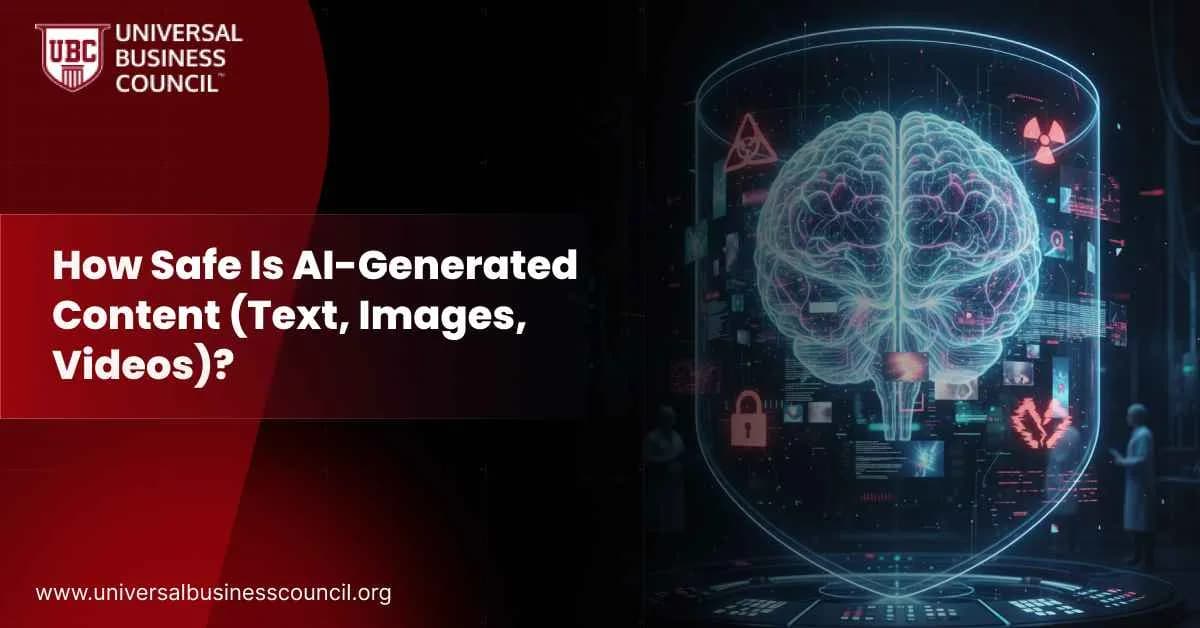
AI-generated content comes with multiple concerns. Deepfakes are one of the most serious. These are synthetic videos or images that convincingly imitate real people. They can damage reputations, manipulate opinions, and even enable identity fraud. AI text brings its own risks, such as “hallucinations,” where models confidently present false statements as facts. Bias is another challenge. Since AI models are trained on data created by humans, they can reproduce stereotypes or unfair assumptions. This is particularly concerning in sensitive areas like hiring, healthcare, or education. Privacy also comes into play, as likenesses and voices can be copied without consent. Copyright and ownership create additional complexity. Current laws in the United States, for instance, do not grant copyright protection to works made entirely by AI without human creativity. That raises questions about who owns AI-generated material, especially when training data may include copyrighted works.Key Risks and Safeguards of AI-Generated Content
| Risk Area | Safety Measure or Response |
| Deepfakes and misinformation | Use watermarking, labels, and detection tools to spot manipulated media |
| Copyright and IP concerns | Clarify licensing, ensure human contribution for copyright claims |
| Hallucinations in text | Keep human review for legal, medical, and technical outputs |
| Bias and stereotyping | Train on diverse datasets, apply fairness checks |
| Privacy and identity misuse | Restrict non-consensual likeness use, add legal penalties |
| Child protection risks | Enforce strict monitoring and takedown systems |
| Lack of transparency | Mandate AI content labeling by law or regulation |
| Overtrust by users | Educate the public on limits of AI reliability |
| Regulatory uncertainty | Follow new laws in EU and US around AI safety |
| Platform responsibility | Platforms like YouTube adding deepfake detection to protect creators |
What Measures Are Being Taken
Technology providers are not ignoring these risks. Many have built guardrails into their systems, blocking unsafe prompts or filtering outputs that might cause harm. Some tools now embed invisible watermarks or metadata, making it easier to identify AI-generated media. Governments are also stepping in. Spain recently announced heavy fines for failing to label AI-generated content, and Italy became the first EU country to pass a full law regulating AI use. These steps highlight the need for accountability at both corporate and national levels. Platforms are evolving too. YouTube, for example, has expanded its detection systems to protect creators from deepfake impersonation. Other companies are investing in detection research, using fingerprinting and statistical models to identify synthetic content with higher accuracy.Why Safety Depends on Context
Not all AI-generated content carries the same level of risk. A promotional image or fun video clip may be relatively safe, though even those can spread misinformation if misused. The stakes rise in politics, health, and legal sectors, where inaccurate or manipulative content can cause real harm. Children’s safety is a special area of concern, as non-consensual or harmful media has serious psychological and legal consequences. For professionals aiming to work responsibly with these systems, developing expertise in data practices is essential. A Data Science Certification helps build skills to manage data pipelines and ensure AI systems are trained and monitored with integrity.Balancing Opportunity With Responsibility
AI-generated content can be safe if it is produced and used responsibly. That means clear labeling, human oversight, strict privacy protections, and legal safeguards. At the same time, companies must educate users about the limits of AI, so people understand when they’re interacting with synthetic material. Upskilling is also part of the solution. Those who want to dive deeper into the technology itself can explore a deep tech certification to gain practical knowledge in building and managing AI systems. With the right training, businesses and individuals can leverage the benefits of AI content creation while reducing the risks.Final Takeaway
AI-generated content is powerful, but it isn’t risk-free. It can inform, entertain, and accelerate work — but it can also mislead, exploit, or harm if left unchecked. The future of safe AI use will depend on a mix of regulations, platform responsibility, technical safeguards, and educated professionals who know how to apply AI responsibly.Related Articles
View All
Artificial Intelligence
Gemini 4 Argon: Features, Pricing, and Availability
Gemini 4 Argon is Google’s new flagship AI model for coding, science, finance, law and security. See its main features, API and subscription pricing, and where you can access it today.

Artificial Intelligence
What Is Meta Muse Wonder? Features and How It Works
Meta Muse Wonder is a new frontier AI model built for agents with Active Memory and Active Focus. Learn what it is, how it works, its features, pricing and how to access it.

Artificial Intelligence
What Is Google Playground? Features and How It Works
What is Google Playground? Learn how Google's new AI platform turns text prompts into playable browser games, which models power it, its features, pricing and access, Unity Spark plans, rival tools, and limits.
Trending Articles
The Role of Blockchain in Ethical AI Development
How blockchain technology is being used to promote transparency and accountability in artificial intelligence systems.
AWS Career Roadmap
A step-by-step guide to building a successful career in Amazon Web Services cloud computing.
Top 5 DeFi Platforms
Explore the leading decentralized finance platforms and what makes each one unique in the evolving DeFi landscape.