What Is Businesses in ChatGPT and How Does It Work?
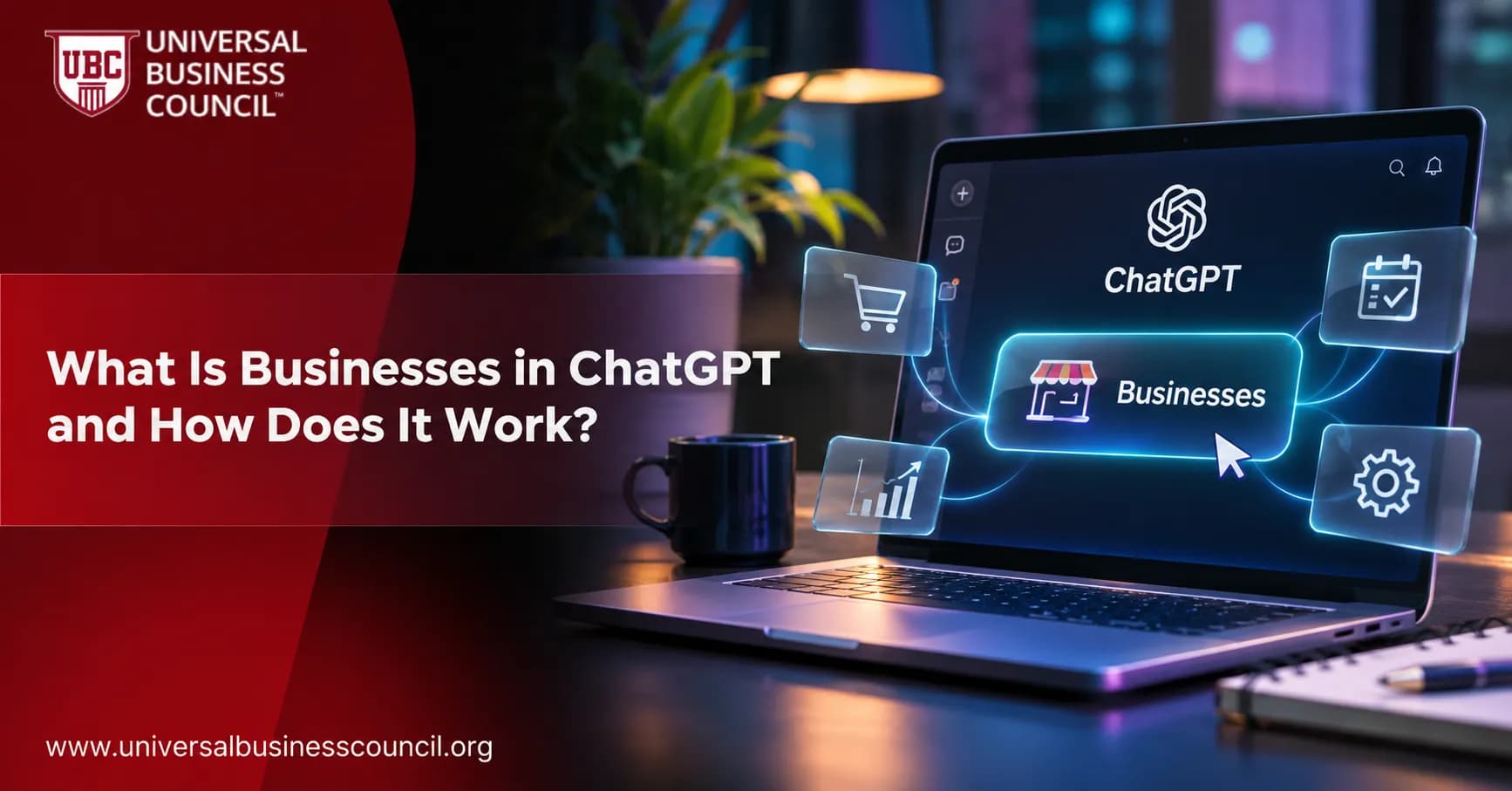
OpenAI has opened a new chapter for companies that want to be found inside AI answers. On November 10, 2026, it launched Businesses in ChatGPT in beta. The feature lets a company claim its profile, keep its details current, see how people engage with it, and, in some cases, run its own AI agent inside the chat. For owners and marketers, this could change how customers discover products, much as search listings did years ago.
This guide explains the topic in plain language. You will learn what the feature is, how Business Hub and Business Agents work, what the privacy and advertising rules look like, and how to prepare. Beginners get clear definitions, and professionals get practical next steps. If you work in promotion or growth, a recognized Marketing Certification can help you turn these changes into a sound strategy.

What Is Businesses in ChatGPT?
The Short Answer
Businesses in ChatGPT is a beta program from OpenAI with two main parts. The first is Business Hub, a self-service dashboard where a verified company can manage the information ChatGPT shows about it. The second is Business Agent, a company-specific AI assistant that can answer customer questions about products and services. OpenAI describes it as an early step and says it plans to expand to more markets and business categories.
You can read the official OpenAI announcement for the company’s own wording, and eligible owners can start at Business Hub.
Why OpenAI Built It
People already ask ChatGPT for product ideas, local services, and comparisons. OpenAI says about 1.2 billion people use ChatGPT every week. Until now, a company had little direct control over how an AI assistant described it. If a model used old prices or a wrong detail, the business could not easily fix it. Business profiles give companies an official channel for accurate facts, and they give OpenAI a clearer way to connect shoppers with real businesses.
Business Hub: How Claiming a Business Works
Business Hub is the front door. It launched for eligible businesses wherever ChatGPT is available, while eligibility still depends on factors such as industry, location, and verification checks. People who plan to manage this channel professionally may also benefit from a Certified ChatGPT Expert program, which builds deeper knowledge of how the tool works.
How to Claim Your Business
The process follows a simple pattern. First, you sign in and search for your business in Business Hub. Second, you confirm that you own the business or are authorized to represent it. Third, you complete verification. OpenAI’s vice president Benji Shomair has said verification will vary by market and business type, and the company has not published every procedural detail. Fourth, once verified, you can update your information. Existing OpenAI Enterprise customers and advertisers can also work through their OpenAI representative.
What You Can Manage
After verification, a business can update its core details and add product feeds with current pricing and availability. Reports describe a verified badge that shows users the profile is authentic. You can create a profile without building an agent, so a small shop can start with accurate information first. Eligible Shopify products are also already connected to ChatGPT through Shopify Catalog, so merchants on that platform may already have some data present.
What the Insights Show
Business Hub also provides aggregated engagement data. Reported metrics include how often ChatGPT mentions your business, profile views, clicks to your website, and common topics in conversations where your site appears. OpenAI says businesses do not see individual conversations. Data is aggregated and shown only after a minimum number of conversations is reached, which protects user privacy.
Business Agents: Your Company’s Assistant Inside ChatGPT
How a Business Agent Works
A Business Agent is an AI representative that a verified company can build, test, and launch inside ChatGPT. It answers questions using the business’s own product and policy information. For example, a shopper could ask whether a jacket is waterproof or how returns work, and the agent replies using the details the company provided. OpenAI says these chats are clearly labeled and kept separate from the user’s original ChatGPT conversation and from ChatGPT’s own independent answers.
Who Can Use It Today
Business Agents are currently available only to eligible ecommerce and online service businesses in the United States. Reports also say companies cannot bring their own custom agents, because the agent is built inside OpenAI’s system. Businesses elsewhere can still use Business Hub for profiles and insights. Because the program is in beta, the list of eligible countries and categories is likely to change.
What an Agent Cannot Promise
An agent answers from the data you give it, so quality depends on your content. Out-of-date prices, missing policies, or vague product pages will lead to weak answers. OpenAI also states that claiming a business does not guarantee higher placement or more sales, and ChatGPT continues to make its own independent recommendations. Treat the agent as a helpful service channel, not a ranking shortcut.
Privacy, Trust, and Advertising Rules
What Businesses Can and Cannot See
According to OpenAI, it will not share users’ chats with Business Agents back to the businesses. Companies receive summary insights, not transcripts. This design matters for trust, because shoppers may ask personal or sensitive questions. Users should still avoid sharing private details in any chat, just as they would with any online service.
How Ads Connect to Business Agents
OpenAI links the new tools to its advertising system. A business can sponsor its Business Agent and use it as the destination for ChatGPT Ads, so a shopper can move from an ad into a direct conversation with the company. OpenAI says sponsored placements are clearly labeled and kept separate from regular ChatGPT responses. Several news outlets have pointed out the pattern: companies see how often they appear, and a paid option is available to appear more. Business owners should weigh that carefully and test results before spending.
Technical teams that connect product feeds, analytics, and customer systems will need a solid foundation in security and integration, and a broad Tech Certification pathway can help build that knowledge.
How It Compares With Google Business Profile
Many readers will compare this with Google Business Profile, where owners claim and manage their listing on search and maps. The idea is similar: verify ownership, keep details accurate, and view performance data. The difference is the format. A search listing shows a card among links. In ChatGPT, information appears inside a conversation, and a Business Agent can hold a back-and-forth chat. That makes accuracy and clear writing even more important, because the assistant paraphrases your content instead of just showing a link.
Another difference is maturity. Google’s tools have existed for years, with established reporting and support. Businesses in ChatGPT is brand new, so features, metrics, and rules may change quickly. Treat early guidance as a snapshot, not a permanent rulebook.
How to Prepare Your Business
You do not need to wait for a perfect strategy. These steps are low risk and useful even if the program changes.
Audit your public information, including name, address, hours, services, and pricing, so every source matches.
Claim your profile in Business Hub if you are eligible, and finish verification.
Prepare clean product feeds with current prices and stock status.
Write simple, honest FAQs-style content on your own site in the form of clear policy pages, covering shipping, returns, and warranties, because agents rely on this material.
Track mentions and clicks over time and compare them with your website analytics.
Test your agent with real customer questions before launch, and fix weak answers.
Set a review schedule so details never go stale.
Think Beyond Rankings
Because AI assistants summarize information, being clear, consistent, and trustworthy matters more than tricks. Use plain language, specific facts, and structured data where your platform supports it. Original reviews, expert guidance, and transparent policies help both people and AI systems understand you. This approach supports traditional search, answer engines, and generative engines at the same time.
Limits and Questions to Watch
Several points remain uncertain. Verification details differ by market and are not fully public. Agent availability is limited to certain US businesses for now. Metrics are aggregated and may be less detailed than owners hope. The link between organic profiles and paid ads may change how visibility works over time. Finally, regional rules on data and advertising may shape how the feature rolls out outside the United States. Check OpenAI’s official pages regularly for updates before making major decisions.
Conclusion
Businesses in ChatGPT gives companies a direct way to manage how they appear in an AI assistant. Business Hub handles claiming, verification, product details, and engagement insights, while Business Agents let eligible US businesses answer customer questions in a labeled chat. Privacy protections limit what companies can see, and sponsored options are clearly separated from regular answers, according to OpenAI. The program is new and still evolving, so start with accurate information, test carefully, and measure results. Businesses that keep their facts clear and current will be best prepared as AI-powered discovery grows.
FAQs
1. What Is Businesses in ChatGPT?
Businesses in ChatGPT is a beta offering introduced by OpenAI on November 10, 2026. It helps businesses manage their presence in ChatGPT, share accurate company and product information, access customer engagement insights, and connect with potential customers through AI-powered Business Agents.
2. What Is Business Hub in ChatGPT?
Business Hub is the central interface within Businesses in ChatGPT. It allows authorised businesses to claim and manage their profiles, update company information, connect product feeds, review engagement insights, and create Business Agents when eligible.
3. How Does Businesses in ChatGPT Work?
The process involves three main steps:
Claim: A business owner or authorised representative claims the existing business listing.
Manage: After verification, the business can update its information and provide product details.
Engage: Eligible businesses can publish Business Agents that answer customer questions using business-provided information.
ChatGPT can use this information to help users discover and understand relevant businesses.
4. Who Can Use Businesses in ChatGPT?
Eligible businesses located in regions where ChatGPT is available can claim their profiles, subject to industry, location, identity, and verification requirements. Business owners or authorised representatives can manage these listings. Business Agents have additional eligibility requirements.
5. How Can a Business Claim Its Profile in ChatGPT?
Businesses can claim their profiles through Business Hub by following these steps:
Sign in to ChatGPT.
Open Business Hub from the sidebar.
Search for the business name.
Select the correct business listing.
Complete the available verification process.
Complete identity verification when required.
OpenAI may request a business email, phone number, website domain, Shopify connection, or supporting identity documents.
6. What Is the Purpose of Business Verification?
Business verification helps confirm that the person managing a listing has a legitimate connection to the organisation. OpenAI uses verification checks to protect business profiles, reduce unauthorised access, and maintain reliable business information.
7. What Information Can Businesses Add to Their ChatGPT Profiles?
Verified businesses can update information such as:
Business name and website
Company description
Business category
Logo and cover image
Product and service details
Delivery and return policies
These details help ChatGPT provide users with more relevant business information.
8. What Are Product Feeds in Businesses in ChatGPT?
Product feeds are structured collections of product information that businesses share with OpenAI. Retailers can provide product names, descriptions, pricing, availability, and other relevant details through supported feeds or integrations. This helps ChatGPT present more accurate product information.
9. How Does Shopify Work With Businesses in ChatGPT?
Shopify merchants can connect their stores through Shopify administration or Business Hub. Their product details, prices, and availability can be shared through Shopify Catalog. Eligible merchants can then review and publish a Business Agent to help customers explore their products.
10. What Are Business Agents in ChatGPT?
Business Agents are AI-powered conversational experiences that interact with users on behalf of a business. They use information and instructions provided by the organisation to answer questions about products, services, policies, and available options.
11. How Do Business Agents Answer Customer Questions?
Business Agents use business-provided information, product details, policies, and instructions to generate relevant responses. Businesses can preview their agents, test common customer questions, adjust instructions, and publish them when ready.
12. Are Business Agents Available to Every Business?
No. Business Agents are initially available to eligible ecommerce and online service businesses in the United States. Businesses must meet OpenAI's location, industry, website, and verification requirements. OpenAI plans to expand eligibility over time.
13. What Insights Can Businesses Get From Business Hub?
Business Hub provides aggregated engagement metrics, including:
Business mentions in ChatGPT
Website clicks
Discovery topics
Common themes in ChatGPT answers that reference a business
These insights can help companies understand how users discover their offerings and identify opportunities to improve their information.
14. Can Businesses Read Individual ChatGPT Conversations?
No. Businesses do not receive individual user prompts or private ChatGPT conversations, including conversations with their Business Agents. Business Hub provides aggregated insights rather than access to individual customer chats.
15. Does Claiming a Business Profile Guarantee Better Visibility?
No. Claiming a profile allows businesses to manage their information and provide more accurate details. However, it does not guarantee higher rankings, increased recommendations, or more sales. ChatGPT continues to make independent recommendations based on users' questions and relevant information.
16. How Is Businesses in ChatGPT Different From Traditional Business Directories?
Traditional business directories primarily display company listings, contact details, and customer reviews. Businesses in ChatGPT combines business profiles with AI-powered discovery, product information, engagement insights, and conversational Business Agents.
17. Can Businesses Advertise Through Business Agents?
Yes. Eligible businesses can sponsor their Business Agents and use them as destinations for ChatGPT Ads. Sponsored placements are clearly labelled and remain separate from ChatGPT's independent responses and recommendations. Advertising is optional and is not required to claim a business profile.
18. What Does Businesses in ChatGPT Mean for SEO and Digital Marketing?
Businesses in ChatGPT creates another opportunity for companies to manage their presence in AI-powered discovery. Digital marketers can focus on accurate business information, structured product feeds, useful website content, clear product descriptions, and customer-focused answers. Engagement insights may also help identify topics that attract interest.
19. Is Businesses in ChatGPT Available in India?
Eligible businesses in regions where ChatGPT is available can claim their profiles, subject to OpenAI's verification and eligibility requirements. However, Business Agents are initially limited to eligible ecommerce and online service businesses in the United States. Indian businesses should check the official Business Hub for their current eligibility.
20. What Is the Future of Businesses in ChatGPT?
Businesses in ChatGPT could become an important platform for AI-powered business discovery, customer engagement, and conversational commerce. OpenAI plans to expand Business Agents into more markets and business categories while developing additional tools for organisations with complex requirements. This could create new ways for businesses to connect with customers through AI-powered experiences.
Related Articles
View All
Artificial Intelligence
What Are Claude Fable 5.2 and Mythos 5.2, and How Do They Work?
Claude Fable 5.2 and Mythos 5.2 are Anthropic’s newest top-tier AI models. Learn what they are, how they work, how they differ, how they perform, and what they cost.

Artificial Intelligence
AI Red Teaming vs AI Auditing: How They Work Together
Understand the differences between AI red teaming and AI auditing, including their goals, methods, and roles in evaluating AI systems. Explore how red teaming uncovers vulnerabilities through simulated attacks while auditing reviews controls, risks, and compliance, and how both approaches work together to strengthen AI security and accountability.

Artificial Intelligence
Why AI Audits Matter: Benefits for Businesses and AI Teams
Discover why AI audits are important for businesses and AI teams. Learn how regular audits help identify risks, detect bias, improve system performance, strengthen compliance, protect data, and build trust in AI-driven decisions while supporting responsible AI adoption.