

Net Promoter Score (NPS): What It Is, How It Works, and How to Use It Well
Net Promoter Score squeezes a customer relationship into one question and one number. That simplicity is why NPS is so widely used, and also why it is so often misread. Used with care, it shows how likely customers are to speak well of a business. Used carelessly, it becomes a score to chase instead of a signal to learn from.
This guide explains what NPS is, how it works, how to calculate and interpret it, and how to run it responsibly. For professionals who want formal training in measuring loyalty and customer health, the Certified Customer Success Professional certification covers customer feedback, retention, and advocacy.

What Is Net Promoter Score (NPS)?
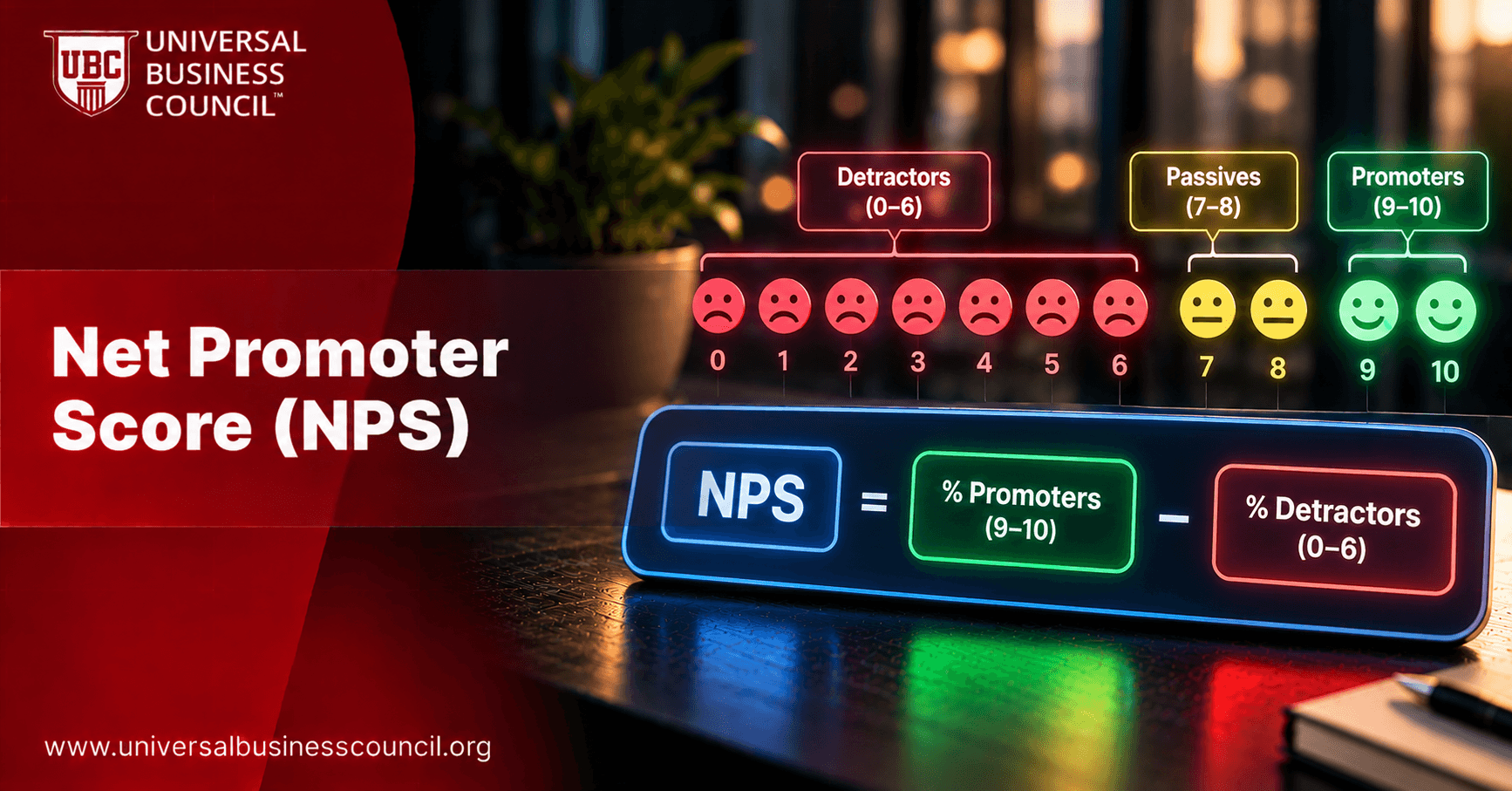
Net Promoter Score is a customer loyalty measure based on a single question: how likely are you to recommend this company, product, or service to a friend or colleague? Customers answer on a scale from 0 to 10, and their answers place them into one of three groups.
The Three NPS Groups
The groups are defined by the score a customer gives, and each one behaves differently.
Promoters (9 to 10): Enthusiastic customers who are likely to stay and recommend.
Passives (7 to 8): Satisfied but not enthusiastic customers who may be open to alternatives.
Detractors (0 to 6): Unhappy customers who may leave and may speak negatively.
How to Calculate NPS
NPS is the percentage of promoters minus the percentage of detractors. Passives count toward the total number of responses but not toward either percentage. The result is a number between -100 and +100.
A Quick Way to Think About It
If every respondent is a promoter, the score is +100. If every respondent is a detractor, it is -100. Most real results sit somewhere between, and the useful part is how the score moves over time.
Relationship NPS vs Transactional NPS
There are two common ways to run NPS. Relationship NPS asks customers about their overall feeling toward the business at regular intervals, such as quarterly or yearly. Transactional NPS asks right after a specific interaction, such as a support case or onboarding milestone. Relationship NPS shows long-term loyalty, while transactional NPS shows how specific moments affect it. Many teams use both.
The Follow-Up Question Matters
The score alone says how customers feel but not why. Add an open follow-up, such as asking what the main reason for the score was, and read the answers closely. Themes in the comments usually point to the changes most worth making. Organizing and tagging this feedback depends on connected systems, and foundational Tech Certifications help customer-facing teams work with survey platforms, CRM tools, and analytics.
How to Interpret NPS
NPS is best read as a trend and a conversation starter. Compare your score with your own past results, break it down by segment, product, and region, and look at what promoters and detractors say. Comparing against other companies is tricky because industries, customer types, and survey methods differ. A rising score is encouraging, but it should be checked against retention and renewal results.
How to Improve NPS
Improving NPS means acting on feedback, not just collecting it.
Follow Up With Detractors
Reach out to unhappy customers promptly, listen, and fix what can be fixed. A well-handled complaint can recover trust and reveal problems worth solving for everyone.
Turn Promoters Into Advocates
Promoters are an opportunity. Invite them to share reviews, join a referral program, or take part in case studies, as long as the invitation is genuine and clear. Planning advocacy and referral communication is part marketing and part relationship building, and a structured Digital Marketing Course can help teams do it well.
Limits of NPS
NPS is useful, but it is not a complete picture. It does not explain causes by itself, it can be affected by who chooses to respond, and customers in different regions may use rating scales differently. It also measures stated intent, not actual behavior. Pair it with measures such as CSAT, CES, retention rate, and churn rate to get the full story.
NPS and Compliance: Running Surveys Responsibly
NPS surveys collect personal opinions and often personal data, so compliance should be part of the process.
Consent: Send surveys only in ways customers have agreed to.
Data privacy: Collect only what is needed and limit who sees individual responses.
Transparency: Explain how feedback will be used and whether responses are anonymous.
Honest advocacy requests: Do not steer only happy customers toward public reviews in ways that mislead others, and be clear about any rewards for referrals.
Records: Keep clear records of how survey data is stored and used.
Using AI to Analyze NPS Feedback
AI-driven tools can sort comments by theme, detect sentiment, and flag at-risk accounts from large volumes of feedback. They work best with human review and transparent data practices. Professionals who want to understand the technology behind these tools can explore Deep Tech Certifications in AI and other emerging areas.
Common NPS Mistakes to Avoid
Common mistakes include chasing the score instead of fixing causes, surveying too often, ignoring passives, skipping the follow-up question, comparing unlike groups, and offering rewards that bias answers.
Conclusion
Net Promoter Score is a simple way to understand customer loyalty, as long as it is paired with good questions, careful reading, and real follow-through. Measure it consistently, listen to the reasons behind the score, act on what you learn, and run your surveys responsibly.
Frequently Asked Questions
1. What is Net Promoter Score?
NPS is a loyalty measure based on how likely customers are to recommend a business to others.
2. What question does NPS ask?
How likely are you to recommend this company, product, or service to a friend or colleague?
3. What is the NPS scale?
Customers answer on a scale from 0 to 10.
4. Who are promoters?
Customers who give a 9 or 10 and are likely to stay and recommend.
5. Who are passives?
Customers who give a 7 or 8 and are satisfied but not enthusiastic.
6. Who are detractors?
Customers who give a 0 to 6 and may leave or speak negatively.
7. How is NPS calculated?
Subtract the percentage of detractors from the percentage of promoters.
8. What is the range of NPS?
From -100 to +100.
9. What is a good NPS?
It depends on industry and customer type, so compare against your own history first.
10. What is relationship NPS?
It measures overall feeling toward a business at regular intervals.
11. What is transactional NPS?
It measures feeling right after a specific interaction.
12. Why add a follow-up question?
It explains why customers gave their score and points to what to change.
13. How often should NPS be measured?
At regular intervals for relationship NPS and after key moments for transactional NPS, without over-surveying.
14. How do I improve NPS?
Follow up with detractors, act on feedback, and turn promoters into advocates.
15. How is NPS different from CSAT?
NPS measures likelihood to recommend, while CSAT measures satisfaction with a specific experience.
16. How is NPS different from CES?
CES measures how easy something was, while NPS measures loyalty and advocacy.
17. What are the limits of NPS?
It does not explain causes on its own, depends on who responds, and measures intent rather than behavior.
18. How does compliance apply to NPS surveys?
Consent, privacy, transparency, and honest advocacy requests apply.
19. Can AI analyze NPS comments?
Yes, for themes and sentiment, with human review.
20. How can professionals build NPS skills?
Structured training in customer success, analytics, and digital marketing, plus hands-on practice, builds these skills.
Related Articles
View All
Business
How to Use AI to Predict Customer Churn
Discover how AI helps businesses predict customer churn by analyzing customer behavior, engagement, purchase history, and usage patterns. Learn how predictive models identify at-risk customers and help teams take action to improve retention.

Business
AI in Customer Success: Use Cases, Benefits and Examples
Discover how AI is being used in customer success to automate routine tasks, predict customer churn, personalize engagement, and improve customer experiences. Explore practical applications, business benefits, and examples of AI-powered customer success.

Business
How AI Is Transforming Customer Success: Opportunities, Limits, and Responsible Use
Explore how artificial intelligence is changing customer success, from automating routine tasks and predicting churn to improving customer engagement, personalizing experiences, and helping teams make data-driven decisions.
Trending Articles
The Role of Blockchain in Ethical AI Development
How blockchain technology is being used to promote transparency and accountability in artificial intelligence systems.
AWS Career Roadmap
A step-by-step guide to building a successful career in Amazon Web Services cloud computing.
Top 5 DeFi Platforms
Explore the leading decentralized finance platforms and what makes each one unique in the evolving DeFi landscape.