

Sarbanes-Oxley 101: staying compliant beyond the annual audit
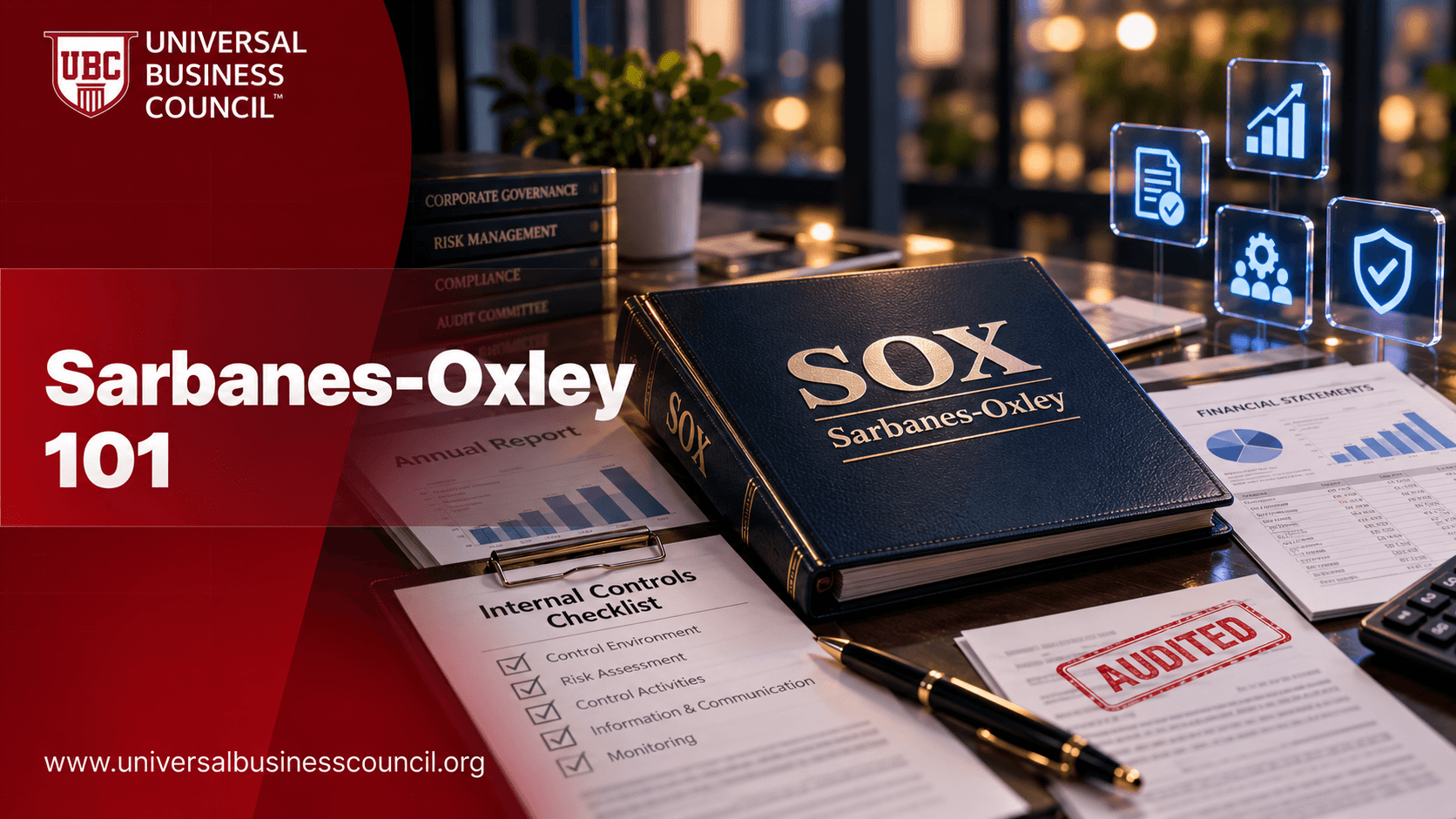
A company passed its SOX audit for years on a control that existed on paper but nobody actually followed. The control description said a manager reviewed every journal entry over a certain threshold. In practice, entries got approved in bulk, on autopilot, without anyone actually checking. It took a restatement to surface what the audit had missed year after year.
This is how a lot of SOX failures actually happen. Not with fraud, but with a control that looked fine in documentation and fell apart the moment someone tested whether it was real.

What SOX actually is
The Sarbanes-Oxley Act is a federal law passed in response to major corporate accounting scandals, designed to restore confidence in financial reporting. It applies to public companies, and increasingly shapes how private companies operate as they prepare to go public.
It requires executives to personally certify the accuracy of financial statements.
It requires companies to assess and report on the effectiveness of their internal controls over financial reporting.
It created oversight bodies, including the PCAOB, to hold external auditors to a higher standard.
SOX isn't just an accounting requirement. It's a structural expectation that a company's financial reporting process is provably reliable, not just accurate by coincidence.
The two sections that matter most day-to-day
Two provisions drive most of what a compliance team actually does under SOX.
Section 302 requires CEOs and CFOs to personally certify that financial statements are accurate and that internal controls have been evaluated. Section 404 requires a formal assessment of internal control effectiveness, often paired with an external auditor's independent opinion on that assessment.
Section 302 puts individual accountability directly on executives, not just the company as an entity.
Section 404 is where most of the actual compliance work lives, documentation, testing, and remediation.
Larger public companies face stricter Section 404 requirements than smaller reporting companies, though the bar keeps tightening across the board.
Why SOX is as much about process as fraud
Most SOX findings aren't about deliberate wrongdoing. They're about controls that exist in theory but not in daily practice.
A control description that says a review happens, without evidence the review actually occurred.
Segregation of duties that looks fine on an org chart, but breaks down when one person covers multiple roles during a busy period.
Manual processes prone to error that never got flagged because no one was testing them regularly.
IT system access that wasn't restricted the way the control documentation claimed it was.
A company can have no intent to mislead anyone and still fail a SOX assessment, simply because the control on paper didn't match the control in practice.
How SOX failures actually surface
SOX problems rarely announce themselves. They tend to surface through routine processes that suddenly reveal a gap.
External audit findings, when an auditor tests a control and it doesn't hold up.
Internal audit testing, catching issues before the external auditor ever sees them.
Whistleblower reports, often from someone inside finance or accounting who noticed a control wasn't being followed.
Financial restatements, the clearest and most damaging signal that something in the control environment broke down.
Getting ahead of these requires more than hoping nothing goes wrong. It requires testing controls before an auditor does.
What an auditor actually checks during SOX testing
When SOX testing happens, auditors aren't just reading policy documents. They're checking whether reality matches what's written down.
Expect a walkthrough of key financial processes, revenue recognition, journal entries, account reconciliations, tracing each step against the documented control. Expect sample testing, where auditors pull actual transactions and check whether the control was genuinely applied, not just described. Expect scrutiny of IT general controls, since access management and system change controls increasingly determine whether financial controls can be trusted at all. And expect a close look at how prior-year deficiencies were remediated, since an unresolved gap from last year is a fast way to draw deeper scrutiny this year.
Explaining what these findings actually mean to non-finance stakeholders, and getting buy-in to fix them, is its own skill. A Digital Marketing Course helps compliance and finance teams communicate control gaps and remediation plans clearly to leadership, instead of losing the message in technical language nobody outside the department follows.
The pillars of a SOX program that holds up
A program that survives real audit scrutiny is built as ongoing infrastructure, not assembled the month before testing begins.
Control design that reflects how the process actually works today, not how it worked when the control was first written.
Segregation of duties enforced structurally, not just documented as a policy.
Documentation detailed enough that someone outside the process could follow it and understand what happened.
Ongoing testing throughout the year, not a single push right before the annual audit.
Running a program like this well takes real structure, and a Certified Compliance Management Professional credential gives finance and compliance staff a framework for building it, instead of reconstructing the process from scratch every reporting cycle. Teams maintaining the systems that log access, changes, and approvals also benefit from Tech Certifications that go deeper than a basic system administration course.
Mistakes companies keep making
A handful of patterns show up repeatedly in SOX deficiencies.
IT general controls treated as an afterthought, even though they underpin nearly every automated financial control.
Rapid growth or M&A activity outpacing the control environment, with new entities or systems never fully integrated into testing.
Control documentation that hasn't been updated to reflect a process change, leaving a gap between what's written and what's real.
Remediation plans that fix the immediate finding without addressing why the control failed in the first place.
What getting it wrong actually costs, beyond the restatement
A SOX failure carries consequences that go well past the immediate finding.
Restatements damage investor confidence and often trigger a stock price reaction that outlasts the correction itself.
Executives face personal liability under Section 302 certifications, not just the company as an entity.
Repeated material weaknesses can affect a company's ability to raise capital or maintain favorable credit terms.
Delisting risk becomes real for companies that can't remediate control failures within a reasonable timeframe.
Where SOX compliance is heading
A few shifts are worth watching. Automation is playing a bigger role in continuous control monitoring, reducing reliance on manual, point-in-time testing. IT general controls are drawing sharper scrutiny as more financial processes run through interconnected systems, and companies building that monitoring infrastructure are finding Deep Tech Certifications cover ground standard finance training doesn't reach. PCAOB inspection standards keep tightening, pushing auditors toward more rigorous testing rather than accepting documentation at face value. And companies preparing for an IPO are increasingly expected to have SOX-ready controls well before their first public filing, not scrambling to build them after.
Conclusion
SOX compliance comes down to a pattern that's easy to underestimate: most failures aren't fraud, they're a gap between what a control says on paper and what actually happens in practice. Sections 302 and 404 set the legal framework, requiring executive certification and a real assessment of control effectiveness, but the strength of a SOX program shows up in the discipline behind it, controls that reflect the actual process, segregation of duties that's structurally enforced, and testing that happens throughout the year instead of once before the audit. Get that right, and SOX compliance becomes routine financial discipline. Get it wrong, and the gap tends to surface exactly when an auditor, a whistleblower, or a restatement forces the question.
FAQs
What is the Sarbanes-Oxley Act?
A federal law requiring public companies to maintain accurate financial reporting and effective internal controls, passed after major accounting scandals.
Which companies does SOX apply to?
Public companies primarily, along with private companies preparing for an IPO that need SOX-ready controls in place.
What does Section 302 require?
CEOs and CFOs must personally certify that financial statements are accurate and that internal controls have been evaluated.
What does Section 404 require?
A formal assessment of internal control effectiveness over financial reporting, often paired with an external auditor's opinion.
Is SOX only about preventing fraud?
No, most findings involve process gaps, controls that exist on paper but aren't consistently followed in practice.
What is a material weakness under SOX?
A control deficiency serious enough that it creates a reasonable possibility of a material misstatement going undetected.
How do SOX failures typically get discovered?
Through external audit findings, internal audit testing, whistleblower reports, or financial restatements.
What do auditors check during SOX testing?
Process walkthroughs, sample transaction testing, IT general controls, and how prior-year deficiencies were remediated.
Why do IT general controls matter for SOX?
Because access management and system change controls increasingly determine whether automated financial controls can be trusted.
What is segregation of duties?
Structuring responsibilities so no single person controls an entire financial process end to end, reducing error and fraud risk.
How often should SOX controls be tested?
Continuously throughout the year, not just in a single push before the annual audit.
What happens if a company fails a SOX assessment?
It may need to disclose a material weakness, remediate the control gap, and face closer scrutiny in future audits.
Can executives be personally liable under SOX?
Yes, Section 302 certifications create personal accountability for CEOs and CFOs beyond the company's corporate liability.
What is the PCAOB's role in SOX compliance?
It oversees and inspects external auditors, holding them to standards for how rigorously they test company controls.
How does M&A activity affect SOX compliance?
Newly acquired entities or systems often aren't fully integrated into existing controls, creating gaps auditors are likely to find.
What's the difference between a control deficiency and a material weakness?
A deficiency is a control gap; a material weakness is a deficiency severe enough to risk a material misstatement.
Do smaller public companies face the same SOX requirements as large ones?
Requirements scale somewhat by company size, though expectations around control rigor continue tightening across the board.
What does SOX remediation actually involve?
Fixing the underlying cause of a control failure, not just correcting the specific instance an auditor identified.
How does automation affect SOX compliance?
It supports continuous control monitoring, reducing reliance on manual, point-in-time testing that's more prone to gaps.
What should a company do before an IPO regarding SOX?
Build SOX-ready controls well in advance, since public company control expectations apply from the first public filing onward.
Related Articles
View All
Business
How to Improve Product Adoption Through Customer Success
Discover how to improve product adoption by helping customers understand, use, and gain value from your product. Explore practical strategies for onboarding, feature discovery, customer education, and ongoing engagement.

Business
Customer Engagement vs Customer Experience: What Sets Them Apart and Why Both Need Guardrails
Customer engagement and customer experience are closely connected, but they serve different purposes. Learn how they differ, how they influence customer loyalty and retention, and why businesses need clear guardrails to manage both effectively.

Business
How to Build a Customer Engagement Strategy
Learn how to build a customer engagement strategy that strengthens customer relationships, improves communication, encourages product adoption, and supports long-term retention through practical steps and measurable goals.
Trending Articles
The Role of Blockchain in Ethical AI Development
How blockchain technology is being used to promote transparency and accountability in artificial intelligence systems.
AWS Career Roadmap
A step-by-step guide to building a successful career in Amazon Web Services cloud computing.
Top 5 DeFi Platforms
Explore the leading decentralized finance platforms and what makes each one unique in the evolving DeFi landscape.