

Anthropic Claude AI Watermarking: What You Need to Know
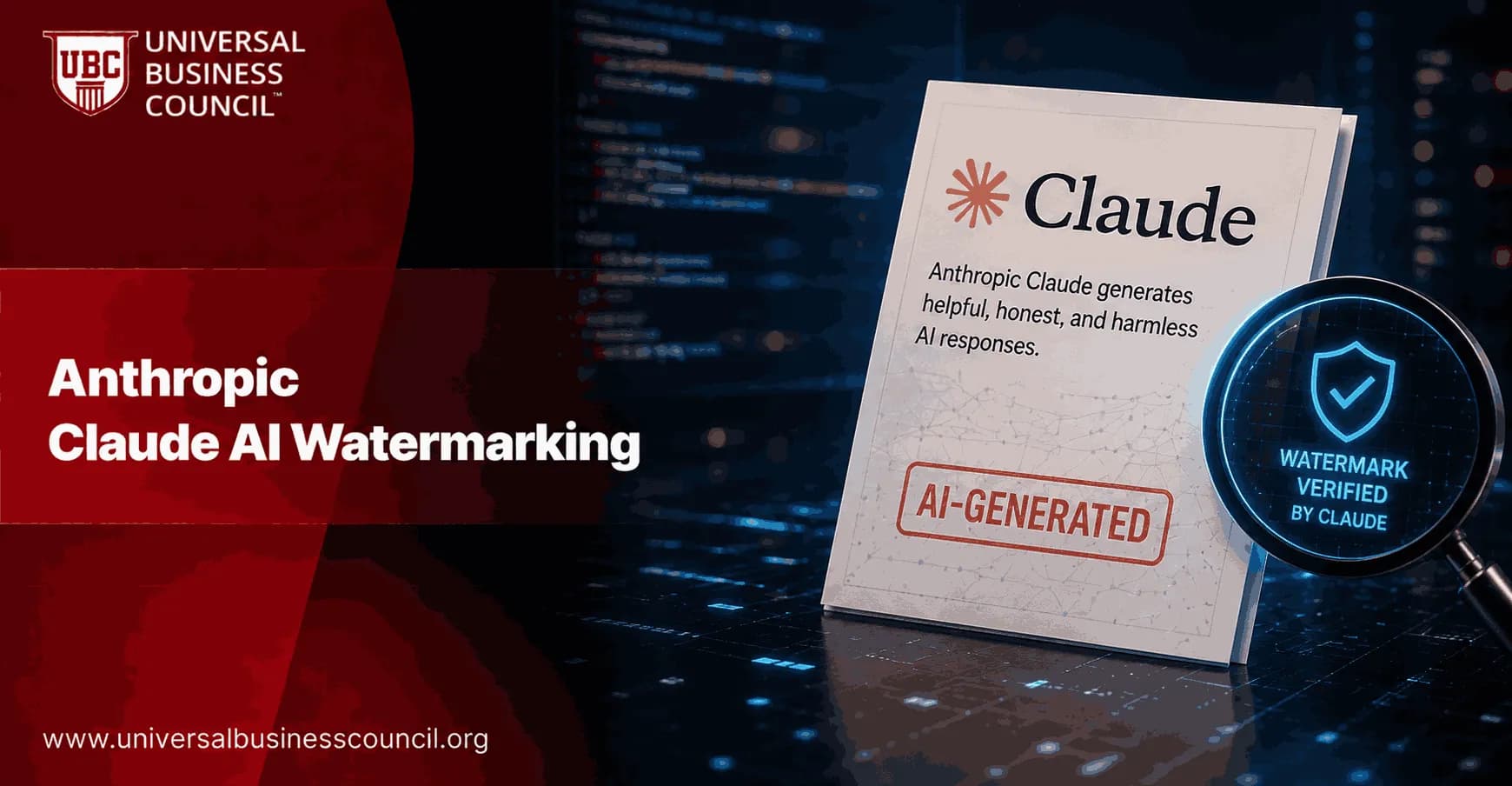
Anthropic recently changed how Claude produces content, and the update is worth understanding whether you use Claude occasionally or rely on it every day for work. Claude AI Watermarking refers to a new system Anthropic built to embed hidden, identifiable signals into text and files that Claude generates. It sounds technical, but the core idea is simple: Claude's output can now carry a quiet marker showing it came from AI.
This guide covers everything a beginner or a working professional needs to know, from why this exists to how it functions and what it means for your everyday use of Claude. Business owners and marketing teams navigating this shift may also want to look at a Marketing Certification, which helps translate technical changes like this one into clear communication with clients and audiences.

The Basics: What Is Claude AI Watermarking?
At its simplest, Claude AI watermarking is a way of tagging AI-generated content so it can later be identified as AI-produced. Anthropic frames this as a transparency measure, giving people useful context about where the content they encounter actually came from, rather than leaving that origin a mystery.
Two separate mechanisms make this work. Generated text carries an invisible signal woven into the writing itself. Generated files, such as certain image formats, carry a separate layer of signed authenticity information attached alongside the file. Together, these two systems form what most people now refer to simply as Claude's watermarking feature.
This is not a feature users need to turn on or configure. It runs automatically in the background for supported Claude models, meaning most people using Claude today are already interacting with it without necessarily realizing it.
Why This Update Happened
Understanding the backstory helps explain why Anthropic built this system in the first place, rather than treating it as a standalone product decision made without outside pressure.
New regulation in the European Union set the wheels in motion. The EU AI Act includes a Transparency Code that took effect on August 2, 2026, requiring companies that build AI systems to mark generated or edited content in a way that can be recognized and verified. This obligation stems from Article 50 of the EU AI Act, part of a wider framework called the Code of Practice on Transparency of AI-Generated Content, which also addresses labeling requirements for deepfakes and manipulated media more broadly.
Anthropic was far from alone in agreeing to this code. Nearly 200 companies had signed on by late July 2026, a group that includes major names like Meta, Microsoft, and OpenAI alongside Anthropic. Rather than restricting the new marking system exclusively to European users, however, Anthropic extended it across its entire platform worldwide, applying the same technical approach everywhere Claude operates rather than maintaining separate regional versions.
How Claude AI Watermarking Actually Works
Breaking this down into its two components makes the mechanics much easier to follow, since text and files are handled through entirely different methods.
Embedded Signals in Text
When Claude writes something, whether it is an email draft, an article, or a piece of code commentary, a subtle pattern gets built into the output itself. Anthropic describes this pattern as imperceptible, meaning readers cannot see, hear, or otherwise notice any difference in the writing because of it.
What stands out about this method is how portable it is. Because the signal lives inside the actual text rather than in some external wrapper, it moves along automatically whenever someone copies the content and pastes it into a different document, email, or website. It can also withstand a certain amount of editing before the signal weakens or disappears.
Signed Metadata for Generated Files
Files work differently. When Claude generates supported file types, including formats like SVG, PNG, and JPG, it attaches cryptographically signed metadata rather than embedding a hidden pattern directly into the visual content. This approach follows the Coalition for Content Provenance and Authenticity standard, widely known as C2PA, an open framework already used elsewhere across the tech industry for similar authenticity labeling.
This signed information confirms that Claude processed the file and allows verification of whether the file has been altered since. The tradeoff is durability. Common actions such as re-saving the file through unrelated software, converting it to a different format, or uploading it somewhere that automatically strips metadata can remove this signature without much effort.
Where Claude AI Watermarking Applies
A common question people ask is simply: does this affect me? The honest answer depends on which Claude product you use and which model version powers it.
Anthropic confirmed that the marking system spans its full product lineup, including the Claude Platform and API, the standard Claude assistant, Claude Code, Claude Cowork, and Claude Tag, everywhere these tools are available around the world. This broad rollout surprised some observers who expected a compliance-driven feature to stay limited to the region that legally required it.
However, coverage is not instant across every model Claude has ever released. Only models launched on or after August 2, 2026 include this capability automatically from day one. Anthropic has stated it continues working to extend support backward to earlier models, so the rollout is an ongoing process rather than a single finished update.
Learners who want a broader technical grounding to understand shifts like this one, beyond Claude specifically, often benefit from a general Tech Certification, which builds foundational knowledge across emerging technology areas that increasingly intersect with everyday professional work.
The Limits of This System
No transparency tool works perfectly, and Anthropic has been fairly upfront about where this one has gaps.
The text-based signal can lose strength or disappear entirely if content gets heavily rewritten, paraphrased, translated into another language, or blended together with writing from other sources. Extremely short pieces of text may also simply lack enough material for the signal to be detected reliably in the first place.
This creates a genuinely confusing middle ground. If Claude only lightly assisted with a piece of writing, such as proofreading a paragraph someone else drafted or translating existing text, that content might still carry a detectable mark. In other words, a detected signal does not necessarily mean Claude generated something from scratch, only that Claude touched it somewhere along the way.
The file-based system has a different kind of weakness. Because the signed metadata sits alongside the file rather than inside its actual pixel data, ordinary actions like re-saving an image or taking a screenshot can strip it away almost accidentally, without anyone specifically trying to defeat the system.
How This Compares to What Other AI Companies Are Doing
Claude AI watermarking did not emerge in a vacuum. Google has already built similar invisible text watermarking into its own AI systems through a technology called SynthID. OpenAI, meanwhile, has concentrated its transparency efforts mainly around images and audio, without publicly detailing an equivalent system specifically for text at the time Anthropic made its announcement.
This puts Anthropic in a smaller group of major AI providers actively watermarking text content specifically, rather than focusing solely on visual or audio media. Since text remains the most frequent type of output people request from tools like Claude, this focus likely carries more day-to-day relevance for the average user than watermarking limited to images or audio alone would.
Public Response to the Change
Not everyone welcomed this update. Criticism spread fairly quickly after the announcement, with many users voicing discomfort at the idea that their AI-assisted writing could remain identifiable, even after substantial personal editing.
A significant part of the concern comes down to ambiguity. Since Anthropic has not published an exact threshold for how much editing is needed to remove the watermark, some users worry that heavily reworked, largely human-written content might still get flagged simply because Claude was involved at some earlier stage. This uncertainty has fueled broader conversation about where AI assistance ends and independent human authorship begins.
What This Means Depending on How You Use Claude
The practical impact of Claude AI watermarking varies quite a bit depending on what you actually use the tool for.
For casual, everyday tasks, such as brainstorming ideas or drafting a quick message, this change will likely go completely unnoticed. The situation looks different for professionals working in contexts where AI disclosure genuinely matters. Journalists, academic writers, and marketing teams producing client-facing material should pay closer attention here, since expectations around AI transparency continue tightening across many industries, well beyond sectors directly targeted by regulation.
For those who use Claude extensively and want a deeper, verified understanding of how the platform itself works, including features like this one, a Certified Claude AI Expert certification offers structured, in-depth knowledge that goes well beyond what a single news article can cover.
Practical Advice for Adjusting to This Change
Rather than treating this development purely as a source of anxiety, a few sensible habits can help individuals and teams adapt smoothly.
Default to disclosing AI involvement openly in your work rather than depending on watermarks as your only method of transparency, since most audiences and clients now expect direct communication regardless of hidden technical signals. Treat a detected or missing watermark as one piece of context rather than definitive proof of authorship either way, given how easily editing or file conversion can influence detection. Stay updated as Anthropic gradually extends this feature to older Claude models, since coverage will likely keep expanding rather than staying fixed. Review your organization's internal AI usage guidelines if client-facing content is involved, since this update introduces a new technical dimension to conversations that previously relied entirely on internal honesty and voluntary disclosure.
Where This Is Headed Next
Claude AI watermarking is unlikely to be the last significant change in how AI-generated content gets identified across the industry. As similar regulatory pressure builds in regions beyond the EU, more AI companies will likely refine their own marking and provenance systems over time. The current gaps, particularly around heavy editing and easily stripped file metadata, represent open challenges the broader industry will probably keep working to address rather than issues unique to Anthropic alone.
For now, this system represents an early but genuinely meaningful step toward making AI-generated content easier to identify at scale, extending well beyond the specific region whose regulation originally required it.
Building Real Expertise Around This Topic
Reading about a single feature update is useful, but turning that awareness into lasting professional value takes a more structured approach.
Marketing and business professionals who need to explain changes like this clearly to clients or internal teams benefit most from a Marketing Certification, since it builds the communication skills needed to translate technical AI developments into practical business context. Those who want a wider technology foundation can pursue a Tech Certification to understand how developments like watermarking connect to broader trends across the technology industry.
Finally, professionals working directly and frequently with Claude can deepen their platform-specific expertise through a Certified Claude AI Expert certification, gaining verified, in-depth knowledge of how the platform behaves, including features like content marking, rather than relying on scattered articles and secondhand summaries.
Together, these three paths, business communication, broad technology literacy, and platform-specific expertise, offer a well-rounded way to turn a single news update into genuine, career-relevant skill.
Conclusion
Claude AI Watermarking represents a real and deliberate shift in how Anthropic handles transparency around AI-generated content. Text now carries a portable, invisible signal, certain generated files carry signed authenticity metadata, and this system applies globally across every major Claude product rather than staying limited to Europe. Genuine limitations remain, especially around heavy editing and metadata that can be stripped fairly easily, but the underlying direction toward greater transparency is unmistakable.
Staying ahead of changes like this works best through a combination of hands-on Claude experience and structured learning. Building communication skills through a Marketing Certification, alongside broader technical literacy, gives professionals the tools to understand not just what Claude AI watermarking does, but why it matters for the work they do every day.
FAQs
1. What is Anthropic Claude AI watermarking?
Anthropic Claude AI watermarking refers to techniques that could identify or provide provenance for content created using Claude. Depending on the implementation, this could involve embedded signals, metadata, digital signatures, visible labels, or standardized content credentials. The goal is to make AI-generated material easier to identify and verify. Importantly, watermarking, provenance, and AI detection are related concepts but are not technically identical, despite headlines frequently tossing them into the same bucket.
2. Why is Anthropic interested in AI watermarking?
AI watermarking can support transparency, content authenticity, and responsible AI use. As generative AI becomes capable of producing increasingly convincing text and media, users may need better ways to understand where content originated. Watermarking or provenance mechanisms could help address misinformation, impersonation, fraud, and undisclosed synthetic content. For AI developers, these systems can also support emerging governance, safety, and disclosure requirements.
3. How does Claude AI watermarking work?
AI watermarking can work in several ways. A system might embed statistical patterns into generated output, attach machine-readable metadata, or cryptographically sign provenance information. Each method has different strengths and limitations. Statistical watermarks may help identify generated material, while cryptographic provenance can verify specific information about an original artifact. The actual behavior of any Claude implementation depends on Anthropic's chosen technical architecture and the type of content involved.
4. Does Claude currently watermark all AI-generated content?
Users should not assume that every piece of content generated by Claude automatically carries a permanent, universally detectable watermark. Coverage can depend on the Claude product, output format, API or third-party integration, and any provenance technology Anthropic supports. Even when markers exist, copying or transforming content can affect them. Claims that all Claude-generated text can always be identified should therefore be treated cautiously unless Anthropic explicitly documents such functionality.
5. Is Claude watermarking the same as AI content labeling?
No. AI content labeling generally refers to displaying a notice indicating that content was generated or modified using AI. Watermarking usually refers to embedding or associating a detectable signal with the content itself. Content provenance is broader and may include cryptographically verifiable information about origin and editing history. A system can use one or several of these approaches, depending on whether its priority is human-readable disclosure, automated detection, or authenticated provenance.
6. Are Claude AI watermarks visible?
AI watermarks do not necessarily have to be visible. Some approaches use hidden statistical patterns or machine-readable metadata, while others provide visible labels or Content Credentials. Invisible markers may help automated verification systems, whereas visible labels communicate AI involvement directly to users. Combining both approaches can improve transparency, although effectiveness depends on whether websites, applications, and other downstream platforms preserve and recognize the information.
7. Can Claude-generated text be detected through a watermark?
Text watermarking is technically possible, but it has significant limitations. A watermark may be designed around patterns in how an AI model selects words or tokens. Detection software can then analyze those patterns. However, editing, paraphrasing, translation, or relatively short passages may weaken detection reliability. Consequently, watermark detection should not automatically be treated as definitive proof that a particular person used Claude to produce a document.
8. Can Claude AI watermarks be removed?
The robustness of a watermark depends on the technique. Metadata may disappear when content is copied or processed by another application, while statistical text watermarks can potentially weaken after substantial rewriting or translation. Embedded signals in media can also face removal attempts. This is one reason content-authenticity systems increasingly focus on multiple complementary signals rather than pretending a single indestructible digital stamp will finally restore order to the internet.
9. What happens to a Claude watermark when content is edited?
Minor modifications may preserve some robust watermark signals, while substantial rewriting can weaken or eliminate others. File-level provenance may remain associated with an original artifact but disappear when text is copied into a new document. The result depends on whether the system uses statistical watermarking, metadata, cryptographic credentials, or another approach. Provenance technologies therefore need to account for normal editing as well as deliberate attempts to remove identification signals.
10. Can Claude watermarks help prevent AI misinformation?
Watermarks and provenance can help users determine whether content originated from an AI system, providing useful context when evaluating suspicious information. They may be particularly useful for journalism, elections, emergencies, and online platforms. However, identifying something as AI-generated does not establish whether it is true or false. Humans can produce misinformation with impressive efficiency without assistance, while AI-generated material can be accurate. Source verification and fact-checking therefore remain necessary.
11. Can Claude watermarking prevent deepfakes?
Watermarking cannot prevent every deepfake, but provenance technologies can help identify supported AI-generated or AI-modified media. For images, audio, and video, digital signatures and standardized credentials can provide information about creation and editing history. Deepfake mitigation still requires detection technologies, platform policies, identity authentication, media literacy, and enforcement against harmful impersonation. Watermarking is best understood as one layer in a broader content-authenticity strategy.
12. How is Claude watermarking different from AI detection?
AI detection generally analyzes existing content and estimates whether it resembles material generated by an AI model. Watermarking deliberately introduces or associates an identifiable signal during content creation. Cryptographic provenance can go further by verifying specific claims about the source or history of a digital artifact. AI detection is typically probabilistic, while authenticated provenance can provide stronger evidence when intact. Neither method guarantees reliable classification after extensive content transformation.
13. Can AI detectors reliably identify Claude-generated content?
AI detectors can produce false positives and false negatives, particularly for short, heavily edited, translated, or formulaic text. Human writing can sometimes resemble AI output, while edited AI-generated text can appear human to detection systems. Therefore, an AI detector score should not be treated as conclusive evidence that Claude produced a document. This is especially important in education, employment, publishing, and other settings where an incorrect classification could have serious consequences.
14. How could Claude AI watermarking affect students and universities?
Universities could potentially use reliable provenance information as one signal when evaluating whether AI tools were involved in student work. However, watermark or detector results should not automatically establish academic misconduct. Institutions need clear policies defining acceptable AI assistance, disclosure requirements, and evidentiary standards. Provenance systems may ultimately be more useful than generic AI detectors because they can provide authenticated information about origin rather than merely estimating whether writing appears machine-generated.
15. How could Claude watermarking affect businesses?
Businesses using Claude for marketing, customer support, reports, documentation, research, and other workflows may need policies governing AI disclosure and provenance. Reliable marking could help organizations track AI-assisted content and demonstrate compliance with internal governance requirements. Companies should also consider privacy, intellectual property, recordkeeping, human review, and regulatory obligations. For high-risk applications, knowing how content was produced may become part of broader AI audit and accountability processes.
16. Will Claude AI watermarks affect SEO?
There is no sound basis for assuming that an AI watermark alone determines search-engine rankings. Search performance depends on factors such as relevance, usefulness, originality, accuracy, authority, and user experience. Publishers should therefore focus on producing genuinely valuable content rather than trying to hide whether AI tools participated in its creation. Search engines have considerably more to evaluate than whether a paragraph had an algorithm somewhere in its family tree.
17. Does Claude watermarking create privacy concerns?
Potentially. Provenance systems can create privacy issues if they expose unnecessary information about users, accounts, devices, locations, or creation activity. Privacy-conscious systems should authenticate relevant information about content without turning provenance into user tracking. Data minimization, limited metadata, appropriate access controls, and clear policies can reduce these risks. The useful question is not simply whether content can be traced, but precisely what can be traced and by whom.
18. How can publishers verify whether content was generated by Claude?
Publishers should prioritize authenticated provenance information when available rather than relying exclusively on generic AI-text detectors. Verification might involve checking supported metadata, digital signatures, Content Credentials, or other provenance information associated with the original artifact. If those signals are absent, determining that Claude specifically generated a passage may be difficult. Writing style alone generally cannot establish model-specific authorship with high confidence.
19. What are the limitations of Claude AI watermarking?
Potential limitations include loss of markers after editing, metadata stripping, false detections, interoperability problems, privacy concerns, and deliberate attempts to evade identification. Text is particularly difficult because it can be copied, paraphrased, translated, or substantially rewritten while preserving its meaning. Effective watermarking therefore benefits from complementary approaches such as cryptographic provenance, platform disclosures, content credentials, and responsible publishing practices rather than relying on one technical mechanism.
20. What is the future of Anthropic Claude AI watermarking?
The future of Claude content authenticity is likely to be shaped by improvements in provenance technology, industry standards, AI regulation, and platform interoperability. Reliable systems may increasingly focus on proving where important digital content came from rather than trying to guess whether every sentence “sounds like AI.” If widely adopted, standardized provenance could help users, businesses, publishers, and institutions evaluate AI-generated content with greater confidence while preserving appropriate privacy and legitimate uses of generative AI.
Related Articles
View All
Claude Ai
Anthropic New Fable 5.1 and Mythos 5.1: What You Need to Know
Anthropic’s new Claude Fable 5.1 and Mythos 5.1 bring improvements to coding, long-running AI agents, research, and knowledge work. Fable 5.1 is generally available with cache reads priced 75% lower than Fable 5, while Mythos 5.1 uses the same underlying model with different safeguards and remains limited to vetted organizations through trusted-access programs.
Claude Ai
Why was Fable 5 banned? What Claude users need to know
Fable 5 was taken offline after a US export control directive restricted foreign-national access to advanced Claude models over security concerns.

Claude Ai
Claude Fable 5 vs Other AI Tools: What Managers and Teams Need to Know
Claude Fable 5 is a premium frontier AI model for complex coding, agentic workflows, and knowledge work. Learn how it compares with other AI tools.
Trending Articles
The Role of Blockchain in Ethical AI Development
How blockchain technology is being used to promote transparency and accountability in artificial intelligence systems.
AWS Career Roadmap
A step-by-step guide to building a successful career in Amazon Web Services cloud computing.
Top 5 DeFi Platforms
Explore the leading decentralized finance platforms and what makes each one unique in the evolving DeFi landscape.