

Sonnet 5 Time Management: What Shakespeare Teaches Business Leaders
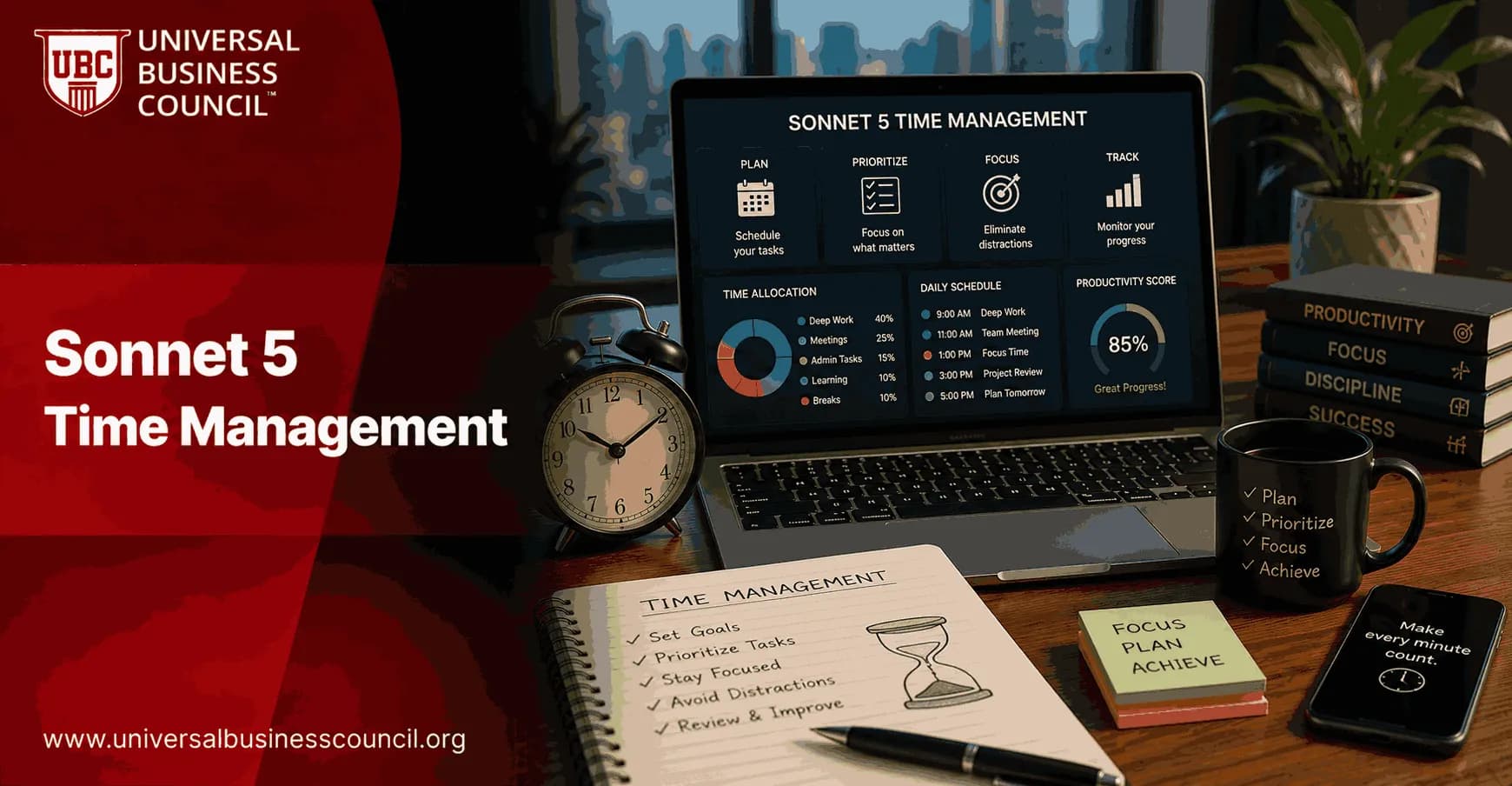
Sonnet 5 time management starts with a hard truth: time does not wait for your strategy offsite, your inbox reset, or your next hiring cycle. Shakespeare presents time as the force that first creates beauty, then destroys it. For business leaders, the lesson is direct. Your best hours must be converted into assets that last.
In Sonnet 5, Shakespeare writes that the same hours that formed a young person's beauty will later act as tyrants against it. Summer becomes winter. Leaves fall. Sap is checked by frost. The only protection is distillation, the process by which flowers lose their appearance but keep their fragrance. That image gives leaders a practical time management framework: protect focus, separate show from substance, and turn temporary advantage into durable capability.

Professionals who want to strengthen these leadership capabilities can also benefit from pursuing the Certified Management Skills Professional™, which focuses on practical decision-making, strategic planning, team leadership, and productivity practices that translate management theory into measurable business results.
What Sonnet 5 Actually Says About Time
Sonnet 5 belongs to Shakespeare's early procreation sonnets, where the speaker urges a young man to preserve his beauty before age takes it. The poem's argument is not subtle. Time is "never-resting" and eventually "plays the tyrant."
The seasonal metaphor does most of the work:
Summer represents youth, strength, advantage, and full bloom.
Winter represents decline, scarcity, fatigue, and loss.
Distillation represents preservation: flowers may lose their outward form, but their essence remains as perfume.
The closing idea is that distilled flowers "leese but their show; their substance still lives sweet." In plain business language, visible success fades. Real value survives only if you capture it, teach it, systematize it, or pass it on.
The Management Lesson: Time Is Not Neutral
Most leaders talk about time as if it were a container. It is not. Time is an active pressure. Left alone, it fills your calendar with status meetings, approval loops, Slack interruptions, and small fires that feel urgent at 10:14 a.m. and look pointless by Friday.
Peter Drucker made a similar point in The Effective Executive: effective leaders begin by knowing where their time actually goes. Not where they think it goes. Where it goes. That distinction hurts.
Research on executive time use suggests senior leaders now spend around 23 hours a week in meetings, far above the levels reported in the 1960s. Microsoft's 2023 Work Trend Index found that a large share of workers say they lack enough uninterrupted focus time during the workday. That is Sonnet 5 in spreadsheet form. The hours that should create value become the hours that strip it away.
From Summer to Winter: Use Strong Periods to Build Assets
Leaders often waste their best season. A company with strong cash flow delays process design. A founder with a loyal early team postpones culture work. A sales leader with a hot pipeline skips coaching because the numbers look fine.
Bad move. Summer is when you prepare for winter.
In leadership time management, your "summer" includes:
Peak energy hours, often early morning for strategic work.
Periods of market strength, when you can invest before pressure rises.
Trusted customer relationships that can become case studies, referrals, or product insight.
Experienced staff who carry knowledge that has never been written down.
If you only enjoy those advantages, they decay. If you distill them, they become systems, playbooks, training materials, decision rules, and leadership bench strength.
Distillation: The Most Useful Metaphor in the Poem
Distillation is not documentation for its own sake. Nobody needs a 47-page process file that no one opens. Good distillation captures what makes performance repeatable.
Here is a practical example. In one calendar review pattern I have seen with senior managers, the week looked busy but not serious: 17 recurring meetings, nine with no decision owner, and several that existed because a dashboard was too unclear to trust. After cutting the low-value meetings and moving updates into a written Monday note, the leader recovered roughly six hours a week. The useful part was not the time saved. It was where the time went next: coaching two new managers and writing down the approval rules that had previously lived in her head.
That is distillation. The leader's judgment stopped being trapped in live meetings and became an asset others could use.
What Business Leaders Should Distill
Decision criteria: What gets approved, rejected, escalated, or paused?
Customer insight: What objections, needs, and usage patterns keep repeating?
Operating knowledge: Which processes fail when one experienced employee is on leave?
Leadership habits: How do strong managers coach, give feedback, and handle conflict?
Strategic assumptions: What must remain true for the current plan to work?
This is where Universal Business Council readers should think beyond personal productivity. Time management is not just a calendar skill. It is a management capability. If you are building formal leadership credentials, connect this topic with Universal Business Council certification pathways in management, business strategy, project leadership, and marketing management.
Show vs Substance: The Calendar Test
Shakespeare's distinction between show and substance is brutal, and useful. Some work looks impressive. Some work changes the business.
Show often includes:
Recurring status meetings where no decision is made.
Deck polishing for audiences that already agree.
Inbox clearing as a substitute for priority setting.
Being present in every discussion to feel in control.
Substance includes:
Strategic choices that remove work, not add it.
Coaching that raises the quality of future decisions.
Customer research that changes product, pricing, or positioning.
Hiring, succession planning, and capability building.
Scenario planning before a crisis forces action.
To be blunt, leaders often defend show because it feels safer. A full calendar proves you are needed. Substance is quieter. It may produce no visible output for three hours, then prevent three months of rework.
A Sonnet 5 Time Management Framework for Leaders
Use this five-step framework during your next Friday review. Keep it practical. A beautiful framework that never touches your calendar is just decoration.
1. Audit Your Summer
Find your best hours. For many leaders, that is a two-hour block before messages pile up. Protect it for work that needs judgment, not admin. Then audit the business version of summer: cash position, customer trust, team morale, product strength, or brand authority.
2. Name the Winter
Ask what will get harder in six to twelve months. Hiring? Margins? Renewal rates? Regulatory pressure? Team burnout? Winter is less frightening when it has a name.
3. Choose What Must Endure
Pick three assets worth distilling this quarter. Examples include a sales qualification playbook, a manager onboarding system, a product decision log, or a customer retention dashboard tracking churn, NPS, expansion revenue, and time to value.
4. Cut the Tyrant Work
Remove or redesign work that consumes attention without preserving value. Start with meetings. Require a decision owner, a written pre-read, and a clear outcome. If a meeting is only for updates, move it to an async note.
5. Schedule Distillation Before Urgency Wins
Block time for documentation, mentoring, strategic thinking, and process improvement. Treat these blocks like customer meetings. Do not donate them to the nearest interruption.
Where AI Fits Without Taking Over Judgment
AI tools can help leaders see time more clearly. Calendar analytics can flag meeting load. Tools such as Claude can summarize long decision threads, draft process notes, and turn rough manager guidance into training material. Useful. Not magic.
The risk is using AI to process more noise instead of reducing the noise. If your team sends twice as many AI-generated updates, you have not solved time management. You have made winter louder. Use AI to compress routine work and preserve human attention for judgment, coaching, negotiation, and strategy.
As organizations increasingly use Anthropic's AI models to support knowledge work and executive productivity, a Claude AI Expert Certification can help professionals develop practical expertise in prompt design, long-context workflows, AI-assisted decision support, and responsible enterprise AI implementation.
What Certification Candidates and Managers Should Practice
If you are studying leadership, management, or business strategy, watch for a common trap in case questions: choosing the option that looks busy instead of the option that builds capability. The best answer is often not "hold more meetings" or "increase reporting." It is to clarify ownership, remove constraints, improve feedback loops, or build repeatable systems.
That is the Sonnet 5 lesson again. Do not confuse activity with preservation of value.
Turn This Into a 30-Minute Leadership Exercise
Open your calendar now and mark each commitment with one of two labels: show or substance. Be honest. Then choose one recurring meeting to cancel, one knowledge asset to document, and one two-hour focus block to protect next week.
If you want to build this into a formal development plan, pair the exercise with a Universal Business Council certification path in management or business strategy. Start with your calendar. That is where your leadership theory becomes visible.
A Tech Certification can further complement leadership development by building a broader understanding of digital transformation, emerging technologies, automation, and AI-enabled business practices that increasingly shape modern management decisions.
FAQs
1. What Is Sonnet 5 for Time Management?
Sonnet 5 is an AI model from Anthropic's Claude family that can assist with time management by helping users plan schedules, prioritize tasks, organize projects, automate planning, and improve productivity through natural language interactions.
2. How Can Sonnet 5 Improve Time Management?
It can create daily schedules, prioritize tasks, organize meetings, summarize workloads, generate productivity plans, and recommend more efficient ways to manage time.
3. Why Should Professionals Use Sonnet 5 for Productivity?
Sonnet 5 helps reduce manual planning, improves organization, supports better decision-making, and saves time by automating repetitive planning and administrative tasks.
4. Can Sonnet 5 Create Daily Schedules?
Yes. It can generate structured daily, weekly, or monthly schedules based on your priorities, deadlines, meetings, and available working hours.
5. How Does Sonnet 5 Help Prioritize Tasks?
It can organize tasks based on urgency, business impact, deadlines, dependencies, and workload, helping users focus on high-priority activities first.
6. Can Sonnet 5 Help Manage Projects?
Yes. It can break projects into milestones, create task lists, assign priorities, suggest timelines, and track overall project progress.
7. How Can Sonnet 5 Help Teams Manage Time?
Teams can use it to summarize meetings, organize action items, prepare project updates, assign responsibilities, and coordinate work across departments.
8. Can Sonnet 5 Improve Meeting Productivity?
Yes. It can create meeting agendas, summarize discussions, extract action items, draft follow-up notes, and help reduce unnecessary meeting time.
9. How Does Sonnet 5 Support Task Planning?
It helps convert goals into actionable steps, estimate timelines, organize dependencies, and recommend logical work sequences for improved execution.
10. Can Sonnet 5 Help Reduce Workplace Stress?
It can support better workload organization, prioritize important work, simplify planning, and reduce the mental effort required to manage multiple tasks. It cannot replace healthy work habits or realistic expectations.
11. Can Sonnet 5 Assist with Calendar Planning?
Yes. It can suggest time blocks for focused work, meetings, breaks, and recurring tasks, although actual calendar integration depends on the application using the model.
12. How Can Sonnet 5 Improve Decision-Making?
It organizes information, compares options, summarizes priorities, and helps users evaluate trade-offs before making scheduling or project decisions.
13. Which Professionals Can Benefit from Sonnet 5?
Project managers, software developers, executives, HR professionals, marketers, consultants, entrepreneurs, students, educators, and remote teams can all benefit.
14. Which Productivity Methods Can Sonnet 5 Support?
It can help implement methods such as the Eisenhower Matrix, Pomodoro Technique, Getting Things Done (GTD), time blocking, Kanban workflows, and SMART goal planning.
15. What Are the Benefits of Using Sonnet 5 for Time Management?
Benefits include better organization, improved productivity, faster planning, clearer priorities, reduced administrative work, stronger collaboration, and more effective time allocation.
16. What Are the Limitations of Using AI for Time Management?
AI recommendations depend on the information provided and may not reflect unexpected events, personal preferences, or organizational constraints. Human judgment remains essential.
17. How Can Businesses Use Sonnet 5 for Productivity?
Businesses can use it to automate meeting summaries, create project plans, draft reports, prioritize work, assist knowledge management, and improve team coordination.
18. What Skills Help Users Get the Most from Sonnet 5?
Useful skills include prompt writing, project management, communication, prioritization, critical thinking, workflow design, and basic productivity planning.
19. What Common Mistakes Should Users Avoid?
Avoid treating AI-generated schedules as fixed commitments, providing vague instructions, overloading every hour of the day, ignoring breaks, and following recommendations without reviewing them. Even the best planner cannot manufacture a 27-hour day, despite humanity's recurring attempts.
20. How Will AI Models Like Sonnet 5 Change Time Management?
AI assistants are expected to become increasingly capable of organizing work, prioritizing tasks, coordinating projects, summarizing meetings, and supporting intelligent productivity workflows. Rather than replacing human planning, they are likely to become collaborative assistants that help individuals and teams make better use of their time while leaving final decisions to people.
Related Articles
View All
Claude Ai
Claude Sonnet 5 Competitive Advantage: Time, Change, and Strategy Lessons From Sonnet 5
Learn how Claude Sonnet 5 competitive advantage comes from faster sensing, decision cycles, adaptability, and disciplined change management.

Claude Ai
How Sonnet 5 Explains Innovation and Business Renewal
Sonnet 5 shows how agentic AI can renew business workflows by improving document work, automation, safety, and cost control across enterprise operations.

Claude Ai
Sonnet 5 and Long-Term Business Strategy: Preserving Excellence at Scale
Explore how Sonnet 5 supports long-term business strategy by preserving excellence across agentic workflows, governance, cost control, and execution.
Trending Articles
The Role of Blockchain in Ethical AI Development
How blockchain technology is being used to promote transparency and accountability in artificial intelligence systems.
AWS Career Roadmap
A step-by-step guide to building a successful career in Amazon Web Services cloud computing.
Top 5 DeFi Platforms
Explore the leading decentralized finance platforms and what makes each one unique in the evolving DeFi landscape.