

Sonnet 5 and Long-Term Business Strategy: Preserving Excellence at Scale
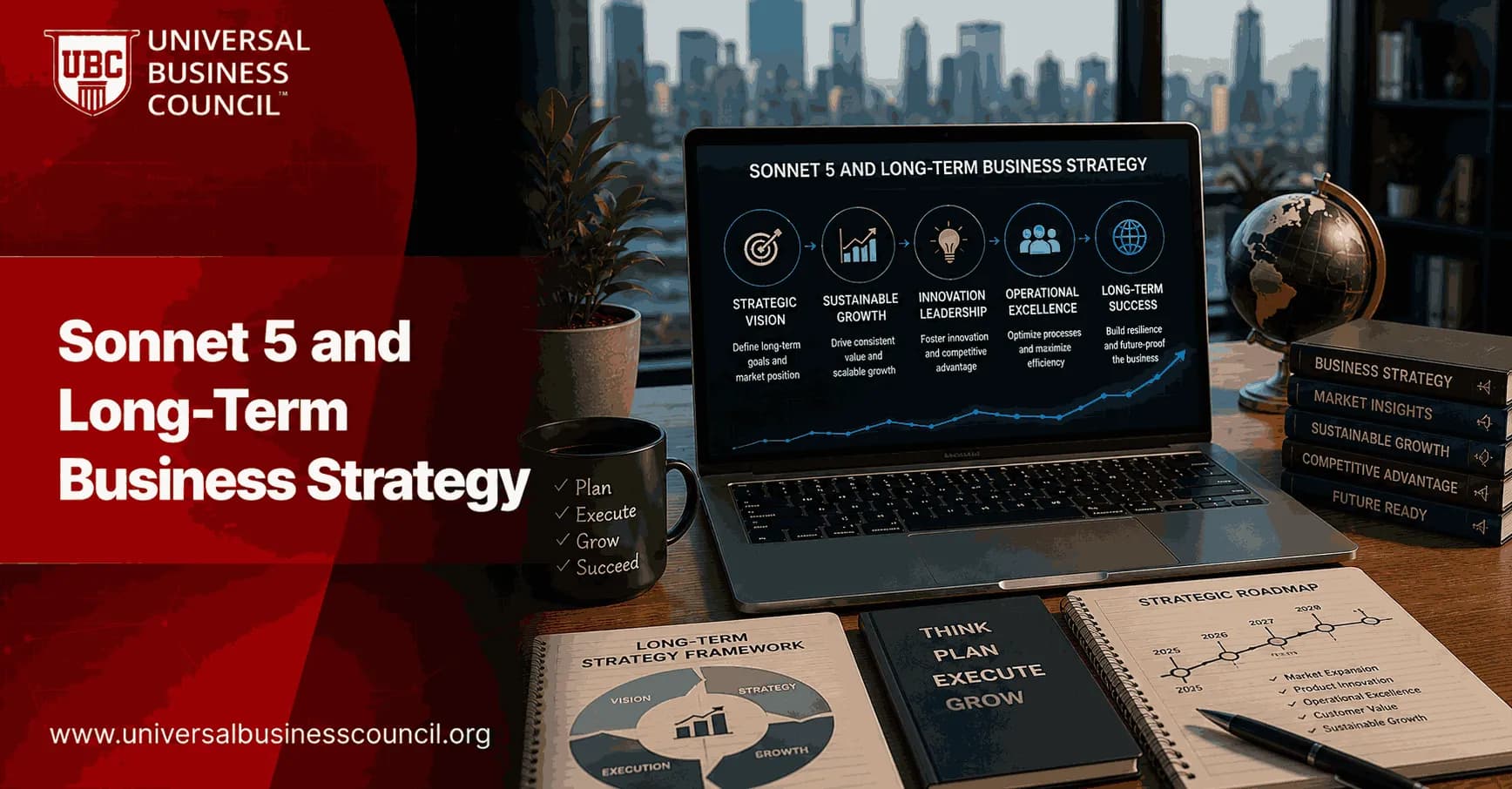
Sonnet 5 long-term business strategy is not just a technical topic. It is a management question. Anthropic's Claude Sonnet model shows how agentic AI can help organizations hold quality steady across the messy work that usually breaks strategy: code reviews, policy checks, market research, document drafting, and cross-team follow-through.
The point is not that Sonnet 5 replaces executives, architects, lawyers, or analysts. It should not. Its value is more practical. It can carry high-quality work through long, multi-step processes without losing the thread as fast as earlier models. That matters because most business excellence is lost in handoffs, rework, vague ownership, and inconsistent execution.

Professionals responsible for leading long-term organizational change can also benefit from the Certified Strategic Planning & Leadership Professional™, which strengthens practical skills in strategic execution, leadership decision-making, performance management, and aligning business objectives with sustainable operational excellence.
What Sonnet 5 Is and Why It Matters
Sonnet 5 is a mid-tier model in Anthropic's Claude Sonnet family, positioned between the lighter Haiku models and the flagship Opus line. Anthropic describes the Sonnet tier as its balance of intelligence and speed, and each release has pushed harder on agentic behavior.
That word, agentic, gets overused. Here it has a specific meaning. The model is designed to make a plan, inspect files, call tools, run commands, check outputs, revise its approach, and continue with less constant human prompting. For enterprise AI strategy, that shifts the model from a single-response assistant to an execution layer for knowledge work.
This is where Sonnet 5 connects to long-term strategy. Good strategy is not a slide deck. It is a system of repeated decisions, standards, reviews, and corrections. A model that can hold a longer task together helps preserve quality across that system.
The Strategic Signal: Long Trajectories Beat One-Off Answers
The most useful shift in the Sonnet line is not raw benchmark scores. It is how many steps the model can run before it drifts. Long, tool-heavy trajectories are where the newer models pull ahead of the one-shot assistants people first tried in 2023. The exact turn count will not tell you whether a model fits your workflow, but the direction is clear.
Long trajectories are where real work lives.
A developer asks an AI coding agent to inspect a service, trace a bug, edit tests, run the suite, fix failures, and explain the risk.
A compliance team asks for a scan of internal policy against a new regulation, followed by a gap list and draft remediation tasks.
A strategy analyst asks for competitor mapping, source review, segmentation notes, and a board-ready summary.
In each case, quality depends on continuity. The model has to remember the plan, test its own assumptions, and avoid declaring victory too early. Anyone who has run AI pilots has seen the failure mode. The first answer looks good, the fifth step drifts, and by step eight a human has to rebuild the work. The hidden metric is not prompt success. It is rework rate.
Preserving Excellence Means Separating Judgment From Execution
There is a useful rule for leaders adopting Sonnet 5. Do not use the same model for every decision. That is lazy architecture.
Sonnet models are strong in an execution role, while the flagship Opus tier is the better choice for judgment-heavy decisions. That split mirrors classic long-term business strategy. You do not assign the same budget, talent, or governance to every activity. You protect the few choices that define advantage, then build systems to execute those choices consistently.
Use flagship models and senior experts for:
Market entry decisions with large capital exposure.
Product architecture choices that will be hard to reverse.
Legal or regulatory judgment with serious downside risk.
Board-level strategy narratives and trade-off decisions.
Use Sonnet 5 for:
Drafting and refining implementation plans.
Summarizing long documents and meeting records.
Organizing research into decision-ready formats.
Running repeatable code, documentation, and workflow checks.
Maintaining consistency across internal communications.
To be blunt, many AI deployments fail because teams put a model in the wrong seat. Sonnet 5 works best as a high-quality operator for moving defined work forward. It can support strategy. It should not become the sole source of strategic judgment.
Cost-Performance Discipline Is Part of the Strategy
The appeal of the Sonnet tier is that it often gets close to flagship quality on coding and tool use while staying at a lower price point. That makes it attractive for teams with large volumes of professional work. Cost still matters. Always.
There is a practical caveat worth testing. At very high reasoning settings, a Sonnet model can lose its price advantage against a flagship model running at lower effort. The lesson is simple. Test at the task level before you standardize.
For enterprise leaders, this creates a portfolio model:
Classify work by risk. Low-risk formatting tasks do not need the same model as regulatory analysis.
Measure output quality. Track defect rate, review time, escalation rate, and user correction rate.
Track cost per completed workflow. Token cost alone can mislead you if a cheaper run creates more human cleanup.
Revisit model routing quarterly. New tokenizers, pricing changes, and model updates can change the economics.
This is a familiar management problem. It looks like cloud cost governance, vendor selection, and process design. The technology is new. The discipline is not.
Where Sonnet 5 Fits in Long-Term Business Work
Software engineering and automation
Sonnet models are built for coding workflows where the model must inspect a codebase, draft changes, run tests, and iterate. That is valuable because engineering excellence is cumulative. A rushed migration, a half-written test, or an undocumented workaround can tax a team for years.
A practical pattern is to use Sonnet 5 for first-pass refactoring plans, test expansion, documentation updates, and pull request summaries. Keep senior engineers responsible for architecture and production risk. The model can reduce drag, but ownership stays human.
Research, market mapping, and competitive analysis
Long-term planning needs a live view of customers, competitors, regulation, and technology shifts. Sonnet 5's gains on tool-assisted search and retrieval tasks point to stronger performance in search, synthesis, and reasoning across many sources.
Use it to assemble competitor profiles, extract themes from customer feedback, compare positioning, or prepare SWOT inputs. Do not let it invent certainty. Require sources, ask for confidence levels, and separate observed facts from interpretation.
Legal and professional document work
Legal AI teams have reported real gains in accuracy and output quality when they move to newer Claude models, especially for transactional work. That matters because legal workflows punish inconsistency. A clause missed in one contract can become a portfolio-level problem later.
For legal, procurement, HR, and compliance teams, Sonnet 5 can support drafting, redline preparation, obligation summaries, and policy comparisons. Final review should stay with qualified professionals, especially where jurisdiction, liability, or client advice is involved.
Operational communication
This may sound less exciting than agentic coding, but it is often where strategy breaks. Meeting notes never become owners. Decisions get buried in Slack threads. A project brief says soon instead of naming a date.
Sonnet 5 is well suited to turning raw notes into action logs, converting executive direction into team briefs, and making internal documents readable. The small detail that matters: ask it to include owner, due date, decision, dependency, and next check-in. Without those fields, a polished summary is just another document.
As organizations increasingly adopt Anthropic's AI models for enterprise productivity, a Claude AI Expert Certification can help professionals build practical expertise in prompt design, long-context workflows, AI-assisted decision support, and responsible implementation of Claude-powered business solutions.
Governance: The Guardrail That Preserves Excellence
Newer Claude releases add features such as adaptive effort levels, updated tokenizers, and refined safety behavior. These details matter for organizations in finance, health, law, education, and public-sector work.
Your governance model should answer five questions before wide deployment:
Which workflows can Sonnet 5 complete without human approval?
Which tasks require expert review before output is used?
What data is prohibited from prompts, files, or tool access?
How will the organization log model actions and decisions?
Which metrics trigger rollback or escalation?
If your team is building AI capability, connect this work with Universal Business Council learning paths in business strategy, management education, analytics, and AI governance. Linking your practice to accountable operating standards is what moves professionals from tool use to reliable delivery.
The Business Strategy Lesson Behind Sonnet 5
Sonnet 5 reflects long-term business strategy because it embodies three principles.
Operational excellence must be repeatable. Excellence cannot depend on one heroic employee cleaning up every workflow.
Resources should match risk. Use stronger judgment where the decision matters most. Use efficient execution where the path is already defined.
Feedback loops protect quality. Long trajectories only help if the model checks results, updates plans, and works within governance rules.
The best AI operating models will not be built around a single model. They will use a portfolio: flagship models for judgment, Sonnet 5 for sustained execution, and lighter models for simple tasks. That is how mature organizations preserve quality while controlling cost.
Next Step for Professionals and Enterprises
Start with one workflow that already has clear standards: pull request review, contract summary, policy scan, customer feedback synthesis, or meeting-to-action conversion. Run Sonnet 5 against real historical work. Measure rework rate, cycle time, reviewer corrections, cost per completed task, and user trust.
If the results hold, document the playbook and train the team. Then expand. For professionals seeking structured growth, pair hands-on Sonnet 5 practice with Universal Business Council programmes in strategy, management, analytics, and AI governance. The goal is not to use more AI. The goal is to preserve excellence when the work gets longer, harder, and more distributed.
A Tech Certification can further complement strategic leadership by expanding knowledge of emerging technologies, cloud platforms, digital transformation, and AI-enabled business practices that support long-term organizational growth and innovation.
FAQs
1. What Is Sonnet 5?
Sonnet 5 is an AI model in Anthropic's Claude family that supports reasoning, writing, coding, analysis, and business productivity. Organizations can use it to assist with research, planning, content creation, and strategic decision-making.
2. How Can Sonnet 5 Support Long-Term Business Strategy?
It can help analyze information, summarize market research, generate strategic plans, evaluate business scenarios, identify opportunities, and organize complex data to support informed decision-making.
3. Why Is Long-Term Business Strategy Important?
A long-term strategy helps organizations define clear objectives, allocate resources effectively, adapt to market changes, manage risks, and achieve sustainable growth over time.
4. How Can Sonnet 5 Help with Strategic Planning?
Sonnet 5 can assist by creating SWOT analyses, drafting business plans, outlining strategic initiatives, identifying risks, and organizing planning documents for leadership teams.
5. Can Sonnet 5 Help with Market Research?
Yes. It can summarize market reports, analyze competitor information, identify industry trends, organize customer insights, and help teams prepare strategic recommendations based on the information provided to it.
6. How Does Sonnet 5 Improve Business Decision-Making?
It helps organize complex information, compare alternatives, identify trade-offs, summarize data, and present structured insights that support better strategic decisions.
7. Can Sonnet 5 Support Business Innovation?
Yes. It can generate ideas, explore new product concepts, evaluate business opportunities, and facilitate brainstorming sessions, while human teams assess feasibility and execution.
8. How Can Sonnet 5 Assist Executive Teams?
Executive teams can use it to draft reports, summarize meetings, prepare presentations, analyze business scenarios, develop strategic roadmaps, and improve internal communication.
9. Can Sonnet 5 Help with Risk Management?
Yes. It can help identify potential business risks, organize risk assessments, evaluate mitigation strategies, and summarize compliance or governance information. Final risk decisions should remain with qualified decision-makers.
10. How Does Sonnet 5 Support Competitive Analysis?
It can help organize competitor information, compare products or strategies, summarize industry developments, and identify competitive strengths and weaknesses from the available data.
11. Can Sonnet 5 Improve Business Productivity?
Yes. It can automate repetitive writing tasks, summarize documents, draft communications, organize research, and reduce the time spent on routine knowledge work.
12. How Can Sonnet 5 Support Knowledge Management?
It can summarize internal documents, answer questions based on organizational knowledge, organize information, and help employees access relevant content more efficiently.
13. Which Business Functions Can Benefit from Sonnet 5?
Strategy, marketing, finance, human resources, operations, customer support, legal, product management, software development, sales, and executive leadership can all benefit from AI-assisted workflows.
14. Which Technologies Can Be Combined with Sonnet 5?
Organizations commonly integrate AI models with APIs, Retrieval-Augmented Generation (RAG), enterprise knowledge bases, CRM systems, project management tools, workflow automation platforms, and analytics solutions.
15. What Are the Benefits of Using Sonnet 5 for Business Strategy?
Benefits include faster research, improved planning efficiency, enhanced collaboration, better document analysis, streamlined reporting, increased productivity, and more structured strategic discussions.
16. What Are the Limitations of AI in Business Strategy?
AI cannot replace executive judgment, organizational experience, stakeholder relationships, or accountability. Its recommendations depend on the quality of the information and instructions it receives.
17. How Can Businesses Successfully Adopt Sonnet 5?
Organizations should identify high-value use cases, establish governance policies, train employees, protect sensitive data, validate AI-generated outputs, and monitor performance over time.
18. What Skills Help Leaders Use Sonnet 5 Effectively?
Leaders benefit from skills in strategic thinking, business analysis, prompt engineering, data interpretation, communication, risk management, AI governance, and change management.
19. What Common Mistakes Should Businesses Avoid When Using Sonnet 5?
Avoid treating AI-generated recommendations as final decisions, providing incomplete business context, exposing confidential information without proper safeguards, ignoring human review, and measuring success only by speed instead of business outcomes. AI can organize options impressively, but it does not attend board meetings or accept responsibility for quarterly results.
20. How Will AI Models Like Sonnet 5 Influence Long-Term Business Strategy?
AI models are expected to become valuable strategic assistants by helping organizations analyze information, model scenarios, automate research, and improve planning processes. Companies that combine AI capabilities with strong leadership, governance, domain expertise, and ethical decision-making will be better positioned to adapt to changing markets, identify growth opportunities, and execute long-term strategies with greater confidence and operational efficiency.
Related Articles
View All
Claude Ai
Claude Sonnet 5 Competitive Advantage: Time, Change, and Strategy Lessons From Sonnet 5
Learn how Claude Sonnet 5 competitive advantage comes from faster sensing, decision cycles, adaptability, and disciplined change management.
Claude Ai
How Sonnet 5 Explains Innovation and Business Renewal
Sonnet 5 shows how agentic AI can renew business workflows by improving document work, automation, safety, and cost control across enterprise operations.

Claude Ai
Sonnet 5 Time Management: What Shakespeare Teaches Business Leaders
Shakespeare's Sonnet 5 turns time into a leadership lesson: protect focus, cut performative work, and distill today's advantage into lasting business assets.
Trending Articles
The Role of Blockchain in Ethical AI Development
How blockchain technology is being used to promote transparency and accountability in artificial intelligence systems.
AWS Career Roadmap
A step-by-step guide to building a successful career in Amazon Web Services cloud computing.
Top 5 DeFi Platforms
Explore the leading decentralized finance platforms and what makes each one unique in the evolving DeFi landscape.