

Leadership Lessons From Sonnet 5: Protecting Talent Before It Fades
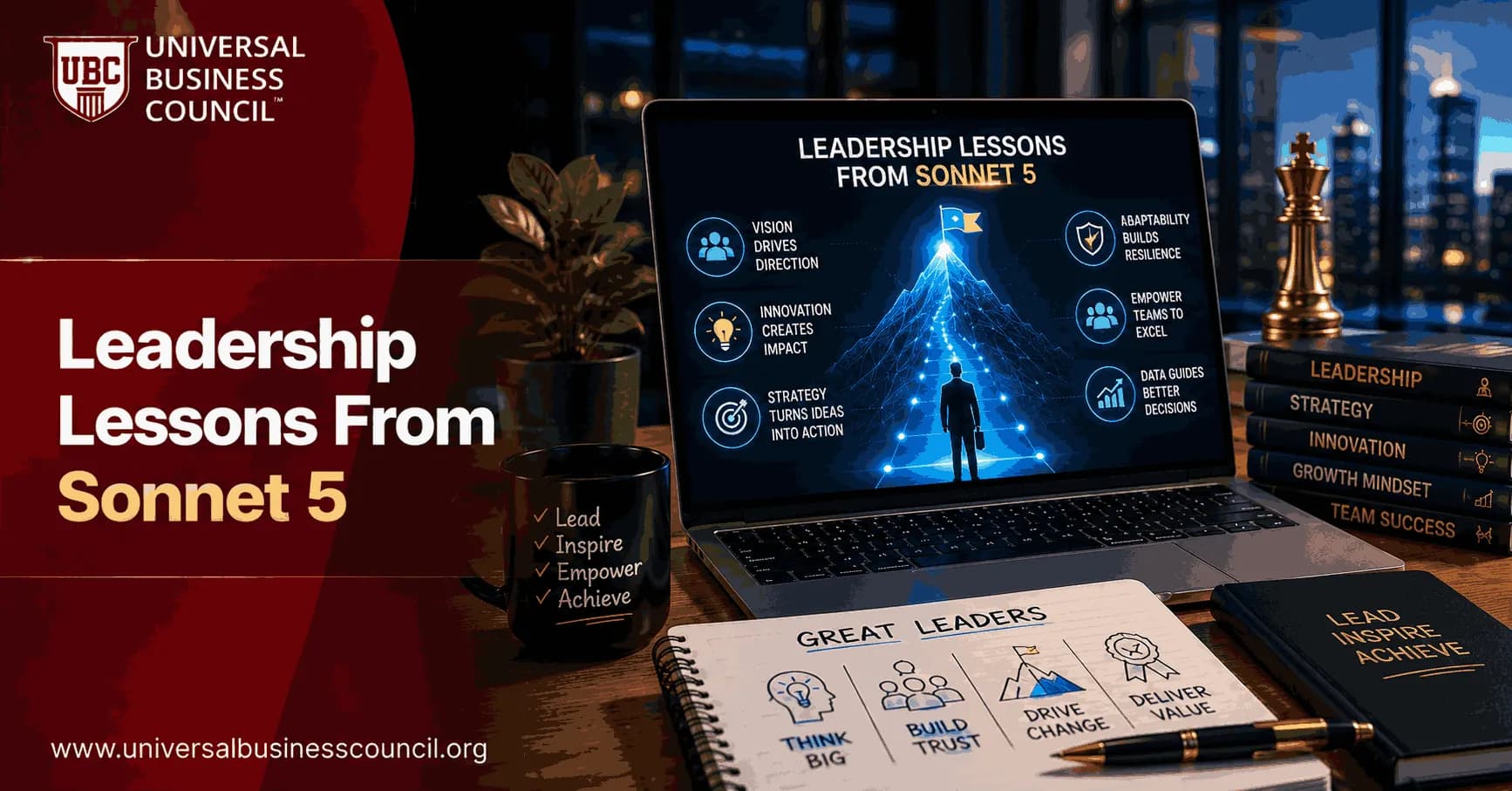
Leadership Lessons From Sonnet 5 start with a hard truth: talent has a season. A brilliant engineer, a trusted client partner, a founder-led culture, or a high-performing manager can look permanent while it is already becoming fragile. Shakespeare names the risk plainly. The same hours that create beauty will later act like tyrants against it.
For leaders, that is not just poetry. It is succession planning, mentoring, knowledge transfer, and talent risk management in compressed form. Wait until the expert retires, the manager burns out, or the market makes a core skill obsolete, and you are trying to bottle perfume after the flowers are gone.

Professionals looking to strengthen these long-term leadership capabilities can also benefit from the Certified Strategic Planning & Leadership Professional™, which develops practical expertise in strategic execution, succession planning, organizational leadership, and building resilient teams that sustain performance over time.
What Sonnet 5 Says About Time, Talent, and Loss
Sonnet 5 opens with one of Shakespeare's sharpest observations about time:
Those hours, that with gentle work did frame
The lovely gaze where every eye doth dwell,
Will play the tyrants to the very same
And that unfair which fairly doth excel.
The poem belongs to the group often called the Procreation Sonnets. The speaker urges a young man to preserve his beauty by passing it on. The logic is simple and uncomfortable: time creates excellence, then destroys it. Summer turns to winter. Leaves fall. Beauty is covered by snow. If nothing is preserved, there may be "nor no remembrance what it was."
Then comes the business lesson hiding inside the literary image:
But flowers distill'd, though they with winter meet,
Leese but their show; their substance still lives sweet.
The flower loses its appearance, but its essence survives as perfume. That is the leadership metaphor. Your organization cannot freeze people in place. It can preserve their substance.
The Leadership Translation: Summer, Winter, and Distillation
Read Sonnet 5 as a talent strategy model and the imagery becomes practical fast.
Summer is peak capability: the senior architect who sees system risk before anyone else, the sales director whose client trust took ten years to build, the plant manager who knows which machine noise means a shutdown is coming.
Winter is attrition, burnout, retirement, disengagement, or skill obsolescence.
Distillation is what leaders do before winter arrives: mentoring, succession planning, documentation, apprenticeships, playbooks, and leadership development.
Procreation is the talent pipeline. Not cloning people, but reproducing capability in others.
To be blunt, most organizations admire summer and underfund distillation. They celebrate the star performer, then panic when that person resigns with three weeks' notice and half the decision logic still in their head.
Succession Planning Is Not Replacement Planning
This is where many managers get the exam answer, and the real-world answer, wrong. Replacement planning asks, "Who can sit in the chair if Priya leaves?" Succession planning asks, "Which capabilities does Priya carry, how critical are they, who is being developed, and what evidence shows they are ready?"
That difference matters. A name in a spreadsheet is not bench strength.
Use a simple test for every critical role:
Risk: What happens if this person leaves in 30 days?
Capability: What judgment, relationships, and technical knowledge are concentrated here?
Successors: Who is ready now, ready in 12 months, and ready in 24 months?
Proof: What assignments have tested those successors under real pressure?
Artifacts: What playbooks, decision trees, client histories, or operating routines would survive the departure?
Leadership teams often track revenue, churn, CAC, LTV, ROAS, NPS, and operating margin with care. They should apply the same discipline to talent risk. A critical role with no ready successor is not an HR issue. It is an enterprise risk.
Preserve Substance, Not Just the Appearance of Control
Sonnet 5 does not pretend the flower can keep its summer form. It says something wiser: keep the substance.
In organizations, substance means the parts of expertise that make performance repeatable:
How a senior negotiator reads a procurement meeting
Why a product leader kills one feature and protects another
How a finance manager spots weak assumptions in a forecast
Which customer objections signal price resistance versus poor fit
How a technical lead decides when "good enough" is safe and when it is dangerous
This knowledge is often tacit. It lives in habits, pattern recognition, and scars. Standard operating procedures help, but they are not enough. You need shadowing, after-action reviews, peer teaching, and stretch assignments.
A useful rule: if the expert says, "I just know," you have found something worth distilling. Ask them to narrate a recent decision. What did they notice first? What options did they reject? What would a novice have missed? That conversation is often more valuable than a polished 40-page manual nobody opens.
Mentoring Is Distillation With Accountability
Mentoring is frequently treated as a soft benefit. Sonnet 5 suggests it is closer to preservation technology.
Good mentoring transfers judgment, not just advice. Sponsorship goes further. A sponsor puts emerging talent into rooms where decisions are made, then helps them survive the exposure. Both are needed.
Build a Practical Mentoring System
Do not leave mentoring to chemistry alone. Pair people with intent.
Match mentors to specific capability gaps, not vague career interests.
Set a 90-day learning goal, such as leading a client review or managing a risk register.
Ask mentees to produce an artifact: a checklist, post-project review, or decision guide.
Review outcomes with the manager, not just the mentor.
Recognize senior experts for developing successors, not only for personal output.
That last point is where culture changes. If hoarding knowledge makes someone indispensable, the system will reward hoarding. If developing successors affects promotion, recognition, and role design, leaders will start distilling what matters.
Protect Talent Before Burnout Turns Summer Into Winter
Sonnet 5 is often read through aging, but leaders should also read it through energy. Top performers can fade long before they leave. Burnout is a kind of winter.
You can usually see it early. The reliable manager becomes short in meetings. The creative strategist stops challenging weak briefs. The senior developer still ships code but stops mentoring. The salesperson protects their accounts but no longer builds pipeline. The leaves are still on the tree, but the season has changed.
Protecting talent is not pampering. It is operational discipline. Watch workload concentration. Rotate high-pressure duties. Remove low-value reporting. Give autonomy where competence is proven. Most of all, stop using your best people as the permanent rescue crew for broken processes.
AI as a New Form of Distillation, With Limits
Since this topic sits in the Claude-ai category, it is worth asking where AI fits. AI tools can help preserve organizational memory. They can summarize project retrospectives, turn expert interviews into structured guides, search internal knowledge bases, and draft training scenarios.
But do not confuse capture with understanding. A model can store patterns from a senior engineer's explanations. It cannot fully replace the apprenticeship that teaches a junior engineer when to challenge a requirement, when to escalate, and when to slow down.
Use AI for the first layer of distillation:
Record and summarize expert interviews.
Create searchable knowledge articles from support tickets and project notes.
Draft onboarding paths for critical roles.
Generate scenario-based practice questions for managers.
Identify repeated failure points in post-project reviews.
Then add human review. Always. The substance of leadership includes ethics, timing, trust, and context. Those do not transfer cleanly through automation alone.
As organizations increasingly integrate Anthropic's AI models into knowledge management and leadership workflows, a Claude AI Expert Certification can help professionals develop practical expertise in prompt engineering, long-context reasoning, AI-assisted documentation, and responsible enterprise AI implementation.
What Shakespeare Adds to Modern Management Training
Shakespeare has long been used as a serious resource for leadership, especially on ambition, moral judgment, communication, indecision, and the danger of poor advisers. That is why Sonnet 5 works so well for executives and managers. It makes a familiar management problem feel urgent again.
Frameworks such as OKRs, Porter's Five Forces, the 4Ps, and succession matrices give you structure. Shakespeare gives you memory. "Summer's distillation" is harder to forget than "knowledge transfer initiative."
For Universal Business Council learners, this topic pairs naturally with leadership, management, marketing, business strategy, and AI-focused certification pathways. It is especially useful if you manage teams, own a function, design training programs, or prepare for senior responsibility.
A Sonnet 5 Checklist for Leaders
Use this in your next talent review. Keep it short. Make the answers visible.
Name your summers: Which people, teams, relationships, and capabilities are at peak value now?
Name the winters: Where do you face retirement risk, burnout risk, resignation risk, or skill obsolescence?
Distill the substance: What knowledge must be documented, taught, observed, or practiced?
Reproduce capability: Who is being developed through real assignments, not just courses?
Measure bench strength: Which critical roles have ready-now and ready-soon successors?
Reward legacy: Are senior people evaluated on the talent they build?
The best leaders do not merely retain talent. They turn talent into institutional capability.
Final Thought: Do the Distillation Before the Frost
Sonnet 5 warns leaders against a quiet arrogance: assuming today's excellence will still be available tomorrow. It may not be. People leave. Skills expire. Energy fades. Markets change.
Your next step is practical. Choose one critical role this week and map its "substance": decisions, relationships, judgment, routines, and risks. Then assign a successor, a mentor, and one knowledge artifact to create within 30 days. If you are building your own leadership depth, explore Universal Business Council's related leadership, management, and AI learning pathways, then apply the Sonnet 5 test to your own team.
A Tech Certification can further strengthen leadership capabilities by expanding knowledge of digital transformation, automation, emerging technologies, and AI-enabled business systems that support modern organizational strategy and workforce development.
FAQs
1. What Is Sonnet 5?
Sonnet 5 is an AI model in Anthropic's Claude family that supports reasoning, writing, coding, analysis, and business productivity. It can assist leaders with research, planning, communication, and decision support.
2. What Leadership Lessons Can Businesses Learn from Sonnet 5?
Organizations can draw lessons about clear communication, structured thinking, continuous learning, collaboration, data-informed decision-making, and responsible use of AI to improve leadership practices.
3. Why Is Clear Communication Important in Leadership?
Clear communication aligns teams, reduces misunderstandings, builds trust, improves collaboration, and helps employees understand organizational goals and expectations.
4. How Can AI Help Leaders Make Better Decisions?
AI can organize information, summarize reports, compare options, identify trends, and support data-driven analysis. Leaders remain responsible for evaluating recommendations and making final decisions.
5. What Role Does Critical Thinking Play in Leadership?
Critical thinking helps leaders evaluate evidence, assess risks, challenge assumptions, solve complex problems, and make balanced decisions in uncertain situations.
6. How Does Continuous Learning Improve Leadership?
Leaders who continually learn can adapt to changing markets, adopt new technologies, improve decision-making, and guide organizations through innovation and transformation.
7. How Can Leaders Build More Collaborative Teams?
They can encourage open communication, define shared goals, promote knowledge sharing, support diverse perspectives, and create an environment where employees feel valued and heard.
8. How Can Sonnet 5 Support Leadership Communication?
It can assist with drafting presentations, preparing reports, summarizing meetings, writing internal communications, and organizing complex information into clear, structured documents.
9. Why Is Adaptability an Important Leadership Skill?
Adaptable leaders respond effectively to changing customer needs, market conditions, technology, and organizational challenges while maintaining focus on long-term objectives.
10. How Can AI Improve Strategic Leadership?
AI can help leaders analyze business data, identify emerging trends, evaluate strategic scenarios, and support planning by processing information efficiently.
11. How Does Emotional Intelligence Influence Leadership?
Emotional intelligence helps leaders build trust, understand team dynamics, resolve conflicts, motivate employees, and communicate with empathy. AI can support communication, but emotional intelligence remains a human capability.
12. Can Sonnet 5 Help with Decision Support?
Yes. It can summarize research, compare alternatives, identify potential risks, and organize information to support more informed leadership discussions.
13. Which Leadership Functions Can Benefit from AI?
Strategic planning, project management, operations, marketing, HR, finance, product management, customer service, and executive leadership can all benefit from AI-assisted workflows.
14. Which Technologies Can Be Combined with Sonnet 5?
Organizations commonly integrate AI models with enterprise knowledge bases, Retrieval-Augmented Generation (RAG), CRM systems, analytics platforms, project management software, APIs, and workflow automation tools.
15. What Are the Benefits of Using AI to Support Leadership?
Benefits include faster analysis, improved productivity, better documentation, more efficient planning, stronger knowledge management, enhanced collaboration, and quicker access to business insights.
16. What Are the Limitations of AI in Leadership?
AI cannot replace human judgment, organizational experience, ethical responsibility, relationship-building, or accountability. It should support leaders rather than make leadership decisions on their behalf.
17. How Can Organizations Successfully Use Sonnet 5 in Leadership?
Businesses should define clear objectives, provide high-quality context, review AI-generated recommendations, protect sensitive information, and combine AI insights with experienced leadership.
18. What Skills Should Modern Leaders Develop Alongside AI?
Leaders should strengthen strategic thinking, communication, data literacy, change management, emotional intelligence, AI literacy, critical thinking, decision-making, and ethical governance.
19. What Common Leadership Mistakes Should Organizations Avoid When Using AI?
Avoid treating AI recommendations as unquestionable, relying on AI without business context, ignoring employee feedback, neglecting transparency, and overlooking governance or privacy requirements. AI can organize information exceptionally well, but it does not inspire teams, build culture, or accept responsibility when a strategy fails. That inconvenient privilege still belongs to humans.
20. How Will AI Models Like Sonnet 5 Influence the Future of Leadership?
AI models will increasingly serve as strategic assistants that help leaders analyze information, automate routine work, improve communication, and support planning. Organizations that combine AI capabilities with ethical leadership, human judgment, collaboration, and continuous learning will be better equipped to navigate uncertainty, drive innovation, and achieve sustainable long-term growth.
Related Articles
View All
Claude Ai
Brand Legacy Lessons from Shakespeare's Sonnet 5
Shakespeare's Sonnet 5 offers marketers a practical model for brand legacy: preserve enduring essence, not just short-term campaign beauty.

Claude Ai
Claude Sonnet 5 Competitive Advantage: Time, Change, and Strategy Lessons From Sonnet 5
Learn how Claude Sonnet 5 competitive advantage comes from faster sensing, decision cycles, adaptability, and disciplined change management.

Claude Ai
Branding Lessons from Sonnet 5: From Beauty to Enduring Value
Shakespeare's Sonnet 5 offers a practical branding lesson: visual beauty fades, but distilled brand essence, trust, and value endure.
Trending Articles
The Role of Blockchain in Ethical AI Development
How blockchain technology is being used to promote transparency and accountability in artificial intelligence systems.
AWS Career Roadmap
A step-by-step guide to building a successful career in Amazon Web Services cloud computing.
Top 5 DeFi Platforms
Explore the leading decentralized finance platforms and what makes each one unique in the evolving DeFi landscape.