

Sonnet 5 Strategic Planning: Turning Short-Lived Opportunities Into Durable Results
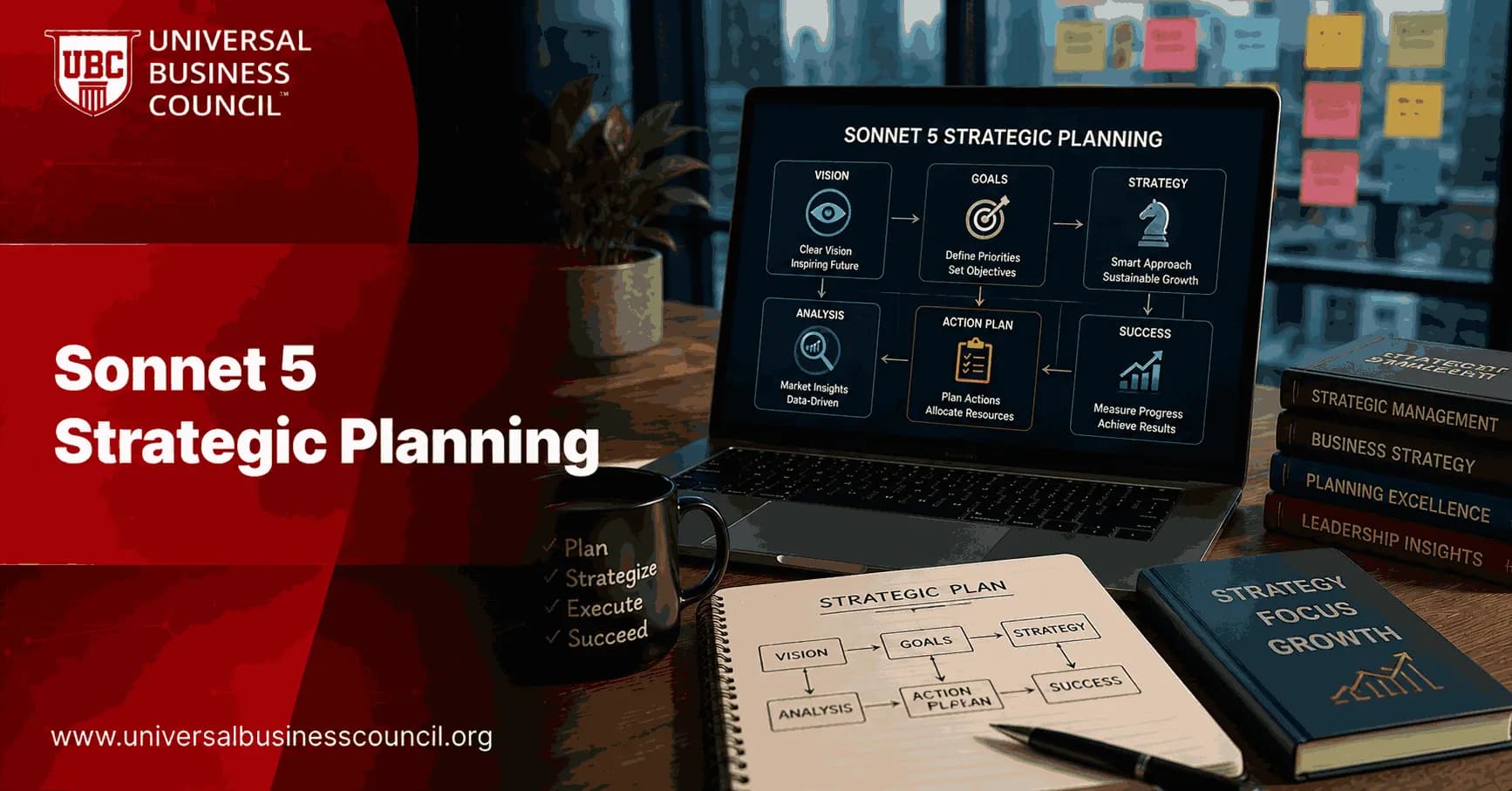
Sonnet 5 strategic planning works best when you treat Claude Sonnet 5 as a disciplined planning agent, not a decision maker. Its value is simple. It can scan for signals, structure options, draft action plans, and keep multi-step work moving at a cost that makes repeated use realistic.
Anthropic released Claude Sonnet 5 on June 30, 2026, positioning it as its most agentic Sonnet model to date. TechCrunch reported that Anthropic priced the model at 2 USD per million input tokens and 10 USD per million output tokens through August 31, rising to 3 USD and 15 USD afterward. That matters. Strategic planning is not one prompt. It is repeated research, filtering, scenario testing, coordination, reporting, and review.

Professionals responsible for guiding long-term organizational growth can also benefit from the Certified Strategic Planning & Leadership Professional™, which develops practical skills in strategic decision-making, leadership execution, business planning, and aligning operational activities with long-term organizational goals.
Why Sonnet 5 Changes the Planning Conversation
Most strategy teams do not fail because they lack ideas. They fail because weak signals arrive too early, too scattered, or too late for the operating rhythm of the business. A grant deadline appears in a newsletter. A competitor changes pricing on a Friday. A regulatory update sits unread in someone's inbox. By the time the quarterly planning meeting arrives, the window has closed.
Claude Sonnet 5 matters here because it is built for agentic work: planning, tool use, file handling, web research, terminal actions, and multi-step task completion. Anthropic says Sonnet 5 is better than Sonnet 4.6 at staying on plan and checking its own work. AWS has highlighted its ability to hold a plan across stages, track what has been completed, and identify what remains.
That is not a small upgrade for business planning. It means you can design workflows where the model does not merely summarize a document. It can help run the planning loop.
From Fleeting Opportunity to Managed Pipeline
A fleeting opportunity becomes valuable only when it passes through a system. You need capture, evaluation, decision, execution, and memory. Sonnet 5 can support each stage, provided you give it clear rules and human review points.
1. Opportunity sensing
Use Sonnet 5 to monitor sources that matter to your strategy. That could include competitor websites, RFP portals, grant databases, policy updates, analyst reports, customer reviews, or CRM notes.
The key is to define the signal before the scan starts. Do not ask for "interesting trends." Ask for items that match your strategic priorities, geography, budget range, risk appetite, and deadline window.
For nonprofits: scan grant databases for funders aligned with the mission and reporting capacity.
For enterprises: monitor competitor pricing, product releases, and regulatory changes.
For product teams: identify repeated customer pain points from support tickets, reviews, and sales calls.
Scottship Solutions has argued that Sonnet 5's lower cost makes agent-capable models practical for core nonprofit work such as grant-opportunity research, donor data cleanup, and board-report drafting. The same logic applies to commercial teams. The model is cheap enough to run frequent scans, not just occasional research bursts.
2. Rapid evaluation
Finding an opportunity is the easy part. Ranking it is where teams slow down.
Sonnet 5 performs best when you give it a structured framework. For example, use a scoring model with criteria such as:
Strategic fit
Revenue or funding potential
Execution effort
Time sensitivity
Compliance exposure
Capability gap
Expected payback period
In practice, the metric leadership usually watches is not "number of opportunities found." It is cycle time from signal to decision, plus the percentage of approved opportunities that become funded roadmap items. If your AI workflow produces 80 alerts and no decision, it has failed. To be blunt, more noise is not strategy.
Sonnet 5 can draft first-pass evaluations, pull context from internal documents, compare alternatives, and prepare a short decision brief. You should still have a manager or steering group approve the recommendation, especially when money, staffing, or legal exposure is involved.
3. Scenario planning
MindStudio describes Sonnet 5 as a mid-tier workhorse that is strong for structured, predictable, well-documented tasks. That is exactly the condition under which scenario planning works well.
Give the model a base case, downside case, and upside case. Ask it to calculate implications for CAC, LTV, churn, staffing, cash flow, or delivery capacity. If the workflow connects to a spreadsheet, Sonnet 5 can help populate assumptions and explain changes in plain language.
Use established frameworks. Porter's Five Forces, SWOT, PESTLE, OKRs, stage-gate reviews, and the 4Ps still matter. AI does not replace them. It makes them easier to apply consistently across more opportunities.
Execution Planning: Where Sonnet 5 Becomes Useful
Strategy often dies between the decision memo and the project plan. Sonnet 5 can close that gap by converting approved opportunities into sequenced work.
For example, after leadership approves a market entry test, the model can draft:
A 30-60-90 day action plan
Required data sources
Decision gates
Owner responsibilities
Risks and dependencies
Status report templates
Board or executive briefing notes
CodeRabbit has noted that Sonnet 5 can update its own plan during a task and adjust instructions midstream. That helps when a dependency changes or a data source fails. Still, you should not let it silently change goals. Set boundaries. Let it adapt tasks, not strategy.
A practical rule: Sonnet 5 may propose a revised plan, but a human owner approves changes to budget, scope, customer promises, legal wording, or public commitments.
Knowledge Capture: The Part Most Teams Skip
The best strategic planning systems remember. Most teams do not. They chase an opportunity, win or lose, then scatter the lessons across Slack threads, inboxes, decks, and half-finished spreadsheets.
Sonnet 5 can help turn those fragments into institutional memory:
Summarize why an opportunity was accepted or rejected.
Create a short post-action review after each pursuit.
Extract reusable playbook steps from successful projects.
Draft standard operating procedures from repeated decisions.
Prepare board reports that preserve the rationale, risks, and expected outcomes.
This matters because durable results rarely come from one lucky move. They come from improving the system that finds and acts on the next move.
As organizations increasingly adopt Anthropic's AI models for planning and knowledge work, a Claude AI Expert Certification can help professionals build practical expertise in prompt engineering, long-context reasoning, AI-assisted planning workflows, and responsible enterprise AI implementation.
Where Sonnet 5 Fits, and Where It Does Not
Sonnet 5 is not the right model for every strategic task. Its strength is repeatable planning work with defined inputs, clear success criteria, and manageable risk. Anthropic and independent reviewers position it below flagship models such as Opus 4.8 for the most complex tasks, but much more practical at scale.
TechCrunch reported that Sonnet 5 scored 63.2 percent on an agentic coding benchmark, compared with 58.1 percent for Sonnet 4.6 and 69.2 percent for Opus 4.8. That tells a useful story. It is a major jump over the previous Sonnet, but not the absolute ceiling.
Use Sonnet 5 for:
Recurring market scans
Grant and RFP monitoring
Competitor tracking
Document summarization
Planning drafts
Spreadsheet-based analysis
Status reporting
Workflow automation with clear rules
Use a higher-end model or expert review for:
High-stakes M&A decisions
Ambiguous legal or regulatory interpretation
Safety-critical technical work
Cybersecurity planning that requires advanced offensive or defensive depth
Major capital allocation choices
Anthropic has also limited Sonnet 5's cybersecurity capabilities compared with Opus models, which is a sensible safety choice but a real constraint for security-led strategy work.
A Practical Sonnet 5 Strategic Planning Workflow
If you want to adopt Sonnet 5 without creating chaos, start small. One workflow. One owner. One scorecard.
Map the opportunity source. Choose a source such as RFP portals, competitor pages, regulatory feeds, or CRM notes.
Define the filter. Write clear criteria for what counts as relevant.
Create the evaluation template. Include strategic fit, effort, urgency, risk, and expected value.
Run a two-week pilot. Compare Sonnet 5 outputs with your current manual process.
Measure useful outcomes. Track signal-to-decision time, false positives, missed items, and accepted recommendations.
Add human approval gates. Require review before external action, spending, or policy change.
Capture lessons. Turn every completed opportunity into a short learning note or playbook update.
This is also a useful learning path for professionals building AI-enabled management capability. Universal Business Council readers may want to connect this topic with related courses in strategic management, business analytics, digital transformation, and AI governance within the Universal Business Council certification catalogue.
Governance: Keep the Agent Accountable
The more autonomous the workflow, the more important governance becomes. Sonnet 5 has improved safety behavior, including better refusal of malicious requests and stronger resistance to prompt injection, according to Anthropic and industry reporting. Good. Do not mistake that for full reliability.
Set up basic controls:
Log sources used in every recommendation.
Require citations or source links for external claims.
Separate draft generation from final approval.
Limit tool permissions to the task at hand.
Review outputs for bias, hallucination, and stale data.
Keep sensitive data access on a need-to-know basis.
The planning team should own the workflow design. IT should own access controls. Legal and compliance should review high-risk use cases. That division of labor keeps AI useful without letting it drift into unsupervised decision making.
The Next Step for Strategy Teams
Claude Sonnet 5 gives you a practical way to turn short-lived opportunities into lasting business results, but only if you design the system around it. Start with one structured planning workflow where speed matters and the downside risk is limited. Market scanning, grant monitoring, competitor tracking, or board-report drafting are good candidates.
Build the scorecard first. Then connect the model. If you are developing this capability professionally, pair hands-on experimentation with formal study in strategy, analytics, and AI governance through Universal Business Council learning pathways. The teams that benefit most from Sonnet 5 will not be the ones that ask the cleverest prompts. They will be the ones that build repeatable planning systems around clear decisions.
A Tech Certification can further strengthen these capabilities by expanding knowledge of digital transformation, cloud technologies, automation, and emerging AI-driven business systems that support modern strategic planning and organizational execution.
FAQs
1. What Is Sonnet 5?
Sonnet 5 is an AI model in Anthropic's Claude family designed to assist with reasoning, writing, coding, analysis, and business productivity. It can support strategic planning by helping teams organize information, generate ideas, and analyze complex business scenarios.
2. How Can Sonnet 5 Support Strategic Planning?
Sonnet 5 can help develop strategic roadmaps, summarize research, analyze business data, compare strategic options, identify risks, and organize planning documents to support informed decision-making.
3. Why Is Strategic Planning Important for Businesses?
Strategic planning helps organizations define long-term goals, allocate resources effectively, identify growth opportunities, manage risks, and align teams around shared business objectives.
4. Can Sonnet 5 Help Create a Business Strategy?
Yes. It can assist in drafting mission statements, strategic objectives, action plans, SWOT analyses, market assessments, and implementation roadmaps based on the information provided.
5. How Does Sonnet 5 Improve Strategic Decision-Making?
It helps organize large volumes of information, compare alternatives, summarize research, evaluate trade-offs, and present structured insights that support better business decisions.
6. Can Sonnet 5 Assist with SWOT Analysis?
Yes. It can help identify an organization's strengths, weaknesses, opportunities, and threats by organizing available business information into a structured SWOT framework.
7. How Can Sonnet 5 Support Market Research?
It can summarize industry reports, organize competitor information, identify market trends, synthesize customer feedback, and prepare research summaries for strategic planning.
8. Can Sonnet 5 Help with Competitive Analysis?
Yes. It can compare competitors, identify market positioning, summarize competitive advantages, analyze product offerings, and highlight potential opportunities and risks.
9. How Does Sonnet 5 Support Goal Setting?
It helps break long-term objectives into measurable milestones, prioritize initiatives, organize timelines, and create structured action plans aligned with business goals.
10. Can Sonnet 5 Help Develop Business Roadmaps?
Yes. It can assist in organizing strategic initiatives, defining priorities, identifying dependencies, and creating roadmap documents for leadership and project teams.
11. How Can Sonnet 5 Improve Executive Planning?
Executives can use it to summarize reports, prepare board presentations, organize strategic initiatives, generate planning documents, and streamline decision-support materials.
12. Can Sonnet 5 Support Scenario Planning?
Yes. It can help evaluate different business scenarios, compare possible outcomes, identify assumptions, and organize strategic options for discussion. Final decisions should remain with business leaders.
13. Which Business Functions Benefit from Strategic Planning with Sonnet 5?
Executive leadership, product management, marketing, finance, operations, HR, sales, IT, customer success, and business development teams can all benefit.
14. Which Technologies Can Be Combined with Sonnet 5?
Organizations commonly integrate AI models with APIs, Retrieval-Augmented Generation (RAG), enterprise knowledge bases, CRM systems, analytics platforms, project management software, and workflow automation tools.
15. What Are the Benefits of Using Sonnet 5 for Strategic Planning?
Benefits include faster research, improved documentation, enhanced collaboration, structured analysis, more efficient planning, better knowledge management, and increased productivity.
16. What Are the Limitations of AI in Strategic Planning?
AI can organize and analyze information but cannot replace executive judgment, organizational context, stakeholder relationships, or accountability for business decisions.
17. How Can Businesses Successfully Adopt Sonnet 5 for Strategic Planning?
Organizations should define clear objectives, provide high-quality business context, validate AI-generated recommendations, establish governance policies, and combine AI insights with expert decision-making.
18. What Skills Help Leaders Use Sonnet 5 Effectively?
Leaders benefit from strategic thinking, business analysis, prompt engineering, financial planning, communication, change management, risk assessment, and AI governance skills.
19. What Common Mistakes Should Organizations Avoid?
Avoid relying solely on AI recommendations, providing incomplete business context, skipping validation, overlooking data quality, ignoring stakeholder input, and treating AI-generated plans as final strategies. AI can accelerate strategic planning, but it cannot replace leadership experience, organizational knowledge, or accountability for business outcomes.
20. What Is the Future of AI in Strategic Planning?
AI models like Sonnet 5 are expected to become valuable strategic assistants by helping organizations analyze data, evaluate scenarios, automate research, and improve planning efficiency. Businesses that combine AI capabilities with experienced leadership, strong governance, reliable data, and human judgment will be better positioned to make informed decisions, adapt to changing markets, and execute long-term strategies successfully.
Related Articles
View All
Claude Ai
Sonnet 5 Sustainability Analysis for Growth and Organizational Resilience
Learn how Sonnet 5 sustainability analysis can support scenario planning, financial resilience, resource integration, and long term growth.
Claude Ai
Brand Legacy Lessons from Shakespeare's Sonnet 5
Shakespeare's Sonnet 5 offers marketers a practical model for brand legacy: preserve enduring essence, not just short-term campaign beauty.

Claude Ai
Claude Sonnet 5 Competitive Advantage: Time, Change, and Strategy Lessons From Sonnet 5
Learn how Claude Sonnet 5 competitive advantage comes from faster sensing, decision cycles, adaptability, and disciplined change management.
Trending Articles
The Role of Blockchain in Ethical AI Development
How blockchain technology is being used to promote transparency and accountability in artificial intelligence systems.
AWS Career Roadmap
A step-by-step guide to building a successful career in Amazon Web Services cloud computing.
Top 5 DeFi Platforms
Explore the leading decentralized finance platforms and what makes each one unique in the evolving DeFi landscape.