

Seasonality in Marketing Through the Lens of Sonnet 5
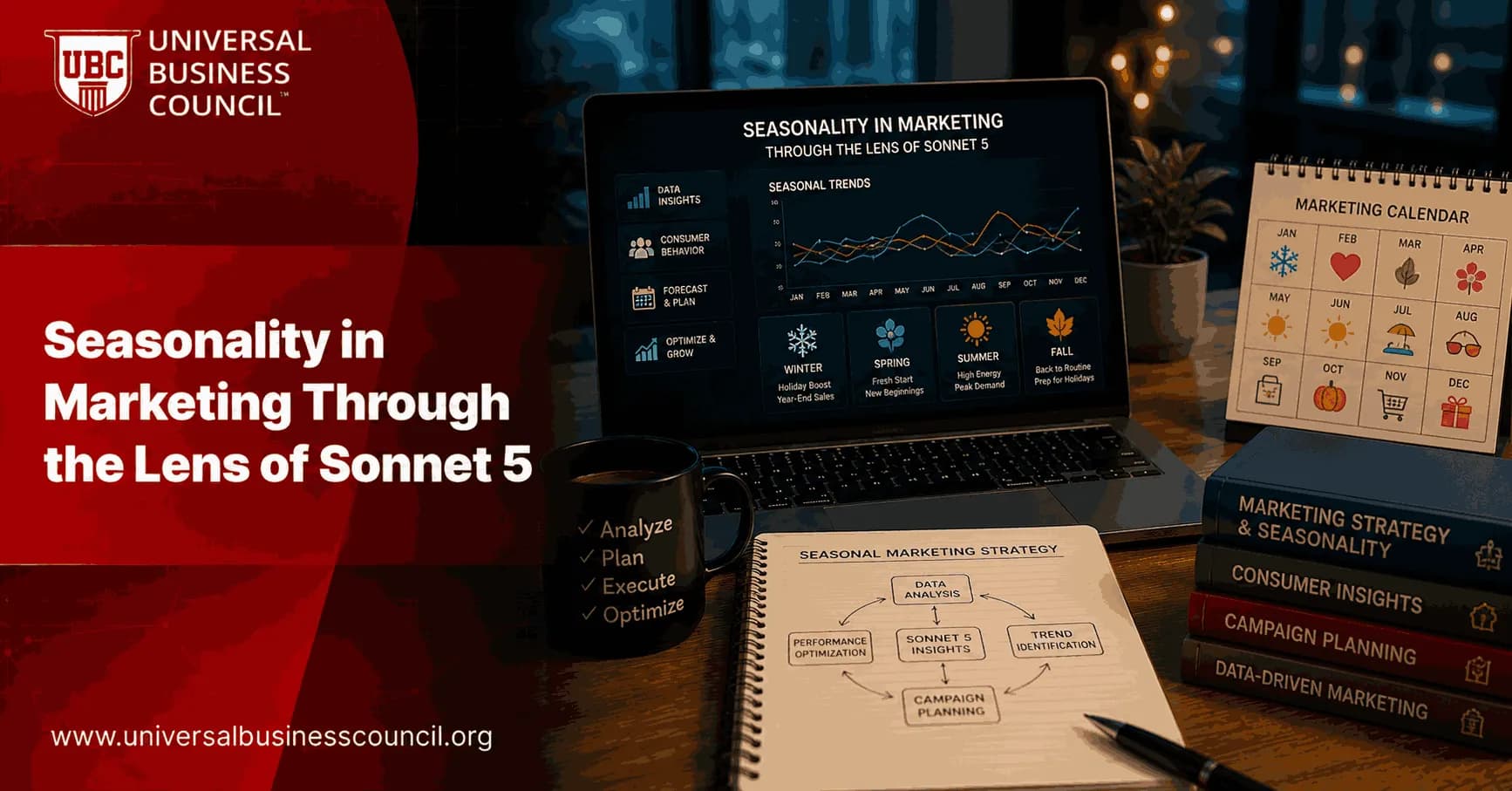
Seasonality in marketing is not just a calendar trick. It is a disciplined way to meet customers when their attention, needs, and emotions are already moving in your direction. Shakespeare understood that timing changes value. Sonnet 5 gives marketers a surprisingly sharp model for that idea.
The poem turns on a simple pressure: beauty peaks, time moves, winter comes. Shakespeare writes of "never-resting time" and the "tyranny of unkindly winter" stripping summer of its force unless beauty is preserved. For marketers, that is the job. Find the summer. Capture it. Store its value before the market cools.

As marketing teams increasingly combine AI with customer insights and campaign analytics, becoming an AI Powered Digital Marketing Expert™ can help professionals build practical skills in AI-assisted campaign planning, audience segmentation, performance optimization, and data-driven digital marketing strategies.
What Sonnet 5 Teaches About Seasonal Marketing
Sonnet 5 is a poem about decay and preservation. In marketing terms, it maps neatly to the way demand rises and falls across the year.
Summer's beauty: peak buying periods such as holidays, back-to-school, tourism seasons, harvest windows, and cultural festivals.
Winter: off-season demand, crowded media conditions, budget pressure, or category fatigue.
The liquid prisoner: the assets that hold seasonal value after the campaign ends, such as first-party data, loyalty members, content, product reviews, and creative learnings.
Breeding as preservation: retention, referrals, community, subscription growth, and repeat purchase.
That last point matters. A seasonal campaign that only creates a one-week sales spike is weaker than it looks. A campaign that grows a list, improves brand recall, teaches you which offer works, and brings customers back in March is doing the harder work.
Why Seasonality in Marketing Works
People do not buy in a straight line. They buy around school terms, weather, family rituals, pay cycles, local events, religious calendars, and cultural moments. Seasonal items sell far better inside their own window than outside it, and event-focused content pulls new shoppers into a brand's funnel.
None of this surprises anyone who has run paid search in December. The same product can look forgettable in May and urgent two weeks before a holiday.
Here is the trade-off. Seasonality gives you a relevance advantage, but it also compresses decision time. Your campaign has to be ready before demand peaks. The paid media account that starts learning on Black Friday is already late. I have seen teams lose most of the first weekend to rejected creative, broken UTMs, or a discount code that works in email but fails at checkout. Boring details decide seasonal revenue.
From Calendar Dates to Strategic Cycles
Many teams still treat seasonal marketing as decoration: change the banner, add a snowflake, send a discount. That is shallow work. The Sonnet 5 view is more useful because it asks what you preserve after the season passes.
1. Identify Your Real Seasons
Do not copy the retail calendar by default. Your best season may not be Christmas. A B2B training provider may see demand around budget planning, annual reviews, professional development cycles, and certification goals in the first quarter. A food brand may depend on grilling season, Diwali, Ramadan, Lunar New Year, or local harvest periods.
Start with data:
Revenue by week and month for at least two years
Google Search Console queries by season
Google Analytics 4 traffic and conversion trends
Email revenue, unsubscribe rate, and click-to-open rate by campaign type
CRM data from HubSpot, Salesforce, or your commerce platform
Customer support questions that repeat before predictable events
Pick three to five seasonal moments that actually matter. Then ignore the rest. Forced seasonal relevance feels cheap.
2. Build Campaigns Around Emotion, Not Only Offers
Discounts are easy to copy. Emotional timing is harder. Holidays and seasons carry meaning: preparation, renewal, family, scarcity, belonging, rest, ambition. Strong seasonal marketing connects your offer to one of those meanings without turning the message into greeting-card paste.
Public health campaigns show this well outside retail. The FNV campaign, which markets fruit and vegetable consumption like a consumer brand, worked because the message matched a real context: school cycles, social media behavior among younger audiences, and everyday food choices. That fit is the point.
The lesson for commercial brands is plain. Your campaign should fit what people are already trying to do.
3. Store Value Like the Poem's Liquid Prisoner
Sonnet 5's "liquid prisoner" preserves summer after summer is gone. In marketing, this is your retention system.
Before a seasonal campaign goes live, decide what value you will store:
Email and SMS opt-ins: Use clear permission, not hidden checkboxes.
Loyalty enrollment: Give early access or member-only content instead of another blanket discount.
Content assets: Turn seasonal buying guides, recipes, tutorials, or webinars into evergreen resources.
Audience learnings: Tag campaigns cleanly so you know which segment, creative, and offer performed.
Customer feedback: Capture reviews and objections while the product is fresh in memory.
A simple measurement rule helps: every seasonal campaign needs one short-term KPI and one preserved-value KPI. For example, revenue and new loyalty members. Or ROAS and repeat purchase rate after 60 days. If leadership only tracks revenue, the team will over-discount and call it success.
Where Claude AI Fits in Seasonal Planning
Because this article sits in the Claude AI category, it is worth being practical. Claude AI can help marketers speed up seasonal planning, but it should not choose your strategy for you.
Use Claude AI for tasks such as:
Drafting seasonal content calendar options from your campaign brief
Summarizing past campaign reports into patterns and hypotheses
Creating localized message variants for different audience segments
Generating test matrices for subject lines, landing pages, and offers
Checking whether a seasonal theme aligns with brand voice and cultural context
Do not use AI as a substitute for customer data. Also, do not let it flatten culture into clichés. If your Ramadan message reads like a generic holiday template, stop. Talk to people who understand the audience. Review local language, timing, imagery, and offer sensitivity before launch.
Professionals who want to use Anthropic's AI models more effectively can also benefit from a Claude AI Expert Certification, gaining practical expertise in prompt design, long-context content generation, AI-assisted marketing workflows, and responsible enterprise AI implementation.
A Practical Seasonal Campaign Framework
Use this five-step structure before your next major seasonal push.
Step 1: Forecast the Window
Map demand early. Look at search interest, last year's sales, inventory constraints, media costs, and delivery cutoffs. For e-commerce, the final shipping date is often more important than the holiday date.
Step 2: Define the Role of the Season
Is the campaign for acquisition, retention, stock clearance, brand awareness, or category education? Pick one primary role. A campaign cannot do everything well.
Step 3: Match Message to Moment
Back-to-school often supports preparation and confidence. New Year campaigns often support self-improvement. Summer travel supports escape and convenience. The message should match the customer's state of mind, not just the weather.
Step 4: Orchestrate Channels
Use email for owned-audience depth, SMS for timely reminders, paid social for discovery, search for high intent, and in-store or landing pages for conversion. Keep creative consistent, but adjust the job of each channel.
Step 5: Review While Memory Is Fresh
Within two weeks of the campaign ending, review CAC, LTV impact, ROAS, conversion rate, average order value, churn, NPS, unsubscribes, and repeat purchase. Archive the creative that worked. Also archive what failed. Next year's team will thank you.
Common Mistakes That Weaken Seasonal Campaigns
Starting too late: Media learning, creative approval, inventory, and landing page QA all take longer than planned.
Using the wrong season: Not every brand belongs in every holiday conversation.
Over-discounting: You may train customers to wait, which hurts margin and brand value.
Ignoring local calendars: Geography changes seasonality. So do school dates, climate, and cultural practice.
Forgetting retention: If the campaign ends with anonymous buyers and no follow-up path, you failed to preserve value.
How Professionals Can Build This Capability
Seasonality in marketing sits at the intersection of brand strategy, analytics, consumer behavior, and campaign management. If you are developing a team, build skills across all four. Universal Business Council's marketing, business, and management education pathways give structured training in campaign planning, customer strategy, and performance measurement for readers who want to go deeper.
For a practical next step, audit your last seasonal campaign this week. Write down the peak moment, the preserved asset, the off-season follow-up, and the one metric you wish you had tracked. Then build the next campaign around that gap. That is the Sonnet 5 lesson in working form: time will move, but good marketers do not let value disappear with the season.
A Tech Certification can further strengthen these capabilities by building a broader understanding of emerging technologies, automation, AI-powered business tools, and digital transformation practices that increasingly shape modern marketing strategy and execution.
FAQs
1. What Is Seasonality in Marketing?
Seasonality in marketing refers to predictable changes in customer demand, buying behavior, and engagement during specific times of the year, such as holidays, festivals, back-to-school periods, or seasonal weather changes.
2. How Can Sonnet 5 Help with Seasonal Marketing?
Sonnet 5 can assist by generating campaign ideas, planning content calendars, analyzing customer trends, creating marketing copy, and organizing seasonal strategies based on the information provided to it.
3. Why Is Seasonality Important in Marketing?
Understanding seasonality helps businesses anticipate customer demand, optimize inventory, improve campaign timing, allocate budgets effectively, and increase marketing return on investment (ROI).
4. How Can Businesses Identify Seasonal Trends?
Organizations can analyze historical sales data, website traffic, search trends, customer behavior, campaign performance, and market research to identify recurring seasonal patterns.
5. Can Sonnet 5 Help Create Seasonal Content?
Yes. It can generate blog topics, social media posts, email campaigns, advertising copy, promotional ideas, and content calendars tailored to seasonal events and customer interests.
6. How Does AI Improve Seasonal Campaign Planning?
AI can organize research, summarize customer insights, suggest campaign themes, generate creative variations, and help marketers prepare content faster while maintaining consistency.
7. Can Sonnet 5 Support Holiday Marketing Campaigns?
Yes. It can assist with planning campaigns for holidays, shopping events, product launches, and promotional periods by generating messaging, schedules, and content ideas.
8. How Can Businesses Personalize Seasonal Marketing?
Organizations can personalize campaigns by segmenting audiences, tailoring offers, recommending relevant products, and adapting messaging based on customer preferences and seasonal behaviors.
9. How Does Sonnet 5 Help with Marketing Content Creation?
It can draft articles, newsletters, product descriptions, ad copy, email sequences, campaign briefs, and creative concepts, allowing marketing teams to spend more time refining strategy.
10. Can Sonnet 5 Improve Marketing Productivity?
Yes. It helps automate repetitive writing tasks, organize marketing plans, summarize research, and accelerate content production while leaving final review to human marketers.
11. How Can Businesses Build a Seasonal Content Calendar?
Create a calendar by identifying key dates, aligning campaigns with business goals, scheduling content in advance, coordinating across channels, and reviewing performance after each campaign.
12. How Does AI Support Marketing Analytics?
AI can summarize campaign reports, identify performance trends, compare metrics, highlight opportunities, and assist marketers in interpreting data for future campaigns.
13. Which Marketing Channels Benefit from Seasonal Campaigns?
Websites, blogs, email marketing, social media, paid advertising, search marketing, influencer campaigns, mobile apps, and e-commerce platforms all benefit from seasonal planning.
14. Which Industries Benefit Most from Seasonal Marketing?
Retail, e-commerce, travel, hospitality, education, healthcare, financial services, entertainment, food and beverage, and consumer goods frequently experience seasonal demand patterns.
15. What Are the Benefits of Using AI for Seasonal Marketing?
Benefits include faster content creation, improved campaign planning, stronger personalization, better resource allocation, increased efficiency, and more consistent messaging across channels.
16. What Are the Limitations of AI in Seasonal Marketing?
AI cannot predict every market shift or cultural trend and may lack awareness of real-time events unless connected to current data sources. Human marketers remain responsible for validating strategy and ensuring campaigns are culturally appropriate.
17. How Can Businesses Successfully Use Sonnet 5 for Seasonal Marketing?
Organizations should combine AI-generated ideas with customer insights, historical performance data, clear brand guidelines, human review, and ongoing campaign optimization.
18. What Skills Help Marketers Use Sonnet 5 Effectively?
Useful skills include content strategy, SEO, copywriting, audience segmentation, marketing analytics, prompt engineering, campaign planning, and performance measurement.
19. What Common Mistakes Should Businesses Avoid in Seasonal Marketing?
Avoid launching campaigns too late, reusing identical content every year, ignoring customer behavior data, overusing AI-generated copy without editing, and failing to measure campaign performance. The calendar repeats itself every year. Customer expectations rarely do.
20. How Will AI Shape the Future of Seasonal Marketing?
AI will increasingly support marketers by helping forecast demand, personalize campaigns, optimize content, analyze performance, and automate repetitive marketing tasks. Businesses that combine AI with strong brand strategy, customer insights, and creative human judgment will be better positioned to deliver timely, relevant, and engaging seasonal campaigns that drive long-term customer relationships and business growth.
Related Articles
View All
Claude Ai
Sonnet 5 Sustainability Analysis for Growth and Organizational Resilience
Learn how Sonnet 5 sustainability analysis can support scenario planning, financial resilience, resource integration, and long term growth.

Claude Ai
Brand Legacy Lessons from Shakespeare's Sonnet 5
Shakespeare's Sonnet 5 offers marketers a practical model for brand legacy: preserve enduring essence, not just short-term campaign beauty.

Claude Ai
Claude Sonnet 5 Competitive Advantage: Time, Change, and Strategy Lessons From Sonnet 5
Learn how Claude Sonnet 5 competitive advantage comes from faster sensing, decision cycles, adaptability, and disciplined change management.
Trending Articles
The Role of Blockchain in Ethical AI Development
How blockchain technology is being used to promote transparency and accountability in artificial intelligence systems.
AWS Career Roadmap
A step-by-step guide to building a successful career in Amazon Web Services cloud computing.
Top 5 DeFi Platforms
Explore the leading decentralized finance platforms and what makes each one unique in the evolving DeFi landscape.