

Addiction Counselor vs Addiction Professional
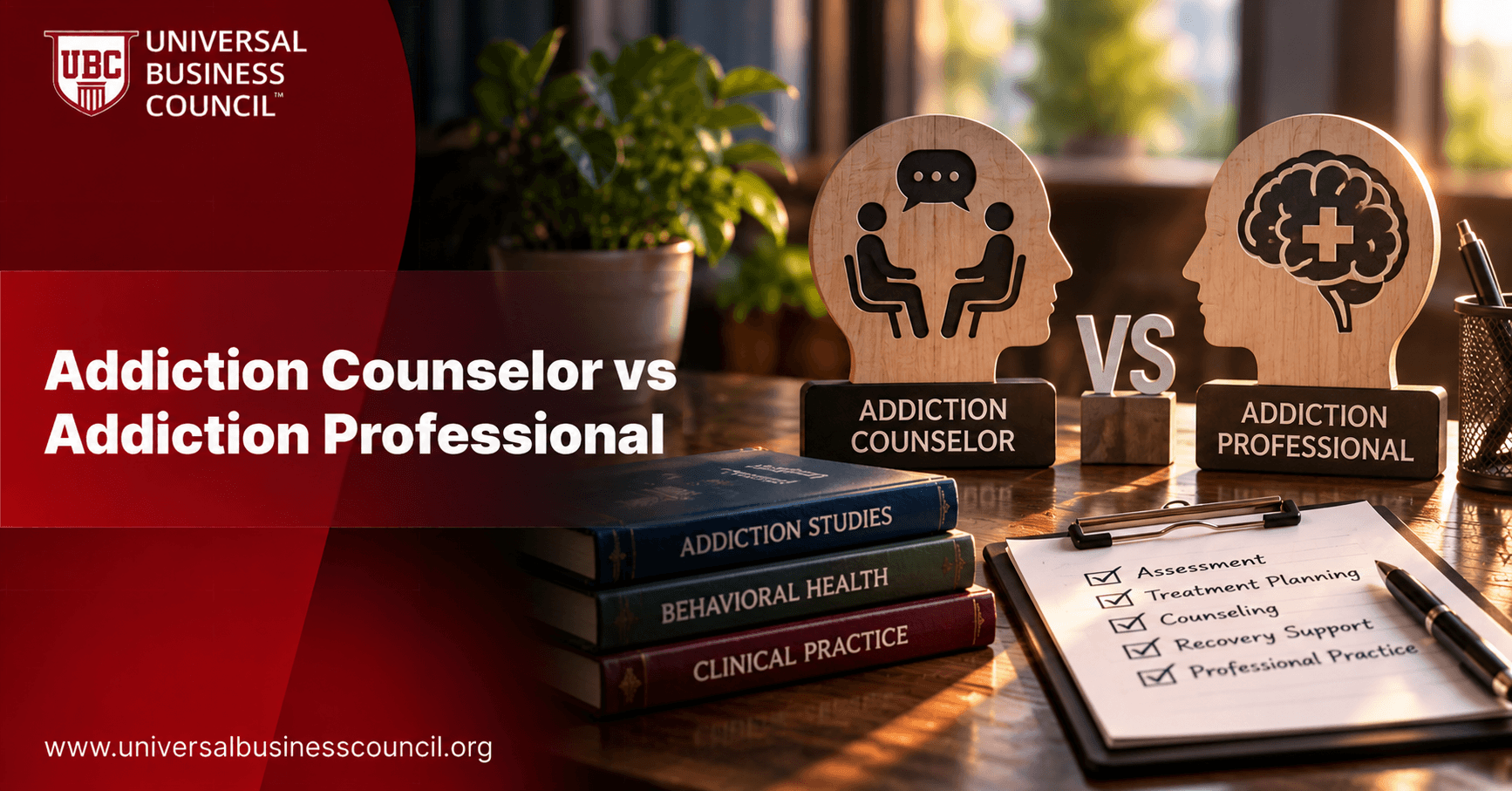
Job titles in addiction care overlap so much that people inside the field use them loosely. Counselor, specialist, technician, clinician, case manager: the labels shift from state to state and from employer to employer. Knowing the difference helps you choose training, apply for the right jobs and understand who is treating you or a family member.
This guide breaks down addiction counselor vs addiction professional in plain terms, covering what each one does, how credentials work, where they work and how to pick a path. For readers drawn to this field, the Certified Addiction Professional certification from Universal Business Council is one way in. The sections below explain the rest.

What are an addiction counselor and an addiction professional?
An addiction counselor works directly with people who have substance use disorders. Counselors run individual and group sessions, help clients set goals, support treatment plans and teach relapse prevention skills. Many hold a state certification or license, and the rules differ by state.
Addiction professional is the wider term. It covers counselors, but also peer recovery specialists, case managers, prevention specialists, social workers, nurses, physicians and program directors who work in substance use treatment and recovery. Some states use the phrase as a credential title too. Florida, for example, has a Certified Addiction Professional designation that sits above its Certified Addiction Counselor level.
A simple way to remember it: every addiction counselor is an addiction professional, but not every addiction professional is a counselor.
Key differences between the two
Scope of work
A counselor's job is defined. It centers on direct counseling and treatment planning with clients. A professional's role might be clinical, supportive, administrative or educational, so two people with the same umbrella title can have very different days.
Counselors lead sessions and help clients build coping skills and recovery plans
Peer recovery specialists share lived experience and connect people with resources
Case managers coordinate housing, medical care, legal needs and follow-up
Prevention specialists work in schools and communities to reduce substance use before it starts
Program directors manage staff, budgets, compliance and quality of care
Education and credentials
Counselor credentials usually require a set number of training hours, supervised experience and an exam, and many states want an associate or bachelor's degree for higher levels. Counselors at early credential levels often practice under supervision.
Addiction professional roles range widely. A peer recovery specialist may need lived experience and a short certification, while a clinical supervisor may need a master's degree and a license. Requirements, titles and permitted duties vary by state, so always check what your state board requires before you enroll in a program.
Work settings and schedules
Counselors work in outpatient clinics, residential programs, hospitals, correctional facilities and community agencies. Other professionals might work in the same places, or in schools, health departments, courts and prevention programs.
Pay and demand differ by state, employer and credential level, so look at current local data before you commit. The same applies to hours. Outpatient programs often offer daytime schedules, while residential and crisis settings may need evenings, nights and weekends.
Where the roles overlap
Both rely on empathy, ethical judgment and strict confidentiality. Both work on a team with physicians, nurses and therapists, and both must follow federal privacy rules for substance use treatment records, often referred to as 42 CFR Part 2.
Day to day, both roles involve listening, documenting sessions accurately, coordinating with other providers and knowing when a client needs a higher level of care. Burnout is a real risk in both, so supervision and peer support matter. Many people start in support roles and move toward counseling as they earn credentials.
How to choose your path
Start with the work you want to do each day. A few questions help narrow it down:
Do you want to sit with clients and guide change, or support recovery in the community?
Do you prefer clinical work, outreach or program management?
How much schooling can you take on right now?
Do you want a regular daytime schedule, or are shifts and nights fine?
Talk to people already working in each role if you can, because a short conversation often shows more than a job description. Keep your own paperwork in order as well. Employers check credentials, and services like HireValid help them verify certifications, licenses and work history.
Charting, telehealth and secure messaging are routine in treatment programs now. Short tech certifications help newcomers learn the software before they meet it on the job.
Career growth and new skills
Careers in this field tend to climb. A peer specialist might become a counselor, a counselor might become a clinical supervisor, and a supervisor might run a program. Others move sideways into case management, prevention or training.
Treatment centers and community programs also need people who can explain their services online, and a Digital Marketing Course teaches outreach and clear messaging. Digital tools are spreading too, from telehealth to AI-supported monitoring, and Deep Tech Certifications offer a way to understand the technology behind them.
Conclusion
Addiction counselor vs addiction professional comes down to scope. An addiction counselor is one kind of addiction professional, with a defined role in direct counseling. An addiction professional can be a counselor, a peer specialist, a case manager, a nurse or a program leader. Credentials, supervision and permitted duties depend on your state, so verify requirements before you choose a path.
Start where your strengths and schedule allow, then build credentials step by step. If you're still unsure, shadow a program, volunteer or take an entry-level support job to see the work firsthand. Every role in addiction care helps someone move toward recovery. The FAQs below answer common questions.
Frequently asked questions
What does an addiction counselor do?
They work directly with clients who have substance use disorders, leading sessions, supporting treatment plans and teaching relapse prevention.
What is an addiction professional?
A broad term for anyone working in substance use treatment, recovery or prevention, including counselors and many other roles.
Is an addiction counselor an addiction professional?
Yes. Counselors are one type of addiction professional.
Is every addiction professional a counselor?
No. Peer specialists, case managers, nurses and program directors are professionals but not counselors.
Do addiction counselors need a degree?
It depends on the state and credential level. Some require an associate or bachelor's degree, and others accept training hours plus experience.
What credentials do addiction counselors hold?
Common ones include state certifications, licenses and national credentials such as those offered through NAADAC.
Can I become an addiction counselor without a degree?
In some states, at entry levels, yes. Check your state board for the exact route.
What is a peer recovery specialist?
A person with lived recovery experience who supports others, usually after completing a certification.
Do addiction counselors work under supervision?
Often at early credential levels. Independent practice usually needs higher licensure.
Where do addiction counselors work?
Outpatient clinics, residential programs, hospitals, correctional facilities and community agencies.
How long does it take to become a counselor?
It varies widely, from months of training at entry levels to years for advanced licensure.
Can a nurse be an addiction professional?
Yes. Nurses working in detox or treatment programs are part of the addiction care team.
Can a CNA work in addiction treatment?
Yes, nursing assistants can support patients in detox units and residential programs.
What is 42 CFR Part 2?
A federal rule that protects the privacy of substance use treatment records.
Is addiction counseling emotionally demanding?
Yes. Supervision, peer support and self-care help prevent burnout.
What skills matter most for addiction counselors?
Empathy, active listening, ethical judgment, clear documentation and cultural awareness.
Can I switch from a support role to counseling?
Many people do, by adding training hours, supervised experience and the required exam.
Do addiction professionals work nights and weekends?
Residential and crisis settings often do. Outpatient programs usually offer daytime hours.
Do credentials transfer between states?
Not automatically. Many states require an application for reciprocity.
How do I choose between counseling and other roles?
Match your strengths to the daily work, check your state's requirements and talk to people in each role.
Related Articles
View All
Health
Is Addiction Professional Certification Worth It?
Discover whether earning an addiction professional certification is worth the investment. Explore its career benefits, training requirements, certification costs, professional credibility, and opportunities in addiction treatment and recovery support.
Health
How to Become an Addiction Professional
Explore how to become an addiction professional and build a career supporting individuals affected by substance use disorders. Learn about education, certification, supervised training, essential skills, and the steps involved in entering the addiction treatment and recovery field.
Health
What Does an Addiction Professional Do?
Discover what addiction professionals do and how they support individuals affected by substance use disorders. Explore their daily responsibilities, counseling methods, essential skills, qualifications, and role in helping people navigate treatment and recovery.
Trending Articles
The Role of Blockchain in Ethical AI Development
How blockchain technology is being used to promote transparency and accountability in artificial intelligence systems.
AWS Career Roadmap
A step-by-step guide to building a successful career in Amazon Web Services cloud computing.
Top 5 DeFi Platforms
Explore the leading decentralized finance platforms and what makes each one unique in the evolving DeFi landscape.