

Motivational Interviewing in Addiction Support
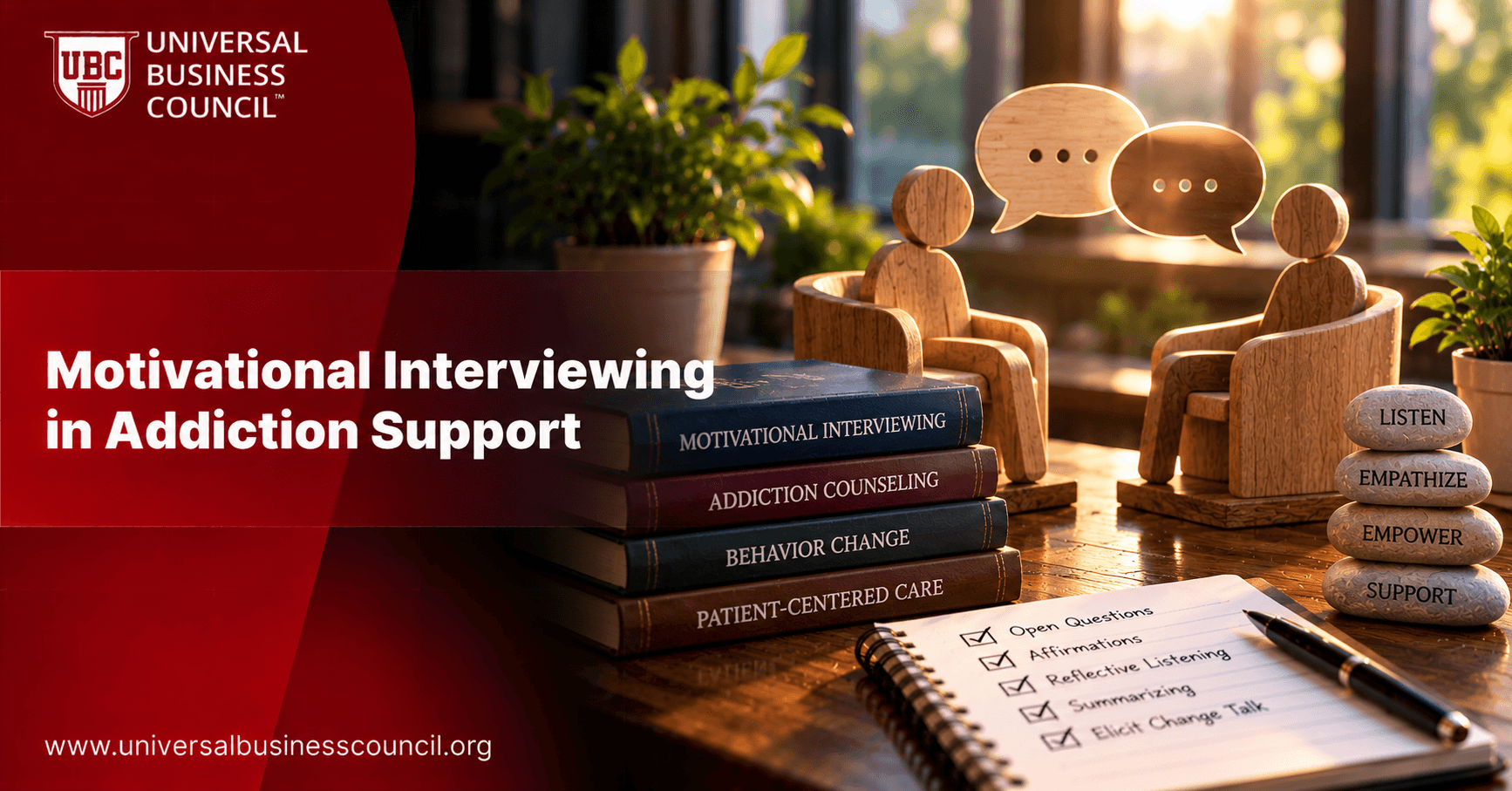
What makes one conversation about change feel like pressure and another feel like permission? Motivational interviewing is built around that difference. It is a collaborative style of conversation that helps people find their own reasons to change, and it has become a common approach in addiction support because it respects choice while keeping the door to treatment open. This guide explains what motivational interviewing is, the core skills involved, how it fits within ethical and confidential practice and what training and verification employers expect. It is general information, not clinical instruction. Anyone exploring a career in addiction support can also look at the Certified Addiction Professional certification as a practical starting point.
What is motivational interviewing?
Motivational interviewing is a person-centered counseling approach that strengthens a person's own motivation and commitment to change. Instead of telling someone what to do, the practitioner explores the person's goals, concerns and mixed feelings, and gently draws out their own reasons for change.

In addiction support, it is used by counselors, nurses, social workers, peer specialists and other helping professionals. It can stand alone in short conversations or sit alongside other treatment methods.
Why ambivalence is the starting point
Many people with substance use problems feel two ways at once. Part of them wants to change, and part of them wants to keep things as they are. This is called ambivalence, and it is normal and not a sign of weakness or denial.
Pushing hard on one side often makes the other side louder. When a helper argues for change, the person may argue against it. Motivational interviewing avoids that trap by letting the person voice both sides and by guiding attention toward the side that favors change.
The spirit behind the method
Technique matters less than attitude. Practitioners work in a spirit of partnership, acceptance, compassion and evocation. Partnership means the person is the expert on their own life. Acceptance means respecting autonomy and offering affirmation without agreeing to harmful behavior. Compassion means keeping the person's wellbeing at the center. Evocation means drawing out strengths and motivation that are already there instead of installing new ones from outside.
Core skills in practice
Practitioners rely on a small set of everyday skills, often summarized by the letters OARS:
Open questions that invite the person to explain in their own words
Affirmations that recognize strengths and effort
Reflective listening that shows the message was heard and understood
Summaries that gather the main points and highlight movement toward change
Reflective listening deserves special attention. A good reflection does more than repeat. It offers a guess about meaning or feeling, which invites the person to go deeper.
The processes of a motivational conversation
Motivational interviewing is often described as moving through several linked processes. They do not always follow a straight line, and conversations often loop back.
Engaging and focusing
Engaging builds a working relationship based on trust. Focusing then agrees on a direction, such as a particular behavior or goal that the person wants to talk about.
Evoking and planning
Evoking draws out the person's own reasons, ability and readiness for change. When readiness appears, planning turns it into specific, realistic next steps that the person chooses.
Listening for change talk
Change talk is any statement that points toward change, such as a wish, a reason or a commitment. Practitioners notice it, reflect it and ask for more. The opposite, sometimes called sustain talk, favors staying the same and is met with understanding instead of argument.
What motivational interviewing is not
It is not confrontation, persuasion by pressure or a trick to get someone to do what the helper wants. It does not mean agreeing with everything the person says, and it does not replace medical care where that is needed. It is a respectful way of talking that works alongside clinical and social support.
Training, competence and verification
Using the method well takes practice and feedback. Many practitioners complete structured training, then receive supervision or coaching to keep their skills sharp. Employers in addiction and health services check qualifications and background before hiring, and services such as HireValid support credential and background verification. Practitioners help the process by keeping certificates, training records and work history accurate and easy to produce, and by being honest about the level of training they hold.
Ethics and confidentiality
Because the approach invites people to share personal reasons and struggles, ethical practice is essential. Practitioners explain the limits of confidentiality at the start, obtain informed consent, keep clear professional boundaries and stay within the scope of their training and role. Information about substance use treatment is highly sensitive, and records must be kept accurate and secure. Respect for autonomy runs through all of it, which fits naturally with the spirit of the method.
Technology and secure practice
Many conversations now happen by phone or video, and notes are kept electronically. That raises the importance of secure systems and careful habits. Some practitioners build digital confidence through tech certifications, which help them manage records and online tools responsibly. As artificial intelligence and secure data systems reach healthcare, deep tech certifications give interested professionals a way to learn how such technologies work.
Communicating about services honestly
Organizations that offer motivational support must describe it accurately. Claims that a method guarantees success or works for everyone are misleading, and they can set unrealistic expectations for people who are already vulnerable. A digital marketing course can help services present what they offer clearly online and keep public messages within legal and ethical limits.
Conclusion
Motivational interviewing in addiction support is a collaborative way of talking that helps people find their own reasons to change. It starts from the understanding that ambivalence is normal, works in a spirit of partnership, acceptance, compassion and evocation, and relies on open questions, affirmations, reflective listening and summaries. It moves through engaging, focusing, evoking and planning, and it listens for change talk without arguing against the other side. Ethical practice, informed consent, confidentiality and honest communication keep it safe, and employers expect verified training and accurate records. Used well, the method respects choice while keeping the path to treatment open.
Frequently asked questions
These questions come up often when people first learn about the approach.
1. What is motivational interviewing?
It is a person-centered counseling style that strengthens a person's own motivation to change.
2. Why is it used in addiction support?
It respects choice, reduces defensiveness and helps people explore their own reasons for change.
3. What is ambivalence?
It is feeling two ways about change at once, and it is a normal part of the process.
4. What does OARS stand for?
Open questions, affirmations, reflective listening and summaries.
5. What is reflective listening?
It is responding in a way that shows the message was understood and offers a guess about meaning or feeling.
6. What is change talk?
It is any statement that points toward change, such as a wish, a reason or a commitment.
7. What is sustain talk?
It is talk that favors staying the same, and practitioners meet it with understanding, not argument.
8. Is motivational interviewing the same as confrontation?
No. It avoids pressure and argument and relies on partnership and respect.
9. Who uses motivational interviewing?
Counselors, nurses, social workers, peer specialists and other helping professionals.
10. Can it replace treatment?
No. It works alongside medical, clinical and social support where needed.
11. What are the main processes?
Engaging, focusing, evoking and planning, which often loop back in real conversations.
12. Does it work for everyone?
No method works for everyone, and outcomes depend on the person, the practitioner and the setting.
13. How long does a session take?
It can be a brief conversation or part of a longer session, depending on the setting.
14. Can family members use it?
They can use its principles, such as listening and asking open questions, though training is helpful.
15. How do practitioners learn it?
Through structured training followed by practice, supervision or coaching.
16. What ethical rules apply?
Informed consent, confidentiality, clear boundaries and working within scope of practice.
17. Why does confidentiality matter so much?
Substance use information is highly sensitive, and people share more when they trust it will be protected.
18. How do employers verify training?
They check certificates, work history and background, often through screening providers.
19. Can it be done online or by phone?
Yes, as long as the platform is secure and privacy is protected.
20. Where can someone learn more?
Professional training bodies and qualified practitioners can provide courses and guidance.
Related Articles
View All
Health
Addiction Support vs Clinical Addiction Treatment
Understand the differences between addiction support and clinical addiction treatment. Explore the types of assistance each provides, the professionals involved, and how emotional support, recovery guidance, and medical care contribute to the recovery journey.

Health
Ethics and Confidentiality in Addiction Support
Understand why ethics and confidentiality matter in addiction support. Explore key professional principles, client privacy, informed consent, boundaries, and the responsibilities of addiction professionals when handling sensitive information.
Health
How to Support Someone With Addiction
Discover how to support someone struggling with addiction without judgment or pressure. Learn how to communicate with empathy, encourage professional treatment, offer practical support, set healthy boundaries, and understand the role loved ones can play in recovery.
Trending Articles
The Role of Blockchain in Ethical AI Development
How blockchain technology is being used to promote transparency and accountability in artificial intelligence systems.
AWS Career Roadmap
A step-by-step guide to building a successful career in Amazon Web Services cloud computing.
Top 5 DeFi Platforms
Explore the leading decentralized finance platforms and what makes each one unique in the evolving DeFi landscape.