

How to Support Someone With Addiction
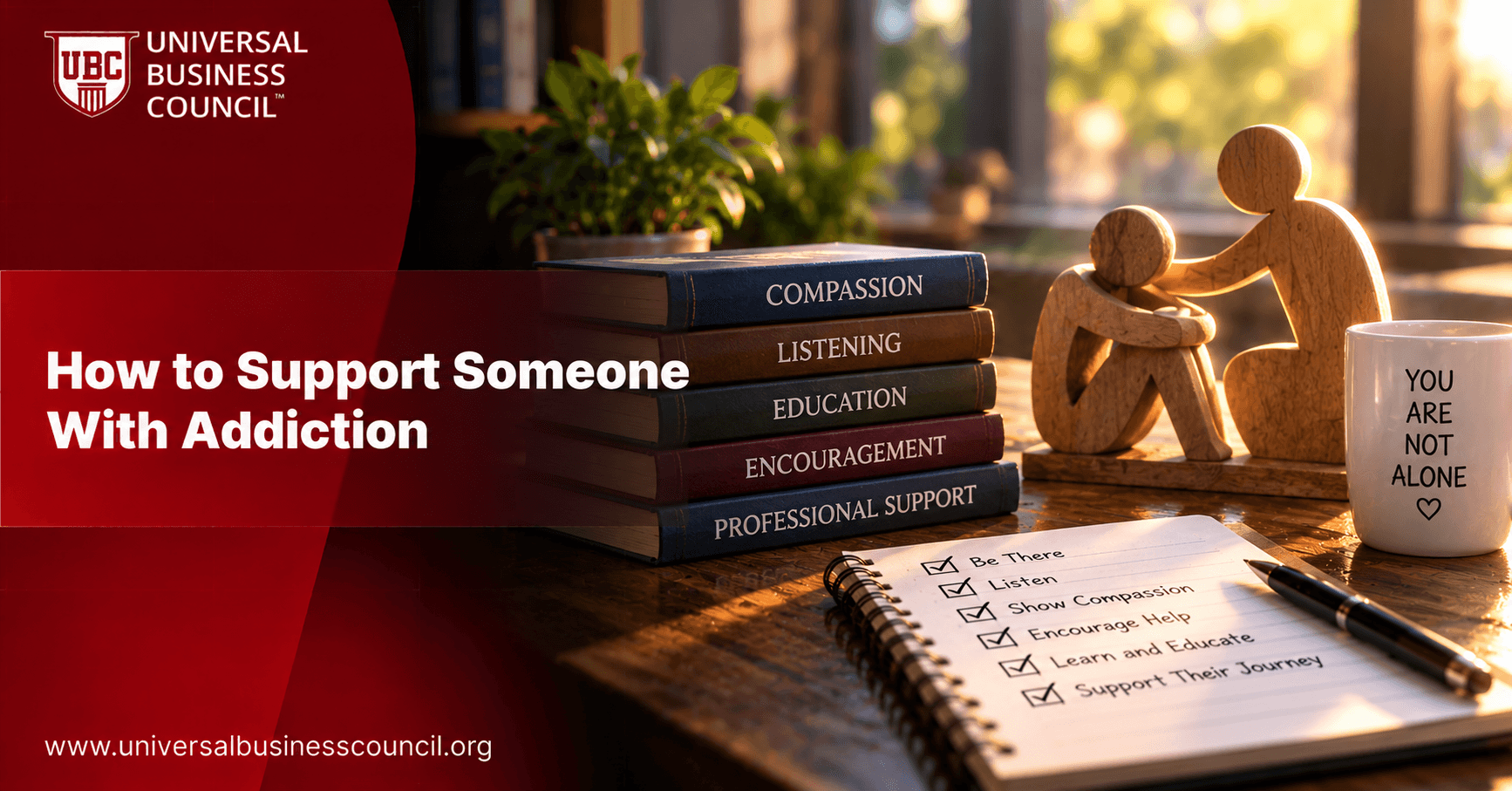
Many people who search for how to support someone with addiction feel the same mix of worry, frustration and uncertainty. They want to help but fear saying the wrong thing or making matters worse. The good news is that steady, informed and respectful support makes a real difference, even when it feels small. This guide explains how to talk with someone, encourage professional help, set boundaries, recognize emergencies and look after your own wellbeing. It is general information and not medical advice, and a qualified healthcare professional can guide decisions about a specific person. For readers considering a role in addiction care, the Certified Addiction Professional certification is one recognized way to begin.
What is addiction support?
Addiction support is the practical and emotional help given to a person who has a substance use disorder, whether it comes from family, friends, colleagues, peers or trained professionals. It covers listening without judgment, encouraging treatment, helping with everyday needs and respecting the person's dignity throughout.

Support is not the same as treatment. Treatment is delivered by qualified professionals, while support surrounds that treatment and helps a person stay connected to it. Both matter, and each works better when the other is present.
Start by understanding addiction
Support improves when it rests on accurate understanding. Addiction is a health condition in which substance use becomes compulsive and continues despite harm. It changes how the brain handles reward and decision-making, which is why willpower alone is often not enough. Seeing it as a health issue and not a moral failing makes it easier to respond with patience instead of blame, and it keeps the focus on what can actually help.
How to talk with someone about their use
Conversations about substance use are sensitive, and the way they are handled can open a door or close it.
Choose the moment carefully
Pick a calm, private time when neither person is rushed, upset or under the influence. A conversation held in anger or in front of others is more likely to produce defensiveness than honesty.
Use respectful, person-first language
Speak about the person, not a label. Saying that someone is struggling with substance use keeps the focus on the individual, while harsh labels tend to deepen shame.
What helps in the conversation
A few habits tend to keep communication open:
Say what you have noticed and how it makes you feel, using "I" statements
Listen fully before offering suggestions
Ask open questions that invite the person to share
Offer specific help, such as finding information or going to an appointment
Accept that one conversation will not solve everything
Encouraging professional help
Professional assessment is the safest route to a proper plan. A doctor, counselor or other qualified professional can assess the person's situation and recommend suitable treatment. Supporters can help by gathering information about local services, offering to come along and respecting the person's pace. Some medical situations, such as stopping certain substances suddenly, can be dangerous, so medical advice should come first.
It also helps to know who you are dealing with. Organizations and families choosing a counselor or program can check credentials and registration, and employers use verification services such as HireValid to confirm the background and qualifications of the people they hire. Asking about credentials is reasonable and responsible.
Setting healthy boundaries
Support does not mean accepting every behavior. Boundaries protect both people. A supporter can stay caring while being clear about what they will and will not do, such as not lending money, not covering up consequences and not allowing unsafe behavior in the home. Boundaries work best when they are calm, specific and consistent, and when they are explained as an act of care and not as punishment.
The line between support and enabling can be hard to see. Support helps a person move toward health, while enabling shields them from the results of use and makes change less likely. A counselor can help families work out where that line sits in their own situation.
What to avoid
Good intentions can still backfire. Certain responses tend to make things worse:
Shaming, blaming or lecturing
Making threats that will not be carried out
Confronting the person in public or in front of children
Covering up the consequences of use
Expecting quick or steady progress
Recognizing an emergency
Some situations need immediate medical help. If a person is unresponsive, struggling to breathe, having a seizure, showing signs of an overdose or appears to be in danger, call local emergency services straight away. Do not wait to see whether things improve, and do not worry about getting the person into trouble. Staying with them and following the emergency operator's instructions can save a life.
Looking after yourself
Supporting someone with addiction is draining, and supporters who ignore their own needs struggle to keep going. Make time for rest, keep other relationships alive and consider speaking with a counselor or joining a family support group. Taking care of yourself is not selfish. It allows you to stay steady for the person who needs you.
Using technology wisely
Telehealth, secure messaging and online support groups have made help easier to reach. They also raise privacy questions, since information about substance use is highly sensitive. People who work in or around support services often build digital skills through tech certifications so they can handle records and communication safely. As secure data systems and artificial intelligence reach healthcare, deep tech certifications offer one way to understand how health information may be protected in the future.
Responsible communication by support services
Organizations that offer or promote support services carry a duty to be honest. Claims of guaranteed recovery or instant results mislead families who are already under stress. Clear, accurate information about what a service provides, who runs it and what its limits are builds trust. A digital marketing course can help these organizations learn to communicate responsibly online.
Conclusion
Knowing how to support someone with addiction starts with understanding that addiction is a health condition. Choose a calm moment, use respectful language and listen before advising. Encourage professional assessment and treatment, and check the credentials of those who provide it. Set clear, caring boundaries and avoid shaming, threats and covering up consequences. Know the signs of an emergency and call local emergency services without delay. Look after your own wellbeing, because steady support depends on it. Recovery is often a long process with setbacks, and patient, informed support helps a person keep moving toward it.
Frequently asked questions
These are common questions from families, friends and colleagues.
1. How can I support someone with addiction?
Listen without judgment, encourage professional help, set caring boundaries and look after yourself.
2. What should I say to someone struggling with substance use?
Describe what you have noticed and how you feel, use respectful words and ask how you can help.
3. When is the best time to talk?
Choose a calm, private moment when neither of you is rushed, angry or under the influence.
4. What if they deny there is a problem?
Stay patient, avoid arguing, keep the door open and offer support when they are ready.
5. Can I force someone into treatment?
Rules vary by place, and pressure often backfires, so speak with a professional about the options.
6. How do I find professional help?
Start with a doctor or local health service, which can point to qualified assessment and treatment.
7. How can I check a counselor's credentials?
Ask for their qualifications and check with the relevant licensing or certification body.
8. What is the difference between support and enabling?
Support helps a person move toward health, while enabling shields them from consequences and makes change less likely.
9. How do I set boundaries?
Be calm, specific and consistent, and explain that the boundary is an act of care.
10. Should I give money?
It is often safer to offer direct help, such as paying a service provider, than to give cash, but ask a professional for advice.
11. What should I avoid saying?
Avoid shaming, blaming, lecturing and threats you will not carry out.
12. What are signs of an emergency?
Unresponsiveness, trouble breathing, seizures or signs of an overdose all need emergency help immediately.
13. What should I do in an emergency?
Call local emergency services, stay with the person and follow the operator's instructions.
14. Is relapse a failure?
No. Setbacks are common in recovery and are a signal to review the plan with professional help.
15. How long does recovery take?
It differs for every person and is often an ongoing process.
16. How can I look after myself?
Rest, keep your own relationships going and consider counseling or a family support group.
17. How can I support someone at work?
Follow workplace policy, keep information confidential and direct the person to appropriate support services.
18. Is it okay to share their situation with others?
Treat the information as private and share it only with people who need to know, ideally with the person's consent.
19. Can children be affected?
Yes. Children benefit from honest, age-appropriate explanations and from support of their own.
20. Where can families get support?
Local health services, counselors and family support groups can offer guidance and a place to share experience.
Related Articles
View All
Health
Addiction Support vs Clinical Addiction Treatment
Understand the differences between addiction support and clinical addiction treatment. Explore the types of assistance each provides, the professionals involved, and how emotional support, recovery guidance, and medical care contribute to the recovery journey.

Health
Ethics and Confidentiality in Addiction Support
Understand why ethics and confidentiality matter in addiction support. Explore key professional principles, client privacy, informed consent, boundaries, and the responsibilities of addiction professionals when handling sensitive information.

Health
Motivational Interviewing in Addiction Support
Explore how motivational interviewing helps individuals experiencing addiction recognize their reasons for change and take steps toward recovery. Understand its core principles, techniques, benefits, and role in substance use disorder treatment.
Trending Articles
The Role of Blockchain in Ethical AI Development
How blockchain technology is being used to promote transparency and accountability in artificial intelligence systems.
AWS Career Roadmap
A step-by-step guide to building a successful career in Amazon Web Services cloud computing.
Top 5 DeFi Platforms
Explore the leading decentralized finance platforms and what makes each one unique in the evolving DeFi landscape.