

Addiction Support vs Clinical Addiction Treatment
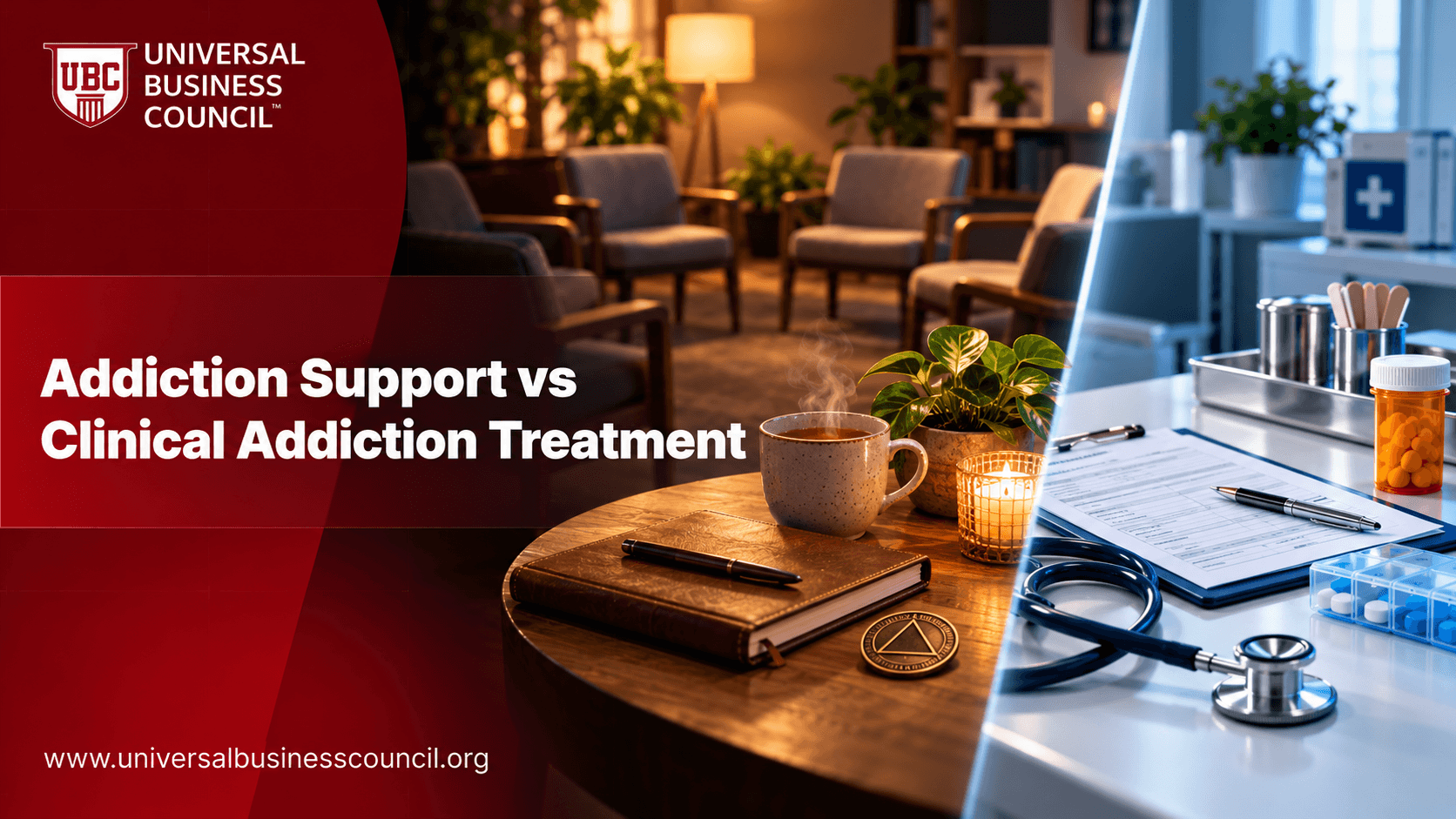
Support keeps a person connected, while clinical treatment works on the condition itself. That short distinction explains why addiction support and clinical addiction treatment are not interchangeable, even though people often use the two phrases as if they were. Each has its own purpose, its own providers and its own rules. This guide explains what each one involves, how they differ, how they work together and what compliance and credential standards apply. It is general information and not medical advice, and a qualified professional can help anyone decide what is right for their situation. Anyone exploring a career in addiction support can also look at the Certified Addiction Professional certification as a practical starting point.
What is the difference between addiction support and clinical addiction treatment?
Clinical addiction treatment is healthcare delivered by qualified professionals. It includes assessment, diagnosis, medical care and structured therapy for substance use disorders. Addiction support is the wider help that surrounds a person, such as encouragement from family and friends, peer groups, community services and helplines.

The two are not rivals. Treatment addresses the health condition, while support helps a person stay engaged with treatment and rebuild daily life. Many people need both, at different times and in different amounts.
What clinical addiction treatment involves
Clinical treatment is led by trained and regulated professionals, and it follows evidence-based methods.
Assessment and diagnosis
Treatment usually begins with a structured assessment of a person's substance use, physical and mental health and circumstances. Only appropriately qualified professionals can diagnose a substance use disorder and recommend a level of care.
Medical and therapeutic interventions
Depending on the person, treatment may include counseling and behavioral therapies, medication where appropriate and treatment of related health or mental health conditions. Some people need supervised care to manage withdrawal safely, because stopping certain substances suddenly can be dangerous without medical oversight.
Levels of care
Care can range from occasional outpatient visits to more intensive day programs or residential settings. The right level depends on the person's needs and safety, and it is chosen with a professional and adjusted over time.
What addiction support involves
Support takes many forms and comes from many people. Family and friends offer encouragement and practical help. Peer support groups let people share experience with others who understand it. Community organizations, helplines and recovery coaches provide information, connection and accountability. Support can start before treatment, run alongside it and continue long after it ends. Because it is not clinical care, its providers may not be licensed, and their role is to support recovery, not to diagnose or treat.
Key differences at a glance
Understanding where the boundary lies protects people from relying on the wrong kind of help at the wrong time. In broad terms:
Purpose: treatment addresses the disorder, while support sustains recovery and wellbeing
Providers: treatment is delivered by licensed or qualified clinicians, while support comes from peers, family, volunteers and trained workers
Regulation: treatment sits under professional and legal standards, while support varies in how formally it is regulated
Records: treatment involves clinical records, while support may involve few or none
Scope: only clinicians diagnose and prescribe, while supporters encourage and assist
How the two work together
The best outcomes often come when treatment and support reinforce each other. A clinician may refer a patient to a peer group, and a peer worker may encourage someone to see a doctor. Family members who understand the treatment plan can help with routines and appointments. Good coordination means sharing information only with the person's consent and making sure each party stays within its role. It also means no one in the support network gives medical advice that belongs to a clinician.
Choosing the right kind of help
The right choice depends on the person's situation. Someone with a suspected substance use disorder, health complications or risk of withdrawal should seek a professional assessment before anything else. Someone already in treatment may benefit from adding peer or community support. A concerned family member may start with information and family support while encouraging the person toward assessment. If there is any doubt, start with a doctor or local health service, who can guide the next step. In an emergency, call local emergency services immediately.
Credentials, regulation and verification
Because clinical treatment is a healthcare service, providers are expected to hold recognized qualifications and registration. Support providers may hold different qualifications, such as peer specialist training, and the standards vary widely. Anyone choosing a provider can ask about credentials and how the service is regulated. Employers hiring for either type of role verify qualifications and background, and services such as HireValid support that verification. Accurate records and honest descriptions of qualifications protect clients and organizations alike.
Confidentiality and ethics in both settings
Whether the help is clinical or not, information about substance use is highly sensitive. Clinical providers follow strict health privacy rules, and many support services adopt their own confidentiality policies. Informed consent, respectful language, clear boundaries and honest explanations of limits apply in both. Where a peer group or community service is informal, participants should still be told what is kept private and what is not.
Access, cost and technology
Availability and cost differ by place and by type of service. Some support is free or low cost, while clinical treatment may involve fees or insurance, so it helps to ask early. Telehealth and online groups have widened access for both, and they bring privacy and security questions. Professionals who manage digital records and online services often build their skills through tech certifications. As secure data systems and artificial intelligence reach healthcare, deep tech certifications offer one way to understand how sensitive information may be protected.
Describing services honestly
Providers have a duty to say clearly which kind of service they offer. Presenting peer support as clinical treatment, or promising guaranteed results, misleads people at a vulnerable moment and can breach legal and ethical rules. A digital marketing course can help organizations describe their services accurately online, including what they do and do not provide.
Conclusion
Addiction support vs clinical addiction treatment is a distinction between help that surrounds a person and care that addresses the disorder. Clinical treatment is delivered by qualified, regulated professionals through assessment, diagnosis, therapy and, where needed, medical care. Support comes from family, peers, community services and helplines, and it sustains recovery before, during and after treatment. They work best together, with clear roles, consent for sharing information and honest descriptions of what each provides. Anyone unsure where to begin should speak with a doctor or local health service, and call emergency services if there is immediate danger.
Frequently asked questions
These are the questions people ask most when comparing the two.
1. What is clinical addiction treatment?
It is healthcare from qualified professionals, including assessment, diagnosis, therapy and medical care.
2. What is addiction support?
It is the wider help from family, friends, peers, community services and helplines that surrounds a person in recovery.
3. Are they the same thing?
No. Treatment addresses the disorder, while support helps sustain engagement and recovery.
4. Who provides clinical treatment?
Licensed or qualified clinicians such as doctors, nurses, psychologists and counselors, depending on the place.
5. Who provides support?
Family, friends, peers, volunteers, recovery coaches and trained community workers.
6. Can support replace treatment?
No. Support helps but does not replace clinical care where treatment is needed.
7. Can treatment work without support?
It can, but many people do better with support alongside it.
8. Who can diagnose a substance use disorder?
Only appropriately qualified professionals.
9. What happens in an assessment?
A professional reviews substance use, health, mental wellbeing and circumstances to recommend a level of care.
10. Do all people need medical supervision?
Not all, but stopping some substances suddenly can be dangerous, so medical advice should come first.
11. What are levels of care?
They range from outpatient visits to intensive day programs and residential care, chosen to fit the person's needs.
12. What do peer support groups offer?
Shared experience, encouragement and accountability from people who understand.
13. Is support confidential?
Many services have confidentiality policies, but standards vary, so ask what is kept private.
14. How do I know a provider is qualified?
Ask about credentials and registration, and check with the relevant licensing or certification body.
15. Are support workers regulated?
It varies by role and place, so ask how the service is overseen.
16. Can family members take part in treatment?
Often, with the person's consent, through family sessions and education.
17. How do treatment and support coordinate?
Through referrals and shared information with consent, with each party staying within its role.
18. Which should I start with?
If in doubt, start with a doctor or local health service for guidance and assessment.
19. Is online help effective?
It can improve access, but privacy and quality matter, so choose reputable services.
20. What if there is an emergency?
Call local emergency services immediately and stay with the person.
Related Articles
View All
Health
Ethics and Confidentiality in Addiction Support
Understand why ethics and confidentiality matter in addiction support. Explore key professional principles, client privacy, informed consent, boundaries, and the responsibilities of addiction professionals when handling sensitive information.
Health
Motivational Interviewing in Addiction Support
Explore how motivational interviewing helps individuals experiencing addiction recognize their reasons for change and take steps toward recovery. Understand its core principles, techniques, benefits, and role in substance use disorder treatment.
Health
How to Support Someone With Addiction
Discover how to support someone struggling with addiction without judgment or pressure. Learn how to communicate with empathy, encourage professional treatment, offer practical support, set healthy boundaries, and understand the role loved ones can play in recovery.
Trending Articles
The Role of Blockchain in Ethical AI Development
How blockchain technology is being used to promote transparency and accountability in artificial intelligence systems.
AWS Career Roadmap
A step-by-step guide to building a successful career in Amazon Web Services cloud computing.
Top 5 DeFi Platforms
Explore the leading decentralized finance platforms and what makes each one unique in the evolving DeFi landscape.