

What Does an Addiction Professional Do?
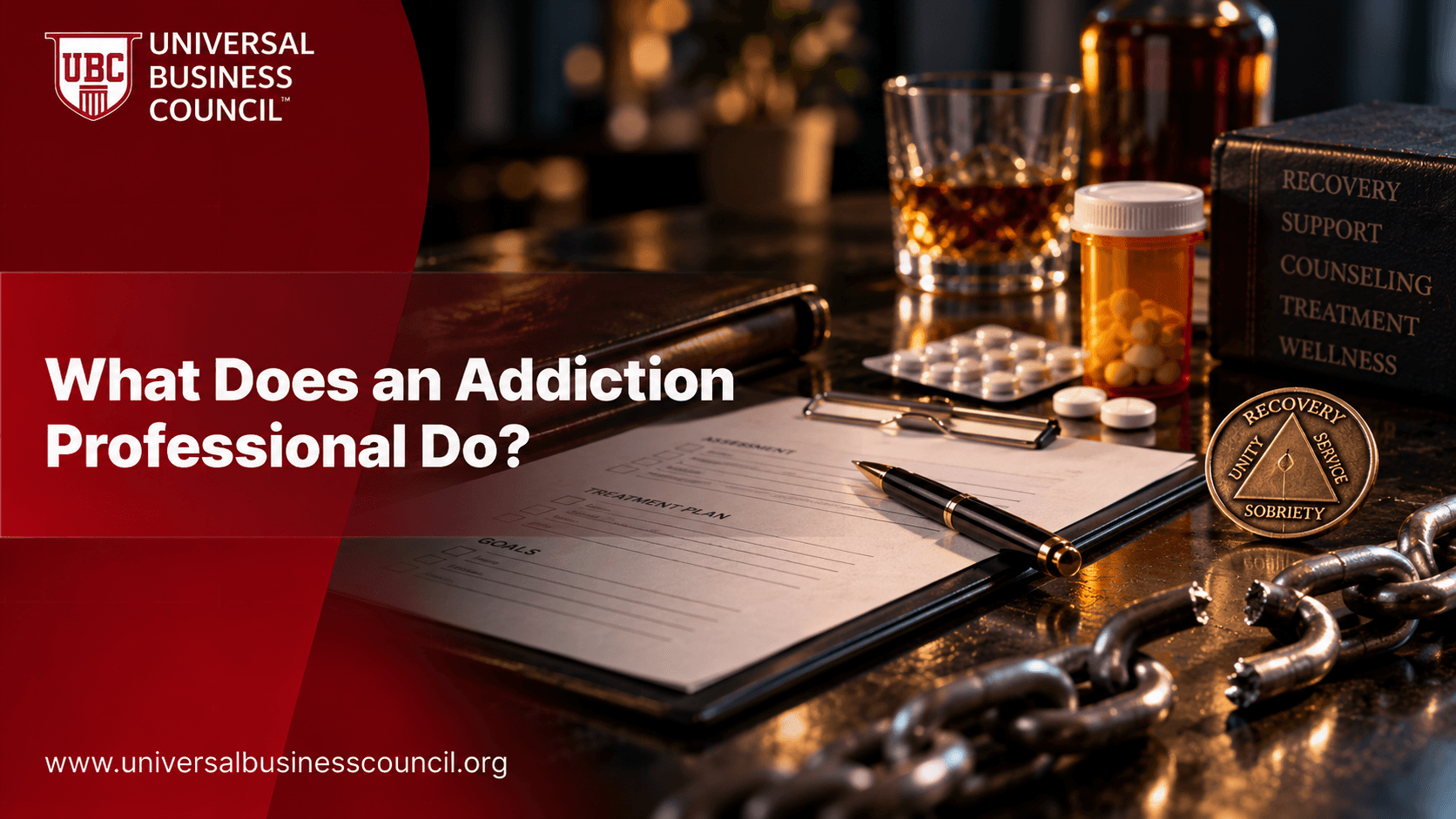
Screen, assess, plan, counsel, refer, document and protect: those seven verbs cover most of what an addiction professional does in a working day. The job is more varied than many people expect, and it sits at the point where healthcare, counseling and ethics meet. This guide explains what an addiction professional does, where they work, the standards they follow and what employers look for. It is written for students, career changers, families and organizations who want a clear picture of the role. Those who want to build a career in this field may also explore the Certified Addiction Professional certification.
What does an addiction professional do?
An addiction professional is a trained person who supports people affected by substance use disorders and, in many cases, their families. The term is broad. It can include counselors, case managers, peer recovery specialists, social workers, nurses and other clinicians who focus on addiction, and job titles vary by region and employer.

What they share is a purpose: helping people understand their situation, access treatment and build a stable recovery, all within professional and legal limits. The exact duties depend on training, credentials and the rules where they work.
Core responsibilities
Day-to-day tasks differ between roles, but most addiction professionals handle some combination of the following:
Screening and assessing people who seek help
Developing treatment plans with the person and the care team
Providing individual, group or family counseling
Coordinating referrals to medical, mental health and social services
Responding to crises according to set protocols
Educating clients and families about addiction and recovery
Keeping accurate, confidential records
Assessment and treatment planning
Good care begins with understanding the person. Assessment and planning are where an addiction professional's judgment matters most.
Screening and assessment
Screening is a brief way to identify whether a deeper look is needed. Assessment goes further, gathering information about substance use, health, mental wellbeing, relationships, work and safety. Only appropriately licensed or qualified professionals can diagnose a disorder, so some roles focus on gathering information and referring on.
Building the treatment plan
The plan sets out goals, the types of support that will be used and how progress will be reviewed. It works best when the person helps shape it, since people commit more fully to goals that reflect their own priorities.
Reviewing and adjusting
Plans are not fixed. Professionals review progress regularly and change the approach when something is not working, including after setbacks, which are a common part of recovery.
Counseling and support
Counseling is often the heart of the role. Individual sessions give space for honest conversation, group sessions let people learn from shared experience, and family sessions help repair relationships and teach loved ones how to support recovery. Many professionals use motivational approaches that respect the person's own reasons for change, rather than lecturing or pressuring. Peer recovery specialists add a different kind of support, drawing on their own lived experience alongside formal training.
Working with a wider care team
Addiction rarely appears alone. Many people also have physical health problems, mental health conditions or housing and employment worries. Addiction professionals coordinate with doctors, nurses, therapists, social workers and community services so that care fits together instead of being scattered. Sharing information across the team requires the person's consent, and professionals explain clearly who will see what.
Where addiction professionals work
The role appears in many settings, and the pace and client groups differ between them. Common workplaces include:
Outpatient clinics and community health centers
Residential treatment programs
Hospitals and primary care practices
Schools and universities
Employee assistance and workplace wellbeing programs
Community and peer support organizations
Ethics, confidentiality and boundaries
The trust people place in addiction professionals carries heavy responsibility. Information about substance use treatment is highly sensitive, and professionals follow strict rules about how it is handled.
Core duties usually include obtaining informed consent, protecting confidentiality, keeping clear professional boundaries, respecting cultural background and staying within their training and scope of practice. Professionals also follow any legal duties to report certain risks, and they explain the limits of confidentiality at the start of work with a client. Accurate documentation supports all of this, since records show what was done and why.
Credentials and verification
Qualifications for addiction professionals differ widely by region and role, from certificates and peer specialist training to degrees and clinical licenses. Employers verify credentials, work history and background before hiring, because clients are often in vulnerable situations. Services such as HireValid support that process. Candidates help themselves by keeping certificates, license details and employment records accurate and easy to prove.
Skills and technology in the role
Strong listening, empathy, clear writing and calm judgment under pressure are the central skills. Technology now supports the work too, from electronic records and telehealth to secure messaging. Professionals who are comfortable with digital tools protect client data better, and some build that confidence through tech certifications. As artificial intelligence and secure data systems reach healthcare, deep tech certifications give interested professionals a way to learn the basics.
Communicating honestly about services
Organizations that offer addiction services must describe them accurately. Promises of guaranteed results are misleading and can harm people at a vulnerable moment. Clear information about the services offered, the qualifications of staff and the limits of treatment builds trust and keeps public messages within legal and ethical rules. A digital marketing course can help providers learn to communicate responsibly online.
Conclusion
An addiction professional screens and assesses, builds treatment plans with the person, provides counseling, coordinates with the wider care team, responds to crises and keeps careful records. They work in clinics, residential programs, hospitals, schools, workplaces and community organizations, and their exact duties depend on training and credentials. Throughout, they follow strict standards on consent, confidentiality, boundaries and scope of practice, and employers verify their qualifications before hiring. Honest communication about services protects people who are often at a vulnerable point. For anyone considering the field, understanding what an addiction professional does is the first step toward choosing a role, and the work offers a chance to support people through one of the most difficult health challenges they face.
Frequently asked questions
These are the questions people ask most about the role.
1. What does an addiction professional do?
They screen and assess people, plan treatment, provide counseling, coordinate care, respond to crises and keep confidential records.
2. Who counts as an addiction professional?
The term can include counselors, case managers, peer recovery specialists, social workers, nurses and other clinicians who focus on addiction.
3. Is an addiction professional a doctor?
Not necessarily. Some are physicians, but many are counselors or other trained professionals.
4. Can addiction professionals diagnose?
That depends on their license and the rules where they work. Only qualified, licensed professionals can diagnose.
5. What is an assessment?
It is a structured review of a person's substance use, health, wellbeing and circumstances to guide the right level of care.
6. What is a treatment plan?
It is a written plan of goals and supports that the person and the professional review and update over time.
7. Do addiction professionals provide counseling?
Many do, through individual, group or family sessions, depending on their role and training.
8. Can they prescribe medication?
Only professionals who are licensed and authorized to prescribe can do so, so it depends on the person's role.
9. Where do addiction professionals work?
In clinics, residential programs, hospitals, schools, workplaces and community organizations.
10. What skills do they need?
Listening, empathy, clear communication, sound judgment, ethical practice and accurate documentation.
11. Do they work with families?
Often yes. Family sessions and education help loved ones understand addiction and support recovery.
12. What is case management?
It means coordinating services, such as medical care, housing and employment support, so the person's needs are met together.
13. How do they handle a crisis?
They follow set protocols and involve emergency services when safety is at risk.
14. Is the information they hold confidential?
Yes, treatment information is protected by strict privacy rules, with limited exceptions set by law.
15. When can confidentiality be limited?
In situations defined by law and policy, such as serious risk of harm, and professionals explain these limits at the start.
16. What ethical rules do they follow?
Informed consent, confidentiality, professional boundaries, respect for culture and working within scope of practice.
17. Do addiction professionals need credentials?
Usually yes, though requirements differ widely by region and role.
18. How do employers verify credentials?
They check certificates, licenses, work history and background, often through screening providers.
19. Is the work emotionally demanding?
It can be, which is why supervision, support and self-care matter for professionals.
20. How can someone find an addiction professional?
Start with a healthcare provider or a local health service, who can point to qualified help.
Related Articles
View All
Health
Is Addiction Professional Certification Worth It?
Discover whether earning an addiction professional certification is worth the investment. Explore its career benefits, training requirements, certification costs, professional credibility, and opportunities in addiction treatment and recovery support.
Health
Addiction Counselor vs Addiction Professional
Understand the differences between addiction counselors and addiction professionals. Explore their responsibilities, qualifications, training, and career opportunities, and learn how each role contributes to substance use disorder treatment and recovery support.
Health
How to Become an Addiction Professional
Explore how to become an addiction professional and build a career supporting individuals affected by substance use disorders. Learn about education, certification, supervised training, essential skills, and the steps involved in entering the addiction treatment and recovery field.
Trending Articles
The Role of Blockchain in Ethical AI Development
How blockchain technology is being used to promote transparency and accountability in artificial intelligence systems.
AWS Career Roadmap
A step-by-step guide to building a successful career in Amazon Web Services cloud computing.
Top 5 DeFi Platforms
Explore the leading decentralized finance platforms and what makes each one unique in the evolving DeFi landscape.