

Burn First Aid: Immediate Response Basics
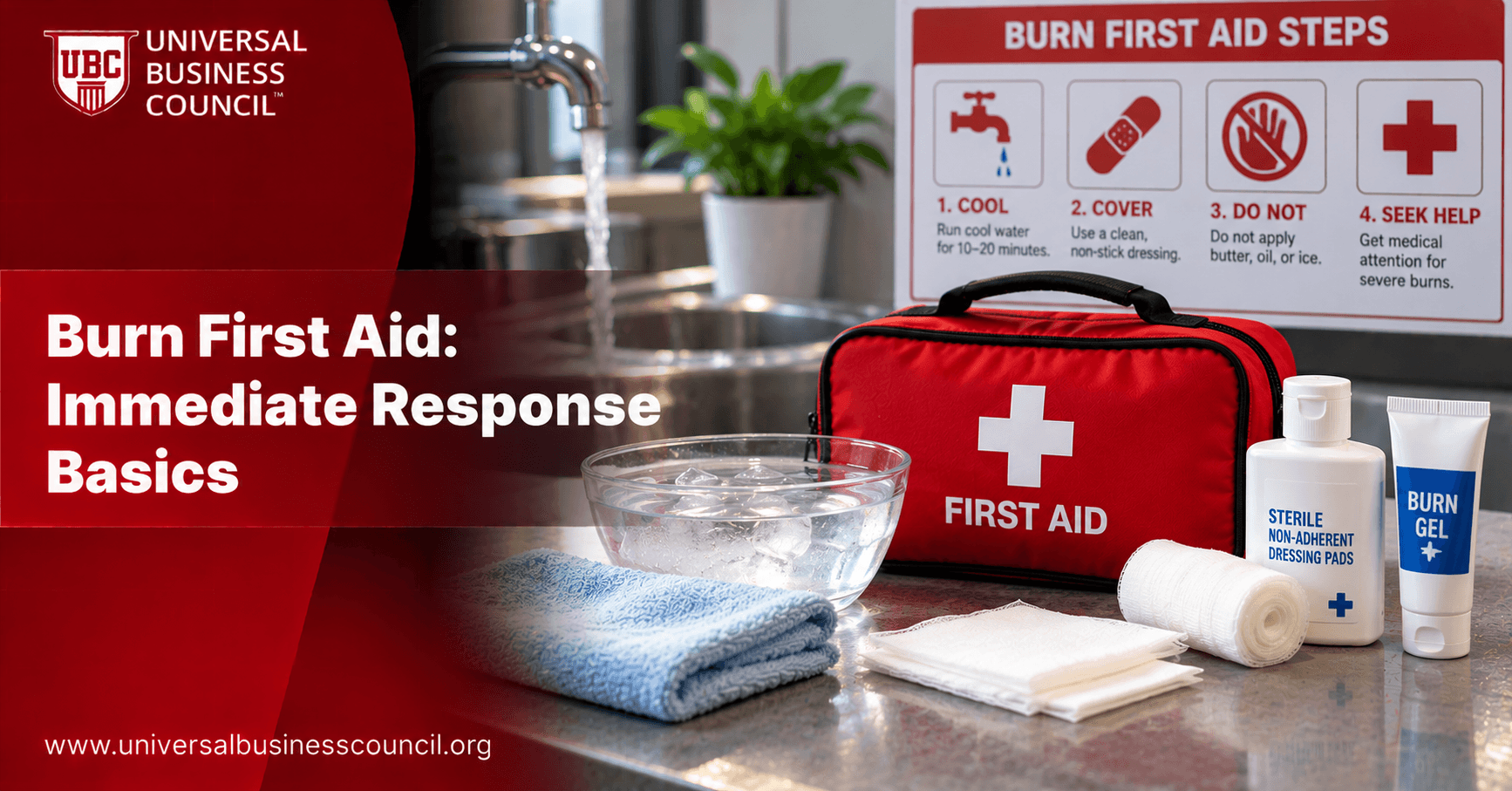
The first actions taken after a burn matter more than almost anything that follows. Stopping the burning, cooling the area and knowing when to call for help can reduce the damage and the pain, while the wrong response, such as applying ice or home remedies, can make things worse. This guide explains the immediate response to burns, how to recognize different types and severity levels, what to avoid and when emergency care is needed. It also covers workplace compliance and record keeping. It is general information and not a substitute for an accredited first aid course. For hands-on training in emergency care, the certified first aid and CPR professional certification is a recognized place to start.
What is burn first aid?
Burn first aid is the immediate care given to a person with a burn before professional medical help takes over. Its goals are to stop further injury, relieve pain, protect the area from infection and recognize when the injury needs urgent treatment.

Burns can come from heat, hot liquids, flames, chemicals, electricity or the sun. The core steps are similar across types, but some situations need extra care or an immediate call to emergency services.
Types and severity of burns
Understanding what kind of burn has occurred helps a first aider decide how to respond and when to seek help.
Common types of burns
Thermal burns come from hot surfaces, steam, hot liquids and flames. Chemical burns result from contact with corrosive substances. Electrical burns occur when current passes through the body and may cause more damage than the skin suggests. Sunburn is caused by ultraviolet exposure and can be mild or severe.
Judging severity
Superficial burns affect only the outer layer of skin, causing redness and pain. Deeper burns may cause blisters, swelling and severe pain. The most serious burns can look white, charred or leathery and may be painless because nerve endings are damaged. The size and location of a burn matter as much as its depth, so even a burn that looks small can be serious.
Higher-risk situations
Burns on the face, hands, feet, joints or genitals, burns affecting a large area and burns in young children and older adults are all treated with extra caution. Any burn involving breathing difficulty, chemicals or electricity needs urgent medical attention.
Immediate response: step by step
A calm, ordered approach protects both the casualty and the first aider.
Make the area safe and stop the burning, removing the person from the source of heat
If clothing is on fire, stop the person moving, lay them down and smother the flames, following your training
Cool the burn with cool running water for an extended period, as your first aid course teaches
Remove rings, watches and tight clothing near the burn before swelling starts, unless they are stuck to the skin
Cover the burn loosely with a clean, non-fluffy covering
Call emergency services if the burn is serious, and keep watching the person
Cooling is the single most useful step, and it should begin as soon as possible. Use cool water, not ice or very cold water, which can cause further damage.
What to avoid
Well-meant actions can do harm. Do not apply ice, butter, oils, toothpaste or creams to a fresh burn. Do not burst blisters, since they protect the underlying skin from infection. Do not pull off clothing that is stuck to the burn. Do not use fluffy cotton wool or adhesive dressings directly on the wound. Avoid giving food or drink to someone with a serious burn if medical care may be needed soon.
Special burn situations
Chemical and electrical burns call for adjustments to the usual response.
For chemical burns, make sure you are not exposed yourself, remove contaminated clothing where safe and flush the skin with plenty of running water, following any instructions on the product label and the advice of emergency services. For electrical burns, never touch the person until the power is safely switched off, and always seek medical help, because internal injury may be present even when the skin damage looks small. Burns to the airway from smoke or hot air are emergencies, so watch for coughing, hoarseness or breathing difficulty.
When to get emergency help
Call local emergency services for large or deep burns, burns to the face, hands, feet, joints or genitals, chemical or electrical burns, burns in young children and older adults, and any burn accompanied by breathing problems or signs of shock. If you are unsure, it is safer to call. Stay with the person, keep cooling the burn if advised and follow the operator's instructions.
Workplace first aid and compliance
Many workplaces carry burn risks, from kitchens and laboratories to workshops and cleaning tasks. Employers are generally expected to assess those risks, provide suitable first aid supplies, train staff and keep clear procedures. Incident records should be accurate and kept private. Organizations that appoint first aiders verify credentials and training records, and services such as HireValid support that verification. Staff should know who the first aiders are and where burn supplies are kept.
Records and digital tools
Incident reports, equipment checks and training records are increasingly kept in digital systems. Accurate, secure records support safety and compliance, and staff who understand digital tools manage them better. Some people build those skills through tech certifications. As secure data systems and artificial intelligence reach workplace safety, deep tech certifications offer one way to learn how those technologies work.
Accurate course descriptions
Training providers should describe clearly what their first aid courses cover, how long certificates last and which workplace requirements they meet. Vague or exaggerated claims can lead people to the wrong course. A digital marketing course can help providers present their offerings honestly online, within legal and ethical limits.
Conclusion
Burn first aid starts with making the area safe and stopping the burning, then cooling the burn with cool running water, removing items near the area, covering it loosely with a clean, non-fluffy covering and watching the person closely. Avoid ice, home remedies and bursting blisters. Chemical, electrical and airway burns need special care, and large, deep or high-risk burns need emergency help straight away. Workplaces support safety through trained first aiders, suitable supplies and accurate records. An accredited course gives the hands-on practice that makes calm, correct action possible.
Frequently asked questions
These are common questions about responding to burns.
1. What is the first thing to do for a burn?
Make the area safe and stop the burning, then cool the burn with cool running water.
2. How long should a burn be cooled?
For an extended period, as taught in your first aid course, starting as soon as possible.
3. Should I use ice on a burn?
No. Ice and very cold water can cause further damage. Use cool running water.
4. Should I put butter, oil or toothpaste on a burn?
No. These can trap heat and increase the risk of infection.
5. Should I burst a blister?
No. Blisters protect the skin underneath and bursting them raises the risk of infection.
6. How do I cover a burn?
Loosely, with a clean, non-fluffy covering that will not stick to the skin.
7. What if clothing is stuck to the burn?
Do not pull it off. Cool the area and get medical help.
8. Should jewelry be removed?
Yes, near the burn and before swelling starts, unless it is stuck to the skin.
9. What are signs of a serious burn?
Large or deep burns, white, charred or leathery skin and burns in high-risk areas or with breathing problems.
10. When should I call emergency services?
For serious burns, burns to the face, hands, feet, joints or genitals, chemical or electrical burns and burns in young children or older adults.
11. How do I treat a chemical burn?
Protect yourself, remove contaminated clothing where safe, flush with plenty of running water and get medical advice.
12. How do I treat an electrical burn?
Do not touch the person until the power is off, then call emergency services, as internal injury may be present.
13. What if someone's clothes are on fire?
Stop them moving, lay them down and smother the flames using the technique taught in first aid training.
14. Can sunburn need first aid?
Yes. Cool the skin, keep the person hydrated and seek medical help if it is severe or blistering.
15. Are burns in children more serious?
They can be, so seek medical advice sooner for young children.
16. Should I give food or drink to a burn casualty?
Avoid it for serious burns, in case medical treatment is needed soon.
17. What should a workplace first aid kit hold for burns?
Suitable non-fluffy dressings and supplies, with contents checked regularly according to local rules.
18. Should burn incidents be recorded?
Yes. Accurate, private records support safety and compliance.
19. How do employers verify first aider credentials?
They check training certificates and records, often with credential screening providers.
20. How can I learn burn first aid properly?
Take an accredited first aid course with hands-on practice and renew your certificate on time.
Related Articles
View All
Health
What Is First Aid? Essential Basics Explained
Understand what first aid is and why it plays an important role in emergency situations. Explore its basic principles, common techniques, essential supplies, and how quick action can help protect someone's health and safety until professional medical assistance arrives.
Health
Is First Aid and CPR Certification Worth It?
Discover whether first aid and CPR certification is worth the time and investment. Explore the benefits of learning life-saving skills, improving workplace safety, responding confidently to emergencies, and building valuable skills that can support personal and professional growth.
Health
How to Choose a First Aid and CPR Certification
Learn how to choose the right first aid and CPR certification based on your career goals, workplace requirements, and training needs. Explore important factors such as course content, accreditation, hands-on practice, certification validity, and training providers to make an informed decision.
Trending Articles
The Role of Blockchain in Ethical AI Development
How blockchain technology is being used to promote transparency and accountability in artificial intelligence systems.
AWS Career Roadmap
A step-by-step guide to building a successful career in Amazon Web Services cloud computing.
Top 5 DeFi Platforms
Explore the leading decentralized finance platforms and what makes each one unique in the evolving DeFi landscape.