

What Is First Aid? Essential Basics Explained
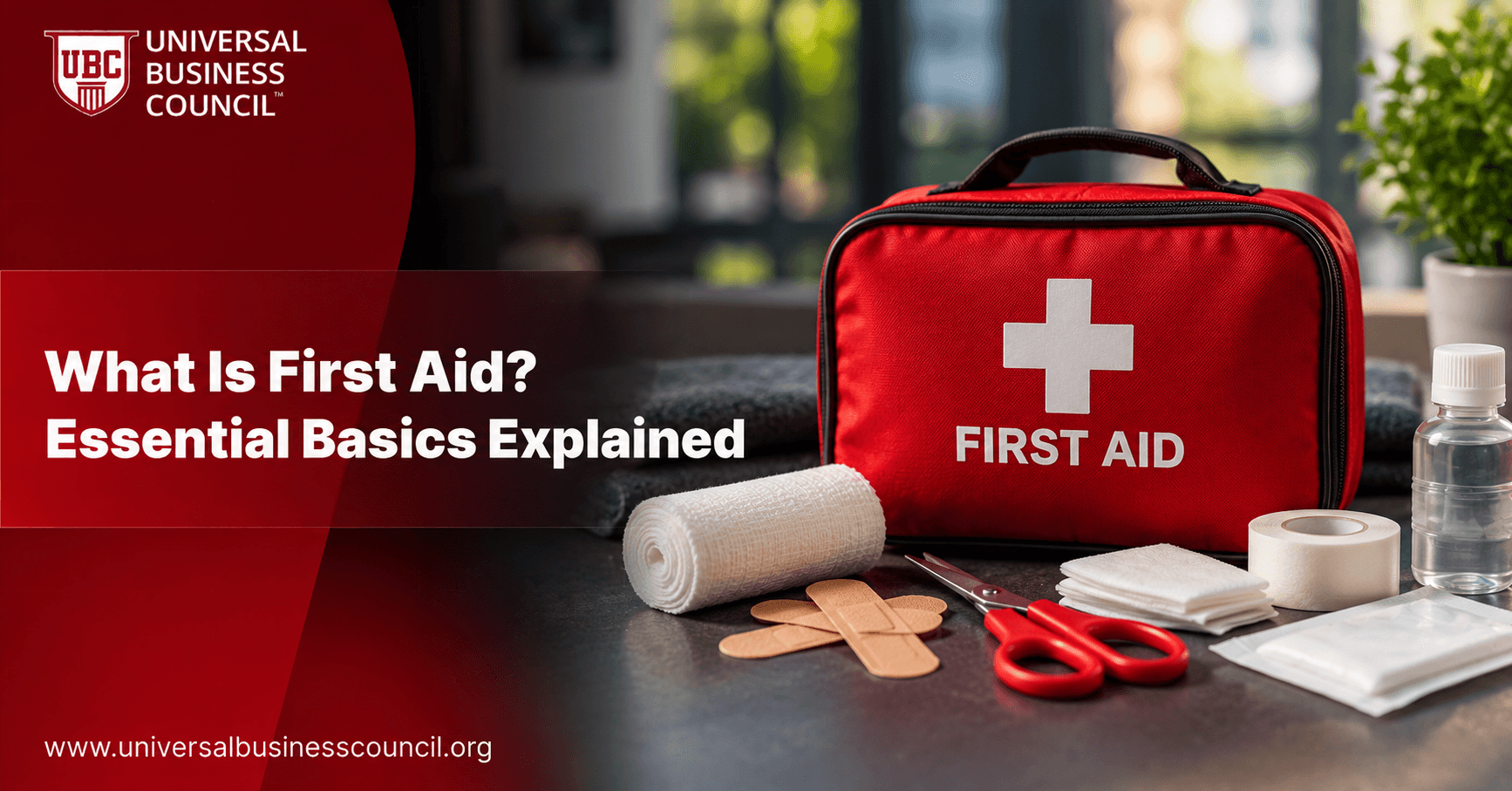
Most people hope never to need first aid, and the ones who do rarely get time to read about it first. That is why learning the basics in advance matters. Simple, calm action in the first minutes can protect a person from further harm until professional help arrives. This guide explains what first aid is, the core steps to follow in an emergency, how to handle common situations, what a first aid kit should hold and what workplaces and organizations are expected to do. It is general information and not a substitute for an accredited first aid course, which gives the hands-on practice that reading cannot. For readers considering a role in patient care, the certified nursing assistant certification is one recognized way to begin.
What is first aid?
First aid is the immediate help given to a person who is injured or suddenly ill, before medical professionals take over. It aims to preserve life, prevent the condition from getting worse and support recovery.

It does not replace professional medical care. A first aider acts within their training, calls for help early and hands over to paramedics or doctors as soon as they arrive. Knowing the limits of what to do is as important as knowing the steps themselves.
The three aims of first aid
First aid is often summed up in three goals: to preserve life, to prevent further harm and to promote recovery. Preserving life comes first, which means dealing with threats such as blocked airways, severe bleeding or lack of breathing. Preventing further harm covers actions such as moving a person away from danger or keeping an injured limb still. Promoting recovery includes comfort, reassurance and monitoring the person until help arrives.
The basic steps in an emergency
Whatever the situation, a calm, ordered approach helps. The exact method taught can differ by region, but the principles are widely shared.
Check for danger
Look around before approaching. Traffic, fire, electrical hazards, unstable structures or aggressive people can put a rescuer at risk. A first aider who becomes a casualty cannot help anyone, so personal safety comes first.
Check the person and call for help
Check whether the person responds and is breathing. If they are seriously hurt or unwell, call local emergency services straight away, or ask someone nearby to do it. Give clear information about the location, what has happened and the person's condition, and follow the operator's instructions.
Start care and keep monitoring
Give the care that is needed within your training, such as controlling bleeding or starting resuscitation. Stay with the person, keep them warm and reassured, and keep watching their condition until help takes over.
Common first aid situations
The most useful basics cover situations that occur again and again. Each one below is a general outline, and a course will teach the practical detail.
Bleeding: apply firm, direct pressure with a clean cloth and keep it there
Burns: cool the burn with running water and cover it loosely with a clean, non-fluffy covering
Choking: encourage coughing, and use the back blow and thrust techniques taught in first aid training if the person cannot breathe
Suspected fractures: keep the injured part still and supported and seek medical help
Fainting: lay the person down and raise the legs if there is no other injury, and seek help if they do not recover quickly
Some conditions, such as heart attack, stroke, severe allergic reactions and loss of consciousness, are medical emergencies where calling emergency services immediately is the priority.
Unresponsive and not breathing normally
A person who does not respond and is not breathing normally needs urgent action. Call emergency services, begin CPR if you are trained and use an automated external defibrillator if one is available and you are guided to do so. If the person is unresponsive but breathing normally, placing them in the recovery position helps keep the airway clear while you wait for help. Training in these skills is widely available and strongly recommended.
What should be in a first aid kit
A well-stocked kit lets a first aider respond quickly. Contents vary by region and workplace, but typically include:
Sterile dressings and bandages
Adhesive plasters in different sizes
Disposable gloves
Scissors and tape
Antiseptic wipes
A basic first aid guide
Kits should be checked regularly, since items expire and get used. They should also be easy to find, clearly marked and kept in places where they are likely to be needed.
Workplace first aid and compliance
Many places have rules requiring employers to provide first aid arrangements suited to the size and risks of the workplace. This may include trained first aiders, suitable supplies and clear procedures. Good practice includes keeping training certificates up to date, recording incidents accurately and protecting the privacy of anyone who is hurt. When hiring or appointing first aiders, organizations verify credentials and training records, and services such as HireValid support that verification. Staff should know who the first aiders are and how to reach them.
Legal and ethical points
People often worry about legal consequences when helping. Laws differ between places, and many offer some protection for those who act in good faith within their abilities. Consent matters, so a first aider introduces themselves and asks permission where the person is able to answer. If the person is unconscious, help is generally given on the basis that they would want it. First aiders should keep information about the person private, and report the incident as their workplace or local rules require.
Records and technology
Incident reports, training records and equipment checks are increasingly kept in digital systems. Accurate, secure records support safety and compliance, and staff who understand digital tools manage them better. Some people build those skills through tech certifications. As secure data systems and artificial intelligence become more common, deep tech certifications offer one way to learn how such technologies work.
Honest promotion of first aid training
Training providers should describe their courses accurately, including what the certificate covers, how long it remains valid and whether it meets particular workplace requirements. Clear information helps people choose the right course and avoids misleading claims. A digital marketing course can help providers present their courses honestly online and within legal and ethical limits.
Conclusion
First aid is the immediate help given to an injured or suddenly ill person before professional care arrives, with the aims of preserving life, preventing further harm and promoting recovery. The basic steps are to check for danger, check the person, call emergency services and give the care you are trained to give while monitoring until help takes over. Common situations such as bleeding, burns, choking and fractures have simple core responses, and unresponsive people who are not breathing normally need urgent resuscitation. A well-kept first aid kit, trained staff and good records support safety and compliance in workplaces. Reading is a start, but an accredited course provides the practice that makes confident action possible.
Frequently asked questions
These are the questions people ask most about first aid basics.
1. What is first aid?
It is the immediate help given to an injured or suddenly ill person before professional medical care arrives.
2. What are the aims of first aid?
To preserve life, prevent further harm and promote recovery.
3. Does first aid replace medical care?
No. It supports the person until professionals take over.
4. What is the first thing to do in an emergency?
Check for danger so that you do not put yourself at risk.
5. When should I call emergency services?
Whenever someone is seriously hurt or unwell, and early rather than late.
6. What should I tell the emergency operator?
The location, what happened, the person's condition and follow their instructions.
7. How do I control bleeding?
Apply firm, direct pressure with a clean cloth and keep it in place while help is arranged.
8. How do I treat a minor burn?
Cool it with running water and cover it loosely with a clean, non-fluffy covering.
9. What do I do if someone is choking?
Encourage coughing, and use the techniques taught in first aid training if they cannot breathe, and call for help.
10. What is the recovery position?
It is a side-lying position that keeps the airway clear for an unresponsive person who is breathing normally.
11. What if someone is not breathing normally?
Call emergency services and start CPR if you are trained.
12. What is an AED?
An automated external defibrillator is a device that can deliver a shock to the heart and gives spoken instructions.
13. How do I treat a suspected fracture?
Keep the injured part still and supported and get medical help.
14. What should a first aid kit contain?
Dressings, bandages, plasters, gloves, scissors, tape, antiseptic wipes and a basic guide.
15. How often should a kit be checked?
Regularly, because items expire or get used.
16. Do workplaces need first aiders?
Many places require suitable first aid arrangements, so check local rules.
17. Can I be sued for helping?
Laws vary, and many places offer protection for good-faith help, so check local rules.
18. Do I need consent to give first aid?
Ask permission where the person can answer, and help is generally given to unconscious people on the assumption they would want it.
19. Should incidents be recorded?
Yes. Accurate, private records support safety and compliance.
20. How do I learn first aid properly?
Take an accredited course that includes hands-on practice and keep your certificate up to date.
Related Articles
View All
Health
Burn First Aid: Immediate Response Basics
Learn how to provide immediate first aid for burns, including thermal, chemical, and electrical burns. Understand the essential steps for cooling the affected area, protecting the injury, avoiding common mistakes, and recognizing when emergency medical attention is needed.
Health
Is First Aid and CPR Certification Worth It?
Discover whether first aid and CPR certification is worth the time and investment. Explore the benefits of learning life-saving skills, improving workplace safety, responding confidently to emergencies, and building valuable skills that can support personal and professional growth.
Health
How to Choose a First Aid and CPR Certification
Learn how to choose the right first aid and CPR certification based on your career goals, workplace requirements, and training needs. Explore important factors such as course content, accreditation, hands-on practice, certification validity, and training providers to make an informed decision.
Trending Articles
The Role of Blockchain in Ethical AI Development
How blockchain technology is being used to promote transparency and accountability in artificial intelligence systems.
AWS Career Roadmap
A step-by-step guide to building a successful career in Amazon Web Services cloud computing.
Top 5 DeFi Platforms
Explore the leading decentralized finance platforms and what makes each one unique in the evolving DeFi landscape.