

Choking First Aid: What You Should Know
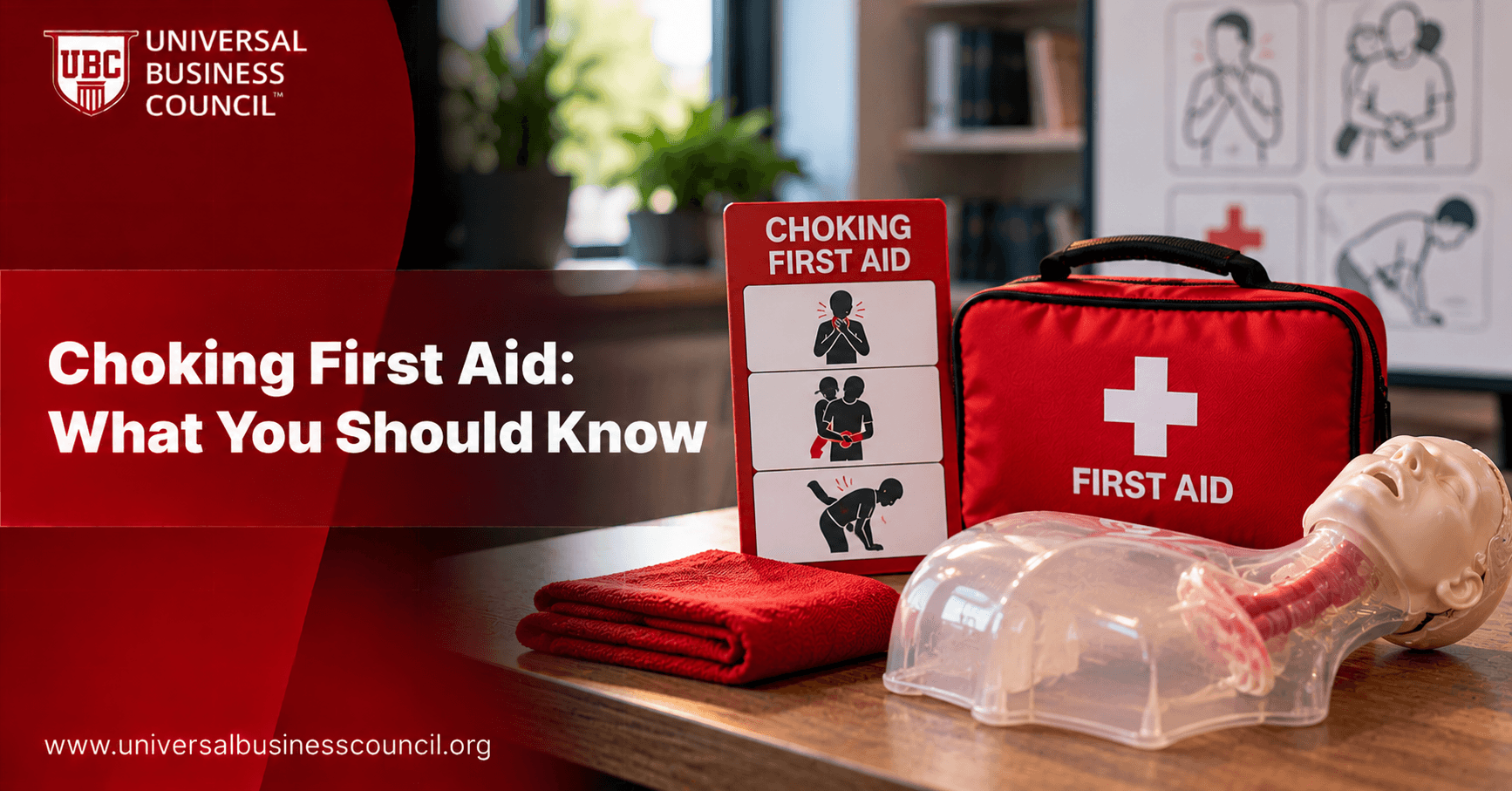
Choking can turn dangerous within minutes, and the right response depends on who is choking, how severe the blockage is and whether the person is still conscious. A few clear rules cover most situations, and they are easy to learn before you ever need them.
This guide explains choking first aid for adults, children and infants, how to tell mild from severe choking and what to do if someone becomes unresponsive. If you want to build skills for a healthcare career, the Certified Nursing Assistant (CNA) certification from Universal Business Council is a good place to start, since emergency response training is a core part of patient care. The sections below cover the signs, the steps and prevention.

What is choking?
Choking happens when food or an object blocks the airway and stops air from reaching the lungs. A partial blockage may let some air through, while a complete blockage stops breathing entirely and needs immediate action.
Anyone can choke, but young children, older adults and people with swallowing difficulties are at higher risk. Common causes include food that is large, hard or round, small toys or objects, eating while talking or laughing, and drinking alcohol with a meal.
Recognizing mild and severe choking
Knowing the difference decides what you do next.
Signs of mild choking
The person can cough forcefully, speak or breathe, even if they are distressed. Encourage them to keep coughing and stay with them. Don't slap their back or reach into their mouth, because it may push the object deeper. If the cough weakens or breathing gets worse, treat it as severe.
Signs of severe choking
Unable to cough, speak or breathe, or making high-pitched or no sounds
Clutching the throat with one or both hands, the universal choking sign
Panic or a look of fear
Skin turning pale, bluish or gray, especially around the lips
Weak or silent coughing
Severe choking is an emergency. Have someone call 911 or your local emergency number while you start first aid. If you are alone, give first aid first and call as soon as the object is out or the person becomes unresponsive.
Choking first aid for adults and children over one year
Training organizations teach slightly different methods. The American Red Cross teaches alternating five back blows with five abdominal thrusts, while the American Heart Association teaches abdominal thrusts. Both are accepted, so follow what you were trained to do.
Back blows and abdominal thrusts
Ask "Are you choking?" and tell the person you're going to help.
Stand behind them and lean them slightly forward. For back blows, give up to five firm blows between the shoulder blades with the heel of your hand.
For abdominal thrusts, make a fist and place it just above the navel, thumb side in. Grasp the fist with your other hand.
Pull sharply inward and upward, up to five times.
Repeat the cycle until the object comes out or the person becomes unresponsive.
Special situations
For pregnant women or people with larger bodies, give chest thrusts, placing your hands at the center of the chest instead of the abdomen
For a child, kneel to their level and use less force than for an adult
If you are choking alone, press your abdomen against a firm edge such as a chair back, or use your fist, and thrust inward and upward
Choking first aid for infants under one year
Infants need a different technique because their bodies are small and fragile. Abdominal thrusts are not used.
Support the infant face down along your forearm, resting on your thigh, with the head lower than the body and your hand holding the jaw.
Give up to five firm back blows between the shoulder blades with the heel of your hand.
Turn the infant face up, still supported on your forearm, with the head lower than the chest.
Give up to five chest thrusts using two fingers in the center of the chest, just below the nipple line.
Repeat until the object comes out or the infant becomes unresponsive.
What to do if the person becomes unresponsive
If a choking person collapses, lower them carefully to the ground, make sure emergency services have been called and begin CPR, starting with chest compressions. Each time you open the airway to give breaths, look inside the mouth. If you can see the object, remove it. Don't do blind finger sweeps, because they can push it further down.
Continue until emergency responders arrive, an AED is ready or the person starts breathing. Even if the object comes out and the person seems fine, they should be checked by a medical professional, because abdominal thrusts can cause internal injury and some people have lingering breathing problems.
Preventing choking
Many choking incidents can be avoided with a few habits:
Cut food into small pieces, especially for young children and older adults
Have children sit while eating, and supervise them
Avoid giving young children hard, round or sticky foods such as whole grapes, nuts, hard candy and popcorn
Keep small objects, coins, button batteries and balloons out of reach
Encourage everyone to chew thoroughly and not talk or laugh with a full mouth
Be careful with alcohol, which can dull the swallowing reflex
Care settings also manage risk carefully. Staff who help people with swallowing difficulties follow plans that cover food texture and positioning, and employers confirm training and credentials before assigning those duties. Services like HireValid help verify certifications and work history for care and safety roles.
Training and staying prepared
Reading helps, but practice builds confidence. A certified first aid and CPR course lets you rehearse choking response on manikins with an instructor who can correct your technique. Refresh your training every couple of years, and make sure family members, babysitters and coworkers know the basics too.
Organizations that track staff certifications can use digital systems with renewal reminders, and short tech certifications can help administrators build those tools. Training providers also need to be found online, and a Digital Marketing Course teaches how to describe classes clearly. Emergency care is also evolving, with smartphone prompts and AI-assisted dispatch that can guide callers in real time, and Deep Tech Certifications explain the technology behind those tools.
Conclusion
Choking first aid starts with recognizing severe choking: a person who cannot cough, speak or breathe. Call for emergency help, give back blows and abdominal thrusts to adults and children, back blows and chest thrusts to infants, and begin CPR if the person becomes unresponsive. For mild choking, encourage coughing and stay close.
Prevention matters as much as response. Cut food small, supervise children and keep small objects away from them. Take a certified course so the steps feel natural, and share what you learn with the people around you. The FAQs below answer common questions about choking.
Frequently asked questions
What is the universal sign of choking?
Clutching the throat with one or both hands.
How can I tell if someone is choking?
They can't cough, speak or breathe, may clutch their throat and can turn pale or bluish.
What should I do if the person is coughing forcefully?
Encourage them to keep coughing and stay close. Don't slap their back.
What is the first step for severe choking in an adult?
Ask if they're choking, have someone call emergency services and begin back blows and abdominal thrusts.
What is the difference between the Red Cross and AHA methods?
The Red Cross teaches five back blows plus five abdominal thrusts, and the AHA teaches abdominal thrusts. Follow your training.
How do I perform abdominal thrusts?
Place a fist above the navel, grasp it with your other hand and pull sharply inward and upward.
How do I help a choking infant?
Give up to five back blows and five chest thrusts, repeating until the object comes out or the infant becomes unresponsive.
Can I use abdominal thrusts on an infant?
No. Use back blows and chest thrusts.
What if the person is pregnant?
Use chest thrusts instead of abdominal thrusts.
What if I'm choking and alone?
Thrust your abdomen against a firm edge like a chair back, or use your fist, and call for help when possible.
What if the person becomes unresponsive?
Lower them to the ground, call 911 and begin CPR.
Should I sweep the mouth with my finger?
Only remove an object you can clearly see. Avoid blind sweeps.
Do I need medical care after choking?
Yes. A medical check is wise after severe choking or abdominal thrusts.
Which foods are high risk for children?
Whole grapes, nuts, hard candy, popcorn and chunks of hot dog or meat.
How can I prevent choking in older adults?
Offer small, soft bites, encourage slow eating and watch for swallowing problems.
Is back slapping safe?
Only as part of trained back blows for severe choking, not for mild choking.
Can drinking water help a choking person?
No. Don't give fluids to someone who is choking.
Should I call 911 for choking?
Yes for severe choking, and anytime you're unsure.
How often should I refresh my first aid training?
Every two years or as your provider recommends.
Where can I learn choking first aid?
Take a course from a recognized provider such as the American Red Cross or the American Heart Association.
Related Articles
View All
Health
Is First Aid and CPR Certification Worth It?
Discover whether first aid and CPR certification is worth the time and investment. Explore the benefits of learning life-saving skills, improving workplace safety, responding confidently to emergencies, and building valuable skills that can support personal and professional growth.
Health
How to Choose a First Aid and CPR Certification
Learn how to choose the right first aid and CPR certification based on your career goals, workplace requirements, and training needs. Explore important factors such as course content, accreditation, hands-on practice, certification validity, and training providers to make an informed decision.
Health
First Aid Training Requirements for the Workplace
Explore the first aid training requirements for workplaces and understand why employee training is essential for handling medical emergencies. Learn about key training topics, certification considerations, workplace safety responsibilities, and how proper preparation helps employees respond confidently to emergencies.
Trending Articles
The Role of Blockchain in Ethical AI Development
How blockchain technology is being used to promote transparency and accountability in artificial intelligence systems.
AWS Career Roadmap
A step-by-step guide to building a successful career in Amazon Web Services cloud computing.
Top 5 DeFi Platforms
Explore the leading decentralized finance platforms and what makes each one unique in the evolving DeFi landscape.