

First Aid vs CPR: What Is the Difference?
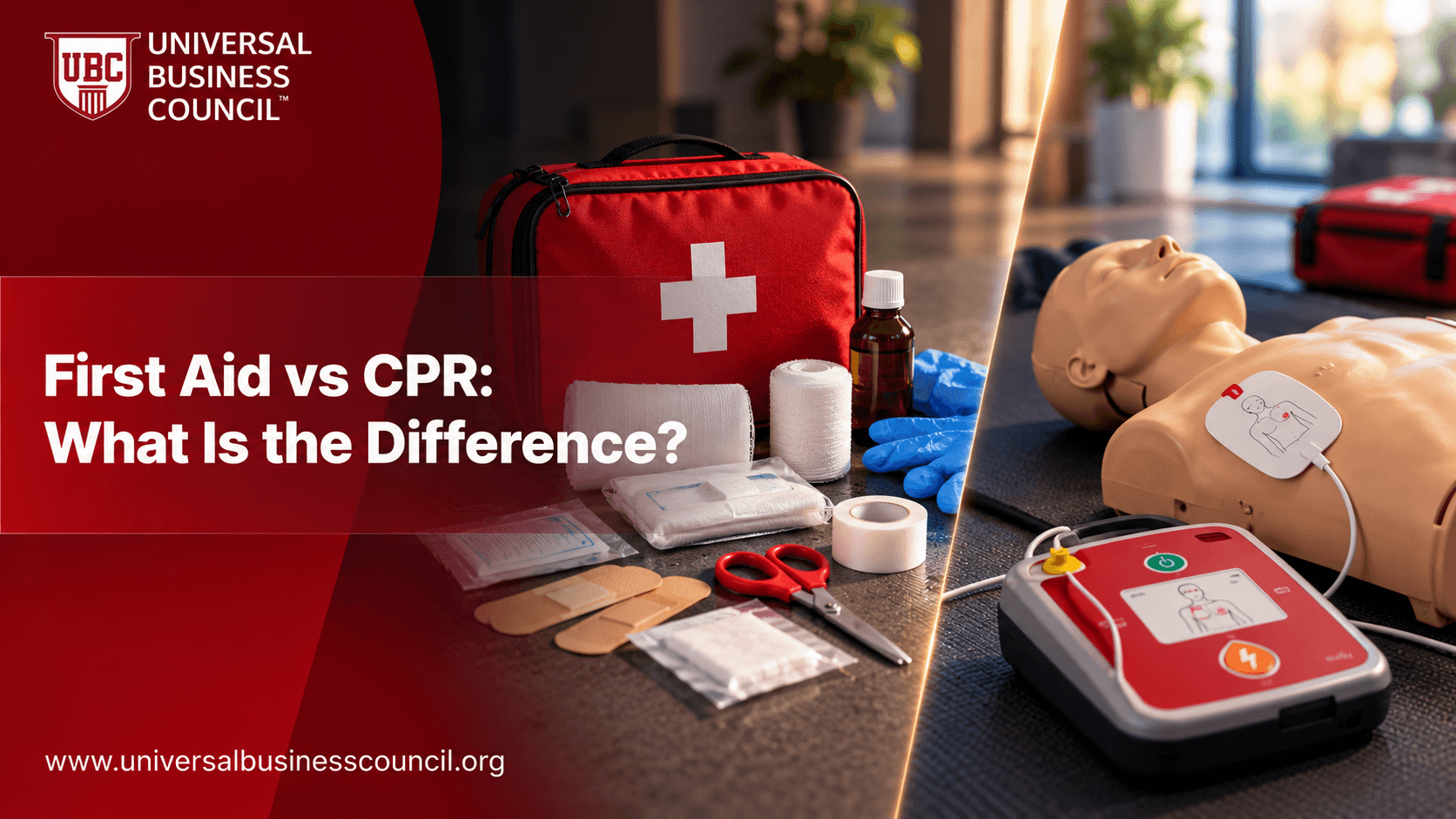
One is a whole toolkit, and the other is a single tool inside it. First aid covers the immediate help given for a wide range of injuries and sudden illnesses, while CPR is a specific emergency technique used when a person is unresponsive and not breathing normally. The two terms are often used as if they were the same, which leads to confusion about which course to take, which certificate an employer needs and what to do in an emergency. This guide explains each one, compares them side by side, shows how they work together and covers the training and compliance points that matter. It is general information and not a substitute for an accredited course. Anyone exploring a hands-on care career can also look at the certified nursing assistant certification as a practical starting point.
What is the difference between first aid and CPR?
First aid is the immediate care given to someone who is injured or suddenly ill before professional help arrives. It aims to preserve life, prevent further harm and promote recovery, and it covers situations such as bleeding, burns, choking, fractures and fainting.

CPR, or cardiopulmonary resuscitation, is one specific part of first aid. It combines firm chest compressions with, where trained, rescue breaths, and it is used when a person is unresponsive and not breathing normally. All CPR is first aid, but not all first aid involves CPR.
When each one is used
The situation decides which skill is needed, and often more than one applies at once.
When first aid is the right response
First aid applies to a broad range of problems, from a minor cut to a serious injury. The person is usually responsive and breathing, and the first aider's job is to treat the problem, keep the person safe and comfortable and call for professional help when needed.
When CPR is the right response
CPR is needed only in a narrow, critical situation: the person does not respond and is not breathing, or not breathing normally. Gasping after a collapse does not count as normal breathing. In this case, calling emergency services and starting compressions without delay gives the person the best chance.
When CPR is not needed
If a person is responsive, or unresponsive but breathing normally, CPR is not appropriate. They should be placed in the recovery position, watched closely and kept under observation until help arrives. If you are unsure, the emergency operator can guide you.
Key differences at a glance
A simple comparison helps keep the two apart:
Scope: first aid covers many conditions, while CPR addresses one critical emergency
Person's state: first aid usually involves someone responsive, while CPR is for someone unresponsive and not breathing normally
Skills: first aid includes wound care, burn care, positioning and more, while CPR focuses on compressions, breaths and defibrillator use
Training: first aid courses are broader, while CPR courses are shorter and more focused
Urgency: CPR is always an immediate life-or-death response, while first aid varies in urgency
How first aid and CPR work together
In a real emergency, the two often overlap. A first aider arrives, checks for danger, checks the person and calls emergency services. If the person is not breathing normally, the first aider moves straight to CPR and uses a defibrillator if one is available. If the person is breathing, other first aid steps follow, such as controlling bleeding or positioning. A good first aid course includes CPR for exactly this reason, while a standalone CPR course concentrates on that single skill in greater depth.
The role of the defibrillator
An automated external defibrillator, or AED, is closely linked with CPR. It analyzes the heart's rhythm and, if needed, delivers a shock, giving spoken instructions as it goes. It is designed to be used by people without medical training. CPR keeps blood moving until the AED can be used, and early defibrillation greatly improves survival, so the two are best seen as a team.
Choosing the right course
The right course depends on the role and the risks. Someone who wants general readiness for emergencies at home or work should consider a full first aid course that includes CPR. Someone whose job specifically requires CPR certification, such as certain healthcare or lifeguarding roles, may need a dedicated CPR course. Courses for infants and children cover modified techniques, so anyone who cares for young people should confirm that these are included. Always check that the course is accredited and recognized by the employer or regulator who requires it.
Certification and workplace compliance
Both first aid and CPR certificates are usually time-limited, because skills fade without practice. Many workplaces must provide first aid arrangements suited to their size and risks, and some roles require current certification. Employers should keep accurate training records, schedule renewals and make sure staff know where equipment is. When appointing first aiders or hiring for roles that require certification, organizations verify credentials, and services such as HireValid support that process. Individuals help themselves by keeping certificates current and easy to produce.
Legal and ethical points
Laws about helping in emergencies differ between places, and many offer some protection to people who act in good faith within their abilities. Consent matters where the person can answer, and unconscious people are generally helped on the basis that they would want it. In both first aid and CPR, the person's information should be kept private, and incidents should be reported and recorded as the workplace or local rules require.
Records, equipment and technology
Training certificates, equipment checks and incident reports are increasingly kept in digital systems. Accurate, secure records support safety and compliance, and staff who understand digital tools manage them better. Some people build these skills through tech certifications. As secure data systems and artificial intelligence reach healthcare and safety, deep tech certifications offer one way to learn how those technologies work.
Clear and honest course descriptions
Training providers should describe exactly what their courses cover, whether CPR is included, how long the certificate lasts and which requirements it meets. Mixing up first aid and CPR in marketing can lead people to buy the wrong course, which wastes money and can leave a workplace out of compliance. A digital marketing course can help providers explain their offerings clearly and truthfully online, within legal and ethical limits.
Conclusion
First aid vs CPR comes down to scope. First aid is the broad set of skills for helping someone who is injured or suddenly ill, while CPR is one critical skill within it, used when a person is unresponsive and not breathing normally. They work together in real emergencies, with the defibrillator supporting CPR where available. Choosing the right course, keeping certificates current and keeping accurate records protect both people and organizations. Calling emergency services early is the first step in every serious situation, and an accredited course remains the best way to gain the confidence to act.
Frequently asked questions
These are the questions people ask most when comparing the two.
1. What is the main difference between first aid and CPR?
First aid covers many injuries and illnesses, while CPR is one specific technique for when a person is unresponsive and not breathing normally.
2. Is CPR part of first aid?
Yes. CPR is one skill within the wider field of first aid.
3. Is first aid part of CPR?
No. CPR is narrower, and a CPR course does not usually cover wound care, burns or other first aid topics.
4. When do I use first aid?
For injuries and sudden illnesses, usually when the person is responsive and breathing.
5. When do I use CPR?
When a person is unresponsive and not breathing, or not breathing normally.
6. What if the person is breathing normally?
CPR is not needed. Use the recovery position, call for help and monitor them.
7. Is gasping normal breathing?
No. Gasping after a collapse is treated as a sign that CPR is needed.
8. What is the first step in either emergency?
Check for danger, then check the person and call emergency services.
9. What is an AED?
An automated external defibrillator analyzes the heart's rhythm and can deliver a shock.
10. Do I need an AED for first aid?
Not for every situation, but one is valuable in cardiac arrest alongside CPR.
11. Does a first aid course include CPR?
Most do, but course content differs, so check the details before enrolling.
12. Can I take a CPR course without first aid?
Yes. Dedicated CPR courses are available and focus on that skill.
13. Which course should I take?
Choose a first aid course for broad readiness, or a CPR course if your role specifically requires it.
14. Are there courses for infants and children?
Yes. Techniques are adapted, so confirm that these are included.
15. Do certificates expire?
Usually yes, and they need renewal because skills fade without practice.
16. Which jobs need certification?
Many healthcare, childcare, lifeguarding and workplace first aid roles, depending on local rules.
17. How do employers verify certificates?
They check certificates and training records, often with credential screening providers.
18. Can I be sued for helping?
Laws vary, and many places protect good-faith help, so check local rules.
19. Is hands-only CPR enough?
Untrained bystanders are often advised to use it, and it is far better than doing nothing.
20. How do I learn properly?
Take an accredited course with hands-on practice and keep your certificate up to date.
Related Articles
View All
Health
Is First Aid and CPR Certification Worth It?
Discover whether first aid and CPR certification is worth the time and investment. Explore the benefits of learning life-saving skills, improving workplace safety, responding confidently to emergencies, and building valuable skills that can support personal and professional growth.
Health
How to Choose a First Aid and CPR Certification
Learn how to choose the right first aid and CPR certification based on your career goals, workplace requirements, and training needs. Explore important factors such as course content, accreditation, hands-on practice, certification validity, and training providers to make an informed decision.
Health
First Aid Training Requirements for the Workplace
Explore the first aid training requirements for workplaces and understand why employee training is essential for handling medical emergencies. Learn about key training topics, certification considerations, workplace safety responsibilities, and how proper preparation helps employees respond confidently to emergencies.
Trending Articles
The Role of Blockchain in Ethical AI Development
How blockchain technology is being used to promote transparency and accountability in artificial intelligence systems.
AWS Career Roadmap
A step-by-step guide to building a successful career in Amazon Web Services cloud computing.
Top 5 DeFi Platforms
Explore the leading decentralized finance platforms and what makes each one unique in the evolving DeFi landscape.